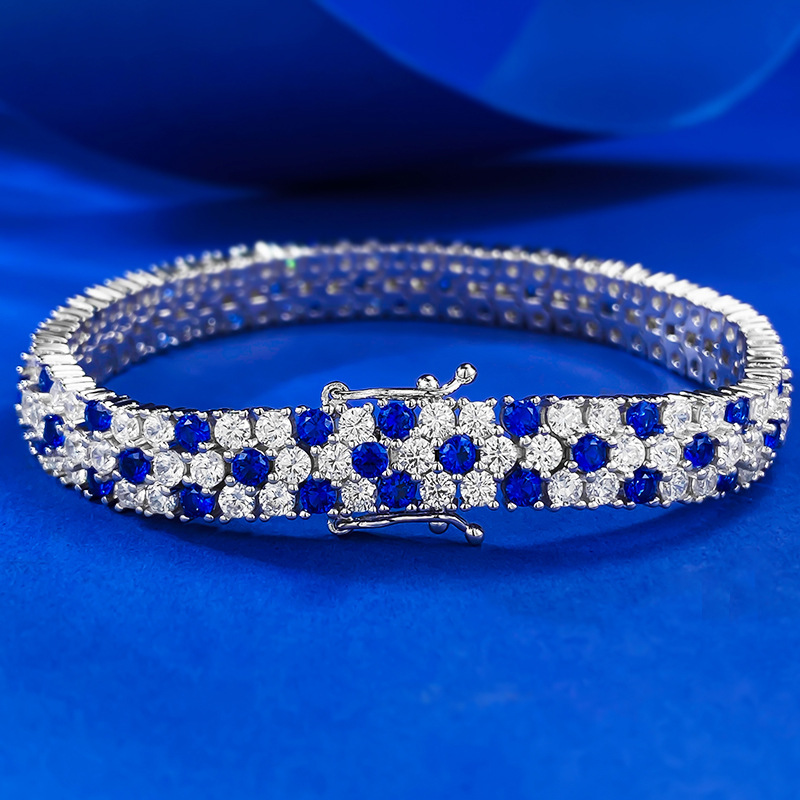
Tennis Bracelet Sizing Before Buying: Find the Right Fit
Tennis bracelet sizing before buying can save you from the two most common fit problems: a bracelet that pinches or one that slides too far down the hand. A Diamond Tennis Bracelet should feel smooth, secure, and easy to wear. It should also keep the diamonds facing upward instead of rolling around the wrist.
Most shoppers compare two simple sizing paths. You can measure your wrist and add a small comfort allowance, or you can choose a standard finished length such as 6.5, 7, or 7.5 inches. Both can work, but one will usually make more sense for your wrist, your style, and how often you'll wear the bracelet.
This sizing advice is written for shoppers comparing lab-Grown Diamond Tennis bracelets online. At StoneBridge Jewelry, fit questions often come down to four details: wrist measurement, clasp security, link flexibility, and how much movement the wearer likes.
Tennis Bracelet Sizing Before Buying: What Really Matters
Tennis bracelet sizing before buying starts with one honest question: do you want a close, tailored fit or a softer drape? A close fit keeps the diamond line neat and polished. A slightly looser fit gives more movement, which can feel comfortable for daily wear or stacking.
A tennis bracelet isn't just a chain. It's a row of diamonds, links, settings, and a clasp working together. If the bracelet is too tight, it can pull at the wrist and feel stiff. If it's too loose, it may rotate, catch on sleeves, or slip toward the hand.
The two main sizing methods are easy to compare:
- Measured wrist method: Measure the wrist where the bracelet will sit, then add about 0.25 to 0.5 inch.
- Standard length method: Choose a common finished bracelet length, usually 6.5, 7, or 7.5 inches.
For a premium bracelet, the measured method gives the most reliable fit. Standard lengths are still useful because many ready-to-ship bracelets are sold that way. A 6-inch wrist, for example, may feel best in a 6.25-inch custom length or a 6.5-inch standard bracelet.
Tennis bracelet sizing before buying is more than a number on a product page. It affects comfort, sparkle, security, and the way the bracelet looks with rings, watches, and other jewelry.
Why Fit Changes the Look of a Diamond Bracelet
Tennis bracelets are designed to follow the wrist. Bangles keep their shape and move freely, but a tennis bracelet should bend with your hand while keeping the diamonds visible.
Small design details can change the feel. A shared-prong setting may drape differently than a bezel setting. A flexible link style may feel softer than a more structured bracelet. A box clasp with a safety lock can add firmness near the closure.
The Gemological Institute of America, or GIA, teaches that diamond beauty depends on cut, proportions, and how the stone handles light. On a bracelet, fit helps the diamonds face upward so they can catch light properly. That's why tennis bracelet sizing before buying deserves the same attention as metal color, diamond quality, and total carat weight.
How to Measure for Tennis Bracelet Sizing Before Buying
Measuring your wrist is the best place to start. It uses your actual wrist size instead of a general average. For Online Jewelry Shopping, that extra step can lower the chance of an exchange.
Use this basic formula:
- Measure your wrist where the bracelet will sit.
- Add about 0.25 inch for a snug, tailored fit.
- Add about 0.5 inch for a classic comfortable fit.
- Add a little more only if you like a relaxed drape or plan to stack bracelets.
A 6-inch wrist often fits a 6.25-inch bracelet for a close look or a 6.5-inch bracelet for classic comfort. A 6.75-inch wrist may compare 7 inches and 7.25 inches, depending on available sizes.
Here's the quick test: can you move your wrist, type, and rest your hand without pinching or heavy swinging? If yes, the fit is probably close. If the clasp keeps turning to the top of your wrist, the bracelet may be too loose for your preferred look.
Tennis bracelet sizing before buying also helps you compare carat weights. A 3 carat total weight bracelet and a 7 carat total weight bracelet may share the same length, but larger stones create more wrist presence. The right size keeps that presence balanced.
Simple Measuring Tips That Improve Accuracy
Use a soft measuring tape if you have one. Wrap it flat around the wrist, usually just above the wrist bone. Don't pull tightly, and don't measure over a sleeve.
No soft tape? Use a strip of paper or non-stretch string. Wrap it around your wrist, mark the overlap, then measure the strip against a ruler.
For a cleaner measurement:
- Measure the wrist you'll actually wear the bracelet on.
- Keep your hand relaxed.
- Measure at room temperature.
- Check the number twice.
- Measure later in the day if your wrists tend to swell.
Wrist feel can change with heat, travel, exercise, or salt intake. If you notice swelling during warm weather, choose the larger end of the 0.25 to 0.5 inch comfort range.
Standard Tennis Bracelet Sizes: 6.5, 7, and 7.5 Inches
Standard sizes make shopping faster. Many fine jewelry retailers offer tennis bracelets in 6.5, 7, and 7.5 inches. Some also offer 6, 7.25, 8, or made-to-order sizing.
A 7-inch tennis bracelet is often treated as the classic women's length. It works for many wrists, so you'll see it often in ready-to-ship collections. A 6.5-inch bracelet can suit smaller wrists or anyone who likes a closer fit. A 7.5-inch bracelet may work better for larger wrists, relaxed styling, or stacking.
Standard size doesn't guarantee a tailored feel. Two people can wear the same 7-inch bracelet and have very different experiences. Wrist shape, hand size, clasp type, and link flexibility all matter.
Tennis bracelet sizing before buying with standard lengths works best after you measure. Use your wrist measurement first, then choose the closest available finished length.
What Each Standard Length Usually Means
Standard sizes refer to the finished length from end to end, including the clasp. Always check the product details, because construction can affect how the bracelet feels on the wrist.
Common size meanings include:
- 6.5 inches: Often best for smaller wrists or a neat fit.
- 7 inches: A popular classic length for many women's bracelets.
- 7.5 inches: Often better for larger wrists or extra movement.
- 8 inches and above: Common for larger wrists, relaxed fits, or some men's styling.
Total carat weight also changes the visual effect. A 2 carat total weight tennis bracelet looks delicate. A 5 carat bracelet has more sparkle and wrist coverage. A 10 carat bracelet makes a stronger statement, so proportion matters even more.
The Federal Trade Commission says lab-grown diamonds have the same optical, physical, and chemical properties as mined diamonds. That means a lab-grown Diamond Tennis Bracelet can deliver real diamond brilliance, but sizing still decides how well that brilliance sits on your wrist.
Measured Wrist vs. Standard Size: Which Is Better?
The best answer is usually both. Measure first, then use standard sizes to choose the closest available bracelet. That approach gives you personal fit data and a practical shopping path.
Here is the comparison:
| Fit Factor | Measured Wrist Method | Standard Size Method | Best Choice |
|---|---|---|---|
| Accuracy | Highest because it starts with your wrist | Moderate because it relies on common lengths | Measure first |
| Ease | Takes a minute or two | Fastest for shopping | Use both |
| Gift buying | Hard unless you can measure discreetly | Easier for surprises | Choose a standard length with exchange support |
| Online confidence | Strong for premium bracelets | Helpful for inventory comparison | Combine both methods |
| Comfort control | Better for snug, classic, or relaxed fit | Less precise between sizes | Add 0.25 to 0.5 inch |
| Exchange risk | Lower when measured well | Higher without wrist details | Check the policy |
Fit preference matters too:
- Snug fit: Wrist measurement plus about 0.25 inch. Best for a clean, refined look.
- Classic fit: Wrist measurement plus about 0.5 inch. Best for comfort and daily wear.
- Relaxed fit: Wrist measurement plus more than 0.5 inch. Best for stacking or loose-jewelry preferences.
For example, a 6-inch wrist usually compares 6.25 and 6.5 inches. A 6.5-inch wrist may compare 6.75 and 7 inches. A 7-inch wrist may need 7.25 or 7.5 inches.
Tennis bracelet sizing before buying should also include clasp checks. A secure box clasp with a safety latch is a smart choice for daily wear. For travel or frequent use, don't choose extra length just because it feels loose and easy at first.
Choosing the Right Fit for Your Style
What will the bracelet do on a normal day? That's the question shoppers should ask before choosing a size.
Pick a snug fit if you like a polished look with less sliding. This fit works well for office wear, formal events, and anyone who dislikes jewelry moving around. The bracelet should still move a little. It should never dig into the skin.
Pick a classic fit if you want the safest everyday balance. It gives a gentle drape without too much swing. Many customers choose this fit for work, dinners, errands, and daily wear.
Pick a relaxed fit if you like movement or plan to stack the bracelet with a watch or bangle. Be careful with extra length. A bracelet that moves too much can knock against other jewelry or catch on sleeves.
Style details can guide your choice:
- Daily wear: Choose classic comfort and a secure clasp.
- Special events: A tailored fit often photographs well.
- Desk work: Avoid a long drape that taps against the desk.
- Layering: Leave room, but keep the bracelet controlled.
- Travel: Prioritize safety locks and comfort over looseness.
Metal color also changes the look. White gold and platinum give a crisp diamond-forward style. Yellow gold adds warmth. Rose gold softens the sparkle.
If you're comparing a bracelet with other fine jewelry, browse the StoneBridge Jewelry fine jewelry collection for styling ideas. You can also shop lab-grown diamonds to compare cut, color, clarity, and carat weight before choosing a bracelet.
Tennis Bracelet Sizing Before Buying as a Gift
Gift sizing takes a little detective work. If you can't measure the recipient's wrist, measure a bracelet they already wear. Choose one with a similar flexible style, lay it flat, and measure from end to end including the clasp.
You can also ask a close friend or family member. Try to learn whether the recipient likes close-fitting jewelry or pieces with movement. Some people remove tight bracelets quickly, while others can't stand a bracelet that slides.
If you have no measurement, 7 inches is often a practical starting point for many women's tennis bracelets. Smaller wrists may need 6.5 inches. Larger wrists or relaxed-fit shoppers may prefer 7.5 inches.
Tennis bracelet sizing before buying matters even more for gifts because surprise purchases carry more uncertainty. Choose a retailer with clear exchange support, sizing help, and product guidance. If you're between two sizes, contact StoneBridge Jewelry's experts before ordering.
Expert Recommendation for Tennis Bracelet Sizing Before Buying
Our recommendation is simple: measure your wrist, add 0.25 to 0.5 inch, then choose the closest finished bracelet length. Use 0.25 inch for a closer fit and 0.5 inch for classic comfort.
This method works especially well for lab-grown Diamond Tennis Bracelets because the fit affects how the diamonds sit and sparkle. IGI and GIA reports can confirm diamond quality details such as cut, color, clarity, and carat weight for qualifying stones or jewelry. They don't tell you whether a bracelet will feel right on your wrist.
Before buying, check these seven details:
- Your wrist measurement.
- Your fit preference: snug, classic, or relaxed.
- Finished bracelet length.
- Total carat weight.
- Diamond size and setting style.
- Clasp type and safety lock.
- Return, exchange, or resizing options.
Tennis bracelet sizing before buying should feel practical, not stressful. A few minutes with a tape measure can prevent the most frustrating fit issues.
For shoppers building a full jewelry look, a tennis bracelet can pair beautifully with diamond studs, a solitaire necklace, or an engagement ring. You can explore StoneBridge Jewelry's engagement rings or use the ring builder if you're matching bracelet sparkle with a bridal set.
Quick Checklist Before You Order
Use this checklist for tennis bracelet sizing before buying:
- Measure the wrist where the bracelet will sit.
- Add 0.25 inch for snug fit or 0.5 inch for classic comfort.
- Compare your result with 6.5, 7, and 7.5 inch options.
- Think about daily wear, stacking, and travel.
- Review total carat weight and diamond size.
- Check clasp security and link flexibility.
- Confirm exchange or resizing support before checkout.
A tennis bracelet is often bought for an anniversary, wedding gift, milestone, or everyday luxury. The right fit helps it feel special from the first wear. If the bracelet closes but doesn't feel natural, it isn't the right size yet.
Tennis bracelet sizing before buying gives you control before checkout. Measure first, compare carefully, and ask for help if two lengths feel close. The right bracelet should feel secure, graceful, and easy to wear.
FAQ
How do I measure my wrist for a tennis bracelet before buying online?
Wrap a soft measuring tape around the part of your wrist where the bracelet will sit. Keep your wrist relaxed, then write down the measurement in inches. Add about 0.25 inch for a snug fit or 0.5 inch for classic comfort. If you don't have a soft tape, use non-stretch string or paper and measure it against a ruler.
What is the best tennis bracelet size for a 6-inch wrist?
For a 6-inch wrist, many shoppers compare 6.25 inches and 6.5 inches. Choose 6.25 inches if you like a tailored bracelet with less movement. Choose 6.5 inches if you want a classic fit with a softer drape. Tennis bracelet sizing before buying is still personal, so consider wrist swelling, stacking, and clasp style.
Is a 7-inch tennis bracelet the standard size for women?
Yes, 7 inches is commonly treated as a standard women's tennis bracelet length. It works for many wrists, but it won't fit everyone the same way. Smaller wrists may prefer 6.5 inches, while larger wrists may need 7.5 inches. Measuring before buying gives a better result than relying on the standard size alone.
Should a diamond tennis bracelet fit tight or loose?
A Diamond Tennis Bracelet should feel secure, not tight. It should move slightly when you bend your wrist, but it shouldn't slide over the hand or rotate constantly. If it pinches, go larger. If it catches on clothing or keeps turning upside down, it may be too loose.
What size tennis bracelet should I buy as a gift?
If you can, measure a bracelet the recipient already wears and likes. If you can't get a measurement, 7 inches is often a practical gift size for many women's bracelets. Choose 6.5 inches for a smaller wrist or 7.5 inches for a larger wrist or relaxed fit. Buy from a jeweler with clear exchange or resizing support so the recipient isn't stuck with the wrong length.
Can a lab-grown diamond tennis bracelet be resized?
Some lab-grown Diamond Tennis Bracelets can be resized, but it depends on the setting, link design, metal, and available matching stones. Removing links is often simpler than adding length. Adding length may require matching diamonds and custom bench work. Always confirm resizing, exchange, and warranty details before ordering.
Ready to Find Your Perfect Diamond?
Explore our collection of certified lab-grown diamonds
Shop Diamonds