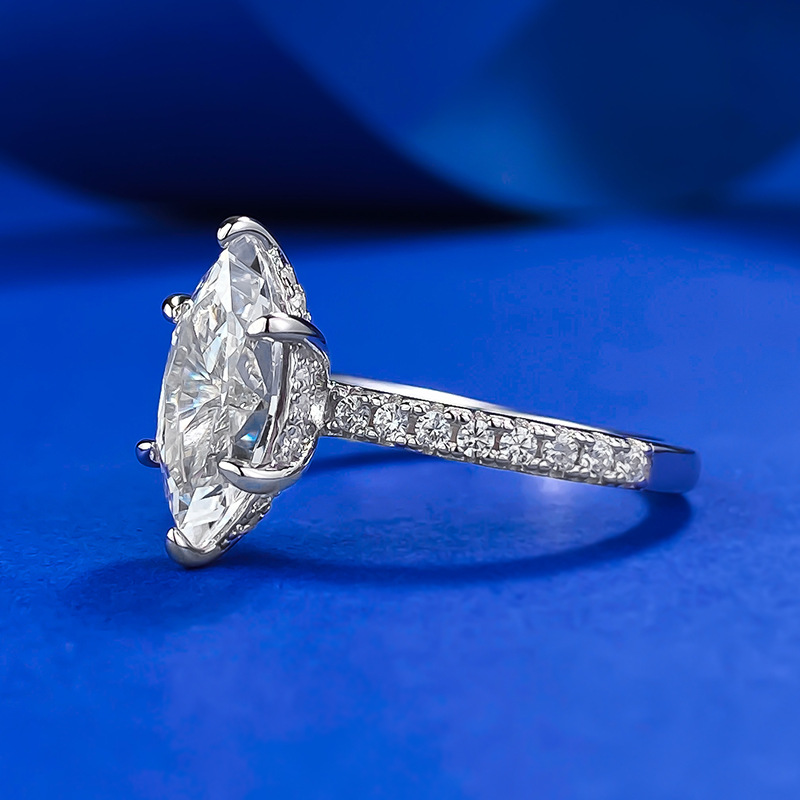
IGI Report Engagement Ring Checklist Before You Buy
An IGI report engagement ring checklist helps you compare lab-grown diamond rings before you commit. It turns a pretty photo into a set of facts: carat weight, color, clarity, measurements, origin, growth method, treatment notes, and the report number.
That paperwork matters. One ring may include a complete, verifiable grading report. Another may rely on vague wording such as "certified quality" or an in-house estimate. Both can look beautiful online, but only one gives you enough detail to compare value with confidence.
Use this IGI report engagement ring checklist during a store visit, a virtual appointment, or a late-night comparison session at home. The goal is not to make you a gemologist. It is to help you ask better questions Before You Buy.
Why an IGI Report Engagement Ring Checklist Matters
An engagement ring carries emotion, budget pressure, and plenty of tiny details. Lab-grown diamonds can offer a larger look for the price compared with many natural diamonds, but they still need clear documentation.
IGI, the International Gemological Institute, is one of the most common grading labs for lab-grown diamonds. Its reports usually identify whether a diamond is laboratory grown, and many reports list CVD or HPHT growth methods. Some also disclose post-growth treatments.
The Gemological Institute of America explains that cut affects a diamond's brightness, fire, and scintillation. That visual performance matters whether the diamond is natural or lab-grown. Two 2.00 carat ovals can face up very differently if their proportions, symmetry, or depth percentages differ.
Shoppers often focus first on carat weight, then later realize that measurements tell the real size story. A 2.00 carat oval measuring about 10.2 x 7.2 mm may look longer on the hand than one measuring 9.8 x 7.4 mm. Same carat weight, different look.
A practical IGI report engagement ring checklist helps you slow down just enough to avoid guesswork. It also gives you a shared language with your jeweler.
What to Confirm on an IGI Report
Start with the report number. It should appear on the grading document, match the retailer's diamond information, and be searchable through IGI's official report verification tool when available.
Next, check the basics: shape, carat weight, color grade, clarity grade, and measurements. If a listing says 1.80 carat radiant cut, E color, VS1 clarity, the IGI report should support those exact details.
Review the cut-related information after that. Round brilliant diamonds may receive a cut grade. Fancy shapes such as oval, emerald, pear, radiant, cushion, and marquise need closer review of table percentage, depth percentage, length-to-width ratio, polish, symmetry, and face-up appearance.
Color and clarity deserve attention, but the highest grades are not always the smartest buy. D, E, and F are colorless grades. G, H, I, and J sit in the near-colorless range. Many buyers are perfectly happy with a well-cut G or H diamond if it looks bright and clean in the setting.
Clarity works the same way. A VS2 or SI1 diamond may look eye-clean, while a VVS grade may cost more without changing what you see day to day. For the smartest tradeoff, compare the report with real images, videos, or an in-person viewing.
Also confirm the report date and whether the diamond is loose or already mounted. A recent report is helpful because it reflects the diamond as it was graded before setting. If the diamond has been worn, traded in, or reset, ask whether the jeweler has inspected it for chips, abrasions, or damage since the report was issued.
For lab-grown diamonds, pay close attention to wording around origin and treatments. An IGI report may state that the diamond is laboratory grown and may list a growth process such as CVD or HPHT. Some diamonds receive post-growth treatment to improve color. Treatment disclosure does not automatically make a diamond undesirable, but it should be reflected in the price and openly explained before purchase.
IGI Report Engagement Ring Checklist for Shoppers
Keep this IGI report engagement ring checklist open while you compare stones:
- Verify the IGI report number through IGI's report lookup when possible.
- Match the report number to the retailer's listing.
- Ask whether the laser inscription matches the report number.
- Confirm shape, carat weight, measurements, color, and clarity.
- Review cut grade for round diamonds.
- Check table, depth, polish, symmetry, and proportions for fancy shapes.
- Confirm the report states laboratory-grown origin clearly.
- Look for CVD or HPHT growth method details when listed.
- Read any treatment disclosures, including post-growth color treatment.
- Review fluorescence, girdle, culet, and inscription details.
- Ask whether the report belongs to the center stone being set.
- Check return, resizing, warranty, upgrade, and appraisal policies.
This IGI report engagement ring checklist also helps with budget control. You may decide that a G color, VS2 clarity diamond with excellent proportions looks better than a higher-color stone with weak symmetry. Or you may choose a slightly lower clarity grade so you can afford a larger oval or cushion cut.
StoneBridge Jewelry shoppers can start with our lab-grown diamond selection and compare shape, carat, color, clarity, and certification details. If you're ready to choose a finished style, browse our engagement ring collection and review the center stone information before checkout.
Report Number and Diamond Identity
The first job of an IGI report engagement ring checklist is to confirm identity. The report number should connect the document, the online listing, and the actual diamond.
Many lab-grown diamonds have the report number laser-inscribed on the girdle. A jeweler can view that inscription under magnification. If it matches the IGI report, you have stronger proof that the graded diamond is the diamond in your ring.
If you are buying online, ask whether the diamond will ship with a physical or digital copy of the report. Some retailers include the original report with the finished ring, while others provide a downloadable copy before the ring is delivered. Save that report with your receipt, appraisal, warranty paperwork, and insurance documents.
4Cs, Measurements, and Face-Up Size
The 4Cs give you a baseline, but measurements explain how the diamond wears. This is especially true for ovals, pears, radiants, emerald cuts, and cushions.
For example, a 1.50 carat round diamond and a 1.50 carat emerald cut will not look the same size. Their shapes distribute weight differently. That is why your IGI report engagement ring checklist should always include millimeter measurements, not just carat weight.
As a practical starting point, many buyers looking for value in lab-grown diamonds compare F-H color and VS1-SI1 clarity, then adjust based on the shape. Emerald and Asscher cuts often benefit from slightly higher clarity because their broad facets make inclusions easier to see. Radiant, cushion, oval, pear, and round brilliant cuts can hide small inclusions better because their facet patterns create more sparkle and contrast.
Length-to-width ratio also changes the look. Ovals around 1.35 to 1.50 often look balanced to many shoppers, while elongated radiants may fall around 1.30 to 1.45. Pear shapes can look elegant around 1.45 to 1.75, depending on personal preference. These are not strict rules, but they give you a useful comparison point when two diamonds have similar carat weights and prices.
Cut Quality and Visual Performance
Cut quality affects what most people notice first: sparkle, contrast, and brightness. For round diamonds, look closely at the cut grade. For fancy shapes, review proportions and ask for photos or video.
An oval may show a bow-tie effect. An emerald cut may reveal inclusions more easily because its facets are open and mirror-like. A cushion can look soft and romantic, but depth percentage can affect how large it appears from the top.
For round brilliant lab-grown diamonds, many shoppers prefer Excellent or Ideal cut grades when available, along with excellent polish and symmetry. For fancy shapes, there may be no single cut grade on the report, so the video becomes more important. Look for even brightness across the stone, lively movement, and a shape outline you actually like. A diamond that looks dim in the center, watery at the edges, or heavily shadowed may not be the best choice even if its color and clarity grades look strong.
Complete IGI Report vs. No Clear Report
A complete IGI report gives you independent grading details. A ring without clear documentation asks you to trust the seller's description with fewer facts.
Small accent diamonds may not need individual reports. A pavé band, for instance, often lists total carat weight and a quality range. The center stone is different. It usually carries most of the ring's value, so documentation matters more.
| Buying Point | Complete IGI Report | No Clear Report | Better Choice |
|---|---|---|---|
| Verification | Report number can be checked | May rely on in-house notes | Complete IGI report |
| 4Cs | Carat, color, clarity, and cut details are listed | Grades may be estimated | Complete IGI report |
| Origin | Lab-grown status is stated | Origin may be unclear | Complete IGI report |
| Treatments | Growth and treatment notes may appear | Treatment history may be missing | Complete IGI report |
| Value comparison | Easier to compare prices | Harder to judge fairness | Complete IGI report |
| Insurance records | Supports appraisal paperwork | May require extra documentation | Complete IGI report |
A missing report does not automatically mean a diamond is poor quality. It does mean you accept more uncertainty. For a meaningful center stone, that risk often outweighs a small discount.
The FTC's jewelry guidance requires sellers to avoid misleading buyers about diamond origin. Clear grading paperwork supports that transparency. Your IGI report engagement ring checklist gives you a simple way to check what the seller claims.
Budget, Price Ranges, and Smart Tradeoffs
Prices for lab-grown diamond engagement rings vary by diamond size, quality, setting style, metal, and customization. A simple solitaire with a 1.00 to 1.50 carat lab-grown center stone may sit in a very different price range than a 3.00 carat oval in a platinum hidden halo setting. The IGI report helps you understand whether the price is tied to visible beauty, paper grades, or design complexity.
For many shoppers, the most useful budget move is to set a total ring budget first, then divide it between the center stone and setting. A plain 14k gold solitaire generally leaves more of the budget for the diamond. A three-stone ring, pavé band, cathedral setting, or custom platinum design adds metal and accent diamond cost, which may mean choosing a slightly smaller or lower-graded center stone.
Expect larger jumps in price at popular carat marks such as 1.00, 1.50, 2.00, and 3.00 carats. Looking just under those thresholds can sometimes improve value. For example, a 1.90 carat diamond with attractive measurements may look nearly identical to a 2.00 carat diamond on the hand, but the price may be more comfortable. The report measurements will tell you whether the visual size is still strong.
Do not pay only for a grade you cannot see. A D color, VVS1 clarity lab-grown diamond may be beautiful, but an F or G color, VS1 or VS2 diamond may look equally impressive in normal wear. Spend more where it changes the ring in real life: cut quality, attractive proportions, secure craftsmanship, and a setting that fits the wearer's lifestyle.
Metal Choices and Setting Tradeoffs
The diamond report tells you about the center stone, but the setting determines how the ring wears every day. Metal choice affects color, durability, maintenance, and price. Your IGI report engagement ring checklist should therefore include a quick review of the mounting, not just the diamond.
14k gold is popular because it balances durability, color, and cost. 18k gold has a richer gold content and a slightly softer feel, which some buyers prefer for luxury pieces. White gold is usually rhodium plated for a bright white finish and may need replating over time. Yellow gold can make near-colorless diamonds look warm in a flattering way. Rose gold adds a romantic tone but may not be ideal for every skin sensitivity because it contains copper. Platinum is dense, naturally white, and durable, but it often costs more and can develop a soft patina with wear.
Setting style matters just as much. A solitaire keeps the focus on the center stone and is usually easier to clean. A hidden halo adds sparkle from the side without changing the top view too dramatically. Pavé bands create extra brilliance but require more maintenance because tiny stones and prongs can wear over time. Bezel settings protect the diamond edge well, especially for active wearers, but they can make the diamond appear slightly more framed and less airy. High-prong settings can maximize visibility, while low-profile settings may feel more comfortable and snag less.
Match the setting to the diamond shape. Pear and marquise diamonds usually need protected tips. Emerald cuts look refined in clean solitaires, three-stone settings, or step-cut side stone designs. Ovals and cushions work well in solitaires, halos, and pavé bands, but prong placement should be even and secure. If the diamond has a very thin girdle, ask whether the setting style gives enough protection for daily wear.
Sizing, Comfort, and Wearability Checks
Ring size is easy to underestimate during the excitement of choosing a diamond. A ring that is too loose can spin, especially with a large center stone. A ring that is too tight may be uncomfortable in warm weather or difficult to remove. If you are guessing a size for a surprise proposal, ask about the resizing policy before checkout.
Band width affects fit. A thin 1.6 mm band may feel delicate and make the diamond look larger, but it can bend more easily and may not be ideal for every lifestyle. A 1.8 to 2.2 mm band is a common balance for many engagement rings. Wider bands can feel tighter, so the wearer may need a slightly different size than they use for a narrow fashion ring.
Also think about Wedding Band Pairing. A low basket or wide gallery may prevent a straight wedding band from sitting flush against the engagement ring. Some buyers love that small gap; others prefer a flush fit or a curved wedding band. If a flush wedding stack matters, ask to see the ring from the side before ordering.
Shipping, Returns, Appraisals, and Insurance
Before You Buy, confirm how the ring ships and what happens if it is not right. Engagement rings should ship insured, securely packaged, and with signature requirements. If the ring is made to order, ask for the production timeline and whether resizing or customization changes the return policy.
Read the return window carefully. Some retailers allow returns on standard engagement rings but exclude custom, engraved, resized, or special-order pieces. If you are choosing between two diamond shapes or uncertain about finger size, a clear return or exchange policy can prevent stress later.
An appraisal is different from an IGI report. The IGI report grades the diamond. An appraisal usually describes the complete ring, including the center stone, accent stones, metal, setting, and estimated replacement value for insurance. Many insurers will ask for an appraisal, sales receipt, and grading report. Keep digital and printed copies in a safe place.
Ask about warranty coverage as well. A strong warranty may include manufacturing defects, but it may not cover normal wear, impact damage, lost accent stones, or neglect. Regular prong checks are still important, especially for pavé, halo, and high-set rings.
Common Mistakes to Avoid
One common mistake is comparing carat weight without checking measurements. A deeper diamond can carry weight in the bottom, making it look smaller from the top. Another mistake is chasing the highest color and clarity grades while overlooking cut, symmetry, and shape appeal.
Some shoppers assume every "certified" diamond comes with the same level of documentation. It does not. Ask which lab issued the report, whether the report number is verifiable, and whether the diamond is laser-inscribed. Avoid vague claims that cannot be matched to a specific report.
Another mistake is choosing a fragile setting for an active lifestyle. A very thin pavé band may look beautiful in photos but require more care than a sturdier solitaire or bezel. If the wearer works with their hands, travels often, lifts weights, or prefers low-maintenance jewelry, prioritize secure prongs, practical height, and a band that can handle daily wear.
Finally, do not skip the final inspection when the ring arrives. Check that the report number, appraisal details, metal stamp, ring size, and order confirmation all match. Look at the ring in daylight and indoor lighting. If anything seems inconsistent, contact the jeweler before wearing the ring extensively.
Who Needs an IGI Report Engagement Ring Checklist Most
First-time ring buyers benefit from a checklist because it keeps the process calm. You do not have to memorize every diamond term. You only need to know what to verify.
Value-focused buyers should compare balanced grades. A well-cut G-H color, VS2-SI1 lab-grown diamond can be a smart choice if it faces up bright and clean.
Size-focused buyers should compare measurements before carat weight. A longer oval, pear, or marquise may look larger on the finger than a deeper stone with the same weight.
Brilliance-focused buyers should prioritize cut, polish, symmetry, and proportions. A diamond with better light return can look more impressive than a larger stone with dull performance.
Ethical-luxury buyers should confirm lab-grown origin and review growth method or treatment disclosures. The IGI report engagement ring checklist keeps those details visible instead of buried in fine print.
Expert Buying Advice Before Checkout
Before checkout, run through the IGI report engagement ring checklist one final time. Match the report to the listing. Confirm the 4Cs and measurements. Ask about the inscription. Review the store policies.
Our customers often feel more confident after comparing two or three certified stones side by side. The differences become easier to see. One diamond may have better symmetry. Another may have a more flattering length-to-width ratio. A third may offer the best balance of price and beauty.
StoneBridge Jewelry recommends a complete, verifiable report for the center stone of a lab-grown diamond engagement ring. The ring should move you emotionally, but it should also make sense on paper. You deserve both.
Ready to compare certified options? Shop StoneBridge engagement rings, explore lab-grown diamonds, or use our ring builder to pair a certified center stone with the right setting. Need a second opinion? Contact our jewelry experts, and we'll help you read the report Before You Buy.
FAQ
What should I check on an IGI report before buying an engagement ring?
Check the report number, shape, carat weight, measurements, color, clarity, cut details, polish, symmetry, fluorescence, lab-grown origin, and treatment notes. Then compare those details with the retailer's product page. If the diamond has a laser inscription, ask the jeweler to confirm that it matches the report number. This IGI report engagement ring checklist helps you verify the center stone before purchase.
Is an IGI report good for a lab-grown diamond engagement ring?
Yes. IGI is widely used for lab-grown diamond grading, especially for engagement ring center stones. A verifiable report helps confirm quality, origin, and identity. Use the report with photos, videos, and jeweler guidance so you can judge both the paperwork and the diamond's appearance.
How do I verify an IGI report number for an engagement ring?
Go to IGI's official report verification tool and enter the report number shown on the document. Compare the online record with the engagement ring listing, including shape, carat weight, color, clarity, and measurements. If the stone has a girdle inscription, ask the jeweler to view it under magnification. The number should match the same IGI report.
Should I buy an engagement ring without an IGI report?
For a lab-grown diamond center stone, a complete independent grading report is the safer choice. Without one, it is harder to confirm origin, treatments, measurements, and fair value. Limited documentation may be fine for small accent stones or lower-cost fashion jewelry. For the main diamond in an engagement ring, clear certification reduces risk.
Does every diamond in an engagement ring need an IGI report?
Usually, only the center stone needs a full grading report. Small accent diamonds are often described by total carat weight and a color or clarity range. The retailer should still disclose those accent stone details clearly. For larger side stones, ask whether individual reports are available or useful.
What diamond specs offer good value for a lab-grown engagement ring?
Many buyers find strong value in F-H color and VS1-SI1 clarity, depending on the shape and how clean the diamond looks in photos or in person. Prioritize excellent visual performance, attractive measurements, and a secure setting before paying extra for grades that do not change the everyday appearance of the ring.
What should I do after the engagement ring arrives?
Check the ring against your order confirmation, IGI report, receipt, and appraisal. Confirm the ring size, metal type, center stone details, and any engraving. Store the report safely, arrange insurance if needed, and schedule routine prong checks to keep the diamond secure over time.
Ready to Find Your Perfect Diamond?
Explore our collection of certified lab-grown diamonds
Shop Diamonds