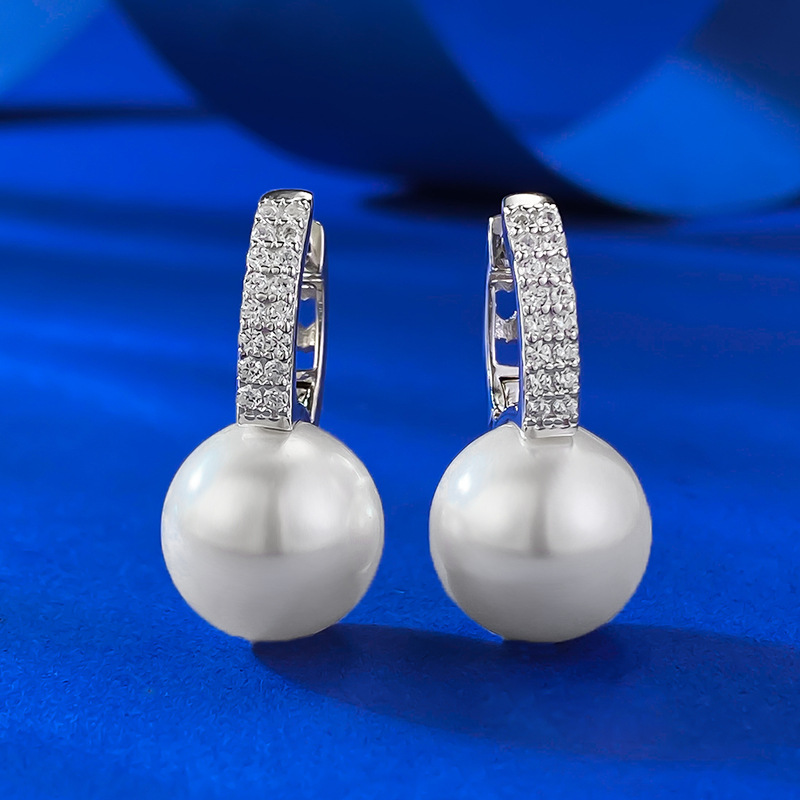
Buy Certified Diamond Hoop Earrings With Confidence
If you want to buy certified Diamond Hoop Earrings, start with the details you can verify: diamond quality, fit, clasp security, metal, and seller support. A great pair should feel easy to wear, not just beautiful in a photo.
Diamond hoops sit between diamond studs and dressier drop earrings. They bring shape, light, and movement without feeling fussy, which makes them a smart choice for daily wear, milestone gifts, bridal looks, and evenings out.
At StoneBridge Jewelry, our certified lab-grown Diamond Hoop Earrings are made for buyers who want real diamond sparkle with clear product information. You can compare total carat weight, metal, size, setting style, and quality notes before checkout.
Certification matters because Online Jewelry Shopping should never feel like guesswork. Documentation helps you understand what you're buying, why it costs what it does, and how the pair compares with similar diamond earrings.
Why Buy Certified Diamond Hoop Earrings Online
Many shoppers choose to buy certified Diamond Hoop Earrings online because they can compare more styles, prices, and specifications in one place. The key is choosing a retailer that gives you enough information to make a confident decision.
A strong listing should show the total carat weight, diamond origin, metal type, setting style, closure type, and quality range. For lab-grown diamond jewelry, reports or quality documentation may reference respected grading standards from organizations such as GIA or IGI.
GIA, the Gemological Institute of America, introduced the 4Cs grading system in the 1950s. Those 4Cs are cut, color, clarity, and carat weight. IGI is also widely used for lab-grown diamond grading and origin documentation.
StoneBridge Jewelry focuses on lab-grown diamonds because they offer the same chemical, optical, and physical properties as mined diamonds. They can also deliver strong size and quality value. If you'd like to compare loose diamond options, visit our lab-grown diamond collection.
Online shopping also makes it easier to compare the details that are difficult to judge in a display case. Two pairs may look similar in a store, but one may have heavier gold, a better hinge, a tighter color range, or more diamonds set along the visible inner curve. When those details are listed clearly, you can choose based on substance rather than lighting or sales pressure.
Before ordering, review every product image and specification together. Front-view photos show the overall look, side-view photos show thickness and profile, and on-ear photos help you estimate scale. If a listing includes a millimeter measurement, use it; if it only says “small” or “large,” ask for the diameter before purchasing.
What Certification Tells You
Certification or quality documentation gives structure to the buying process. It can confirm or describe the diamond origin, total carat weight, color range, clarity range, and grading standards used.
For hoop earrings, not every small diamond will always have an individual report. That's normal. Many fine jewelry pieces use matched diamonds with documented quality ranges instead.
The best approach is simple: look for clear, specific information. Vague wording such as “high quality diamonds” tells you less than a listed color range, clarity range, total carat weight, and metal purity.
For example, a useful description might state that a pair contains lab-grown diamonds totaling 1.00 carat weight, set in 14k white gold, with diamonds in an F-G color and VS clarity range. That gives you a practical comparison point. A listing that only says “premium diamonds” leaves too much open to interpretation.
Color and clarity ranges are especially common in Diamond Hoop Earrings because the pair may contain many small matched stones. With small melee diamonds, exact individual grades are less important than overall consistency. You want the diamonds to face up bright, appear evenly matched from stone to stone, and avoid visible dark or cloudy areas.
How Diamond Hoops Compare With Other Earrings
Diamond studs are quiet and classic. Huggie earrings sit close to the lobe and work well for simple daily wear. Drop earrings and dangle earrings add length and movement.
Diamond hoops frame the face, catch light from several angles, and still feel wearable with a blazer, sweater, dress, or bridal hairstyle.
Many customers who already own diamond studs look at hoops as their next upgrade. They want more presence without choosing earrings that feel too formal for everyday use.
Hoops also solve a styling problem that studs sometimes do not. Studs sparkle mainly from the front, while hoops create a line of light that can be seen from the side and at a slight angle. That makes them flattering in conversation, in photos, and at events where hair may move around the face.
If you are choosing a gift, diamond hoops can feel more personal than studs without requiring the boldness of long earrings. They are polished enough for anniversaries and birthdays, but practical enough that the recipient can wear them often.
How to Buy Certified Diamond Hoop Earrings That Fit Your Life
Before You Buy certified diamond hoop earrings, think about how you'll wear them. Will they be for workdays, travel, weddings, or special dinners? Your answer should guide the size, weight, clasp, and metal choice.
Small hoops and huggies usually feel best for frequent wear. Medium hoops offer the most flexible day-to-night look. Larger hoops create more impact, though they may feel heavier depending on the metal and diamond coverage.
Total carat weight can be misleading if you don't check the hoop size. One carat spread across small huggies can look dense and bright. The same total weight across larger hoops may look lighter because the diamonds cover more space.
Also pay attention to whether the listed carat weight is for the pair or for each earring. Most earring listings use total carat weight for both earrings combined. That means a 1.00 carat total weight pair usually contains about 0.50 carat of diamonds in each hoop. This is standard, but it is worth confirming so expectations are clear.
Think about your normal routine as well. If you wear headphones, take calls all day, commute, or change clothes often, a lower-profile huggie or small hoop may be easier. If the earrings are mainly for dinners, weddings, or dress occasions, you may prefer a larger diameter or inside-outside diamond layout.
Diamond Quality and Lab-Grown Value
Lab-grown diamonds are real diamonds. The Federal Trade Commission states that lab-grown diamonds must be described in a way that clearly identifies their origin, but they share the same essential diamond properties as mined diamonds.
Industry price trackers have often shown lab-grown diamonds priced 60% to 80% below comparable mined diamonds, especially in larger sizes. Prices move over time, so don't buy for resale hopes. Buy for beauty, value, and wearability.
For earrings, cut and matching often matter more than tiny clarity differences. People see diamond hoops from conversational distance. Bright, well-matched diamonds usually make the strongest impression.
In practical terms, that means you usually do not need to chase flawless clarity for diamond hoops. VS or SI clarity diamonds can look excellent in earrings when they are well cut, clean to the eye, and matched properly. Color also has some flexibility. Near-colorless diamonds can face up beautifully in white gold, while slightly warmer diamonds may look harmonious in yellow or rose gold.
Cut quality controls how much light returns to the eye. In hoops, the diamonds are often small round brilliants, so consistency is important. A row of lively stones will look cleaner and more luxurious than a row with mixed sparkle, even if the carat weight is the same.
Matching is part of quality. The diamonds should look similar in size, brightness, and tone across both earrings. If one hoop appears brighter or whiter than the other, the pair may not feel balanced when worn.
Metal, Settings, and Clasp Security
Metal changes the look and feel of your earrings. 14k gold is a popular daily-wear choice because it's durable. 18k gold has richer gold content. Platinum feels dense and premium, though it usually costs more.
White gold and platinum give a crisp, bright look. Yellow gold feels warm and classic. Rose gold softens the design and pairs well with romantic styling.
Setting style also matters. Pavé settings create a glittering surface. Shared-prong settings let in more light. Channel settings protect diamond edges with smooth metal walls. Inside-outside hoops place diamonds along the front outer curve and the visible inner back curve.
A secure clasp is non-negotiable. Hinged backs, snap closures, and locking clasps should feel firm and aligned. If you plan to buy certified diamond hoop earrings for travel or daily wear, clasp quality matters as much as sparkle.
Each setting has a tradeoff. Shared-prong hoops often show more diamond and less metal, which can create strong brilliance. The tradeoff is that prongs should be checked periodically because each small point of metal helps hold stones in place. Channel-set hoops have a smoother feel and can be more protective, but they may show slightly less light return from the sides. Pavé hoops look delicate and glittery, yet they require careful cleaning because lotion and soap can collect around small beads of metal.
Inside-outside hoops are popular because they maximize visible sparkle. When worn, the front outside of the hoop and the back inside of the hoop face outward, so diamonds appear along the parts people actually see. They are an excellent choice for dressier wear, though they can cost more because they use additional stones and require precise setting work.
For metal purity, 14k gold contains more alloy than 18k gold, which usually makes it a bit harder and more resistant to bending. 18k gold has a richer color in yellow and rose tones and a luxurious feel, but it may show wear faster in certain designs. Platinum is naturally white and durable, but its density can make larger earrings feel heavier.
Certified Diamond Hoop Earrings Buying Checklist
Use a short checklist Before You Buy certified diamond hoop earrings. It keeps the decision practical and helps you compare pairs without getting distracted by one pretty photo.
- Check the total carat weight across the pair.
- Confirm lab-grown or mined diamond origin.
- Review color, clarity, cut notes, or quality documentation.
- Compare 14k gold, 18k gold, and platinum options.
- Match hoop diameter to your daily style.
- Look for a smooth, secure clasp.
- Read shipping, return, warranty, and service details.
You can also compare diamond hoops with other jewelry staples while you narrow your choice. Browse our fine jewelry collection if you're building a coordinated look or choosing a gift.
When comparing two pairs, put the specifications side by side. A pair with slightly lower carat weight may be the better choice if it has a stronger clasp, a comfortable diameter, better-matched diamonds, or a metal tone the wearer will use more often. The best earrings are not always the largest; they are the ones that get worn.
Choosing the Right Size
Huggie earrings usually sit closest to the ear. They're great for second piercings, simple outfits, and buyers who want sparkle without swing.
Small to medium diamond hoops suit most wardrobes. They work with office clothes, denim, evening dresses, and layered necklaces.
Large diamond hoops make more of a statement. They suit events, confident styling, and recipients who already enjoy visible jewelry.
Hair length can affect your choice. Short hair and updos show smaller hoops clearly. Long hair may need a slightly larger hoop if you want the diamonds to stand out.
As a general guide, huggies often fall around 10mm to 15mm in diameter, small hoops may be around 16mm to 22mm, medium hoops often sit around 23mm to 35mm, and larger hoops may be 36mm or more. Exact fit depends on lobe shape and piercing placement. A 14mm huggie can sit close on one person and leave more space on another.
If you are gifting, look at the recipient's current earrings. Someone who wears tiny studs every day may appreciate a refined huggie or small hoop. Someone who already wears bold gold hoops may prefer a larger diamond style with more diameter and presence.
Comfort and Everyday Wear
Comfort depends on more than diameter. Weight distribution, post thickness, hinge placement, and earlobe sensitivity all affect how the earrings feel after several hours.
If your ears are sensitive, review the metal and earring weight carefully. A lighter 14k gold pair may feel better for daily use than a larger platinum style.
Ask yourself one practical question: would I wear these on a full day, from morning coffee to dinner? If the answer is yes, you're closer to the right pair.
Post shape matters, too. A well-finished post should pass through the ear smoothly and close without pinching. The hinge should move cleanly but should not feel loose. If the earring clicks shut, that click should feel decisive rather than soft or uncertain.
For everyday wear, avoid choosing a pair that pulls the lobe downward. Some people enjoy a substantial earring, but visible pulling can become uncomfortable and may stretch piercings over time. If you like a larger look, consider a design with a hollow or balanced gold structure, or choose a medium diameter with more diamond density instead of a very large hoop.
Price and Value: What You're Really Paying For
When you buy certified diamond hoop earrings, price reflects more than diamond size. You're paying for total carat weight, diamond quality, metal, setting labor, clasp construction, documentation, and retailer support.
A lower price isn't always a better value. If the clasp feels weak, the metal is unclear, or the diamond details are thin, the savings may not be worth it.
A strong value purchase answers three questions. What exactly am I buying? How is quality documented? Who helps me if I need sizing advice, service, or a return?
StoneBridge Jewelry designs its lab-grown diamond hoop earrings for buyers who want clear answers. You get real diamond brilliance, refined styling, and practical details before checkout.
Price ranges vary by market, metal, and diamond quality, but there are useful expectations. Petite lab-grown diamond huggies may start in the several-hundred-dollar range. Small to medium diamond hoops often fall from under $1,000 to several thousand dollars depending on carat weight and metal. Larger inside-outside hoops, higher total carat weights, platinum settings, and premium matching can move the price higher.
With mined diamonds, comparable hoop earrings often cost more at the same size and quality level. That difference is one reason many buyers choose lab-grown diamond hoops when they want a larger look, a matched pair, or a higher color and clarity range without pushing the budget as far.
Be careful with unusually low prices. If a pair appears far cheaper than similar styles, check for plated metal, very low diamond quality, unclear origin, lightweight construction, or a final-sale policy. A bargain loses appeal quickly if the earrings arrive smaller than expected, feel flimsy, or cannot be returned.
Budget Tips That Help
Set your budget before browsing. Then decide which feature matters most: size, diamond brightness, metal, or everyday comfort.
Choose smaller hoops if you want higher diamond density at a lower total price. Choose medium hoops if you want the most versatile look. Choose larger hoops if impact matters more than subtlety.
If you're shopping for a proposal-related gift or a Bridal Jewelry Set, you may also want to explore our engagement rings or design options through the ring builder. Matching metal tones can make the final look feel more intentional.
Another way to manage budget is to Choose the Right metal for the purpose. 14k gold is often the most practical daily-wear choice and may keep the cost lower than platinum. If the recipient strongly prefers yellow gold, you may not need the highest color grade because the warm metal can make near-colorless diamonds look beautifully balanced.
Do not spend only for a number on the tag. A 2.00 carat total weight pair that feels heavy or too large may get less wear than a 1.00 carat total weight pair with excellent proportions. Value comes from the combination of beauty, comfort, durability, and how often the earrings leave the jewelry box.
Shipping, Returns, and Service Details to Check
Shipping and return policies are part of the purchase, especially when buying fine jewelry online. Look for insured shipping, tracking, secure packaging, and clear delivery requirements. High-value jewelry often requires a signature at delivery, which protects both the buyer and the seller.
Review the return window before checkout. Confirm whether the earrings must be unworn, whether tags or packaging must remain intact, and whether custom or special-order pieces are returnable. If you are buying for a birthday, anniversary, or wedding, order early enough to inspect the earrings before the event.
Ask what support is available after purchase. Useful service details include cleaning guidance, repair options, clasp inspections, warranty coverage, and help if a diamond ever loosens. Diamond hoops have moving parts and small settings, so long-term service matters.
If the earrings are a gift, check whether gift packaging, discreet shipping, or a gift receipt is available. A thoughtful presentation is not a substitute for quality, but it can make the moment feel polished.
Care Tips After You Buy Certified Diamond Hoop Earrings
Good care keeps diamond hoops bright. Clean them with warm water, mild dish soap, and a soft brush. Rinse well and dry with a lint-free cloth.
Avoid bleach, chlorine, abrasive cleaners, and harsh chemicals. They can damage metal finishes or weaken delicate settings over time.
Store diamond hoops separately so they don't scratch other jewelry. Check the clasp before each wear. If you hear a weak click or feel looseness, have a jeweler inspect the closure.
Professional inspections help, especially for earrings you wear often. A jeweler can check hinges, posts, prongs, and stone security in a few minutes.
Clean behind the diamonds, not only across the front. Earrings collect hair products, sunscreen, makeup, and skin oils, especially around the hinge and inner curve. A soft baby toothbrush can reach many small areas, but use gentle pressure around pavé or shared-prong settings.
Remove diamond hoops before swimming, sleeping, exercising, or applying hairspray. Chlorine can affect gold alloys, sweat can leave residue, and sleeping in hoops can stress hinges or posts. Put earrings on after lotions, fragrance, and styling products have dried.
For travel, use a structured jewelry case rather than tossing hoops into a pouch with chains or rings. Fasten the clasps before storing them so posts are protected and the earrings do not tangle with other pieces.
Common Mistakes to Avoid
One common mistake is buying by carat weight alone. Carat weight tells you how much diamond material is in the pair, but it does not tell you how large the hoops are, how bright the diamonds look, or how comfortable the earrings feel.
Another mistake is ignoring the clasp. A beautiful pair with an unreliable closure is frustrating and risky. The clasp should line up correctly, close securely, and feel appropriate for the weight of the earring.
Buyers also sometimes overlook scale. Product photos can make small earrings look dramatic when they are photographed close up. Always check millimeter measurements and, when possible, compare them with a pair you already own.
Do not assume every “diamond” hoop is solid gold or set with natural or lab-grown diamonds. Some lower-priced earrings use diamond accents, composite stones, plated metals, or diamond simulants. Those may be perfectly fine for fashion jewelry, but they are not the same purchase as certified diamond hoop earrings.
Finally, avoid waiting until the last minute for a major gift. Fine jewelry may require signature delivery, sizing questions, inspection time, or an exchange if the scale is not right. Planning ahead gives you room to make a thoughtful choice.
FAQ: Buying Certified Diamond Hoop Earrings
Where can I buy certified diamond hoop earrings online?
You can buy certified diamond hoop earrings from a fine jewelry retailer that lists diamond origin, carat weight, metal, setting style, and quality documentation. StoneBridge Jewelry offers certified lab-grown diamond hoop earrings with secure checkout and clear product details. Compare size, clasp style, and metal before ordering.
Are lab-grown diamond hoop earrings real diamonds?
Yes. Lab-grown diamonds are real diamonds with the same chemical, optical, and physical properties as mined diamonds. The difference is origin, not sparkle. Certification or quality documentation helps confirm the details.
What size diamond hoop earrings should I choose for daily wear?
Most buyers do best with huggie, small, or medium hoops for daily wear. They offer sparkle without feeling heavy or too dressy. If you wear diamond studs now, small hoops are an easy next step.
Are certified diamond hoops worth the price?
They can be worth it when the pair combines verified diamond details, solid metal, secure clasps, and a comfortable fit. Don't judge value by carat weight alone. Build quality and documentation matter too.
What is the best metal for diamond hoop earrings?
14k gold is a strong everyday option because it balances durability and beauty. 18k gold gives a richer look, while platinum offers density and prestige. Choose white, yellow, or rose tones based on the jewelry you already wear most.
What diamond color and clarity are best for hoop earrings?
For diamond hoops, many buyers do well with near-colorless diamonds and eye-clean clarity. F-G or G-H color ranges are popular in white metal, while slightly warmer ranges can look beautiful in yellow or rose gold. VS clarity offers a refined choice, but well-matched eye-clean SI diamonds can also look bright in small hoop settings.
Should I choose inside-outside or front-facing diamond hoops?
Choose inside-outside hoops if you want maximum visible sparkle from the front and side. Choose front-facing or outside-only hoops if you prefer a lighter feel, a lower price, or a more understated daily look. The best choice depends on budget, comfort, and how often you plan to wear them.
Shop Certified Diamond Hoop Earrings at StoneBridge Jewelry
Ready to buy certified diamond hoop earrings with confidence? Start by comparing the details that affect real-life wear: hoop size, total carat weight, diamond quality, metal tone, setting style, and clasp security.
StoneBridge Jewelry makes the process clear. Our certified lab-grown diamond hoop earrings are designed for brilliance, comfort, and lasting style.
Shop these direct paths to find your fit:
- Shop certified diamond hoop earrings
- Shop diamond huggie earrings
- Shop diamond stud earrings
- Shop fine jewelry gifts
Popular sizes and metals can sell quickly, especially around gifting seasons. Choose the pair that matches your style, review the specs, and complete your purchase through secure checkout.
Ready to Find Your Perfect Diamond?
Explore our collection of certified lab-grown diamonds
Shop Diamonds