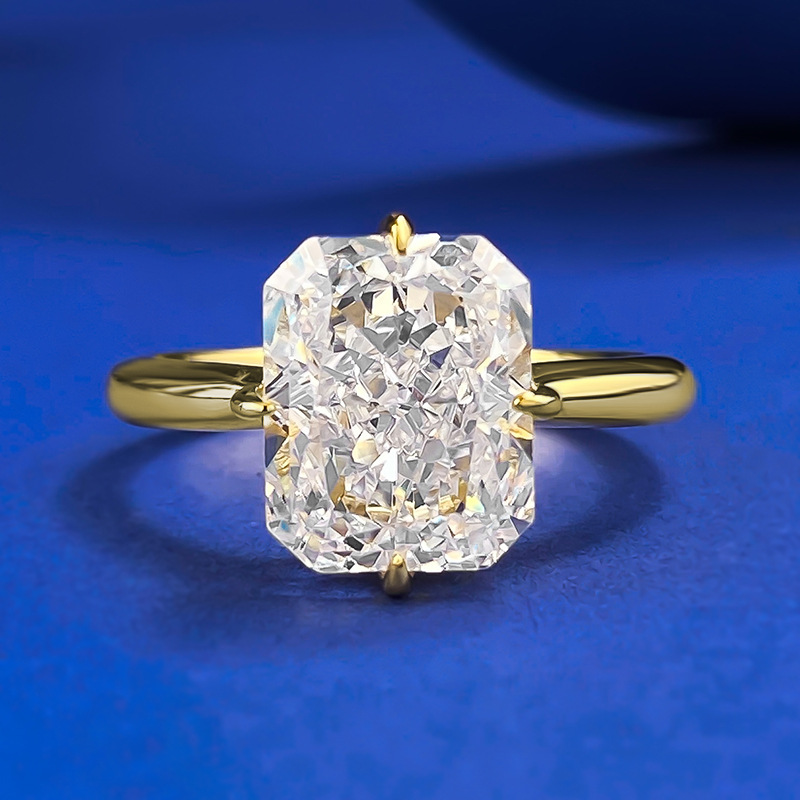
Halo vs Prong Setting: How to Choose the Right Engagement Ring Look
Choosing between a halo vs Prong Setting changes more than the look of an engagement ring. It affects how large the center stone appears, how much sparkle you see, how much maintenance the ring needs, and how it feels on your hand every day. If you're comparing a halo vs prong setting for an engagement ring, the best choice depends on your diamond shape, budget, lifestyle, and the style you want to wear for years.
A halo setting can make a center stone look larger and brighter by surrounding it with smaller diamonds. A prong setting keeps the spotlight on the center diamond with a clean, classic frame that maximizes light return. Both can be beautiful, secure, and wearable when crafted well. The real question is which one fits your priorities.
Halo vs Prong Setting: What You Need to Know
A halo vs prong setting comparison makes sense because these two styles solve different shopper problems. One amplifies presence. The other showcases the diamond itself with as little visual distraction as possible.
A halo setting surrounds the center stone with a ring of smaller accent diamonds or gemstones. That frame expands the ring's visual footprint and adds sparkle from multiple angles. A prong setting uses metal claws, usually four or six, to hold the center stone in place while leaving more of it exposed to light.
From a buyer's point of view, the comparison usually comes down to five things: appearance, security, daily comfort, upkeep, and value. A halo vs prong setting choice also depends on how the diamond shape interacts with the mounting. A round diamond, oval diamond, pear shape, or cushion cut can each look different in these two settings.
Jewelers often look at stone exposure, prong count, halo profile, and the thickness of the gallery when evaluating durability. Common GIA guidance on ring design points to settings that protect the girdle and keep the stone properly seated as better support for long-term wear. That matters whether you choose halo or prong.
A practical way to think about halo vs prong setting is simple:
- Choose halo if you want more sparkle and a bigger look.
- Choose prong if you want a timeless, open, diamond-first appearance.
- Choose based on how often you'll wear the ring and how much maintenance you want.
If you're also comparing stone options, you can shop our lab-grown diamonds or explore our engagement rings to see how different settings change the final look.
What Is a Halo Setting?
A halo setting places a circle, oval, or shaped frame of small stones around the center diamond. That frame can be single-row, double-row, hidden, or vintage-inspired. The basic idea stays the same: the smaller stones create a larger visual outline around the center gem.
In a halo vs prong setting comparison, halo usually wins on perceived size. The surrounding diamonds reflect light back toward the eye, which can make the center stone appear more substantial than its carat weight alone suggests. That is one reason halo engagement rings remain popular with shoppers who want maximum impact without moving to a much larger center diamond.
Why shoppers like halo settings
- They make the center stone look bigger.
- They add extra sparkle from side stones.
- They can flatter many diamond shapes.
- They work well in modern, vintage, and romantic designs.
- They can help a smaller center stone feel more luxurious.
A halo setting also gives designers more room to play with proportion. A round center stone in a round halo looks soft and balanced. An oval halo can lengthen the finger visually. A cushion halo can create a bold, elegant frame. This versatility is part of why halo vs prong setting is such a common shopping decision.
There are trade-offs. A halo adds more small stones, which means more prongs or bead settings to inspect and clean. The design can trap lotion, soap, and daily grime more easily than a simple prong setting. Because the halo has more visual detail, it can also dominate the center stone if the proportions are too heavy.
Jewelers usually recommend checking halo settings carefully at the edges where accent stones meet the outer frame. A lower-profile halo may sit closer to the finger and feel more practical, while a high-profile halo can offer more drama but may catch more often. If you're comparing halo vs prong setting for everyday wear, this detail matters.
Common halo setting styles
- Classic halo: A single ring of stones around the center diamond.
- Double halo: Two rows of accent stones for a larger, more dramatic outline.
- Hidden halo: Stones sit just beneath the center stone, adding sparkle from side angles.
- Vintage halo: Milgrain, filigree, or shaped borders create an antique feel.
A halo setting often pairs well with shoppers who want visual richness. It can also be a smart choice when paired with browse our jewelry collection styles that lean toward fashion-forward or bridal glamour.
What Is a Prong Setting?
A prong setting is the classic ring construction most people picture first. Small metal claws hold the center diamond at several points, usually four or six. The open structure exposes more of the stone, which lets more light enter and exit the diamond.
In a halo vs prong setting decision, prong is the cleaner, more traditional look. It puts the center stone front and center without a surrounding frame of accent diamonds. The design feels airy, minimal, and easy to pair with almost any wedding band.
Why shoppers like prong settings
- They maximize light exposure.
- They keep the design timeless and versatile.
- They highlight the center diamond's cut.
- They usually look less busy than halo settings.
- They work across many diamond shapes and metal types.
Industry experts often favor prong settings for buyers who want to see the actual diamond as clearly as possible. Since the stone is less visually framed, its cut quality, brilliance, and symmetry become the main event. That makes prong especially appealing if the center stone is well cut and you want to show it off.
But prong settings have their own considerations. The exposed edges can be more vulnerable to bumps, depending on prong count, prong thickness, and how high the setting sits above the finger. Prongs can also catch on knitwear, hair, or gloves if they are too tall or not finished smoothly. A well-made prong setting reduces that risk, but it doesn't eliminate it.
Common prong setting styles
- Four-prong: A simple, open look that shows off more of the stone.
- Six-prong: Added security and a slightly rounder outline.
- V-prong: Often used to protect pointed tips on pear, marquise, and princess cuts.
- Cathedral prong: Elevated shoulders add structure and elegance.
For buyers comparing halo vs prong setting, prong is often the better fit if you want an understated ring that never feels overdesigned. It also works well if you like to stack bands or change band styles over time.
Halo vs Prong Setting: Side-by-Side Comparison
Here is the most practical way to compare halo vs prong setting for engagement rings.
| Feature | Halo Setting | Prong Setting |
|---|---|---|
| Visual size | Makes the center stone appear larger | Focuses on the actual center stone |
| Sparkle | High overall sparkle from center and accent stones | Strong brilliance from the center diamond |
| Security | Secure when well-made, but includes more small stones | Secure with quality prongs, though the center stone is more exposed |
| Maintenance | Needs more frequent cleaning and inspection | Easier to clean and inspect |
| Style | Glamorous, romantic, decorative | Classic, clean, timeless |
| Best for | Buyers who want impact and size | Buyers who want simplicity and versatility |
| Budget impact | Can add cost through extra stones and labor | Often simpler to build and maintain |
Sparkle and light performance
Sparkle is one of the biggest differences in the halo vs prong setting debate. A halo setting adds extra light reflections from the small surrounding stones. The result is a broader sparkle pattern, especially in bright retail lighting or sunlight.
A prong setting can still be very brilliant, but the shine comes mostly from the center diamond. That makes cut quality even more important. GIA notes that a well-cut diamond returns more light and creates stronger brilliance, fire, and scintillation. In a prong setting, that light performance is easy to see because there is less surrounding visual competition.
If your main goal is maximum sparkle across the whole ring, halo often has the edge. If your goal is to spotlight the center diamond's natural brilliance, prong usually wins.
Security and durability
Both halo and prong settings can be secure when they are built well. The difference lies in how the stone is held and how much routine attention the ring needs.
A halo setting includes more tiny stones and more setting points. That means more places to inspect over time. Loose melee stones can happen if the ring is worn hard and rarely cleaned. A prong setting is mechanically simpler, but the center diamond is more exposed. If a prong bends or wears thin, the center stone may need immediate service.
A jeweler's note: setting construction directly affects durability, security, and cleaning needs. Rings with higher profiles, thinner prongs, or many small accent stones usually demand more care than simpler low-profile styles. Daily wear patterns matter too. If you use your hands a lot, work out often, or wear gloves frequently, you'll want a setting that balances comfort with protection.
Maintenance and cleaning
Maintenance is another key part of halo vs prong setting shopping.
A halo setting tends to collect residue around the small stones and in the tight spaces between the center stone and the outer frame. You may need more frequent cleaning to keep it bright. A soft brush, mild soap, and warm water help, but detailed cleaning can take more time.
A prong setting is easier to clean because more of the diamond surface is open. That also makes it easier to inspect at home. You can look at the prongs, check for movement, and see whether the stone still sits evenly.
A good real-world rule:
- Clean halo rings more often if you wear lotion, makeup, or hand sanitizer frequently.
- Inspect prong tips if you wear the ring every day.
- Schedule professional checks at least once or twice a year for either setting.
If you want help with long-term fit or band pairing, you can try our ring builder and test how different mountings work with your preferred stone shape.
Budget and value
Budget plays a big role in halo vs prong setting decisions. A halo may increase the total ring cost because it uses more diamonds and more labor. The payoff is visual: you get a bigger, brighter look without always buying a larger center stone.
A prong setting is often more direct from a pricing standpoint. Fewer accent stones can mean a simpler build, and more of your budget can go toward the center diamond itself. That can be a smart move if you care most about cut quality or want to maximize diamond size over ring embellishment.
The better value depends on what you value. If you want the most visual impact for a given center stone size, halo can be strong value. If you want a ring that stays classic and lets the diamond itself carry the design, prong is often the cleaner investment.
Perceived center-stone size
This is where halo vs prong setting becomes very clear. A halo expands the outline around the diamond, so the center stone appears larger. A prong setting does not add that visual boost.
This doesn't change the actual carat weight, but it changes how the ring reads from across a room. Buyers often use halo designs to stretch the look of a 0.70 carat, 1.00 carat, or 1.50 carat stone without stepping into a higher size bracket. That can be a smart use of budget if visual size is a top concern.
Who Should Choose a Halo Setting?
A halo setting is a strong match if you want your ring to command attention. It suits shoppers who love sparkle, want a larger-looking center stone, and enjoy designs with more detail.
Halo is a good fit for you if:
- You want a more dramatic presence on the hand.
- You like extra brilliance from accent stones.
- You prefer romantic, vintage, or glamorous styling.
- You want a smaller center diamond to look more substantial.
- You don't mind a little more cleaning and inspection.
Halo settings pair especially well with round, oval, cushion, and pear-shaped diamonds. They also work beautifully for shoppers who want a center stone that feels visually strong without increasing size too much. In halo vs prong setting comparisons, halo often appeals to buyers who are style-driven and want the ring to feel fully finished from every angle.
A halo setting also suits many dressier lifestyles. If you enjoy polished outfits, coordinated jewelry, or statement pieces, halo usually feels at home. And if you're comparing styles online, the halo profile is easy to evaluate by looking at stone count, halo height, and the width of the outer frame.
Who Should Choose a Prong Setting?
A prong setting is ideal if you value clarity, simplicity, and timeless design. It offers a direct view of the center diamond and works well for buyers who want a ring that stays elegant across changing trends.
Prong is a good fit for you if:
- You want a classic, minimal look.
- You prefer the diamond to be the star.
- You want easy pairing with wedding bands.
- You like a setting that is easy to inspect and clean.
- You want something versatile enough for everyday wear.
Prong settings are especially strong for shoppers who care about light return and cut quality. A beautifully cut diamond in a prong setting can look vivid and crisp because there is less surrounding metal or accent stone competition. That makes prong a favorite among buyers who want the best possible view of the center stone.
Round brilliants, emerald cuts, and ovals all work well in prong settings. Six-prong versions can add a little more security and a slightly softer outline, while four-prong styles feel more open. If you want a ring that stacks easily and stays versatile, prong is often the better long-term choice in the halo vs prong setting debate.
Expert Recommendation: Which Setting Wins?
If you're comparing halo vs prong setting for the average engagement ring buyer, there isn't one universal winner. The right answer depends on the experience you want every time you look at the ring.
Choose a Halo setting if your top priority is sparkle and size. It makes the center stone feel larger, adds light from every direction, and delivers strong visual impact. It's a great choice for shoppers who want a more decorative ring and don't mind extra upkeep.
Choose a prong setting if you want timeless simplicity, a clean profile, and maximum focus on the center diamond. It is the more understated option, and it usually gives you easier cleaning and a more classic silhouette that ages well.
From a jeweler's perspective, the best halo vs prong setting choice is the one that fits your lifestyle as well as your style. A ring should feel beautiful, but it should also work for your daily routine. If you use your hands often, want lower maintenance, or prefer a setting that keeps the diamond front and center, prong has the edge. If you want a ring that looks larger and brighter without increasing the center stone size, halo is the stronger pick.
For most shoppers, the decision becomes clear once they compare these three factors:
- Sparkle preference.
- Desire for perceived size.
- Comfort with routine maintenance.
If you are ready to compare styles side by side, explore our engagement rings and use the setting that fits your diamond best. You can also contact our jewelry experts for help choosing between halo and prong designs.
For a direct shopping path, choose halo for maximum sparkle and a larger-looking center stone. Choose prong for timeless simplicity and a diamond-first look. View our halo engagement rings collection and our prong setting engagement rings collection to find the style that fits your hand, your stone, and your budget.
FAQ
Is a halo or prong setting better for everyday wear?
The better choice depends on your lifestyle and maintenance preferences. A prong setting is usually simpler and more classic, while a halo can offer more sparkle but may require a bit more attention to keep all stones clean and secure. If you wear your ring constantly and want less upkeep, prong often feels easier. If you want more visual impact and don't mind routine cleaning, halo can be a better match.
Does a halo setting make a diamond look bigger than a prong setting?
Yes, a halo setting often makes the center stone appear larger because the surrounding stones expand the visual footprint. A prong setting focuses attention on the center diamond itself rather than adding that size-enhancing effect. That is one of the main reasons halo vs prong setting comparisons often favor halo for shoppers chasing a bigger look.
Which is more secure: halo or prong setting?
Both can be secure when well-made, but prong settings leave more of the center stone exposed, while halo settings surround the center stone with additional smaller stones. The better option depends on craftsmanship, prong count, and how carefully the ring is worn. A well-built six-prong ring can be very secure, and a quality halo can be equally dependable with proper maintenance.
Which setting is better for a lab-grown diamond?
Both settings work beautifully with lab-grown diamonds. A halo can maximize sparkle and perceived size, while a prong setting offers a clean, timeless presentation that highlights the center diamond's cut and brilliance. If you're comparing halo vs prong setting for engagement rings, lab-grown stones perform well in either design when the proportions are right.
What is the most popular engagement ring setting: halo or prong?
Prong settings are often considered the most classic and widely recognized choice, while halo settings remain popular for shoppers who want extra brilliance and a larger-looking stone. Popularity can vary by style preference, metal choice, and diamond shape. In practice, the best choice is the one that matches how you want the ring to look and wear over time.
Ready to Find Your Perfect Diamond?
Explore our collection of certified lab-grown diamonds
Shop Diamonds