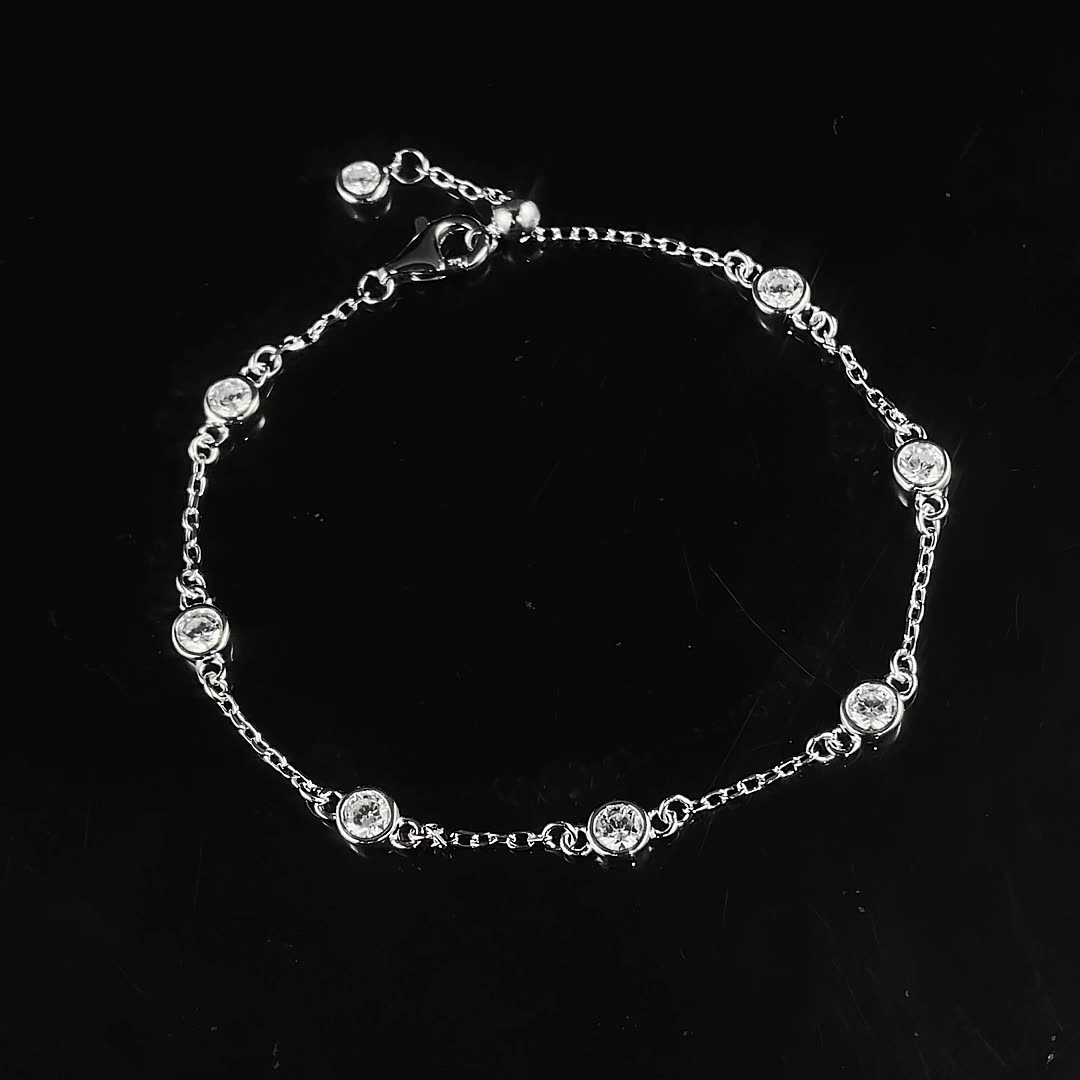
Platinum vs Gold Diamond Bracelet Clasp: Security, Cost, and Long-Term Value
A bracelet clasp does the hard work. It opens and closes hundreds of times, handles constant wrist movement, and helps keep your diamonds secure every hour you wear them.
That’s why the Platinum vs Gold Diamond Bracelet clasp choice deserves real attention. Two bracelets can look nearly identical, yet the clasp metal can change comfort, maintenance, and long-term cost.
At StoneBridge, buyers tend to ask the same three questions: Which One Feels safer? Which one needs less service? Which one holds value better over 5 to 10 years? I’ve helped hundreds of couples choose milestone jewelry, and clasp quality is one of those details people only notice after a problem (trust me, I’ve seen it happen).
Platinum vs Gold Diamond Bracelet Clasp: What Actually Matters
For a useful Platinum vs Gold Diamond Bracelet clasp comparison, focus on seven factors:
- Purity and alloy mix (PT950 vs 14K/18K)
- Clasp mechanics and tension stability
- Wrist weight and comfort
- Surface wear over time
- Skin reactivity risk
- Repair access and service cost
- Total ownership cost, not just purchase price
Quick reality check: metal matters, but engineering matters just as much. A poorly made platinum clasp can fail sooner than a well-built 14K clasp.
Bench Checks to Request Before You Buy
Ask the jeweler to show:
- Clear hallmark stamps: PT950, 14K, or 18K
- Tongue fit and latch snap strength
- Hinge pin alignment under magnification
- Smooth close/open cycle across several tests
If the seller can’t demonstrate these basics, keep shopping.
Clasp Types and Security Features
When shoppers compare the Platinum vs Gold diamond bracelet clasp decision, they often focus on metal first and clasp design second. That is backward. The security feature is usually what keeps a bracelet on your wrist.
For diamond bracelets, especially tennis bracelets and line bracelets, the most common designs include box clasps, tongue-and-groove clasps, lobster clasps, and integrated safety latches. A box clasp with a safety figure-eight or double-lock tends to be the gold standard for higher-value bracelets because it combines a firm primary closure with a secondary backup.
Best Clasp Styles for Diamond Bracelets
- Box clasp with safety latch: Strong, clean look, and common on tennis bracelets.
- Double-lock box clasp: Better for heavier pieces or frequent wear.
- Lobster clasp: Secure for many bracelets, but less elegant on some diamond lines.
- Hidden tongue clasp: Attractive and streamlined, though quality varies by maker.
If the bracelet is set with larger diamonds, weighs more, or carries a high price tag, ask for a clasp with a built-in secondary safety. That backup matters whether the clasp is platinum or gold.
What Makes a Clasp Safer
- Firm spring tension that resists accidental opening
- Positive latch engagement you can feel and hear
- Good alignment so the tongue sits straight in the box
- Secondary safety that catches the bracelet if the main clasp opens
For buyers comparing a Platinum vs Gold diamond bracelet clasp, safety features often matter more than the sticker metal. A well-made 14K clasp with a safety latch can outperform a plain platinum clasp with weak construction.
Platinum Clasp: Strengths and Tradeoffs
In the Platinum vs Gold diamond bracelet clasp discussion, platinum stands out for density and color stability. PT950 is usually 95% platinum, and that high purity appeals to buyers who want a naturally white metal.
Key Platinum Facts
- Platinum density is about 21.45 g/cm³.
- 14K and 18K gold alloys are lighter, with density varying by composition.
- Platinum keeps its white tone without rhodium plating.
That extra density is why a platinum clasp often feels more substantial in hand. In my 10 years at StoneBridge, clients who love a “solid luxury feel” almost always smile when they try platinum first.
Pros of Platinum Clasps
- Strong buyer confidence for high-value pieces
- Naturally white look without replating cycles
- Great option for many people with sensitive skin
- Excellent fit for heirloom planning
Cons of Platinum Clasps
- Higher upfront price
- Heavier feel on the wrist
- Patina develops over time
- Repairs can cost more in some markets
For many luxury tennis bracelets, the Platinum vs Gold diamond bracelet clasp decision leans platinum when the piece is heavy and worn often.
When Platinum Is the Better Buy
Choose platinum if you want a clasp that matches a high-end white metal setting, if you dislike rhodium maintenance, or if the bracelet is intended as a long-term gift or heirloom. Platinum also tends to suit buyers who want a slight visual heft and do not mind the extra weight. On a wrist, that can feel reassuring rather than bulky, especially for wider diamond bracelets.
One practical note: platinum is not automatically “stronger” in every real-world scenario. It resists metal loss differently than gold and can show surface wear as a soft patina. That patina is not damage; many people like the look. But if you prefer a bright mirror finish forever, you will need occasional polishing either way.
Gold Clasp: Strengths and Tradeoffs
Gold offers flexibility on budget, color, and overall bracelet weight. In many Platinum vs Gold diamond bracelet clasp comparisons, 14K leads for everyday practicality.
14K vs 18K for Moving Parts
- 14K gold: usually better deformation resistance in clasp components
- 18K gold: richer gold content and color, often a bit softer in thin parts
Many customers choose 14K for everyday tennis bracelets because it balances price and durability (yes, even on a budget).
White, Yellow, and Rose Gold Notes
- White gold pairs well with colorless diamonds, but rhodium touch-ups may be needed every 12 to 36 months, depending on wear.
- Yellow gold avoids white plating maintenance.
- Rose gold offers a distinct look, though tone can vary by alloy recipe.
White gold remains a common choice for diamond bracelets because it gives you the bright look people expect around white diamonds without the premium of platinum. Still, the need for replating should be part of the buying conversation. A bracelet clasp that gets handled daily can lose rhodium faster than the rest of the bracelet, so ask whether the seller will replate the clasp only or the whole piece.
Pros of Gold Clasps
- Lower starting price than platinum in most builds
- Lighter wrist feel
- Easier color matching across your jewelry wardrobe
- Widely available repair service
Cons of Gold Clasps
- White gold may need periodic replating
- Nickel-containing alloys can irritate sensitive skin
- Durability changes by karat and design thickness
If you’re weighing platinum vs gold diamond bracelet clasp options for daily use, 14K is often the value leader.
When Gold Is the Better Buy
Gold makes sense when budget control is important, when you want a lighter bracelet, or when the jewelry will be worn casually instead of daily. It also gives you more flexibility if you plan to coordinate the bracelet with yellow gold rings, earrings, or a watch. If the rest of your collection is mixed metal, gold can reduce the pressure to match every piece exactly.
For white gold buyers, I suggest asking whether the clasp and the bracelet body are both white gold or whether only the visible front sections are plated. On some lower-cost pieces, the clasp gets more wear but receives less finishing attention, which can make it look dull sooner than expected.
Platinum vs Gold Diamond Bracelet Clasp: Side-by-Side Table
| Factor | Platinum (PT950 typical) | Gold (14K/18K typical) |
|---|---|---|
| Upfront price | Higher | Lower to mid-high |
| Weight | Heavier | Lighter |
| White color upkeep | No rhodium needed | White gold often needs rhodium |
| Skin sensitivity profile | Strong for many buyers | Alloy-dependent |
| Daily wear durability | Excellent with good build | Excellent in 14K with good build |
| Service availability | Strong, sometimes specialized | Very broad |
| Prestige perception | Very high | High |
For many buyers, the platinum vs gold diamond bracelet clasp outcome comes down to weight tolerance and maintenance preference.
Priority Scores (1-10)
| Priority | Platinum | 14K Gold | 18K Gold |
|---|---|---|---|
| Security-first | 9.2 | 8.8 | 8.4 |
| Comfort-first | 7.5 | 9.1 | 8.8 |
| Value-first | 7.7 | 9.3 | 8.2 |
| Low-upkeep finish | 8.9 | 8.3 | 7.8 |
| Sensitive-skin-first | 9.3 | 8.0* | 8.5* |
*Depends on exact alloy and finishing.
Diamond Specs That Influence Bracelet Decisions
Even though this article focuses on the clasp, the diamond specs affect the way you should evaluate the whole bracelet. A lighter, delicate bracelet with small melee stones has different security needs than a heavier line bracelet with larger diamonds. The clasp should suit the bracelet’s total carat weight, not just the metal type.
For most tennis bracelets, diamonds range from about 0.01 ct to 0.25 ct each, with total carat weight varying widely based on length and design. The classic look often uses stones in the G-H color range with VS-SI clarity, because those grades look bright to the eye while keeping the piece within a more realistic budget. For premium pieces, buyers may move to D-F color and VVS-VS clarity, but the price jumps quickly.
What to Ask About the Stones
- Are the diamonds natural or lab-grown?
- What is the total carat weight?
- What are the color and clarity ranges?
- Are any larger stones individually certified?
- Is the bracelet graded with a full written spec sheet?
Small accent diamonds are usually not individually certified, but larger diamonds should come with reports from recognized labs such as GIA or IGI. If a bracelet uses a larger center diamond or alternating stone sizes, ask for the report number and verify that it matches the stone in the setting. For buyers comparing the platinum vs gold diamond bracelet clasp, the quality of the stones can change whether the clasp should include a double safety or a heavier box design.
Setting Tradeoffs to Consider
The bracelet setting affects clasp stress. Prong-set bracelets are visually open and brilliant, but they can catch on fabrics more easily and may flex more at the ends if the bracelet is thin. Bezel settings and channel settings create a smoother profile and can be more protective for active wearers, though they may add weight or change the look of the bracelet.
If the bracelet has open spacing between diamond stations, make sure the clasp and adjoining links are strong enough to prevent twisting. The link closest to the clasp often wears first, so a better metal choice there can be worth the upgrade even if the rest of the bracelet is already durable.
Sizing, Fit, and Comfort
A bracelet that fits badly can feel insecure no matter how expensive the clasp is. Too tight, and the clasp and links take extra strain. Too loose, and the bracelet spins, catches, and may slip out during daily wear. Fit is part of the platinum vs gold diamond bracelet clasp decision because metal weight affects the way the bracelet hangs on the wrist.
How to Size a Diamond Bracelet
- Measure wrist circumference where the bracelet will sit.
- Add about 0.25 to 0.5 inches for a snug fit.
- Add about 0.5 to 0.75 inches for a more relaxed fit.
- For very wide or heavy bracelets, account for the piece’s own weight so it doesn’t feel tighter than expected.
If you are buying a gift, ask the seller whether the bracelet can be resized or adjusted before shipping. Some pieces have modular links that allow small changes, while others need a bench jeweler to remove or add links. A clasp that sits perfectly on a wrist with the wrong length can still be a problem, especially if it rotates toward the underside of the wrist and catches on objects.
Comfort Clues in the Clasp
- Rounded edges that do not dig into skin
- Low-profile closure that does not snag on clothing
- Weight balance that keeps the clasp from rolling
- Enough stiffness to stay closed, but not so much that it is hard to operate
Some buyers love the firm, substantial feel of platinum; others prefer the lighter everyday comfort of gold. There is no universal winner. The better choice is the one that fits your wrist size, lifestyle, and tolerance for weight.
Real-World Maintenance and Service Timeline
A clasp is a mechanical part, so it needs checkups. GIA care guidance supports periodic professional inspection, and many jewelers recommend checks every 6 to 12 months for frequently worn pieces.
For the platinum vs gold diamond bracelet clasp decision, use this practical service model:
- Every 6-12 months: clasp tension check and safety latch inspection
- Every 12-36 months: possible rhodium refresh for white gold
- As needed: hinge pin work, tongue adjustment, or latch tuning
If you want fewer finish appointments, platinum or yellow gold usually simplifies maintenance. Here’s what nobody tells you: most expensive repairs start as tiny alignment issues that were easy to catch early.
Store the bracelet flat or separately in a fabric-lined compartment so the clasp does not press against other jewelry. If you travel, use a small zip pouch or hard case rather than tossing it into a cosmetic bag. A clasp can loosen from repeated impacts even when the bracelet itself looks untouched.
Cleaning and At-Home Care
Use warm water, mild soap, and a soft brush for routine cleaning. Avoid harsh ultrasonic cleaning if the bracelet has delicate settings, fragile pavé, or stones with unknown treatments. Dry the clasp area carefully, since trapped moisture and lotion residue can make the mechanism feel sticky over time.
For white gold, keep in mind that cleaning does not replace rhodium. If the white finish looks yellowish or uneven, the bracelet may simply need plating rather than repair. Platinum can be polished, but over-polishing can round out details, so ask the jeweler to preserve the original geometry of the clasp and links whenever possible.
Price Ranges and Value Clues
Buyers often ask how much the clasp metal actually changes the price. The answer depends on the bracelet size, total gold weight, and whether the clasp is plain or reinforced. For a diamond bracelet, the clasp metal may contribute a modest amount in a lightweight design or a more noticeable amount in a heavy, high-carat piece.
As a rough shopping guide, a platinum upgrade on a fine diamond bracelet can add a few hundred dollars to well over a thousand dollars in premium builds, especially when the bracelet uses a large box clasp or extra safety parts. A 14K clasp usually offers the best entry-level value, while 18K often sits in the middle depending on the design and market.
What Drives the Price
- Metal weight and current commodity pricing
- Complexity of the clasp mechanism
- Number of safety features
- Labor involved in hand-finishing and setting
- Whether the bracelet is stock, made-to-order, or custom
For value shopping, compare the whole bracelet, not just the clasp. A slightly more expensive platinum piece may actually be the better long-term purchase if it includes a stronger closure, fewer service visits, and better resale appeal. On the other hand, a well-made 14K bracelet can be the smarter buy if you want a similar look with lower upfront cost and easier sizing flexibility.
Shipping, Returns, and Insurance
When jewelry leaves the store, the risk changes. The best platinum vs gold diamond bracelet clasp choice can be undermined if the seller does not protect the piece in transit or support returns clearly. Fine jewelry should ship insured, tracked, and signature-required. That matters even more for bracelets because a weak clasp can be damaged if the bracelet shifts inside a box during transport.
Policies to Check Before You Order
- Insured shipping included in the purchase price
- Signature confirmation on delivery
- Return window long enough to inspect and try on the bracelet
- Clear rules on resizing, wear, and custom order exclusions
- Written appraisal or value documentation when applicable
Ask whether the bracelet is returnable if the clasp action does not feel right in person. Some sellers only accept returns if tags remain attached or if the bracelet is unworn. That is common, but you should know the rule Before You Buy. If you are ordering a gift, confirm the policy for an exchanged size, because a bracelet that slides too much can make even a beautiful platinum clasp feel like the wrong choice.
Also ask how the bracelet is packed. A proper jewelry box should immobilize the bracelet rather than let the clasp bang around. For overseas orders or high-value gifts, request photographs of the packed item and confirmation of insurance coverage. These are small steps that can prevent a lot of frustration later.
How to Choose Based on Buyer Type
1) High-Value Heirloom Buyer
Start with platinum, then compare against heavy-duty 18K. In this platinum vs gold diamond bracelet clasp scenario, long-term restoration and prestige often justify the premium.
2) Practical Daily Wear Buyer
Start with 14K, then compare against platinum by comfort. If you dislike extra wrist weight, 14K may fit best.
3) Sensitive Skin Buyer
Prioritize platinum or nickel-free gold. Ask for alloy disclosure in writing before purchase.
4) Budget-Focused Gift Buyer
Choose a well-engineered 14K clasp with a safety feature. You’ll usually get better value per dollar. Honestly, I think this is the smartest path for anniversary and birthday gifts when you want beautiful quality without stretching too far.
5) Fashion-Forward Buyer
If your bracelet is part of a layered look, consider how the clasp will interact with bangles, watches, and cuffs. A lighter gold clasp can make stacking easier because the bracelet sits more comfortably alongside other pieces. Platinum can still work beautifully, but the added weight may not be ideal if you plan to wear multiple bracelets at once.
Common Mistakes Buyers Make
Most clasp problems start with assumptions. The first mistake is choosing metal by brand reputation alone. Platinum sounds premium, but if the clasp is underbuilt or the link next to it is weak, the benefit disappears. The second mistake is skipping a fit check and assuming the bracelet will “settle in.” Fine jewelry should feel right immediately, with only a small amount of expected movement.
Other Avoidable Errors
- Ignoring the safety latch because the main clasp looks strong
- Buying white gold without asking about rhodium maintenance
- Choosing 18K for a high-stress moving part without checking thickness
- Forgetting to ask whether the diamonds have written specs
- Not confirming return policy, resize options, or shipping insurance
Another common error is comparing only the visible finish. A shiny clasp can hide poor tension, sloppy alignment, or weak solder joints. Ask how the piece was assembled and whether the clasp was hand-finished or mass-produced. A slightly more careful build often pays off later in reduced repairs.
One more mistake: assuming all platinum or all gold behaves the same. Alloy composition, clasp thickness, and finishing quality matter more than most shoppers realize. A thin 18K clasp with beautiful polish may look great in the case but need more maintenance than a sturdier 14K version with slightly less color richness. In practical terms, the best choice is the one that matches how you actually wear jewelry.
Cost Over 5 to 10 Years
Most people compare only purchase price, but lifecycle cost gives a clearer answer. For the platinum vs gold diamond bracelet clasp choice, include:
- Initial metal upgrade cost
- Replating cadence for white gold
- Inspection and tune-up frequency
- Repair complexity if wear appears
Buyers often spend less by choosing the right clasp from day one instead of upgrading later.
A simple example: a white gold bracelet may be less expensive at checkout, but if it needs rhodium refreshes, clasp tightening, and periodic polishing, the cost gap narrows over time. Platinum may cost more upfront yet require fewer finish-related appointments. Meanwhile, 14K gold can offer the best total value for casual wearers because it tends to hit a sweet spot of durability, price, and service availability.
Resale value is also worth considering. Jewelry buyers often recognize platinum as a premium category, especially on larger diamond pieces, while gold has broad demand because it is universally familiar and easy to service. Neither metal guarantees a higher resale price on its own. Condition, craftsmanship, brand, and diamond quality usually matter more. Still, a strong clasp in a respected metal can make a bracelet feel more trustworthy to future buyers or inheritors.
Platinum vs Gold Diamond Bracelet Clasp: Final Recommendation
Short answer for platinum vs gold diamond bracelet clasp options:
- Choose platinum for high-value bracelets, naturally white color, and long-horizon ownership.
- Choose 14K gold for strong daily performance, lighter feel, and lower entry cost.
- Choose 18K gold if color richness is a top priority and you accept extra care in some designs.
Still undecided? Ask yourself one question: do you want the lightest feel, or the most substantial one?
Before checkout, confirm hallmark, latch security, hinge alignment, and smooth clasp action. If this bracelet marks a proposal, wedding, or major life moment, take the extra five minutes to test the clasp twice—you’ll wear that memory for years, and it should feel secure every time it clicks shut.
If you are still comparing options, think in this order: clasp design first, metal second, and diamond specs third. That may sound surprising, but it reflects how bracelets actually wear in real life. The best piece is not just beautiful in the box; it is secure, comfortable, and easy to live with for years.
Shop and Compare at StoneBridge Jewelry
Compare specs side by side in our fine jewelry collection. If you’re pairing a bracelet with a center stone, review options in our lab-grown diamonds collection. For coordinated styling, browse engagement ring designs or build a custom look in our ring builder.
The best platinum vs gold diamond bracelet clasp decision gets easier when you compare mechanism details, not just metal labels.
Ready to Find Your Perfect Diamond?
Explore our collection of certified lab-grown diamonds
Shop Diamonds