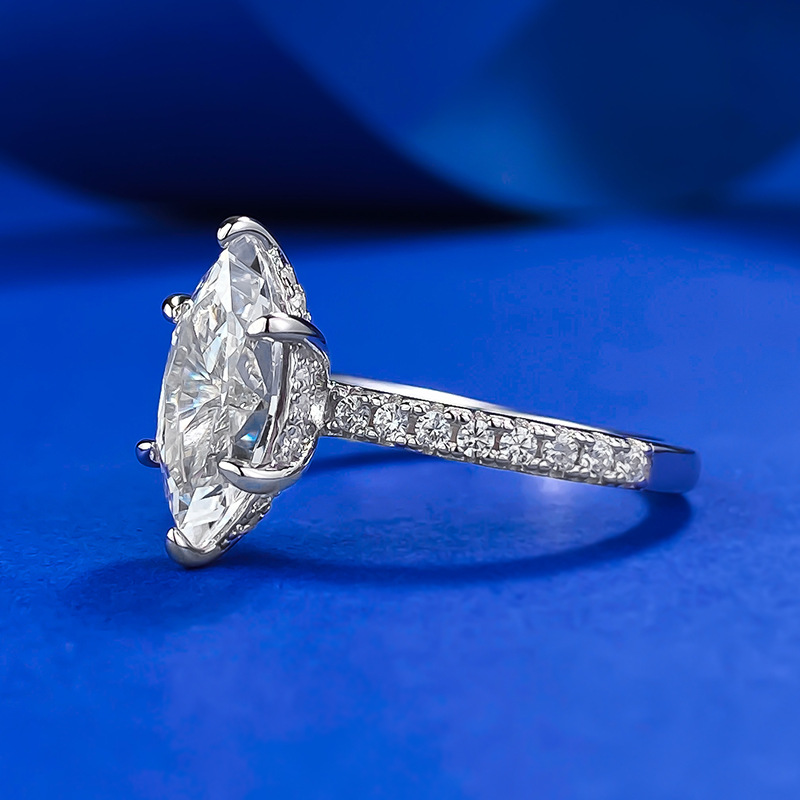
Pear Shaped Lab Diamond Wedding Band Pairing Guide
Pear Shaped Lab Diamond Wedding Band Pairing Guide: Start With Fit
Choosing a wedding band for a pear ring takes more thought than most people expect. The pear outline is beautiful, but its rounded end and pointed tip can leave a gap, create rubbing, or make the stack feel uneven.
This pear shaped Lab Diamond Wedding Band Pairing guide focuses on what matters in real life: fit, comfort, proportion, and style. Lab-grown diamonds have the same optical, physical, and chemical properties as mined diamonds, so the design work matters just as much as the stone choice.
A pear shaped center stone pulls the eye in one direction. The rounded end feels soft, while the point adds length and drama. The right band should frame that shape instead of fighting it.
For the cleanest result, look at the engagement ring from the side before you commit to a band based on the top view. I have helped hundreds of couples choose wedding bands for pear shaped rings, and the side profile is where the truth usually shows up (trust me, I have seen a perfect-looking top view turn into a frustrating gap).
Understand the Pear Shape Before Choosing a Band
A Pear Shaped Diamond blends the sparkle of a round brilliant with the length of a marquise. It has one rounded end and one tapered point, which gives it a romantic but slightly dramatic look.
That uneven outline is why a Pear Shaped Lab Diamond wedding band pairing guide needs more detail than a round diamond guide. A round center stone usually gives bands an easier path. A pear center stone asks for better planning.
GIA notes that fancy-shape diamonds should be judged by outline, symmetry, polish, and face-up appeal because they do not receive the same cut grade as round brilliants. IGI Grading Reports can also help shoppers compare lab-grown center stones and band stones with consistent color, clarity, and carat language.
A few numbers help. Pear shaped diamonds often look balanced around a 1.45:1 to 1.75:1 length-to-width ratio. Very slim pears can feel elegant and long, while fuller pears look softer and more classic.
How Pear Orientation Changes the Stack
Pear orientation changes the whole pairing. A point-up pear places the tip toward the knuckle and the rounded end near the fingertip. That usually creates a longer, more elongated look.
A point-down pear flips the visual weight. It can feel fresh, directional, and a little more modern. It may also leave different space near the wedding band, depending on how the ring is built.
In many cases, a point-up ring works well with a curved or chevron band because the V shape can echo the tip. A point-down ring may allow a straight band to sit closer, especially if the setting has enough height.
The first fit rule is simple: do not choose the band until you know where the pear point sits and how low it drops.
Why Lab Diamonds Give You More Pairing Options
Lab-grown diamonds can make the full bridal set easier to plan. Many shoppers can choose a higher total carat weight, a finer pavé line, or a better color match without moving into the same price range as mined diamonds.
Many StoneBridge customers choose D-H color lab-grown diamonds for bridal stacks because they look bright across white, yellow, and rose gold settings. For clarity, VS1 to SI1 often gives a clean look without paying for grades the eye may not notice.
As a pricing reference, a 0.25 to 0.75 tcw lab diamond pavé band often falls around $700 to $2,500, depending on metal, diamond quality, and setting style. Full eternity bands usually cost more because diamonds continue around the entire ring.
If you are still choosing the center stone, shop lab-grown diamonds first and compare the wedding band after you know the pear's size, orientation, and setting height.
Key Fit Rules in a Pear Shaped Lab Diamond Wedding Band Pairing Guide
The band should support the engagement ring, not compete with it. That sounds simple, but small design choices can change the whole stack.
Start with gap, contour, width, metal, and ring height. Once those pieces make sense, the style choice gets easier. Your dream band may change after you see how it sits against the pear.
A flush fit is not the only beautiful option. A slim, even gap can look relaxed and modern. The problem is not the gap itself; it is a gap that looks accidental.
This Pear Shaped Lab Diamond wedding band pairing guide treats the side profile as the deciding factor. A high-set basket or cathedral setting may welcome a straight band. A low bezel or low basket may need a curved, notched, or chevron style.
Flush Fit vs. Intentional Gap
A flush fit means the wedding band sits directly against the engagement ring. It looks crisp, clean, and traditional when the engagement ring allows enough room.
A small gap can look just as good. It gives each ring room to breathe, which can help the pear shape stay visible. Some brides prefer that look because it feels less formal.
The better choice is the one that looks deliberate and feels comfortable. If the band knocks against the pear point or twists during wear, the style is not the right match.
Honestly, I think an intentional tiny gap is underrated. Couples sometimes apologize for it during appointments, but when the spacing is even, it can look effortless and very personal.
Band Width and Proportion
Band width changes the mood of the stack. A 1.5 mm to 2.0 mm band keeps the pear as the clear focal point. A 2.0 mm to 2.5 mm band adds presence without feeling heavy.
Wider bands can look bold and stylish, especially with a simple solitaire. They can also overpower a smaller pear if the diamonds or metal are too strong. Balance matters more than sparkle alone.
For pavé bands, durability deserves real attention. Ultra-thin bands can look delicate, but they may need more careful wear and regular prong checks. A smart pear shaped lab Diamond Wedding Band pairing guide should protect the ring as well as style it.
Metal and Diamond Color Matching
Metal tone shapes how the pear reads on the hand. Platinum and white gold make bright lab diamonds look crisp. Yellow gold adds warmth, while rose gold softens the whole set.
Matching metals creates the most seamless bridal look. Mixed metals can also work, but the contrast should feel planned. If you pair yellow gold with white gold, repeat that white tone in another band, a hidden halo, or daily jewelry.
Diamond color matters too. Near-colorless stones often blend beautifully with yellow or rose gold. Higher-color lab diamonds tend to look especially icy in platinum or white gold.
Best Wedding Band Styles for Pear Shaped Lab Diamond Rings
The best style depends on setting height, pear orientation, and the amount of sparkle you want. A minimalist solitaire pairs differently from a halo, three-stone ring, or bezel design.
Use this pear shaped lab Diamond Wedding Band pairing guide as a practical filter. If the band clears the setting, feels comfortable, and keeps the pear as the star, you are on the right track.
| Band style | Best for | Fit with pear shape | Main advantage | Watch-out |
|---|---|---|---|---|
| Straight band | Higher solitaires and clean stacks | Flush or even gap | Timeless and versatile | May not clear a low pear point |
| Curved band | Low settings and close-fit stacks | Follows the ring outline | Softens awkward space | May look less balanced alone |
| Chevron band | Pear tips and modern sets | Echoes the pointed shape | Adds structure | Can dominate a delicate ring |
| Pavé band | Extra sparkle | Works with many profiles | Bright, unified shimmer | Needs prong care |
| Eternity band | Statement stacks | Best with balanced heights | Diamond coverage all around | Harder to resize |
| Half-eternity band | Daily wear | Easy to pair and maintain | Comfort plus sparkle | Less diamond coverage |
Straight Wedding Bands
Straight wedding bands are classic for a reason. They are easy to wear, easy to clean, and simple to style with anniversary bands later.
A plain metal band keeps the pear diamond in charge. A pavé straight band adds sparkle without changing the outline too much. A channel-set band gives a smoother feel, while shared-prong styles look brighter and more open.
Straight bands work best when the engagement ring has enough height. If the pear sits low, the band may stop at the point and leave an uneven space. In that case, do not force it.
Curved and Contoured Wedding Bands
Curved bands follow the engagement ring's outline. They are useful when a straight band leaves a distracting gap or bumps into the basket.
A subtle curve gives you more styling freedom. It can still look graceful if worn alone. A deeper contour gives a closer fit, but it usually looks best as part of the set.
For many low-profile pear rings, a curved band is the cleanest answer. Try the curve from both top and side views before buying.
In my years at StoneBridge, I have noticed that curved bands often win over hesitant shoppers once they see the pair on the hand. They can feel too specific in a product photo, then suddenly make perfect sense in real life.
Chevron Wedding Bands
Chevron bands have a V shape that naturally mirrors the pear point. They can make the stack feel sharp, intentional, and modern.
A soft chevron works well if you want a hint of shape. A deeper V creates more drama and may frame the pear like a crown. Both can look beautiful, but scale is key.
If the engagement ring already has a halo, side stones, or ornate detailing, choose a quieter chevron. Too many strong lines can crowd the pear.
Eternity and Half-Eternity Bands
Eternity bands bring diamonds all the way around the finger. They look polished and luxurious beside a pear shaped lab diamond ring.
The trade-off is practicality. Full eternity bands are harder to resize, and the diamonds on the palm side can take more wear. Half-eternity bands often suit daily use better because they keep diamonds on the visible portion of the ring.
Round diamonds create a classic rhythm. Baguette, oval, and marquise bands feel more editorial. If you want to compare options, browse engagement rings and pay close attention to setting height.
A Step-by-Step Pear Shaped Lab Diamond Wedding Band Pairing Guide
Style matters, but the best pairings start with measurements. The more you know about the engagement ring, the fewer surprises you will have after ordering.
Follow these steps Before You Buy online or in-store:
- Measure the engagement ring from the side.
- Check basket clearance near the pear point.
- Decide whether you want a flush fit or an intentional gap.
- Choose plain metal, pavé, chevron, curved, or eternity styling.
- Match or deliberately contrast the metal tone.
- Test comfort with normal hand movement.
- Leave room for future anniversary bands if stacking matters to you.
If you are unsure about sizing, use our ring size guide before choosing a close-fit band. Curved and contoured bands are less forgiving when the size is off.
Step 1: Identify the Setting
Solitaire, halo, hidden halo, three-stone, bezel, and cathedral settings all change the fit. A high basket often gives a straight band more room. A low bezel may need a contour.
Cathedral shoulders can raise the center stone enough for a cleaner pairing. Hidden halos can be trickier because the band may hit the hidden diamond row. Always check the side view.
StoneBridge customers often send side-profile photos before choosing a close-fit band. That simple step helps spot clearance issues before they become a return or custom redesign.
Step 2: Choose Cohesion or Contrast
Cohesive stacks repeat design details. That might mean the same metal, matching pavé size, or a shared prong style that appears on both rings.
Contrast makes the pear stand out. A plain yellow gold band beside a diamond-heavy pear ring can look clean and confident. A baguette band beside a round pavé engagement ring can feel more architectural.
Pick one clear focal point. If every ring tries to be the star, the pear shape loses impact.
Step 3: Test Comfort and Wear
Comfort is not a small detail. Band thickness, prong height, diamond edges, and ring movement all affect daily wear.
If you work with your hands, exercise often, or prefer low-maintenance jewelry, consider a half-eternity band or smoother setting. Pavé and shared-prong bands look bright, but they need periodic prong checks.
Cleaning matters too. Stacked rings can trap lotion, soap, and debris in small spaces. A soft brush and regular professional inspections help keep the set looking sharp.
Styling Tips for a Balanced Bridal Stack
A polished bridal stack repeats at least one element: metal tone, diamond shape, setting style, or finish. That repetition makes the set feel planned, even if the rings were bought at different times.
If the engagement ring is ornate, let the wedding band calm the look. If the pear solitaire is simple, the band can bring more texture or sparkle. This pear shaped lab Diamond Wedding Band pairing guide is about balance, not matching every detail perfectly.
Minimal, Romantic, Vintage, or Modern
Minimal stacks usually pair a pear solitaire with a slim plain band or fine pavé band. The result feels clean and timeless.
Romantic stacks often use soft curves, scalloped pavé, or delicate diamond details. Vintage-inspired stacks may include milgrain, baguettes, engraving, or mixed-shape diamond bands.
Modern stacks look great with chevrons, wider plain bands, east-west styling, or mixed metals. If you want to build your look from scratch, start with the ring builder and test how different silhouettes work together.
Stacking With Anniversary Bands
Adding a second band can look beautiful if the heights stay close. One diamond band plus one plain band often gives the best balance.
Try not to stack too many high-prong bands against each other. Uneven heights can cause rubbing and make the set feel bulky. A spacer band can help protect delicate pavé if the rings touch too aggressively.
Plan ahead if you love stacking. A pear shaped lab Diamond Wedding Band pairing guide should help you choose the wedding band and leave room for the anniversary band you may want later.
And if that future band marks a first anniversary, a new baby, a vow renewal, or simply a season you made it through together, leave room for it now. Jewelry gets more meaningful when it has space to collect your story.
Common Mistakes to Avoid
The biggest mistake is choosing the band from a product photo alone. A band can look perfect online and still sit poorly against the pear point.
Another mistake is adding too much sparkle. A bright diamond band can be stunning, but oversized stones may blur the pear outline. The center stone should still get the first glance.
Mismatched metals can also feel accidental if nothing ties them together. Mixed metals work best when you repeat the contrast on purpose. For more styling ideas, explore fine jewelry and compare metal combinations across rings, earrings, and bracelets.
Ignoring the Pear Point
The pear point needs space. If it sits low, a straight band may hit it, stop short, or leave a crooked gap.
A curved, notched, or chevron band can solve that issue. So can a custom contour, especially if the engagement ring has a low basket or protective bezel.
Before ordering, check whether the pear tip faces the band. This small detail can change the whole recommendation.
Forgetting About Maintenance
Diamond bands need upkeep. Pavé prongs should be checked at least once or twice a year, especially on rings worn daily.
Full eternity bands also need extra care because the palm-side diamonds touch more surfaces. If easy maintenance is your priority, a half-eternity band may be the smarter choice.
A good pear shaped lab diamond wedding band pairing guide should make the stack beautiful and wearable. You should not have to baby the ring every minute.
Here is what nobody tells you: the most wearable band is not always the one with the most diamonds. Sometimes the quieter choice is the one you reach for every single day (yes, even when the sparkly option is tempting).
FAQ: Pear Shaped Lab Diamond Wedding Band Pairing Guide
What wedding band looks best with a pear shaped lab diamond engagement ring?
The best wedding band depends on the setting height, pear orientation, and your style. Straight pavé bands suit higher settings, while curved and chevron bands often work better with low-profile pear rings. If you want a clean daily stack, start with a slim band between 1.5 mm and 2.5 mm. Keep one focal point so the pear shaped lab diamond remains the star.
Can a straight wedding band sit flush with a pear shaped diamond ring?
Yes, a straight wedding band can sit flush if the pear diamond is set high enough. Cathedral settings and raised baskets usually give the band more room. If the pear point or basket sits low, the band may leave an uneven gap. Check the side profile before buying because that view predicts fit better than the top view.
Is a curved wedding band better for a pear shaped engagement ring?
A curved wedding band is often better when you want a close fit around the pear shape. It can reduce awkward spacing and protect the visual flow of the bridal stack. Choose a gentle curve if you plan to wear the band alone sometimes. Choose a deeper contour if the stacked look matters most.
Do eternity bands pair well with pear shaped lab diamond rings?
Eternity bands can look beautiful with pear shaped lab diamond rings when the proportions are balanced. Round diamonds give a classic look, while baguette or marquise bands add a more styled feel. Full eternity bands offer sparkle all around but have limited resizing options. Half-eternity bands are often easier for daily wear and long-term comfort.
Should my Wedding Band Metal match my pear shaped lab diamond ring?
Matching metals gives the bridal set the smoothest look. White gold and platinum make bright lab diamonds look crisp, while yellow and rose gold add warmth. Mixed metals can still work if the contrast appears intentional. Repeat the second metal elsewhere in the stack or in your daily jewelry to make the pairing feel connected.
Choose the Band That Makes the Pear Shine
The right wedding band should complement the pear diamond's shape, protect the ring's comfort, and suit the way you will wear it. Straight, curved, chevron, pavé, eternity, and half-eternity styles can all work when the fit is right.
Keep the side profile in view. Check the gap, ring height, band width, metal tone, and maintenance needs. A pear shaped lab diamond wedding band pairing guide is most useful when it helps you avoid guessing.
Most of all, choose the band that feels like it belongs in your life, not just in a photo. Whether it is for a wedding day, a proposal plan, or a gift that says “I still choose you,” the best pairing should feel beautiful, comfortable, and unmistakably yours.
If you are still deciding, compare StoneBridge Jewelry's lab-grown diamond bands, review engagement ring profiles, or contact our jewelry experts for help with measurements and custom contouring.
Ready to Find Your Perfect Diamond?
Explore our collection of certified lab-grown diamonds
Shop Diamonds