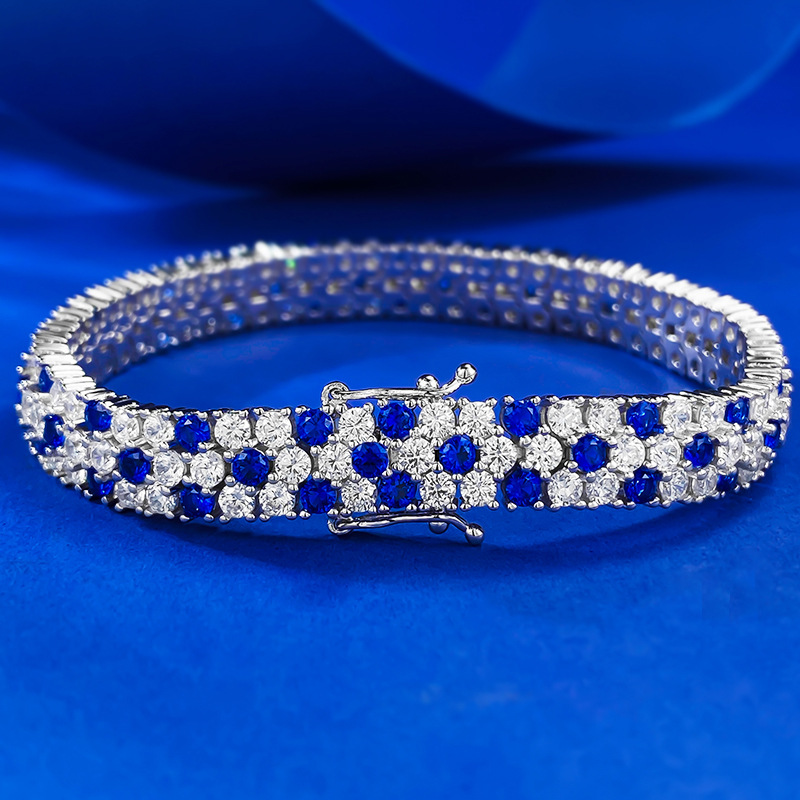
Best Carat Tennis Bracelet Daily: Which Size Works Best?
Choosing the best Carat Tennis Bracelet daily comes down to more than sparkle. The right bracelet should fit your wrist, suit your routine, and feel comfortable from morning to night. A 1-2 ctw bracelet feels light and understated. A 5-6 ctw piece has a stronger luxury look. For most people, the best carat tennis bracelet daily is the one they’ll actually wear often, not the one with the biggest number on the tag.
A tennis bracelet works well for daily wear because it moves easily from office outfits to weekend looks. Not every carat range wears the same way, though. Most tennis bracelets are made around 6.5 to 7.5 inches, with 7 inches being a common standard length, so fit changes the look right away. GIA also explains that the 4Cs work together, and cut has a major effect on sparkle. That matters here more than many shoppers expect.
We’ve seen that shoppers are happiest when they compare carat weight with clasp security, setting height, and wrist size. If you want more fine jewelry ideas to pair with your bracelet, browse our lab-grown diamond collection or compare styles in our fine jewelry collection.
Best Carat Tennis Bracelet Daily: What Size Works for Most Buyers?
For the best carat tennis bracelet daily, start with how often you’ll wear it and where you’ll wear it. A bracelet for office wear needs a different feel than one for dinners, events, or travel. The same carat weight can look subtle on one wrist and bold on another.
Carat weight changes more than size. It affects comfort, weight, visibility, and the way the diamonds catch light. It also affects price quickly. A well-cut 3 ctw bracelet can look brighter than a poorly made 4 ctw bracelet, so build quality matters as much as size.
What matters beyond carat weight?
Look at the clasp, the link flexibility, the metal, and the setting height. A secure box clasp with a safety latch is one of the best features for daily wear. 14k gold is 58.5% pure gold and tends to hold up well for everyday use, while 18k gold is 75% pure and has a richer color but a softer feel. Platinum brings strong durability and a cool tone.
Diamond quality also matters in a tennis bracelet, but it does not need to be judged exactly like a solitaire engagement ring. Because tennis bracelets use many smaller diamonds, the eye sees overall brightness and matching more than one individual stone. For daily wear, many buyers do well with near-colorless diamonds in the G-H or H-I range and eye-clean clarity such as VS2-SI1, depending on the size of each stone. If the bracelet uses larger diamonds, clarity and color become easier to notice, so it can be worth moving slightly higher in grade.
Ask how the diamonds are matched across the bracelet. A well-made bracelet should have consistent color, similar diameter, and even sparkle from link to link. One noticeably dark, cloudy, or poorly cut diamond can interrupt the line. This is especially important in 4 ctw and larger bracelets, where each diamond has more presence.
Best Carat Tennis Bracelet Daily: 1-2 ctw for Subtle Wear
A 1-2 ctw bracelet is the quietest option in the lineup. It sits close to the wrist, feels light, and layers easily with a watch or another bracelet. If your version of the best carat tennis bracelet daily is polished, understated, and easy to forget on your wrist, this range makes a lot of sense.
It also works well for petite wrists and first-time fine jewelry buyers. The lower profile keeps it comfortable during typing, driving, and errands. Lab-grown diamonds can stretch the value here, since you may be able to choose a cleaner look or better cut without pushing the budget too far.
In this range, the individual diamonds are usually small, so construction and finishing deserve close attention. Look for smooth prongs that do not scratch, links that bend naturally around the wrist, and a clasp that closes with a firm click. A delicate bracelet should still feel substantial enough that you are not worried about wearing it outside the house.
Pros and cons of 1-2 ctw
Pros
- Light and easy to wear all day
- Good for stacking
- Usually the most affordable
- Strong choice for office wear and travel
Cons
- Less visual impact
- May feel too delicate for some buyers
- Not the best pick if you want strong wrist presence
If your goal is quiet polish, this can still be the best carat tennis bracelet daily for you.
Best Carat Tennis Bracelet Daily: 3-4 ctw for Everyday Luxury
For most shoppers, the best carat tennis bracelet daily lives in the 3-4 ctw range. It gives you clear diamond presence without crossing into heavy statement territory. That balance is hard to beat.
A 3 ctw bracelet usually feels refined and easy to wear. A 4 ctw bracelet adds a little more glow and a richer look. Either one can handle work, dinner, and casual outfits without feeling out of place. That is why this range is often the safest all-around choice.
The 3-4 ctw range also tends to offer strong value. You get enough size to make the bracelet feel special, but you avoid the biggest price jumps that show up as carat weight rises. For many buyers, the best carat tennis bracelet daily is here because it looks luxurious without demanding special treatment.
This range is also forgiving when it comes to styling. Yellow gold can make the bracelet feel warmer and more classic, white gold keeps the look bright and crisp, and rose gold adds softness against the skin. If you wear a white gold engagement ring or stainless steel watch every day, a white metal bracelet may be the easiest match. If most of your jewelry is yellow gold, choosing yellow gold will help the bracelet feel intentional instead of separate from the rest of your wardrobe.
Why this range wins for daily wear
It plays well with almost everything in a jewelry box. A 3 ctw bracelet can sit beside a watch. A 4 ctw bracelet can stand alone and still feel elegant. Many customers say this is the range that looks expensive without feeling fussy.
If you want to compare everyday bracelet options, this is the range to study first. It gives you a strong mix of sparkle, comfort, and wearability. If you also want to compare ring styles for gifting, explore our engagement rings or build a custom piece with our ring builder.
Best Carat Tennis Bracelet Daily: 5-6 ctw and 7+ ctw
The best carat tennis bracelet daily can move into 5-6 ctw if you enjoy bolder sparkle. This range has more wrist presence, brighter flashes, and a more obvious luxury feel. It can still work for daily wear, but it asks for more attention.
5-6 ctw: elevated but still wearable
A 5-6 ctw bracelet suits someone who likes fine jewelry to be seen. It looks rich with simple clothes and can make even a basic outfit feel finished. The tradeoff is that you should pay closer attention to clasp strength, prong security, and how the bracelet feels against your wrist during a full day.
This range makes a strong gift for milestones and anniversaries. It also works well for someone who already knows they like a bigger bracelet look. If that sounds like you, the best carat tennis bracelet daily might be 5 ctw, not 3 ctw.
At 5-6 ctw, avoid judging only from a straight-on photo. A bracelet that looks perfect in a product image can feel too tall if the settings sit high above the wrist. Ask for side-view photos or video when possible. A lower basket or shared-prong design can make a larger bracelet feel more wearable, while a taller four-prong setting can create more visible diamond height.
7+ ctw: the statement option
A 7+ ctw bracelet is for maximum impact. It turns heads, photographs well, and gives off a strong luxury signal. It is beautiful, but it is not the easiest answer if you want low-maintenance daily wear.
At this size, craftsmanship matters even more. Check prongs, clasp tension, and link movement Before You Buy. Insurance and appraisal paperwork are smart steps too, since the value is higher. For most shoppers, the best carat tennis bracelet daily is not 7+ ctw unless bold style is the goal.
Higher-carat bracelets also make sizing more important. If a heavy bracelet is too loose, it can slide into desks, counters, door handles, and watch clasps. If it is too tight, it can pinch or twist. For daily wear, the bracelet should move slightly but not spin dramatically around the wrist.
Best Carat Tennis Bracelet Daily: Side-by-Side Comparison
If you want the best carat tennis bracelet daily in one line, 3-4 ctw wins for most buyers. It gives real sparkle, solid comfort, and the widest styling range. Still, each size has a clear use case.
| Carat Range | Best For | Daily Comfort | Sparkle | Price Level | Styling Range | Overall Fit |
|---|---|---|---|---|---|---|
| 1-2 ctw | Minimalists, petite wrists, first-time buyers | Excellent | Subtle | Lowest | Very wide | Best for quiet daily wear |
| 3-4 ctw | Most everyday buyers, gifting, office wear | Very strong | Noticeable | Mid to high | Very wide | Best overall balance |
| 5-6 ctw | Luxury buyers, milestone gifts | Good | Bold | Premium | Wide | Best for elevated daily wear |
| 7+ ctw | Statement jewelry lovers | Fair to good | Very high | Highest | Moderate | Best for dramatic impact |
The same total carat weight can look different on different wrists. A 4 ctw bracelet may look much bolder on a 6-inch wrist than on a 7.5-inch wrist. That is why fit matters as much as the number itself.
How to choose the right bracelet for your wrist
Think about how you dress and how often you wear bracelets. If you want something you can leave on through most of the day, choose a lower profile and a secure clasp. If you like your bracelet to stand out, move up a size.
To measure your wrist, wrap a soft measuring tape around the wrist bone where the bracelet will sit. If you do not have a tape, use a strip of paper or string, mark the overlap, and measure it against a ruler. Many buyers add about 0.25 to 0.5 inch for a close everyday fit. If you prefer a looser drape, add closer to 0.75 inch. A very loose fit looks relaxed, but it can increase snagging and impact during daily wear.
For example, a 6.25-inch wrist often wears well in a 6.75-inch or 7-inch tennis bracelet, depending on the desired movement. A 7-inch wrist may need 7.25 or 7.5 inches. If you are between lengths, ask whether links can be removed or added later. Some tennis bracelets are easier to resize than others, and resizing may affect the pattern if the bracelet uses graduated stones or special links.
For minimalists
Choose 1-2 ctw if you want a soft shine and easy stacking. It feels natural with office clothes and everyday basics. For some buyers, that quiet look is exactly what makes it the best carat tennis bracelet daily.
For everyday luxury buyers
Choose 3-4 ctw if you want the most balanced option. It works for work, weekends, dinners, and gifts. This is the size range we point most customers toward when they ask for one bracelet that can do almost everything.
For statement jewelry lovers
Choose 5-6 ctw or 7+ ctw if you want a bolder wrist look. Make sure the settings are secure and the clasp feels strong. Bigger bracelets deserve more care, and they should be checked from time to time.
Diamond specs, certificates, and price expectations
For a daily tennis bracelet, focus on a practical quality range instead of chasing the highest grades on paper. Excellent or very good cut consistency, matched color, and eye-clean clarity usually matter more than paying for D color or flawless clarity in every small diamond. For lab-Grown Diamond Tennis bracelets, IGI certification is common, while GIA reports may appear on select stones or higher-value pieces. Some bracelets come with a single report for the finished item, while others include details about the diamond lot rather than individual grading reports for every small stone.
Always ask what the carat weight means. “CTW” or “total carat weight” refers to the combined weight of all diamonds in the bracelet, not the size of each diamond. A 4 ctw bracelet with many small stones will not look like one 4 carat diamond; it will look like a continuous line of diamonds whose individual size depends on the number of links and bracelet length. Longer bracelets may need more stones, which can make each stone slightly smaller at the same total carat weight.
Pricing varies with diamond origin, quality, metal, length, and craftsmanship. As a broad shopping guide, lab-grown Diamond Tennis Bracelets often offer the strongest size-for-budget value. Smaller 1-2 ctw lab-grown styles may start in the lower four figures, while 3-4 ctw pieces commonly move into the mid four figures depending on specs and metal. 5-6 ctw and larger bracelets can rise quickly, especially in platinum, higher color grades, or premium settings. Mined diamond tennis bracelets usually cost more at the same carat weight and quality, so compare both options if budget and size are equally important.
Do not compare prices without comparing details. A lower price may reflect lighter gold weight, lower color or clarity, shallow cutting, weaker clasp construction, or diamonds that are not well matched. A better bracelet should feel smooth, close securely, and show even brilliance across the full line.
Setting styles and metal choices for daily wear
The setting affects both the look and the durability of a tennis bracelet. A classic four-prong setting shows more of each diamond and gives a traditional round-diamond look. Shared-prong settings can create a sleek, continuous sparkle, but the shared metal points need to be well made because each prong helps secure neighboring stones. Bezel-set tennis bracelets surround each diamond with metal, offering a smooth, protective edge that can be excellent for active wear, though bezels may show slightly less diamond surface.
For daily use, inspect how exposed the diamonds are. High-set baskets can look dramatic, but they may catch more often on sweaters, jacket cuffs, and bags. Low-profile settings tend to be more comfortable for typing and commuting. If you plan to wear the bracelet with a watch, try to choose a setting that will not scrape the watch case or crystal.
Metal choice should match lifestyle as much as color preference. 14k white gold is a popular daily option because it balances durability and price, though it may need rhodium replating over time to maintain a bright white finish. 14k yellow gold is durable and hides minor wear well. 18k gold has a richer color and more gold content but can show wear a little more easily. Platinum is dense, naturally white, and premium, but it usually costs more and can feel heavier on the wrist.
What to check before you buy
A daily bracelet should be comfortable, secure, and well made. Here’s the short list:
- Cut quality, since it drives sparkle
- Color and clarity grades from trusted standards like GIA or IGI
- A box clasp with a safety latch
- Smooth links that move without catching
- A metal choice that fits your lifestyle
- A good return policy and warranty
A lab-Grown Diamond Bracelet can be a smart choice here. It often gives you more size for the budget, which makes the best carat tennis bracelet daily easier to find without giving up beauty.
Before placing an order, confirm the bracelet length, metal karat, total carat weight, diamond origin, color and clarity range, clasp type, and whether the item is in stock or made to order. If the bracelet is a gift, check the return window before shipping it early. A 30-day return policy is common in fine jewelry, but custom lengths, special orders, engraved pieces, and worn items may have restrictions.
Shipping details matter for higher-value jewelry. Look for insured shipping, signature confirmation, secure packaging, and tracking. If you are ordering for a birthday, anniversary, or travel date, leave extra time for sizing adjustments and delivery delays. For expensive bracelets, ask whether an appraisal or insurance documentation is included. Many buyers add the bracelet to a jewelry insurance policy once it arrives.
Daily care and common mistakes to avoid
A tennis bracelet is made for wear, but it still benefits from a simple care routine. Put it on after lotions, sunscreen, perfume, and hair products so residue does not dull the diamonds. Remove it before heavy cleaning, weightlifting, gardening, swimming, or any activity where the bracelet could be hit, pulled, or exposed to chlorine. Chlorine can be especially hard on gold alloys over time.
Clean the bracelet gently with warm water, mild dish soap, and a soft brush, then dry it with a lint-free cloth. Pay attention to the underside of the diamonds, where skin oils and soap can collect. Avoid harsh chemical dips unless a jeweler confirms they are safe for your specific bracelet. Ultrasonic cleaners can loosen vulnerable stones if prongs are already worn, so they are best used carefully and not as a substitute for inspections.
Have the clasp, safety latch, links, and prongs checked periodically by a jeweler, especially if you wear the bracelet several times a week. For a daily bracelet, an inspection once or twice a year is a sensible habit. If the clasp feels loose, a link bends oddly, or a diamond moves when touched, stop wearing it until it is repaired.
Common mistakes include buying too much carat weight for your lifestyle, choosing a bracelet that is too loose, ignoring the clasp, and assuming all bracelets with the same ctw will look the same. Another mistake is spending the entire budget on size while accepting dull or mismatched diamonds. A slightly smaller bracelet with better cutting and construction usually looks better every day than a larger bracelet with weak sparkle.
Expert pick: which size should you choose?
For most shoppers, the best carat tennis bracelet daily is 3-4 ctw. It offers the cleanest mix of comfort, brilliance, value, and versatility. It feels special, but not overdone.
Choose 1-2 ctw if you want something subtle and easy to stack. Choose 5-6 ctw if you want a more luxurious look and you don’t mind a bolder wrist presence. Go to 7+ ctw only if you want the bracelet to be the star.
Before you decide, compare wrist size, bracelet length, clasp type, and diamond quality together. That mix tells you more than carat weight alone. If you need help narrowing it down, talk with a StoneBridge specialist Before You Buy.
FAQ
What is the best carat tennis bracelet daily for most people?
For most people, the best carat tennis bracelet daily is 3-4 ctw. It gives enough sparkle to feel special without becoming too heavy or too formal. This range works well for work, weekends, and gift giving because it wears easily in real life. If you want one bracelet that does almost everything, start here.
Is a 2 carat tennis bracelet enough for everyday wear?
Yes, a 2 carat tennis bracelet can be enough for everyday wear if you like a refined look. It works especially well for petite wrists, stacking, and office settings. If you want stronger shine, compare it with 3 ctw before you decide. The right choice depends on how visible you want the bracelet to feel.
Can I wear a 5 carat tennis bracelet every day?
Yes, you can wear a 5 carat tennis bracelet every day if the bracelet is well made and the clasp is secure. This size has a stronger visual impact, so it suits people who enjoy noticeable jewelry. Check the prongs, link movement, and safety latch often. A good fit makes a big difference in comfort.
What carat tennis bracelet looks best on a small wrist?
On a small wrist, 1-3 ctw usually looks balanced and elegant. A 4 ctw bracelet can still work if you want a fuller, more luxurious look. The same bracelet can read larger on a smaller wrist, so compare it on the hand or use wrist measurements before buying. If you want the safest middle ground, 3 ctw is a smart place to start.
Are lab-grown diamond tennis bracelets good for daily wear?
Yes, lab-grown Diamond Tennis Bracelets are a strong daily-wear choice. Lab-grown diamonds have the same hardness and sparkle as mined diamonds, so they hold up well with normal wear. They can also give you more room in the budget for better cut quality or a larger carat weight. For many shoppers, that makes the best carat tennis bracelet daily easier to afford.
Should a tennis bracelet come with a certificate?
A quality tennis bracelet should come with clear diamond and metal details, and many lab-grown diamond bracelets include IGI documentation or a jeweler’s appraisal. Smaller diamonds may not each have individual reports, but the seller should still disclose total carat weight, diamond origin, color, clarity, and metal type. For higher-value bracelets, documentation is also useful for insurance.
How tight should a daily tennis bracelet be?
A daily tennis bracelet should be loose enough to move comfortably but not so loose that it flips around the wrist or catches on objects. Many buyers prefer about 0.25 to 0.5 inch of extra room beyond the wrist measurement. If you plan to stack it with a watch or other bracelets, test the length carefully so the pieces do not rub too aggressively.
Ready to Find Your Perfect Diamond?
Explore our collection of certified lab-grown diamonds
Shop Diamonds