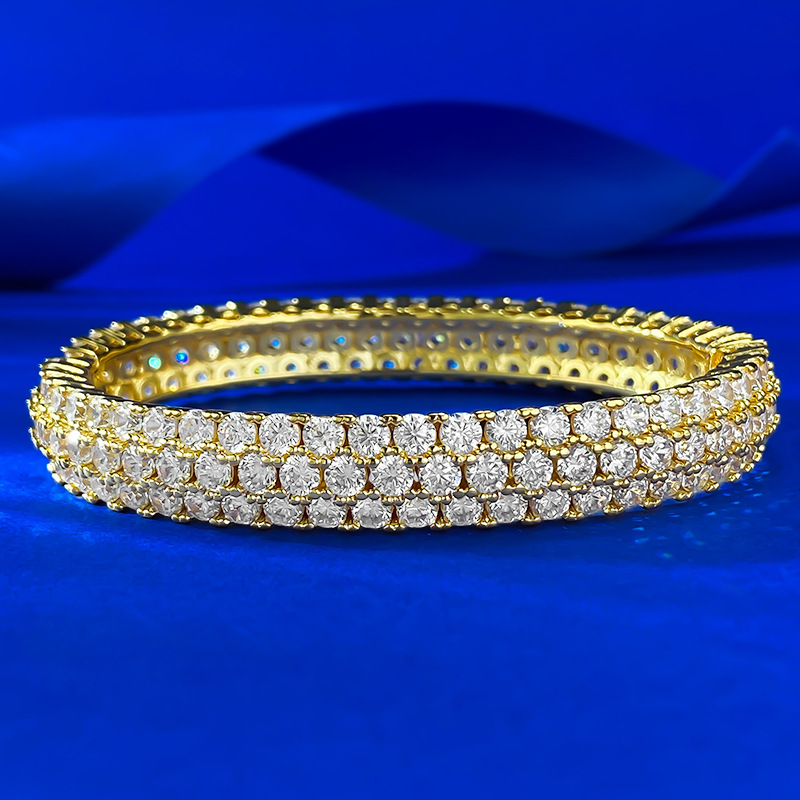
Round Diamond Tennis Bracelet vs Oval: Which Is the Better Buy?
A tennis bracelet looks simple at first: diamonds, metal, clasp, wrist. Then you compare shapes, and the choice gets more personal. The round Diamond Tennis Bracelet vs oval decision affects sparkle, size appearance, price, and how the bracelet feels with the jewelry you already wear.
Round diamonds give you the classic tennis bracelet look. Oval diamonds create a longer, softer line that can look larger on the wrist. Neither shape is automatically better, but one may fit your Style, Budget, and Daily routine better than the other.
At StoneBridge Jewelry, customers usually ask one question first: do I want maximum sparkle or a bigger-looking bracelet? That answer often points them in the right direction.
Round vs Oval Diamond Tennis Bracelets: The Quick Answer
If you want the safest all-around choice, choose a round Diamond Tennis Bracelet. Round brilliant diamonds are known for strong, steady sparkle, and the shape pairs easily with almost everything.
If you want more wrist coverage, choose an oval Diamond Tennis Bracelet. Ovals often look larger face-up than rounds of the same carat weight because their weight spreads across a longer outline.
The round Diamond Tennis Bracelet vs oval choice comes down to this:
- Choose round for classic brilliance, symmetry, and easy everyday styling.
- Choose oval for an elongated look, stronger wrist presence, and a more distinct style.
- Choose either shape only after checking diamond matching, clasp quality, setting security, and bracelet comfort.
According to GIA, a standard round brilliant diamond usually has 57 or 58 facets, depending on whether it has a culet. That cut pattern was built to support brightness, fire, and scintillation. Oval diamonds use a modified brilliant style, but their beauty depends more on symmetry, length-to-width ratio, and bow-tie control.
Why Diamond Shape Changes the Whole Bracelet
A tennis bracelet repeats the same diamond shape around the wrist. That repetition matters. One round diamond may look classic, but 50 or more round diamonds create a clean, even line of sparkle.
Oval diamonds create a different rhythm. Their longer outline adds flow and length, especially in a north-south setting where each oval follows the line of the bracelet.
That’s why round diamond tennis bracelet vs oval comparisons should never stop at carat weight. Two bracelets can have the same total carat weight and look very different on the wrist.
A 3 CTW round bracelet may look crisp and bright. A 3 CTW oval bracelet may look more spread out and graceful. The better buy depends on the look you want every time you put it on.
Shape also changes how much metal you notice. Round diamonds often create a neat bead-like line, especially in four-prong settings. Ovals can reduce the visual gaps between stones when they are set close together, which may make the bracelet appear more continuous across the wrist. If you prefer a very diamond-forward look, pay attention to the spacing between stones in the product photos and side view, not just the top-down image.
Round Diamond Tennis Bracelet: Best for Classic Sparkle
A round diamond tennis bracelet is the traditional choice for good reason. It’s balanced, timeless, and easy to wear with engagement rings, diamond studs, watches, bangles, and chain bracelets.
Round diamonds also make matching easier. Because the shape is symmetrical, jewelers can source calibrated stones with similar size, brightness, and outline. That helps the bracelet look even from clasp to clasp.
In the round diamond tennis bracelet vs oval debate, round usually wins for sparkle. Well-cut round brilliant diamonds return light in a lively, predictable way. They also hide small alignment differences better than elongated shapes.
Pros of Round Diamond Tennis Bracelets
Round diamond tennis bracelets are loved because they don’t feel tied to a trend. They work for daily wear, bridal jewelry, anniversaries, graduations, and milestone gifts.
Key benefits include:
- Strong, classic sparkle
- Easy styling with most jewelry collections
- Broad appeal for gifting
- Better availability in matched sizes
- Clean symmetry around the wrist
- Strong long-term wearability
Round is also a smart pick if you’re buying your first tennis bracelet. If you don’t want to overthink the shape, round gives you the look most people picture when they think of a diamond tennis bracelet.
Cons of Round Diamond Tennis Bracelets
Round diamonds can look a little smaller face-up than oval diamonds of the same carat weight. The shape is compact, so it doesn’t stretch visually across the wrist.
Premium round diamonds may also cost more per carat than some fancy shapes. That doesn’t make them a poor value. It simply means you should compare total carat weight, color, clarity, and setting quality together.
If you want a bracelet that feels less common, round may feel too traditional. For many shoppers, though, that classic quality is exactly the point.
Oval Diamond Tennis Bracelet: Best for a Larger-Looking Style
An oval diamond tennis bracelet keeps the elegance of a tennis bracelet but adds a softer, more modern shape. Ovals look graceful on the wrist, and they often create more visual spread than rounds.
In a round diamond tennis bracelet vs oval comparison, oval usually wins for face-up size. The same total carat weight can appear larger because each diamond has a longer silhouette.
Oval bracelets work especially well for shoppers who already own classic diamond jewelry and want something different. They’re refined, but not predictable.
Pros of Oval Diamond Tennis Bracelets
Oval diamond bracelets offer a mix of elegance and presence. They can feel dressier than round styles, especially in larger total carat weights.
Key benefits include:
- Larger face-up look per carat
- Elegant, elongated wrist line
- More distinctive than a standard round bracelet
- Beautiful standalone presence
- Strong choice for modern fine jewelry wardrobes
- Romantic look in yellow gold, rose gold, white gold, or platinum
Our customers often choose oval when they want a bracelet that people notice, but not one that feels flashy. It’s a quiet statement.
Cons of Oval Diamond Tennis Bracelets
Oval diamonds need careful selection. Because they’re elongated, differences in shape, length, or alignment are easier to see.
The bow-tie effect also matters. A bow tie is a darker area that can appear across the center of oval and other elongated brilliant-cut diamonds. A mild bow tie can be normal, but a heavy one can make the stones look dull.
For an oval bracelet, matching is everything. The diamonds should have similar length-to-width ratios, color, clarity, brightness, and orientation.
Also check how the oval diamonds are arranged. A north-south layout, where the long axis of each oval follows the bracelet line, creates a lengthening effect and usually gives the most classic oval tennis bracelet look. An east-west layout can look bolder and wider, but it may sit differently on smaller wrists. Neither is wrong, but it is worth choosing intentionally.
Round Diamond Tennis Bracelet vs Oval: Side-by-Side Comparison
The round diamond tennis bracelet vs oval choice gets easier when you compare the main buying factors. Think about how the bracelet will look in real life, not just in a product photo.
| Factor | Round Diamond Tennis Bracelet | Oval Diamond Tennis Bracelet |
|---|---|---|
| Sparkle | Usually the most consistent brilliance | Can be bright, but depends more on proportions and bow-tie control |
| Face-up size | Balanced and compact | Often looks larger for the same carat weight |
| Style | Classic, symmetrical, timeless | Elegant, elongated, more distinct |
| Matching | Easier to match in calibrated sizes | Harder to match because shape ratios vary |
| Daily wear | Very versatile and easy to stack | Wearable, but more eye-catching |
| Best for gifts | Safer choice with broad appeal | Best when the recipient likes elongated shapes |
| Budget feel | May cost more per carat in fine make | Can offer more visible size per carat |
| Overall personality | Polished and traditional | Graceful and fashion-forward |
Lab-grown diamonds make both options easier to compare. Many shoppers can look at 2 CTW, 3 CTW, 5 CTW, and 7 CTW bracelets while still paying attention to color, clarity, and craftsmanship.
If you’re comparing both styles, don’t judge by total carat weight alone. A well-matched 3 CTW bracelet can look better than a poorly matched 5 CTW bracelet.
Diamond Specs to Check Before You Buy
Most tennis bracelets are sold with a total carat weight, also called CTW or TCW. That number is the combined weight of all diamonds in the bracelet, not the size of each individual diamond. A 5 CTW bracelet with 55 diamonds will have smaller individual stones than a 5 CTW bracelet with 45 diamonds, and that can change the whole look on the wrist.
For everyday fine jewelry, many buyers prefer diamonds in the near-colorless range, such as G-H or H-I, because they appear bright while keeping the price more efficient than D-F stones. In yellow gold or rose gold, an H-I or I-J range can still face up beautifully because the warm metal softens the contrast. In white gold or platinum, shoppers who are sensitive to warmth often prefer G-H or better.
Clarity is slightly different in a bracelet than in a solitaire ring. Tennis bracelet diamonds are smaller and viewed from farther away, so an eye-clean SI or VS range can be a strong value when the stones are well matched. For larger total carat weights or larger individual oval diamonds, VS clarity may be worth considering because inclusions and uneven transparency can become more noticeable.
Cut quality deserves special attention. With round diamonds, look for consistent brightness across the bracelet and stones that do not appear gray or lifeless. With oval diamonds, look for lively ends, good symmetry, and only a mild bow tie. The best oval bracelets are not simply made with elongated stones; they are made with ovals that look like they belong together.
Certification and Documentation
Certification can be confusing with tennis bracelets because the piece contains many diamonds. Larger center stones in rings are often individually graded, but bracelet diamonds are commonly represented by a quality range for the entire piece. That is normal for multi-stone jewelry, especially when each diamond is small.
What you want is clear documentation. The product details should state the total carat weight, diamond type, color range, clarity range, metal, length, setting, and any grading authority involved. IGI and GIA are both respected names, and many lab-grown diamond pieces use IGI grading. For bracelets with larger individual diamonds, individual grading reports may be more common and can add confidence, especially at higher price points.
Be cautious if a bracelet is listed only as “high quality diamonds” without specific ranges. A clear G-H/VS or H-I/SI description is more useful than vague language. If you are buying online, the return policy matters because it gives you time to inspect matching, sparkle, and fit in normal lighting.
Sparkle, Size, and Wrist Presence
Round diamonds usually win for sparkle because the round brilliant cut was designed for light return. A well-made round bracelet flashes from many angles, even as your wrist moves.
Oval diamonds usually win for size appearance. Their longer shape spreads the visual weight across more space. This is the biggest reason shoppers compare round diamond tennis bracelet vs oval styles before buying.
Want the bracelet to glow quietly every day? Round may be your answer. Want the bracelet to look larger and more graceful from across the table? Oval may be the better fit.
Lighting also changes what you see. Store spotlights can make almost anything sparkle. Try to view diamonds in daylight, office lighting, and softer evening light if possible.
For online shopping, zoom in on the bracelet from multiple angles. Look at the straightness of the diamond line, the evenness of the prongs, and whether any stones appear darker than their neighbors. One mismatched stone can be more noticeable in a tennis bracelet than in a pair of earrings because your eye follows the entire row.
Settings, Security, and Comfort
A tennis bracelet has to move with your wrist. That means the links, prongs, and clasp matter as much as the diamonds.
Common settings include:
- 3-prong settings for a lighter look and more visible diamond surface
- 4-prong settings for a classic balance of security and sparkle
- Shared-prong settings for a sleek diamond-forward line
- Bezel settings for a smooth, protective frame
Round diamonds are easier to align because they look the same from every direction. Oval diamonds need more precise orientation. If an oval stone tilts or twists, the bracelet can look uneven.
For daily wear, look for a box clasp, safety latch, or double safety mechanism. Many tennis bracelets measure around 6.5 to 7 inches, but the right length depends on wrist size and how much drape you like.
A four-prong setting is often the most balanced option for a daily diamond tennis bracelet because each stone is held securely while still allowing plenty of light. Three-prong settings can look delicate and make the diamonds appear more open, but prongs should be checked regularly because there is less metal around each stone. Bezel settings are the most protective and smoothest against clothing, though they can make the bracelet look more metal-forward and slightly less airy.
Comfort also depends on the underside of the bracelet. A well-made tennis bracelet should flex smoothly without pinching, flipping constantly, or feeling sharp along the edges. If the bracelet is too loose, it may rotate and catch on surfaces. If it is too tight, it can press into the wrist when your hand bends.
If you need help with fit, you can contact StoneBridge Jewelry’s experts before choosing a bracelet.
Metal Choices: White Gold, Yellow Gold, Rose Gold, and Platinum
Metal color changes the personality of both round and oval tennis bracelets. White gold gives the brightest, most traditional diamond-forward look because the metal visually blends with the stones. It is a popular choice for shoppers who wear white gold engagement rings, platinum rings, or stainless steel watches.
Yellow gold adds warmth and contrast. It can make a round bracelet feel more classic and an oval bracelet feel more vintage-inspired or romantic. Yellow gold is also forgiving with slightly warmer diamond color grades, which can be helpful if you want to maximize size while staying within budget.
Rose gold gives both shapes a softer look. It pairs beautifully with oval diamonds because the warm-pink metal enhances the elongated, romantic style. It is less common than white or yellow gold for tennis bracelets, which can make it feel more personal.
Platinum is dense, naturally white, and highly durable, but it usually costs more and feels heavier on the wrist. For buyers who want a substantial heirloom feel, platinum is excellent. For buyers who want a lighter bracelet or a lower price, 14K or 18K gold may be the better everyday option.
Between 14K and 18K gold, 14K is generally harder and more resistant to bending, while 18K has a richer gold content and a more luxurious color. For an active daily bracelet, 14K gold is a practical choice. For a special-occasion bracelet or a buyer who prefers richer metal color, 18K gold is worth considering.
Bracelet Length, Sizing, and Carat Weight
Bracelet length can make a beautiful piece feel right or wrong. A common women’s tennis bracelet length is 7 inches, but many wrists need 6.5, 7.25, or 7.5 inches. The easiest starting point is to measure the wrist snugly with a soft tape measure, then add about 0.25 to 0.75 inch depending on the fit you prefer.
If you like a close, tailored fit, add about 0.25 to 0.5 inch. If you like a looser drape, add closer to 0.75 inch. A bracelet worn next to a watch may need a slightly more controlled fit so it does not slide over the watch face or crown.
Total carat weight should be chosen with wrist size in mind. A 2 CTW or 3 CTW bracelet often feels refined and wearable for daily use. A 5 CTW bracelet has more presence without becoming too formal for many wardrobes. A 7 CTW or larger bracelet makes a stronger statement and may sit higher off the wrist depending on the setting.
Oval diamonds can make a lower carat weight look more substantial because of their spread. That can be a smart value strategy if you want noticeable wrist coverage. Round diamonds may require a slightly higher total carat weight to achieve the same visual footprint, but they compensate with stronger classic sparkle.
Budget and Lab-Grown Diamond Value
Lab-Grown Diamond Tennis bracelets are popular because they let buyers compare bigger looks and higher specifications at more accessible prices. Lab-grown diamonds have the same chemical, physical, and optical properties as mined diamonds.
For tennis bracelets, value is not only about carat weight. You should also compare:
- Total carat weight
- Individual diamond size
- Diamond color range
- Diamond clarity range
- Metal type and karat
- Setting style
- Clasp type
- Bracelet length
- Grading or certification details
IGI and GIA are two well-known grading authorities for diamonds, including many lab-grown diamonds. In bracelets with many smaller stones, you may see overall quality ranges instead of a full report for every diamond. That’s normal, but the product details should still be clear.
If you’re weighing round diamond tennis bracelet vs oval options, decide what matters most: top sparkle, larger visual spread, or the best balance of both.
Price ranges vary by diamond size, quality, metal, and construction, but lab-grown diamond tennis bracelets commonly start in the lower four figures for lighter total carat weights and can move into several thousand dollars for 5 CTW, 7 CTW, or higher-quality pieces. Platinum, higher color grades, VS clarity, and larger individual diamonds will raise the price. A bracelet with excellent matching and a secure clasp may cost more than a similar CTW bracelet with looser specifications, but the difference is visible in daily wear.
A common buying mistake is choosing the highest CTW available at the lowest price. That can lead to compromised color, cloudy diamonds, weak settings, or an unreliable clasp. A slightly smaller bracelet with better-matched stones and sturdy construction is usually the better purchase.
You can also shop lab-grown diamonds at StoneBridge Jewelry if you want to compare diamond quality terms before choosing a bracelet.
Care, Maintenance, Shipping, and Returns
A diamond tennis bracelet is durable, but it still needs regular care. Lotions, sunscreen, soap, and everyday dust can collect under the diamonds and reduce sparkle. Clean the bracelet at home with warm water, a small amount of mild dish soap, and a soft brush. Rinse carefully and dry with a lint-free cloth. Avoid harsh chemicals, bleach, and abrasive cleaners, especially around white gold finishes and delicate prongs.
Have the bracelet inspected periodically, especially if you wear it often. A jeweler can check for loose stones, worn prongs, bent links, and clasp tension. This is especially important for three-prong and shared-prong designs, where more of the diamond is visible but less metal surrounds each stone.
When buying online, review the shipping and return details before checkout. Fine jewelry should ship insured and trackable, ideally with signature confirmation. If the bracelet is a gift, check whether discreet packaging, gift packaging, or delivery timing is available. For returns, confirm the return window, whether the item must be unworn, and whether custom lengths or special orders are final sale.
Once the bracelet arrives, inspect it before removing tags or wearing it out. Check the clasp several times, look at the stones in natural light, and confirm the length feels comfortable. If something feels off, contact the jeweler promptly instead of waiting until the return period is almost over.
Common Mistakes When Comparing Round and Oval Bracelets
The first mistake is comparing only carat weight. CTW matters, but shape, individual stone size, setting height, and diamond matching all affect how big the bracelet looks.
The second mistake is ignoring the clasp. A beautiful diamond bracelet is not a good buy if the clasp feels weak or opens too easily. Look for a secure box clasp with a safety latch or double safety, especially on higher-value bracelets.
The third mistake is choosing a bracelet that is too loose. Extra drape may feel glamorous at first, but a loose bracelet can twist, snag, or hit hard surfaces more often. That increases wear on the links and prongs.
The fourth mistake is assuming all ovals look alike. Oval diamonds vary widely. Some are slender, some are wide, some have heavy bow ties, and some have uneven brightness. A fine oval tennis bracelet depends on careful matching from stone to stone.
The fifth mistake is overlooking lifestyle. If you plan to wear the bracelet daily at a desk, with knitwear, or next to a watch, a lower-profile setting may be better. If the bracelet is mostly for dinners, events, and occasions, you may prefer a larger carat weight or a more dramatic oval design.
Who Should Choose Round?
Choose round if you want the most timeless tennis bracelet style. It’s the better pick for classic jewelry lovers, first-time buyers, and anyone who wants a bracelet they can wear often.
Round is also smart for gifts. If you’re buying for an anniversary, birthday, graduation, or wedding-day surprise, round has the broadest appeal.
In the round diamond tennis bracelet vs oval decision, round is the safer buy when you want sparkle, symmetry, and easy styling. It blends well with engagement rings, watches, diamond studs, and simple gold jewelry.
Round is also the better direction if you are sensitive to unevenness. Because every stone is circular, the bracelet line tends to look more uniform even when viewed quickly. That makes round especially practical for buyers who want a no-regret piece that will still feel current ten years from now.
Who Should Choose Oval?
Choose oval if you want a bracelet with more shape and presence. Oval diamonds look elegant, slightly unexpected, and often larger than their carat weight suggests.
Oval is a strong choice if you already own classic diamond pieces and want variety. It also pairs beautifully with Oval Engagement Rings or elongated diamond necklaces.
In the round diamond tennis bracelet vs oval decision, oval is the better buy for shoppers who care most about visual size and a graceful wrist line. Just be sure to inspect bow-tie effect, matching, and stone alignment.
Oval is also a good choice for someone who likes jewelry with movement and softness. The elongated shape can make the wrist look more refined, especially when the stones are set in a continuous north-south line. If you choose oval as a gift, make sure the recipient already likes elongated diamond shapes in rings, earrings, or necklaces.
For more styling ideas, browse StoneBridge Jewelry’s fine jewelry collection and compare bracelet shapes with earrings, necklaces, and rings.
Best Buy Recommendation
For most first-time buyers, the round diamond tennis bracelet is the better overall buy. It offers dependable sparkle, classic style, and easy everyday wear.
The oval diamond tennis bracelet is the better statement buy. It gives you a larger-looking bracelet and a more distinctive shape without losing the elegance of a diamond line bracelet.
StoneBridge Jewelry recommends round for:
- First tennis bracelet purchases
- Milestone gifts
- Everyday wear
- Maximum sparkle
- Classic diamond collections
StoneBridge Jewelry recommends oval for:
- Larger-looking wrist coverage
- A more modern tennis bracelet style
- Statement jewelry buyers
- Fans of elongated diamond shapes
- Shoppers who already own classic round pieces
The best bracelet is the one you’ll reach for often. Shape catches your eye first, but craftsmanship keeps the bracelet comfortable and secure for years.
If you are still split, use this practical rule: choose round when the bracelet needs to be as versatile as possible, and choose oval when the bracelet needs to feel more personal. Then narrow the decision by length, metal color, total carat weight, and diamond quality rather than by shape alone.
Shop Round and Oval Tennis Bracelets
Ready to compare both styles? Start with the shape that matches your goal.
For classic sparkle and timeless styling, shop round lab-grown diamond tennis bracelets.
For elongated brilliance and a larger-looking wrist presence, shop oval lab-grown diamond tennis bracelets.
To compare carat weights, metals, and settings side by side, browse all lab-grown diamond tennis bracelets.
Still unsure? Choose round for classic sparkle and the easiest long-term wear. Choose oval for graceful size and a more memorable look. The round diamond tennis bracelet vs oval choice is really about what you want to see every time the bracelet catches the light.
Ready to Find Your Perfect Diamond?
Explore our collection of certified lab-grown diamonds
Shop Diamonds