Round Diamond Earrings Compare: Studs, Hoops, Drops, and Huggies
If you need to Round Diamond Earrings compare the main styles before buying, the differences show up quickly. A round brilliant looks crisp in studs, bold in hoops, polished in huggies, and elegant in drops. The right pair depends on sparkle, comfort, security, and how often you plan to wear them.
A smart round diamond earrings compare starts with your routine, not the display case. Some pairs stay on for work, errands, and travel. Others fit better for dinners, weddings, proposal weekends, or nights out. I've helped hundreds of couples and gift buyers narrow this down, and the best choice is usually the one that feels like "you" the moment it goes on (trust me, I've seen it happen). Which pair deserves space in your jewelry box?
Round Diamond Earrings Compare: What Matters Most
A round diamond earrings compare should begin with cut quality. GIA says cut drives a round brilliant's face-up beauty, and round brilliants are the only shape GIA grades for cut. That matters in earrings because small changes in proportion, symmetry, and setting can change how bright the pair looks on the ear.
A standard round brilliant has 57 or 58 facets. That facet pattern helps the stone return light well, but the setting still changes the final look. A high-set prong stud reads very differently from a bezel stud, and a pavé hoop spreads sparkle across the ear instead of focusing it in one spot. Honestly, I think that is where a lot of shoppers get surprised: two pairs can use similar diamonds and still look completely different once they're mounted.
Before you choose, compare these details:
- Sparkle: one center stone or a line of smaller stones?
- Comfort: will you forget you are wearing them?
- Security: does the closure feel firm enough for daily use?
- Versatility: do they work with jeans, tailoring, and dress clothes?
- Value: are you paying for visible diamond presence or for design detail?
You should also think about how earrings sit on the ear. A round diamond can look larger or smaller depending on how much metal surrounds it, how high it is mounted, and whether the design includes halos or side stones. That means two styles with the same total carat weight can have very different visual impact.
For buyers comparing natural and lab-grown options, the style decision stays the same, but budget stretches differently. Lab-grown round diamond earrings often let you move up in size or clarity for the same spend, while natural diamonds may hold a different kind of long-term appeal for buyers who prioritize rarity. Either way, the setting and proportions still matter more than many shoppers expect.
Round Diamond Stud Earrings
Round Diamond Studs are the classic answer for a reason. They keep the eye on the center stone and stay neat from morning to night. In a round diamond earrings compare, studs usually win for daily wear because they are simple, stable, and easy to match with almost anything.
Why studs work so well
Studs give you direct sparkle without extra movement. That makes them a smart pick for office wear, travel, and gift buying. Customers who wear earrings most days often get the most value from studs because they never feel fussy. In my 10 years at StoneBridge, I've seen studs become the pair people reach for when life gets busy (and that includes weddings, interviews, and last-minute dinner plans).
They also photograph well without trying too hard. A round stud catches light cleanly from the front, so even modest sizes can look polished. If you want a dependable pair that goes with everything from a white shirt to an evening dress, studs are hard to beat.
Tradeoffs to keep in mind
Studs can feel understated if you want a bigger style statement. Size matters a lot, too, because a small change in carat weight is easy to notice on the ear. A larger matched pair can get expensive fast, especially if you want strong color and clarity alignment.
Another thing buyers miss is balance. A very large stud on a thin lobe can tilt or pull, especially if the post is long and the backing is loose. Heavier studs feel better when the setting is well proportioned and the backing supports the stone properly.
Best setting options
Prong settings show the most diamond and let in more light. Martini settings sit lower and feel sleek. Bezels add a clean frame and more security, though they can slightly soften the open sparkle look. If you are buying a gift for an anniversary or a proposal, a bezel can be a thoughtful choice for someone who is hard on jewelry (yes, even on a budget, it can be the practical win).
For everyday wear, martini or low-profile prong settings often feel most natural because they hug the lobe and reduce catching on clothing or hair. Four-prong settings are common and versatile, while six-prong settings can create a more rounded, secure look around the stone. The right choice often comes down to how important visibility is versus how much protection you want around the girdle.
What to buy in a stud
For many shoppers, a matched pair between 0.50 ct tw and 2.00 ct tw is the most useful range. Smaller pairs around 0.50 to 1.00 carat total weight tend to read refined and wearable every day. Mid-range pairs between 1.00 and 1.50 carat total weight have enough presence to stand out without feeling too formal. Larger pairs above 2.00 carat total weight make a strong statement and usually require a bigger budget plus careful backing choice.
On color and clarity, most buyers do well in the near-colorless range, especially in white gold or platinum. A well-cut I or J color can still look bright in earrings, particularly if the stones are matched and set well. Clarity can often be prioritized a little lower in earrings than in a center stone ring because the stones are farther from the eye, but you still want clean, eye-appealing diamonds. For round studs, many buyers land around VS2 to SI1 for a balanced value point, depending on the stone size and the viewer's sensitivity to inclusions.
Round Diamond Earrings Compare by Style
If you want more shape or motion, hoops, huggies, drops, and dangles shift the look fast. A round diamond earrings compare gets more interesting here because the stone placement matters as much as the stone itself. These styles frame the face and make the diamonds visible from more angles.
Hoop earrings
Round diamond hoops wrap sparkle around the ear instead of concentrating it in one point. Front-facing hoops and inside-out designs can make a moderate diamond weight look much brighter. They feel more fashion-forward than studs and often show up well in photos.
Hoops do ask for a little more care. Larger pairs can snag on hair or clothing, and the closure quality really matters. If you want the look of movement without going too bold, a medium hoop is usually the sweet spot.
Inside-out hoops are especially useful if you want visible diamonds from the front and side. They place diamonds on the outside curve and sometimes the inside curve too, which boosts sparkle without requiring a massive stone size. Full diamond hoops cost more than partial designs, but they deliver stronger presence for special occasions and evening wear.
Huggie earrings
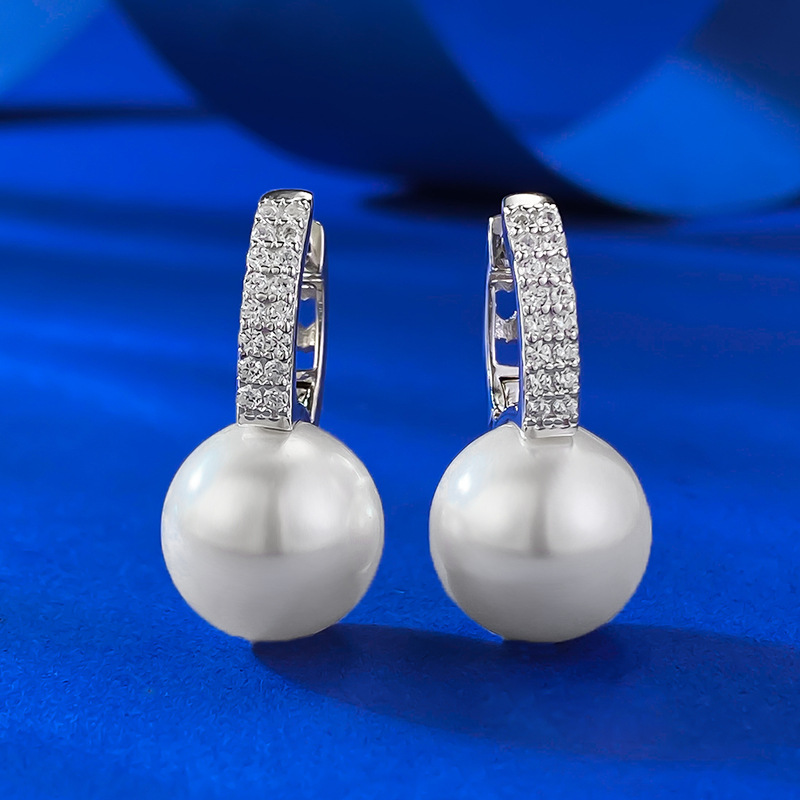
Huggies are small hoops that sit close to the lobe. They are one of the easiest hoop-style choices for daily wear because the compact shape feels secure and clean. In a round diamond earrings compare, huggies land between studs and full hoops in both presence and practicality.
They shine in pavé, channel, or line settings. The tradeoff is simple: huggies give less visual drama than larger hoops or drops. Still, they are a strong pick if you want something polished that will not get in the way. Here's what nobody tells you: huggies are often the style people buy as a "second pair" and end up wearing more than the flashy option.
Because huggies sit close to the ear, size and fit matter more than people expect. A snug huggie should close cleanly without pinching the lobe or dangling lower than intended. If the inner diameter is too small, the earring can press on the ear; if it is too large, it loses the very close-fit look that defines the style.
Drop earrings and dangle earrings
Drop earrings hang just below the ear, while dangles move more freely and usually extend farther down. That motion gives round diamonds a graceful, lively feel. A single stone, a halo, or a small cluster can all work well in this shape.
These styles are better for events than for rough daily wear. They look elegant, but the extra movement can catch on scarves, hair, or coats. If you want a dressier pair for a wedding, milestone birthday, or a special gift, drops and dangles are often the most eye-catching option in a round diamond earrings compare.
Drop earrings are often more balanced than long dangles, which makes them easier to wear if you like movement but want less swing. Dangles make the strongest statement, but they are best chosen for lighter wearers or special occasions where comfort for many hours is not the main concern.
Halo and cluster variations
Many round diamond earrings use a halo or cluster around the center stone to increase apparent size. A halo can make a smaller round diamond read much larger and can also add a vintage feel. Cluster designs create a similar effect with several smaller stones arranged to mimic a larger center. These can be excellent value plays if you care more about visible sparkle than about a single soltaire center.
The tradeoff is maintenance. More stones mean more prongs, more places for dirt to collect, and more settings to inspect over time. If you choose halo or cluster earrings, pay close attention to how securely the stones are mounted and whether the edges feel smooth against the skin.
Diamond Specs, Certification, and What Actually Matters
When shoppers compare round diamond earrings, the spec sheet can look intimidating. The good news is that earrings are usually more forgiving than rings in some respects, because the stones are not viewed as close-up all day. Still, a few details deserve real attention.
Cut: For round brilliants, cut is the main sparkle driver. Look for strong proportions, good symmetry, and polish. If you are buying loose center stones before setting them, GIA Excellent is a solid benchmark, and AGS Ideal is another respected reference where available. For finished earrings, ask whether the manufacturer prioritizes cut quality in the matched pair.
Color: White gold and platinum usually show the face-up color of a diamond more clearly, so near-colorless grades often offer good value. Yellow gold can make a slightly warmer stone look intentional and attractive, which sometimes lets buyers save money without sacrificing beauty. Many earrings look great in the G to J range, depending on size and setting.
Clarity: Earrings do not always require the same clarity grade as a center stone ring. Eye-clean stones can deliver better value than chasing a technically higher grade you will never notice. That said, avoid obvious inclusions or cloudiness, especially in larger studs where each stone is more visible.
Carat weight: Focus on total carat weight for pairs, but also ask for individual stone weight and measurements. Two pairs with the same total weight can face up differently if one uses slightly deeper stones and the other uses more spread. Measurements matter because earrings are judged by how they look on the ear, not just by the number on the paperwork.
Certification: For larger matched pairs, independent grading reports add confidence. GIA and IGI are common in the market, especially for loose or larger stones. Many smaller accent diamonds in earrings are not individually certified, which is normal, but you should still expect quality disclosure from the seller. If the pair is expensive, ask what documentation accompanies it and whether each center stone is individually graded or sold as a matched pair with a shared report.
One practical note: tiny melee stones used in pavé hoops, huggies, and drops are often not certified individually, and that is standard. In those cases, craftsmanship becomes the bigger issue. Check for even stone alignment, secure micro-pavé, and a smooth finish on the underside of the setting.
Metal Choices and Setting Tradeoffs
Metal changes both the look and the durability of your earrings. The same round diamond can read brighter, warmer, heavier, or more delicate depending on the metal around it.
14k gold: This is a popular balance of strength and value. At 58.3% pure gold, 14k holds up well for regular wear and is usually more affordable than higher-karat options. It is a strong choice for studs, huggies, and everyday hoops.
18k gold: This has a richer gold color and a slightly softer feel than 14k. It works well if you want a more luxurious look and do not mind a bit more care. It is common in fine jewelry and is especially attractive in yellow or rose gold styles.
Platinum: Usually 95% pure, platinum is dense, durable, and naturally white. It is often chosen for premium studs and important gifts. It tends to cost more, but many buyers like the weight and the way it wears over time. It can develop a soft patina that some people love and others prefer to have polished.
White gold: A strong choice for making diamonds look crisp and bright. White gold often receives rhodium plating to enhance its whiteness, which means it may need refreshing over time. It is a common pick for modern-looking studs and hoops.
Yellow gold: Great if you want warmth or a vintage feel. Yellow gold can make near-colorless diamonds feel slightly richer and can be forgiving with warmth in the stone. It is especially nice for fashion-forward hoops and huggies.
Rose gold: Less common for classic round diamond compare shopping, but it can be beautiful if you want a softer, romantic tone. It pairs well with some skin tones and gives studs or small hoops a distinctive look without being loud.
Setting style is just as important. Prongs maximize light return and keep the diamond visually open. Bezels improve protection and make a pair feel more modern and secure, but they can reduce the visible edge of the stone. Pavé settings add surface sparkle, yet they require better maintenance because more tiny stones means more places to inspect. Channel settings keep stones protected and give a sleek finish, which is useful in huggies and some hoops.
Price Ranges and Value Guide
Price varies widely based on diamond size, cut quality, whether the stones are natural or lab-grown, and how much metal and setting work go into the piece. A realistic round diamond earrings compare should include budget, because style and price are tied together more than most shoppers realize.
Diamond studs: Entry-level natural diamond studs can start in the low hundreds for small total weights and simpler settings, while well-cut natural pairs with stronger size and quality can run into the thousands. Lab-grown studs often offer more visible size at the same price point, sometimes moving a buyer from a modest pair to a much fuller look.
Huggies: Plain gold huggies with small diamonds may sit in the mid-hundreds, while fuller pavé versions or larger matched diamonds can move into the high hundreds or thousands. Because the stones are smaller, craftsmanship often drives the price more than the center-stone value alone.
Hoops: Diamond hoops span a large range. Partial diamond hoops are usually less expensive than inside-out or fully paved designs. The more visible the diamonds are from the front and side, the higher the labor and stone count tend to be.
Drops and dangles: These can be affordable if they use smaller diamonds and minimal metal, but more elaborate pieces with multiple matched stones, halos, or articulated movement can climb quickly. Fancy shapes are not always the most important cost driver; labor and setting complexity often matter just as much.
If you are value-focused, ask yourself where the money is going. In studs, most of the budget should be in the stones. In hoops, huggies, and drops, a larger share can go into the setting and the number of stones. That is not bad, but it means the visible size of the diamond may not tell the whole story.
How to Choose the Best Pair
The easiest round diamond earrings compare is the one that matches real life. The pair you wear often will always beat the pair you admire once a year. Think about the moments that matter most: work, travel, dinners, proposals, weddings, and the little celebrations in between.
Match the style to the occasion
- Office wear: choose diamond studs or huggies for polished sparkle without noise.
- Travel: choose studs or tight huggies because they sit close and stay easier to secure.
- Date nights: choose hoops if you want more profile and more visible shine.
- Special events: choose drops or dangles for length and movement.
- Everyday luxury: choose studs if you want the most consistent wear.
If you want a pair that can move from day to evening without changing, huggies and small hoops are often the sweet spot. If you want one pair that feels timeless across decades, studs usually win. If you prefer a more fashion-led choice, hoops and dangles make the strongest style statement.
Match the style to the wearer
Minimalists usually like studs because the look stays clean. Statement jewelry fans tend to prefer hoops or dangles because the shape has more energy. Gift buyers often choose diamond studs because the style is broad and easy to wear. There is a reason studs show up so often for anniversaries and proposal gifts: they feel timeless without trying too hard, which is a lovely balance.
If you are comparing value across more than earrings, you can also browse our jewelry collection to match a pair with a necklace or bracelet. For shoppers who want more size for the same budget, explore our lab-grown diamonds before you lock in the setting.
Match the style to face shape and neckline
Face shape changes the way a silhouette reads. Round faces often look good with the vertical line of drops, while longer faces can handle the width of hoops. Studs work for almost everyone because they do not add extra length or width.
Necklines matter too. Higher necklines pair well with studs and huggies because they keep the look clean. Open necklines can carry more movement, so drops and dangles usually look intentional rather than busy.
Hair length and styling matter as well. Short hair or tucked-back styles make hoops and dangles more visible, while long hair can soften the outline of larger earrings. If the wearer often wears hair down, stronger stud size or a more prominent huggie may be a better everyday choice than a tiny pair that disappears into the hair.
Check the details before you buy
- Backing type: push backs are easy to use, screw backs add security, and hinged closures are common on huggies and hoops.
- Pair matching: color, clarity, and size should be closely matched.
- Total carat weight: look at the full pair, not just one stone.
- Comfort: smooth edges and balanced weight matter more than many shoppers expect.
- Maintenance: studs are easiest to clean, while pavé hoops and drops need more care.
A round diamond earrings compare should also include the back view. Prongs should line up, hinges should close cleanly, and the stones should sit straight. Those small details say a lot about the craftsmanship you are paying for.
Another practical check is ear security. For high-value pieces, ask whether the backs are locking, whether screw backs are available, and whether replacement backs can be purchased later. That is especially useful if the earrings are a gift and the wearer has lost backs before. Secure hardware is one of those details people do not think about until they need it.
Sizing, Fit, and Comfort
Earring fit is often overlooked until the pair arrives. With round diamond earrings, size is not just about diameter or carat weight; it is also about how the style hangs, how far it projects from the lobe, and whether the closure stays comfortable over a full day.
For studs, post length should be long enough to accommodate the lobe without pressing into the skin, but not so long that the backing feels loose. For huggies, the inner diameter should allow a close fit without pinching. For hoops, the size should match how much movement you want; a slightly larger hoop can feel more elegant, while a small hoop may look cleaner and stay more secure.
If the wearer has sensitive ears, metal purity and closure finish matter. Nickel-free alloys are important for many people, and polished edges reduce irritation. Some shoppers also prefer screw backs for studs because they feel more secure for active wear, though push backs are faster to remove and still work well if the fit is right.
Weight is another comfort factor. Heavier diamond hoops or dangles can tug on the lobe over time, especially if the design concentrates weight at the bottom. A well-balanced piece will feel steadier and more comfortable than a visually similar pair with poor distribution.
Care, Cleaning, Shipping, and Returns
Before You Buy, ask how the earrings are packaged, shipped, and supported after purchase. The best jewelry purchases come with a good policy, not just a pretty box.
Cleaning: Diamonds attract oils and lotion quickly, and earring backs collect residue too. A soft brush, warm water, and mild soap are usually enough for routine care. For pavé hoops or intricate drops, use a gentle clean so you do not loosen small stones. Professional cleaning is a good idea once or twice a year if the pair is worn often.
Storage: Keep pairs separate so prongs and stones do not scratch other pieces. A lined jewelry case or small pouch is enough for most buyers. Studs are easy to misplace, so a secure compartment matters.
Inspection: Check prongs, backs, and hinges every few months. A loose post or worn catch is easier to fix early. If a diamond looks slightly crooked or a hinge feels soft, stop wearing the pair until it is inspected.
Shipping: For higher-value earrings, insured shipping and signature confirmation are worth having. The package should arrive in a sturdy outer box with the jewelry secured inside. If you are buying a gift, ask whether the seller can ship unbranded or in discreet packaging.
Returns: Return windows matter more than many people realize. Earrings can be difficult to judge from photos alone, especially if you are choosing between hoop diameter or stud size. A reasonable return policy gives you room to check the fit and sparkle in real light. Make sure you understand whether custom items, engraved pieces, or specially ordered diamond pairs are final sale.
Common Mistakes Buyers Make
Even experienced shoppers make avoidable mistakes when they round diamond earrings compare styles. A few simple checks can prevent most of them.
- Buying by carat weight alone instead of looking at cut, measurements, and setting.
- Choosing hoops or drops that are too heavy for everyday use.
- Picking huggies without checking inner diameter and closure quality.
- Overpaying for a grading detail that will not be visible in the ear.
- Ignoring metal choice and ending up with a pair that clashes with the rest of the wardrobe.
- Forgetting to check whether the pair is matched by eye as well as by report.
- Skipping return policy review for an expensive purchase.
One especially common mistake is assuming all "diamond hoops" are the same. They are not. A slim hoop with small, well-set diamonds can feel elegant and wearable, while a heavier design with more stones can feel dramatic and expensive but less practical. The same is true for studs: a bright but well-proportioned pair often outperforms a larger pair with mediocre cut.
Expert Recommendation
If you want one simple answer, Round Diamond Studs are the safest all-around choice. They are versatile, easy to gift, and easy to wear for years. For a lot of shoppers, that makes them the strongest value.
Here is the short breakdown:
- Everyday wear winner: diamond studs
- Best gift choice: round diamond studs
- Best dressy style: drop earrings or dangle earrings
- Best value choice: huggie earrings
- Best style-forward option: hoop earrings
Our customers often pick studs first, then come back for huggies once they want a little more shape. That pattern makes sense. The first pair handles daily life, and the second pair adds variety without taking over the budget.
If you are still torn, compare round diamond earrings by how often you will actually wear them. A pair that stays in your jewelry box is not a great buy, even if it looks perfect in the case.
If you want the most balanced purchase, start with a pair that has strong cut quality, a metal you already wear often, and a closure that feels secure in real life. That combination usually matters more than chasing the biggest possible stone size.
Shop the Pair That Fits
Start with round diamond studs if you want the most reliable option. Move to huggies or hoops if you want a stronger frame around the face. Choose drops or dangles if you want more motion for events and evenings.
Shop by goal:
- For everyday polish, browse our jewelry collection and look for secure diamond studs.
- For more visible sparkle, compare huggie earrings and hoop earrings side by side.
- For more budget room and larger looks, shop loose diamonds before choosing the setting.
- If you want help with size, metal, or backings, contact our jewelry experts.
The easiest round diamond earrings compare is the one that fits your routine, your style, and your budget. If you want the broadest wearability, start with diamond studs. If you want a little more edge, huggies and hoops are the next best move.
FAQ
Are round diamond stud earrings better than hoop earrings for everyday wear?
Round Diamond Stud Earrings are usually the most practical everyday choice because they sit close to the ear and stay low-profile. Hoop earrings can work daily too, but they bring more movement and can feel less restrained. If you want a pair that disappears into your routine, studs usually make more sense.
What is the difference between huggie earrings and hoop earrings?
Huggie earrings are smaller hoops that sit tight to the lobe. They usually feel more secure and polished, while larger hoops create more movement and a bigger visual frame. If you want a compact style for work or travel, huggies are easier to live with.
Which round diamond earrings are best for a gift?
Round diamond studs are often the safest gift choice because they suit most ages, tastes, and wardrobes. They are easy to size, easy to style, and hard to get wrong. If the person likes statement jewelry, huggies or drops can be a good second choice.
Do round diamond drop earrings look more elegant than studs?
Drop earrings usually look more formal because they add length and motion below the earlobe. Studs feel more classic and understated, which many people prefer for daily wear. For events, drops often feel dressier; for everyday use, studs usually win on versatility.
How do I choose between diamond studs and round diamond hoops?
Choose diamond studs if you want the most flexible pair for work, errands, and travel. Choose round diamond hoops if you want a brighter outline around the face and more style impact in photos. If you are doing a round diamond earrings compare based on total wear, studs usually stay in rotation longer.
What diamond grades should I prioritize for earrings?
Prioritize cut first for round brilliants, then choose color and clarity based on the setting and your budget. Earrings do not always need the highest clarity grade, especially if the stones are small or set in a way that hides minor inclusions. For the best balance, many buyers focus on eye-clean stones with strong cut and a color grade that stays bright in the chosen metal.
Do I need certification for diamond earrings?
Certification is most helpful for larger center stones or premium pairs where the diamond value is a major part of the price. Smaller accent stones in hoops, huggies, and pavé drops are often not certified individually, which is normal. Ask for documentation when the stones are larger, the price is high, or you want extra confidence in the grading.
How much should I expect to spend?
Small diamond studs can start in the low hundreds, while stronger natural diamond pairs can move into the thousands depending on size and quality. Lab-grown options may offer a larger look at the same budget. Hoops and drops can range widely based on stone count, labor, and setting complexity, so compare both the diamond content and the craftsmanship.
What is the safest closure for earrings?
Screw backs are often considered the most secure for studs, especially if the wearer plans to sleep, travel, or wear them often. Push backs are faster and still work well if they fit properly. Huggies and hoops usually use hinged or latch closures, which should close firmly and click into place without wobble.
Ready to Find Your Perfect Diamond?
Explore our collection of certified lab-grown diamonds
Shop Diamonds