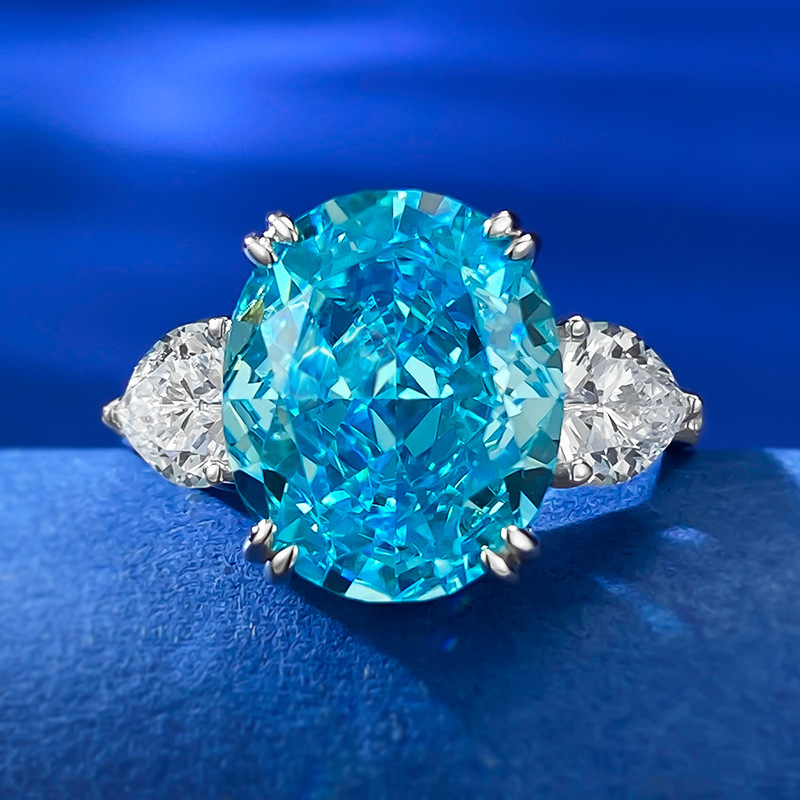
Radiant Cut Three Stone Ring Setting Comparison
A Radiant Cut Three Stone Ring setting comparison usually comes down to two beautiful choices: trapezoid side stones or half-moon side stones. Both frame a radiant center diamond well, but they create very different looks on the hand.
Trapezoids look crisp, tailored, and architectural. Half-moons feel softer, more romantic, and a little more unexpected. The best choice depends on the center diamond's measurements, your style, and how you want the ring to wear every day.
at StoneBridge Jewelry, we often see proportion matter more than carat weight alone. I've helped hundreds of couples compare Three Stone Rings, and the ones that feel truly right almost always come down to balance: side-stone size, sparkle, prong placement, setting height, and wedding band fit. Lab-grown radiant diamonds make that planning even more useful because shoppers can often compare larger centers or higher grades within a similar budget.
What This Radiant Cut Three Stone Ring Setting Comparison Covers
This Radiant Cut Three Stone Ring setting comparison focuses on a radiant cut center diamond with either two trapezoid diamonds or two half-moon diamonds. The side-stone shape changes the outline, sparkle pattern, width, and overall mood of the finished ring.
A Radiant Cut Diamond has cropped corners, straight sides, and brilliant-style facets. Trapezoid side stones echo those clipped corners, giving the design a clean and connected look. Half-moon side stones create contrast because their straight inner edge meets the radiant, while the rounded outer edge softens the ring.
Other side stones can work too. Baguettes give a linear, vintage-leaning look with step-cut flashes. Pears create a tapered outline with more drama. Smaller radiant side stones add strong sparkle, though they may not transition into the band as gracefully.
Before choosing a setting, look at these design points:
- Side-stone shape affects symmetry, softness, and finger coverage.
- Setting height changes comfort, snag risk, and wedding band fit.
- Prong style affects both security and how much metal you see.
- Metal color changes contrast, warmth, and perceived diamond color.
- Diamond measurements matter more than carat weight by itself.
Two radiant diamonds with the same carat weight can face up very differently. A 2.00 carat elongated radiant might measure about 8.5 x 6.2 mm, while a deeper 2.00 carat stone may look smaller from above. That difference changes the ideal side-stone length, angle, and basket design (trust me, I've seen a "same carat weight" comparison surprise people more than once).
How Radiant Cut Three Stone Rings Are Built
A three stone setting has several working parts. The radiant center sits in the main head or basket. The side diamonds sit on either side, usually angled slightly toward the center stone. Prongs hold each diamond, while the gallery and bridge support the ring from underneath.
That structure affects wedding band fit. A low basket can feel sleek and comfortable, but it may block a straight wedding band from sitting flush. A raised gallery may allow a closer stack, though a very tall setting can feel less practical for active hands.
GIA explains that brightness, fire, and scintillation come from cut quality and proportion. GIA does not assign a standard cut grade to fancy shapes such as radiant cuts, so shoppers should study measurements, table size, depth, polish, symmetry, and facet pattern. Expert guidance can help connect those technical details to how the diamond will actually look in a ring.
Radiant cuts are lively stones. They blend the outline of an emerald cut with the sparkle of a brilliant cut. Because the center already has strong scintillation, the side stones should support it rather than compete with it.
Buying Criteria for a Radiant Cut Three Stone Ring Setting Comparison
A helpful Radiant Cut Three Stone Ring setting comparison should answer a practical question: which ring will look beautiful and still feel good after years of wear?
Start with brilliance. Radiant centers already sparkle, so the side stones need enough life to keep the ring balanced. Dull trapezoids or poorly matched half-moons can make even a strong center diamond feel less polished.
Next, consider perceived size. Three Stone Rings usually look larger than solitaires because the side stones extend the width across the finger. Many balanced designs use side stones that appear roughly 25% to 33% of the center stone's visual weight on each side, though millimeter size matters more than carat weight.
Comfort also deserves attention. Smooth galleries, secure baskets, and a well-shaped shank make a difference during daily wear. Diamond ranks 10 on the Mohs hardness scale, but prongs and exposed points still need smart protection.
Metal choice changes the look:
- Platinum feels substantial, naturally white, and secure for fine prong work.
- White gold gives a bright classic look and is usually rhodium plated.
- Yellow gold adds warmth and can flatter near-colorless diamonds.
- Rose gold feels romantic, especially with half-moon side stones.
For lab-grown diamonds, compare IGI or GIA reports for carat weight, color, clarity, measurements, polish, symmetry, fluorescence, and growth disclosure. D-F color looks icy in platinum or white gold. G-H can still look bright and may offer better value. VS1-VS2 clarity is a safe target, though some SI1 diamonds look eye-clean when inclusions sit away from the table.
Trapezoid Side Stones in a Radiant Cut Three Stone Ring
A Radiant Cut Three Stone Ring with trapezoid side stones is the more structured option. The angled sides of the trapezoids repeat the radiant's clipped-corner outline, so the ring looks intentional from center stone to shank.
This choice works especially well with elongated radiant cuts. A center stone with a 1.30 to 1.45 length-to-width ratio often pairs beautifully with tapered trapezoids. The side stones widen the ring without making it look bulky.
Trapezoids suit shoppers who like clean lines, strong symmetry, and a luxury custom look. If you want the center diamond to feel larger without adding a halo, trapezoids are often the stronger path.
Matching matters here. A bench jeweler will check the trapezoids' length, angle, depth, color, and brightness. If one side stone is deeper, darker, or angled differently, the eye catches it fast because this design depends on balance.
Trapezoid Setting Features
Trapezoids can be straight or tapered. Straight trapezoids create a wider, bolder look. Tapered trapezoids narrow toward the shank and give the ring a more graceful flow.
Prongs also shape the final style. Claw prongs keep the metal refined. Protective corner prongs help guard exposed points. Shared prongs can look minimal, but they need careful engineering.
For square radiant centers, trapezoids still can work. The side stones simply need adjusted dimensions so the ring does not look too wide or boxy.
Pros and Cons of Trapezoid Side Stones
Pros:
- Crisp geometry that suits radiant cut diamonds.
- Strong finger coverage without a halo.
- Excellent symmetry when the pair is well matched.
- High-end custom feel.
- Strong fit for elongated radiant centers.
Cons:
- Precise matching is essential.
- Poorly cut trapezoids may look dark or glassy.
- The style can feel less soft than curved side stones.
- Custom sourcing may add time or cost.
Trapezoids often win a radiant Cut Three Stone Ring setting comparison because they make the whole design feel connected. They frame the radiant instead of distracting from it. Honestly, I think this is why so many people choose trapezoids after seeing both styles side by side; the ring just clicks visually.
Half-Moon Side Stones in a Radiant Cut Three Stone Ring
A radiant cut Three Stone Ring with half-moon side stones has a softer outline. The straight edge of each half-moon sits beside the radiant, while the curved edge rounds out the silhouette.
This style works well for shoppers who want contrast. The radiant center stays crisp, but the side stones add curve and romance. In rose gold or yellow gold, that softness becomes even warmer. In platinum or white gold, the design feels sculptural and clean.
Half-moons are also a good choice if you want a ring that feels distinctive without becoming ornate. They do not disappear into the center stone the way trapezoids can. They bring their own shape to the design.
The fit must be close. A large gap between the half-moon and radiant center can make the ring look disconnected. A too-tight build can make cleaning harder or create stress points if the setting is not designed well.
Half-Moon Setting Features
Half-moon diamonds have one straight side and one rounded side. In a Three Stone Ring, the straight side faces the center stone. The curved side faces outward toward the finger.
Open galleries and fine claw prongs usually suit this style. They keep the setting light and make cleaning easier. Low-profile baskets can also help the ring feel comfortable for daily wear.
The center diamond's shape still guides the side stones. A long radiant needs half-moons with enough length to avoid looking stubby. A more square radiant often needs smaller, tighter side stones for balance.
Pros and Cons of Half-Moon Side Stones
Pros:
- Softer silhouette than trapezoid settings.
- Romantic, elegant, and distinctive look.
- Strong contrast against radiant cut geometry.
- Beautiful in platinum, yellow gold, or rose gold.
- Good choice for shoppers who do not want a very angular ring.
Cons:
- Less connected-looking than trapezoid side stones.
- Gaps are easy to notice if alignment is off.
- Carat weight alone will not tell you how they face up.
- Some wedding bands may need a contour fit.
Half-moons are best for shoppers who want shape contrast. They frame a radiant center with softness instead of extending its angles. For a proposal ring that feels personal, tender, and just a bit different, half-moons can be a wonderful choice.
Trapezoid vs Half-Moon Radiant Cut Three Stone Ring Setting Comparison
This radiant cut Three Stone Ring setting comparison is easiest to judge side by side. Both options can be stunning, but they serve different style goals.
| Buying Factor | Trapezoid Side Stones | Half-Moon Side Stones |
|---|---|---|
| Overall look | Sleek, angular, tailored | Soft, curved, romantic |
| Best effect | Extends the radiant shape | Contrasts the radiant shape |
| Finger coverage | Usually very strong | Strong but visually softer |
| Sparkle | Balanced flashes when well cut | Bright, rounded side sparkle |
| Matching challenge | Angle, depth, and outline | Curve, length, and straight-edge fit |
| Wedding band fit | Depends on basket height | Often needs a contour or custom band |
| Best center ratio | Often 1.30 to 1.45 | Elongated or moderately rectangular radiants |
| Best shopper | Loves clean symmetry | Loves curve and contrast |
Trapezoids create the most connected look. They make the center diamond feel broader and more important, especially with elongated radiants. Half-moons create a gentler shape and a more romantic profile.
Price depends more on diamond quality, metal, and craftsmanship than side-stone shape alone. A 2.50 carat lab-grown radiant with high color and clarity will drive more of the budget than the choice between trapezoids and half-moons. Platinum, custom CAD design, hand finishing, and side-stone sourcing also affect the quote.
Here's what nobody tells you: the setting that photographs best is not always the one that feels best on the hand. Try to think about how the ring will move through real life: putting on sweaters, reaching into bags, hugging people after the proposal, and eventually sitting beside a wedding band (yes, even on a budget, those details matter).
If you want to compare center stones first, browse StoneBridge's lab-grown diamonds and review exact measurements. If you're ready to test different ring styles, use the ring builder to compare shape, size, and metal color.
Who Should Choose Each Setting?
Choose trapezoid side stones if you want a ring that feels sleek, balanced, and precise. They're ideal for shoppers who love symmetry, clean edges, and strong spread across the finger. They also pair especially well with elongated Radiant Cut Diamonds.
Choose half-moon side stones if you want a softer and more romantic ring. They're a strong fit if you like the sparkle of a radiant cut but do not want the full design to feel too angular.
A few other side-stone options may fit your taste:
- Baguettes: best for vintage lines and step-cut flashes.
- Pears: best for dramatic taper and a pointed outline.
- Smaller radiants: best for a consistent sparkle pattern.
Lifestyle should guide the final call. If the wearer works with their hands, wears gloves, or wants low-maintenance jewelry, choose secure prongs and a lower profile. If a flush wedding band matters, plan the bridge and basket before the ring is made.
In my years working with Engagement Ring Shoppers at StoneBridge, I have learned that the right ring is usually the one that matches both the person's style and their daily rhythm. A ring can be breathtaking in a display case, but it also needs to feel natural during coffee runs, workdays, family dinners, and all the little moments after the "yes."
You can compare more finished styles in our engagement rings collection or browse broader fine jewelry inspiration at StoneBridge jewelry. For custom proportions, our team can help match the center stone to the right side-stone size.
StoneBridge Recommendation
Our editorial pick for most shoppers is the trapezoid setting. In this radiant Cut Three Stone Ring Setting Comparison, trapezoids offer the strongest mix of symmetry, coverage, and radiant cut compatibility. Their angles repeat the radiant's clipped corners, which gives the ring a polished look.
Half-moons remain the best choice for shoppers who want softness and contrast. If the wearer loves curves, warm gold, romantic styling, or a designer-inspired silhouette, half-moons may feel more personal.
For many custom rings, we recommend choosing the radiant center first. Then we build the side stones around its exact length, width, depth, and ratio. That avoids the common mistake of forcing a great diamond into a setting that does not suit its proportions.
Start with radiant diamonds, decide whether you want crisp geometry or soft contrast, then design the setting around the stone you'll actually wear. When the proportions are right, a Three Stone Ring has a beautiful way of feeling meaningful without needing to shout; it has presence, sentiment, and a little everyday magic.
FAQ
What is the best side stone shape for a radiant cut three stone engagement ring?
Trapezoid side stones are often the best all-around match for a radiant cut because they echo the diamond's clipped corners. They give the ring a crisp, balanced look with strong finger coverage. Half-moon side stones are better if you want a softer and more romantic outline.
Are trapezoid or half-moon side stones better for a radiant cut three stone ring?
Trapezoids usually look more connected to a radiant center diamond. Half-moons create more contrast and curve. The better choice depends on whether you want clean symmetry or a softer shape.
Does a radiant cut three stone ring look bigger than a solitaire?
Yes, a Three Stone Ring usually looks larger than a solitaire because the side stones add width across the finger. This effect is strongest when the side stones are matched to the center diamond's measurements. A smart setting can make the center feel more substantial without increasing only the center carat weight.
What radiant cut ratio works best for a three stone setting?
Elongated radiant cuts around a 1.30 to 1.45 length-to-width ratio often work well with trapezoid or half-moon side stones. More square radiant cuts can also look beautiful, but they need tighter side-stone proportions. Always compare millimeter measurements, not just carat weight.
Are lab-grown diamonds good for radiant cut three stone rings?
Yes. Lab-grown diamonds have the same physical, chemical, and optical properties as mined diamonds. They also let many shoppers compare larger sizes or higher grades within a similar budget. Review IGI or GIA reports before choosing the center stone and side stones.
Ready to Find Your Perfect Diamond?
Explore our collection of certified lab-grown diamonds
Shop Diamonds