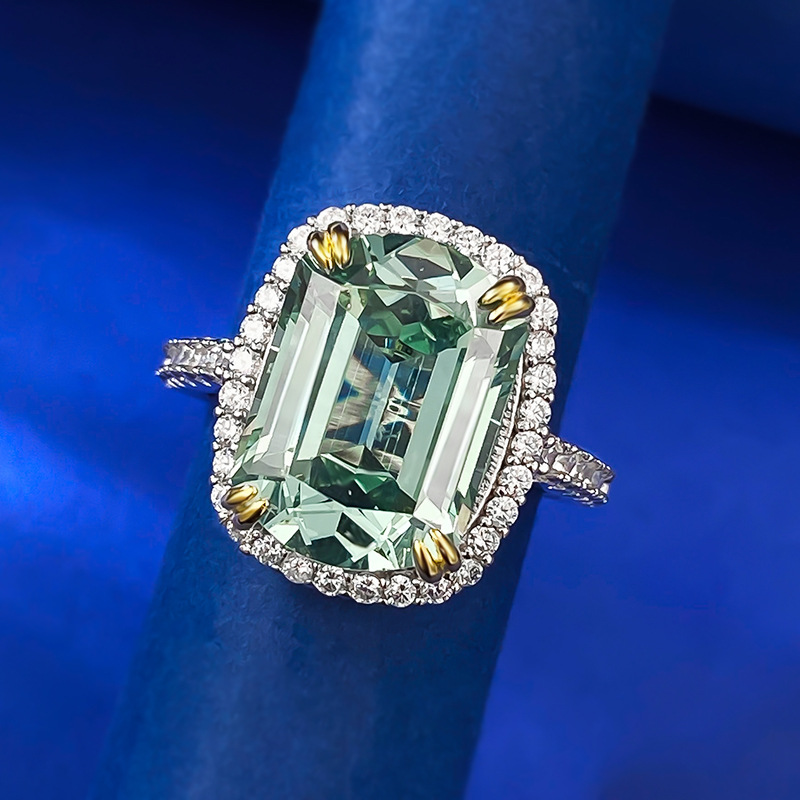
Prong Setting vs Halo Ring: How to Compare and Choose the Right Engagement Style
Choosing between prong Setting vs Halo ring is one of the most common ring shopping decisions for good reason. Both styles can showcase a beautiful diamond, but they create very different looks, levels of sparkle, and wear experiences over time. If you are comparing prong setting vs halo ring for an engagement ring or upgrade ring, the right choice usually comes down to how you want the center stone to look, how much maintenance you are comfortable with, and how you want to balance budget against visual impact.
GIA guidance on diamond appearance shows that setting style plays a major role in how much light reaches the stone and how large the ring appears on the hand. That makes this comparison especially useful for shoppers who want a ring that feels right on day one and still makes sense years later.
Prong Setting vs Halo Ring: What’s the Difference?
A prong setting holds the center stone with small metal claws, usually four or six, that lift the diamond and leave much of its surface open to light. A halo ring surrounds the center stone with a frame of smaller accent diamonds or gemstones. In a prong setting vs halo ring comparison, the biggest difference is simple: prong settings spotlight the main diamond, while halo rings add a border that boosts sparkle and makes the center stone look larger.
That difference changes more than appearance. It affects the ring’s profile, how secure the stone feels, how easy the ring is to clean, and how the design reads from across a room.
Shoppers compare prong setting vs halo ring for a few practical reasons:
- They want to know which style makes the center diamond look bigger.
- They want the best sparkle for the budget.
- They want a ring that works for daily wear.
- They want a setting that fits their style, from minimal to ornate.
The decision usually comes down to four factors: budget, center-stone visibility, maintenance, and personal style. A prong setting often puts more of the budget toward the center diamond. A halo ring often spreads the visual impact across more stones, which can create a larger look at a lower center-stone carat weight.
If you are still narrowing down styles, it can help to explore our engagement rings or browse our jewelry collection to see how different settings change the overall look.
Prong Setting: Features, Benefits, and Trade-Offs
A prong setting is one of the most classic ways to mount a diamond. The prongs grip the stone at key points, leaving the crown and table open to light. That open structure is a major reason prong setting vs halo ring debates often favor prongs for shoppers who want maximum center-stone visibility.
How prong settings work
Most fine-jewelry prong settings use four prongs or six prongs.
- Four-prong settings show more of the diamond and create a cleaner, lighter look.
- Six-prong settings add a bit more security and a rounder visual outline.
- V-prong settings protect pointed corners on shapes like princess, pear, and marquise cuts.
The style is versatile. Prongs can be rounded, flat, talon-shaped, or claw-like. Each one changes the ring’s personality slightly. A delicate claw prong feels airy and modern. A heavier prong feels sturdier and more traditional.
In a prong setting vs halo ring comparison, prongs usually win on simplicity. They keep attention on the center stone and work beautifully with round brilliant, oval, emerald, cushion, princess, and pear shapes.
Benefits of prong settings
A prong setting offers several clear advantages:
- Maximum light exposure: More open sides mean more light can enter the diamond, which can enhance brilliance and fire.
- Timeless appearance: The look is classic and does not depend on trend cycles.
- Strong center-stone focus: The diamond becomes the visual hero of the ring.
- Easy styling: Prong settings pair well with plain bands, pavé bands, and bridal sets.
- Budget flexibility: More of the budget can go toward diamond quality or carat weight instead of surrounding stones.
Many buyers like prong setting vs halo ring because prongs feel less decorative and more refined. If the center diamond is the priority, a prong setting usually delivers the cleanest presentation.
For shoppers considering lab-grown diamonds, a prong setting can be especially appealing because it lets the center stone take full visual control. You can shop our lab-grown diamonds to compare how a prong setting changes the diamond’s presence.
Trade-offs of prong settings
Prong settings also have a few downsides:
- More exposed edges: The diamond is more open to bumps and knocks.
- Potential snagging: Tall or sharp prongs can catch on fabric or hair.
- Minimal visual impact: Some shoppers want more side sparkle and detail.
- Maintenance needs: Prongs should be checked periodically to make sure they are secure.
For some shoppers, prong setting vs halo ring is a question of restraint versus detail. If you want understated elegance, prongs are hard to beat. If you want extra sparkle and a more fashion-forward outline, you may prefer a halo.
A good practice is to inspect the prongs every six to twelve months, especially if the ring is worn daily. Jewelers often recommend checking for worn tips, bent claws, or loose stones during routine cleaning.
Halo Ring: Features, Benefits, and Trade-Offs
A halo ring places small diamonds around the center stone, usually in a round, cushion, oval, or shaped frame. The halo amplifies sparkle and creates a larger-looking center stone. In the prong setting vs halo ring debate, halo designs are often chosen by buyers who want high visual impact without moving into a much larger center stone budget.
How halo rings work
A halo can be single, double, or hidden.
- Single halo: One circle of accent diamonds surrounds the center stone.
- Double halo: Two rows of diamonds create a bolder, more dramatic effect.
- Hidden halo: Small stones sit beneath the center stone for subtle sparkle from the side.
The surrounding diamonds create contrast and edge definition. That contrast makes the center diamond appear wider and more prominent. For many shoppers, that is the main reason halo rings enter the prong setting vs halo ring comparison in the first place.
Benefits of halo rings
Halo designs offer several strong benefits:
- Amplified sparkle: Accent diamonds increase the total amount of light return.
- Larger visual presence: The ring often looks bigger than the center stone alone.
- Strong style detail: Halos can make the ring feel more ornate and finished.
- Shape enhancement: A halo can soften or emphasize certain fancy shapes.
- Strong presence from a distance: The ring reads as bold and bright.
Halo engagement rings are also popular because they can create a more luxurious appearance at a relatively efficient budget. If the goal is maximum visual size, prong setting vs halo ring often ends with the halo in front.
A halo can be especially appealing for shoppers comparing diamond carat weights in the 0.75 to 1.50 carat range, where a halo can create a noticeably larger look without requiring a major jump in center-stone cost.
Trade-offs of halo rings
Halo rings bring beauty, but they also require more attention:
- More maintenance: More stones mean more places to inspect and clean.
- More intricate construction: Small diamonds need tight workmanship.
- Potentially higher total cost: Even if the center stone is smaller, the setting can add expense.
- Less understated appearance: The look is bold, not minimal.
- Cleaning takes longer: Dirt and lotion can collect around accent stones.
In prong setting vs halo ring shopping, some buyers decide that the extra sparkle is worth the extra care. Others prefer the cleaner feel of prongs and the simplicity of fewer stones.
If you like halo style but want to compare options by shape and profile, try our ring builder to explore settings side by side.
Prong Setting vs Halo Ring: Side-by-Side Comparison
Here is a practical prong setting vs halo ring comparison based on what shoppers usually care about most.
| Feature | Prong Setting | Halo Ring |
|---|---|---|
| Center-stone visibility | Very high | High, but framed by accent stones |
| Sparkle | Strong from the center diamond | Very high overall |
| Visual size | True to stone size | Usually looks larger |
| Style | Classic, minimal, timeless | Decorative, detailed, statement-driven |
| Security | Good with proper prong maintenance | Good, but more stones require attention |
| Maintenance | Lower | Higher |
| Budget efficiency | Great for maximizing center stone | Great for maximizing presence |
| Best for | Clean, elegant buyers | Sparkle-focused buyers |
Brilliance and light performance
If you want the center stone to do the talking, prong setting vs halo ring usually favors prongs. The open structure allows more light to reach the diamond, which can enhance brilliance and fire. This is especially noticeable with well-cut stones graded by GIA or IGI standards, since cut quality strongly affects sparkle.
A halo ring, though, can create a broader sparkle effect. The smaller surrounding diamonds catch light from many angles, so the ring can look more brilliant overall. The center stone may not be the only star, but the entire ring becomes part of the show.
Visual size and presence
Halo rings usually win on perceived size. The border of diamonds widens the ring visually, which can make the center stone look larger than it is. That is a major reason halo styles are so popular with shoppers who want a more substantial look without a dramatic jump in center-stone price.
Prong setting vs halo ring is less about actual carat weight and more about visual storytelling. A prong setting tells a straightforward story: here is a beautiful diamond. A halo ring says: here is a diamond with more frame, more sparkle, and more presence.
Durability and wearability
Prong settings can be very durable, but the exposed center stone is more vulnerable to impact if the ring is worn in active settings. Six-prong designs can feel especially secure for round stones. Halo rings spread the design across more components, which can feel sturdy, but they also create more small surfaces that may require inspection over time.
For daily wear, both can work. The better choice depends on your routine. If you use your hands a lot, a lower-profile prong setting can feel easier to live with. If your top priority is appearance and sparkle, a halo can still be a smart choice with routine care.
Budget efficiency
Budget matters in every prong setting vs halo ring comparison. A prong setting often channels more of the budget into the center diamond, which can be a smart move if cut, color, and clarity are priorities. A halo ring can make a smaller center stone look larger, so it may deliver stronger perceived value if size is the main goal.
Typical price differences depend on metal type, center diamond quality, and whether the halo uses natural or lab-grown accent diamonds. Platinum usually costs more than 14K gold, and double or hidden halos increase craftsmanship costs.
Customization options
Both styles are customizable, but halo rings usually offer more visual variation. You can adjust:
- Metal type, including platinum, white gold, yellow gold, or rose gold.
- Center stone shape and carat weight.
- Band width and pavé detail.
- Halo size and shape.
- Profile height and basket style.
Prong settings can also be customized, especially if you want a secure six-prong structure, split prongs, or a low-profile basket. For shoppers who like clean lines, prong setting vs halo ring may come down to whether they want subtle personalization or a more dramatic design shift.
Which Ring Style Should You Choose?
The right choice depends on what you value most.
Choose a prong setting if you want:
- A classic, timeless ring
- Maximum center-stone visibility
- A minimal design with fewer accents
- Easier long-term upkeep
- A style that puts diamond quality first
Choose a Halo Ring if you want:
- Maximum sparkle
- A larger-looking center stone
- More design detail and visual texture
- A bolder, more glamorous look
- Strong presence even with a moderate carat weight
If you are active, prefer low-maintenance jewelry, or want a cleaner profile, prong setting vs halo ring usually points to prongs. If you love shine and want the ring to feel visually substantial, a halo may be the better fit.
Lifestyle also matters. A nurse, athlete, chef, or hands-on professional may appreciate the simpler lines of a prong setting. Someone who prioritizes statement jewelry and wears rings mainly in less rugged environments may prefer the halo's sparkle and size effect.
If you are still deciding, read more on our blog for related ring education and styling ideas, or contact our jewelry experts for help matching a setting to your stone.
Expert Recommendation: Best Choice by Buyer Profile
From a jewelry standpoint, the best prong setting vs halo ring choice depends on the buyer profile.
- Best for classic buyers: Prong setting, especially a four- or six-prong solitaire.
- Best for sparkle-first buyers: Halo ring, ideally with a well-matched center stone and balanced accent size.
- Best for maximizing budget: Prong setting if you want to put more spend into the center diamond.
- Best for size illusion: Halo ring if perceived size matters most.
- Best for everyday simplicity: Prong setting with a secure, low-profile basket.
Expert jewelers often recommend choosing the diamond shape first, then matching the setting. Round and oval stones work well in either style. Emerald cuts tend to look elegant in prong settings, while cushions and ovals often glow in halos. Metal choice matters too: white metals can emphasize brilliance, while yellow and rose gold can warm the look.
If you are comparing prong setting vs halo ring for a lab-grown diamond, the same principles apply. The setting should support the stone’s cut quality and the buyer’s lifestyle, not overpower either one.
Shop the Winner
Ready to compare prong setting vs halo ring by real designs? Start with the collection that matches your buying priorities:
- Prong setting engagement rings collection
- Halo engagement rings collection
- Lab-grown diamond center stone ring collection
If you want a ring that feels timeless and center-stone focused, the prong setting is the stronger fit. If you want a ring that looks larger, brighter, and more decorative, the halo ring is the better choice.
FAQ: Prong Setting vs Halo Ring
Is a prong setting better than a halo ring for everyday wear?
A prong setting is often preferred for everyday wear if you want a classic look with fewer accent stones to maintain. A halo ring can still be worn daily, but it may require more care because of the additional diamonds and detail around the center stone. If your routine is active or hands-on, a lower-profile prong setting can feel easier to manage. The better choice depends on how much maintenance you want to take on.
Which looks bigger: prong setting or halo ring?
A halo ring usually makes the center stone appear larger because the surrounding diamonds create a broader visual frame. A prong setting shows more of the center stone itself, but it does not add the same size-enhancing effect. If perceived size is your main goal, halo styles usually have the edge. If you want the diamond to look clean and unframed, prongs are stronger.
Which is more sparkly: prong setting or halo ring?
A halo ring typically appears more sparkly overall because of the added accent diamonds. A prong setting can still be very brilliant, especially when it allows more light to enter the center stone. If you want a single-stone sparkle effect, prongs are excellent. If you want a broader glittering surface, halos usually win.
Is a halo ring more expensive than a prong setting?
It can be, depending on the number and quality of accent diamonds, the metal used, and the total craftsmanship involved. A prong setting may be more budget-efficient if the focus is on maximizing the center stone. In prong setting vs halo ring comparisons, halo styles often cost more in setting complexity, while prongs often shift more of the budget to the center diamond.
Can you customize a prong setting or halo ring?
Yes, both styles can be customized in terms of metal type, diamond shape, band width, and overall profile. Halo rings often offer more design variation, while prong settings are commonly customized for a cleaner, more traditional look. A jeweler can also adjust the height, prong style, and accent details to suit your preferences. If you want to compare custom options, a ring builder can make the differences easier to see.
Ready to Find Your Perfect Diamond?
Explore our collection of certified lab-grown diamonds
Shop Diamonds