Insured Jewelry Hotel Safe Checkout Log: Smarter Travel Protection
Traveling with fine jewelry takes more than a zippered pouch and good intentions. An Insured Jewelry Hotel Safe checkout log can help you track when a ring, bracelet, pendant, or watch goes into a hotel safe and when it comes back out.
Still, a log is not insurance. It does not set replacement value, remove policy exclusions, or force a hotel to pay a claim. It is one helpful record inside a larger travel plan.
So what should you do before you pack a diamond engagement ring or heirloom necklace? Compare four choices: use an insured jewelry hotel safe checkout log, carry proper jewelry insurance, follow the hotel safe policy, or leave high-value pieces at home.
What an Insured Jewelry Hotel Safe Checkout Log Actually Does
An insured jewelry hotel safe checkout log is a written record tied to Hotel Safe Access. A good one lists the guest name, room or reservation number, item description, deposit time, retrieval time, and staff initials.
The word insured matters. The log works best when the jewelry already has standalone jewelry insurance or scheduled personal property coverage. Without that coverage, the record may prove timing, but it may not help you recover the full value.
A front-desk safe usually creates a stronger paper trail than an in-room safe. Staff can witness the deposit, issue a receipt, and document each access event. In-room safes are convenient, but they rarely give you a staff-witnessed insured jewelry hotel safe checkout log.
The log answers practical questions after a loss. Was the bracelet placed in the safe? When was it removed? Who handled the storage process? Those details can matter for an insurance claim, police report, or hotel incident report.
Quick Comparison: Log, Insurance, Hotel Liability, or Leave It Home
Each option protects you in a different way. The insured jewelry hotel safe checkout log supports documentation. Jewelry insurance supports financial recovery. Hotel liability depends on local law and property rules. Leaving jewelry home lowers the risk before the trip begins.
Here is the simple version:
| Travel protection choice | Best use | Main strength | Main limit |
|---|---|---|---|
| Insured jewelry hotel safe checkout log | Hotel stays with front-desk safe access | Creates a storage timeline | Does not pay claims by itself |
| Jewelry insurance | Engagement rings, diamond jewelry, watches, heirlooms | May cover covered loss or theft | Requires policy terms and proof |
| Hotel liability policy | Properties with written safe procedures | May support a hotel claim | Often has strict caps and rules |
| Leaving jewelry at home | Adventure trips, crowded cities, uninsured pieces | Lowest travel exposure | You cannot wear the original piece |
For many travelers, the smartest choice is layered. Insure the jewelry, photograph it, carry digital records, and use an insured jewelry hotel safe checkout log when you store pieces at the hotel.
Option A: Using an Insured Jewelry Hotel Safe Checkout Log
An insured jewelry hotel safe checkout log is most useful for hotel-based trips. Think weddings, business conferences, resort dinners, galas, and cruises with overnight lodging.
The log should be specific without broadcasting value in a busy lobby. Describe the piece by metal, stone type, setting, carat weight if known, and unique details. A clear description beats a vague note every time.
For example, write 14K white gold lab-grown Diamond Solitaire Pendant, round brilliant, approximately 1.00 carat total weight. That gives more proof than diamond necklace.
Ask the hotel for its valuable property policy before you hand anything over. Some hotels require front-desk storage for valuable items. Others limit liability if you use only the in-room safe.
What to Include in the Hotel Safe Log
A useful insured jewelry hotel safe checkout log should include:
- Guest name and reservation reference.
- Date and time of deposit.
- Date and time of retrieval.
- Staff initials or signature.
- Item description with metal, stones, setting, and identifying marks.
- Receipt number or safe deposit reference, if available.
For higher-value pieces, add enough detail that the item could be distinguished from similar jewelry. A ring entry might read: platinum six-prong solitaire engagement ring, round brilliant lab-grown diamond, 2.01 carats, F color, VS1 clarity, excellent cut, IGI Report Number on file, size 6.25, hidden halo under basket. A bracelet entry might note 14K yellow gold Diamond Tennis Bracelet, 5.00 carats total weight, four-prong basket links, box clasp with two safety catches.
Take your own photo before the item goes into the safe. After retrieval, inspect the jewelry under good light. Check prongs, clasps, stones, engravings, and hallmarks before you leave the property.
This step may feel fussy. It is not. If a 2.00 carat diamond ring or tennis bracelet goes missing, you will want dates, photos, names, and receipts instead of memory alone.
Pros and Cons of a Hotel Safe Checkout Log
The main benefit is proof. An insured jewelry hotel safe checkout log gives you a timeline during a stressful event. It can also show that you followed the hotel procedure.
The downside is limited power. A log does not guarantee reimbursement. It may help your insurer or the hotel review the case, but the final result depends on policy language, exclusions, liability caps, and the facts.
Logs also vary by property. A luxury hotel may use formal safe deposit cards. A small boutique inn may keep a loose internal note. Ask before you rely on the process.
Option B: Jewelry Insurance for Travel
Jewelry insurance solves the money problem better than a hotel log does. Depending on the policy, it may cover theft, accidental loss, mysterious disappearance, or damage.
Many travelers use standalone jewelry insurance. Others schedule valuable items on a homeowners or renters policy. Either way, read the details before your trip.
Check the deductible, covered locations, worldwide coverage, claim documents, and replacement terms. Ask how the insurer treats natural diamonds, lab-grown diamonds, colored gemstones, custom settings, and antique pieces.
The Insurance Information Institute notes that standard homeowners policies often limit theft coverage for jewelry, commonly around $1,500 unless extra coverage is added. That number is far below the value of many engagement rings. If your piece is worth more, scheduled coverage may be worth discussing with a licensed insurance professional.
Replacement terms deserve special attention. Some policies reimburse a stated value, while others replace with like kind and quality through an approved jeweler. That difference matters when a natural diamond, lab-grown diamond, or custom setting has changed in market price since purchase. A 1.75 carat GIA-graded natural diamond with G color, VS2 clarity, and excellent cut may need very different replacement documentation than a 1.75 carat IGI-graded lab-grown diamond with the same color and clarity.
Why Insurance Beats a Log Away From the Hotel
An insured jewelry hotel safe checkout log only helps with the hotel storage window. It will not explain a ring lost during handwashing, earrings stolen from a bag at the airport, or a bracelet clasp that fails at dinner.
Insurance may apply beyond the hotel if the loss is covered. That is why insurance usually matters more for financial recovery. The log matters more for storage proof.
Use both if you are traveling with a valuable piece. The insured jewelry hotel safe checkout log supports the claim file, while insurance may provide the replacement path.
Documentation Your Insurer May Ask For
Good records start before you leave home. Keep digital copies of appraisals, receipts, grading reports, and clear photos in a secure folder.
For diamonds, GIA explains value through the 4Cs: carat weight, color, clarity, and cut. IGI also grades natural and lab-grown diamonds with detailed reports. A 1.50 carat oval lab-grown diamond with F color and VS1 clarity is not the same as an ungraded oval of unknown quality.
Photograph the front, side, inside shank, clasp, hallmark, engraving, and any report number. If you have a ring builder receipt or diamond certificate, save those files too. You can compare diamond details through our loose diamond selection or plan a setting through the StoneBridge ring builder.
Diamond and Metal Details That Make Records Stronger
When you buy jewelry you expect to travel with, choose pieces that are easy to document and practical to replace. For diamond jewelry, save the grading report number, exact carat weight, shape, measurements, color, clarity, polish, symmetry, fluorescence, and cut grade when available. For round brilliant diamonds, cut quality has a major effect on sparkle, so an excellent or ideal cut grade is more meaningful than carat weight alone.
Metal choice also affects travel wear. Platinum is dense, naturally white, and excellent for secure Engagement Ring Prongs, but it can show a satin-like patina over time. 14K gold is harder than 18K gold and often practical for frequent wear, while 18K gold has a richer gold content and slightly softer feel. White gold usually needs rhodium maintenance over time, especially if the ring is worn daily through sunscreen, hotel soaps, and pool chemicals.
Price range is another reason to document clearly. A simple 14K lab-Grown Diamond Pendant may cost a few hundred to a few thousand dollars depending on carat weight and diamond quality. A natural diamond engagement ring can range from several thousand dollars to well into five figures. A Diamond Tennis Bracelet may vary widely based on total carat weight, diamond color and clarity, clasp quality, and gold or platinum weight. Your insurance file should match the real replacement level, not a casual estimate.
Option C: Hotel Liability and Front-Desk Safe Rules
Hotel liability is easy to misunderstand. A hotel may not be responsible for the full value of jewelry simply because it was on the property.
Many hotels set strict rules for valuables. They may require you to use the front-desk safe, declare the item, get a receipt, or stay under a stated value limit. If you skip those steps, the hotel may deny or limit responsibility.
A front-desk process gives you a better insured jewelry hotel safe checkout log. Staff can witness the transfer and record each access event. That extra structure can help if a dispute starts later.
In-room safes are more private, but they leave gaps. The hotel may ask whether the safe was locked, who entered the room, and whether the jewelry was ever inside. Those questions are hard to answer without a written record.
Questions to Ask the Hotel Before You Store Jewelry
Ask direct questions at check-in or before arrival:
- Do you offer a front-desk safe or safe deposit box?
- Do you issue a written receipt for valuables?
- Does the receipt include item descriptions?
- What is the hotel liability limit for jewelry?
- Does the policy treat in-room safes differently?
- Can I receive a copy of the insured jewelry hotel safe checkout log?
Do not rely on a casual answer like it should be fine. Ask for the written policy or guest services page. If the item is a family heirloom, a 3.00 carat diamond ring, or an uninsured piece, consider leaving it home.
Option D: Leaving High-Value Jewelry at Home
The lowest-risk travel decision is simple: do not bring jewelry you cannot replace emotionally or financially. That includes heirlooms, loose stones, rare signed pieces, uninsured rings, and jewelry tied to major family history.
Home storage still needs care. Use a properly installed safe, a bank safe deposit box, or another secure storage option that fits your insurance terms. Keep the same documentation you would use for travel: photos, appraisals, receipts, and grading reports.
Travel-friendly jewelry can still feel polished. Lab-grown diamond studs, solitaire pendants, low-profile bands, and secure bracelets offer real diamond sparkle at a more practical travel value. Lab-grown diamonds have the same chemical composition as natural diamonds, and grading reports can document their quality.
Our customers often tell us they want jewelry that looks refined in photos without carrying their most sentimental piece through airports, beaches, taxis, and hotel rooms. For that reason, many choose a travel band or lab-Grown Diamond Pendant and leave the original engagement ring at home.
You can browse travel-friendly fine jewelry in our jewelry collection or compare low-profile styles in our engagement ring collection.
Best Choice by Traveler Type
A destination wedding guest should use insurance plus an insured jewelry hotel safe checkout log. Bring only the pieces needed for the ceremony and reception. Store them through the front desk when the hotel policy supports it.
A honeymoon traveler may want the engagement ring for photos. If that is you, keep it insured, wear it selectively, and use a low-profile travel band for beaches, pools, spa days, and excursions.
A business traveler usually needs less. Diamond studs, a simple pendant, and a secure band can look professional without adding much packing stress. Use a hotel safe log for pieces you do not wear every day.
A luxury vacation traveler should resist packing every favorite piece. Choose one or two versatile items instead of a full jewelry wardrobe. The more items you bring, the more records, inspections, and safe transfers you need to manage.
An adventure traveler should leave high-value jewelry home. Hiking, boating, snorkeling, nightlife, crowded markets, and multi-stop travel all raise the odds of loss or damage. Why spend the trip checking your ring every ten minutes?
How to Build a Jewelry Travel Protection File
Before you pack, create one folder for each valuable piece. Store it in an encrypted cloud drive or password-protected device. Do not carry original appraisals unless you truly need them.
Your file should include:
- Current appraisal or purchase receipt.
- Diamond grading report from GIA, IGI, or another respected lab.
- Clear dated photos from several angles.
- Insurance policy number and claim phone number.
- Serial numbers, engravings, report numbers, or hallmark photos.
- Hotel safe policy, receipt, or insured jewelry hotel safe checkout log.
- Short notes on when the jewelry was worn, stored, and retrieved.
Update appraisals after major repairs, resets, resizing, or big market changes. Also update photos if the ring is altered. A claim file works best when the records match the current piece.
Buying Travel-Friendly Jewelry: Specs That Matter
If you are buying a piece partly for travel, prioritize secure construction over maximum size. A lower-profile bezel, half-bezel, flush, or basket setting is less likely to snag than a very high cathedral solitaire. Four-prong settings show more diamond, but six prongs give a round stone extra security. Bezel settings protect the girdle well, though they can make a diamond look slightly more framed and less open from the side.
For stud earrings, screw backs and high-quality locking backs add security, but they must be comfortable enough for long wear. Push backs are easy to use, yet they should fit tightly on the post and be checked before every trip. For tennis bracelets, look for a box clasp with one or two safety latches, even if the bracelet costs more. The clasp is not the place to save money.
Sizing matters during travel because heat, flights, salt, and activity can make fingers swell or shrink. If a ring already spins at home, it may be risky on a cold airplane or after swimming. If it is tight at home, it may become uncomfortable in a tropical climate. A jeweler can discuss sizing beads, a slightly wider band, or a temporary travel band instead of forcing one ring to work for every condition.
Common buying mistakes include choosing an ungraded center diamond, ignoring return windows before a trip, buying a delicate pave ring for active travel, or assuming all white metals perform the same. Another mistake is packing a new piece before checking it under magnification. Prongs, clasps, and earring backs should be inspected before departure, not after a stone loosens on day three.
Shipping, Returns, and Timing Before a Trip
Do not order important travel jewelry so close to departure that you cannot inspect it, resize it, or return it. Build in time for shipping, signature delivery, appraisal paperwork, insurance binding, and any adjustment. For engagement rings and custom settings, allow additional time because resizing, engraving, or setting changes can affect the finished schedule.
When buying online, review the return policy before checkout. Look for the return window, whether worn or resized pieces qualify, who pays return shipping, and whether custom or engraved jewelry is final sale. Use insured shipping with tracking and signature confirmation for any return. Never drop a diamond ring or bracelet into regular mail without verifying coverage limits and packaging instructions.
Once the piece arrives, compare it against the receipt and certificate. Confirm the metal stamp, diamond report number, ring size, setting style, and stone count. Put the receipt, grading report, appraisal, shipping confirmation, and return policy in your travel protection file. If the jewelry will be insured, wait for proof of coverage before packing it.
Care Checks Before and During Travel
A pre-trip cleaning is useful, but inspection matters more than sparkle. Ask a jeweler to check prongs, pave stones, clasps, jump rings, chain links, earring posts, and bracelet hinges. For rings, confirm that the center stone does not move when gently tapped. For pendants, check both the bail and the chain clasp; a strong pendant on a weak chain is still a loss risk.
Pack jewelry in separate compartments so diamonds do not scratch gold, platinum, pearls, or softer gemstones. Diamonds can scratch other jewelry, and chains can knot badly in one shared pouch. Use a compact travel case with individual slots, or keep each piece in a small soft pouch inside a carry-on. Do not pack fine jewelry in checked luggage.
During the trip, remove jewelry before swimming, applying sunscreen, using hotel gym equipment, or sleeping if the setting has delicate prongs. Chlorine can affect gold alloys, sunscreen leaves residue under stones, and sheets can catch prongs. If you remove a ring in a bathroom, place it directly into a zipped case, not on a sink ledge or tissue.
StoneBridge Jewelry Recommendations for Lower-Risk Travel
Lab-grown Diamond Stud Earrings are one of the easiest travel choices. They work with business outfits, resort dresses, wedding guest looks, and casual dinners. Shop styles here: https://stonebridgejewelry.com/collections/lab-grown-diamond-earrings
For studs, consider total carat weight, not just the size of one diamond. A 1.00 carat total weight pair means each earring is about 0.50 carat. Many travelers like 1.00 to 2.00 carats total weight for visible sparkle without the anxiety of very large stones. Near-colorless grades such as G-H and eye-clean clarity such as VS2-SI1 can offer a practical balance, while higher grades may appeal if you want premium specs documented on a report.
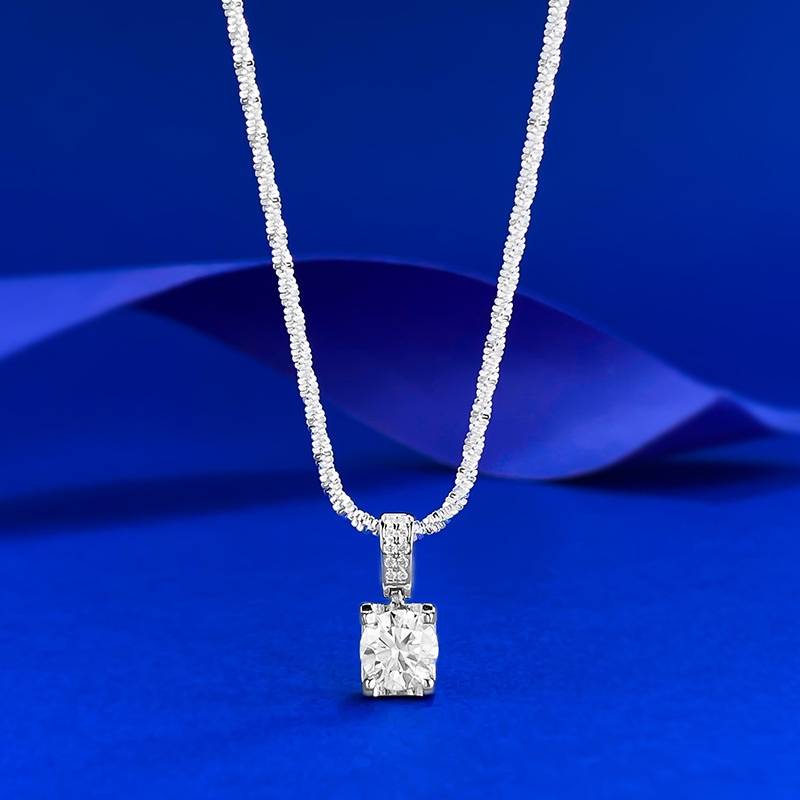
Lab-grown Diamond Solitaire Pendants are another strong option. A pendant stays close to the body, pairs with many necklines, and avoids some of the handling risks that come with rings. Shop necklaces here: https://stonebridgejewelry.com/collections/lab-grown-diamond-necklaces
For pendants, match the chain to the diamond and travel plans. A 16-inch chain sits higher, while an 18-inch chain is a versatile everyday length for many necklines. Cable chains are common, but the clasp and link thickness matter. If the pendant is 1.00 carat or larger, a sturdier chain may be worth the added cost.
Low-profile lab-grown diamond bands suit travelers who do not want to bring a high-set engagement ring. A secure band can feel comfortable during flights, sightseeing, and active days. View ring options here: https://stonebridgejewelry.com/collections/lab-grown-diamond-rings
For rings, think about daily comfort as much as photos. A smooth half-eternity band is easier to resize than a full-eternity band and usually more practical if your finger size changes. A channel or bezel-set band protects stones better than exposed shared prongs, though it may have a more structured look. If you plan to wear the ring through airports and sightseeing, comfort-fit interiors and lower profiles are worth considering.
Secure-setting bracelets can work for dinners and formal events if they are insured and inspected first. Check the clasp before departure, and avoid bracelets during swimming, crowded transit, or adventure activities. Browse bracelets here: https://stonebridgejewelry.com/collections/lab-grown-diamond-bracelets
For bracelets, fit is part of security. A bracelet that is too loose can catch on luggage handles, restaurant chairs, or clothing. A bracelet that is too tight can stress links and feel uncomfortable in warm weather. Measure your wrist and compare the finished length, then look for a clasp system you can close securely without rushing.
Best Strategy for an Insured Jewelry Hotel Safe Checkout Log
The best plan is not log versus insurance. Use both when valuable jewelry must travel.
Insurance gives you the stronger path to financial recovery. An insured jewelry hotel safe checkout log gives you stronger proof of hotel storage. Together, they create a cleaner record and reduce guesswork.
If a piece is irreplaceable, leave it home. If it is valuable and must travel, insure it. If you store it at the hotel, ask for a written insured jewelry hotel safe checkout log and keep your own photos.
Need help choosing a lower-risk travel piece? StoneBridge Jewelry can help you compare secure settings, diamond sizes, and everyday styles Before You Buy or pack. Contact our team through StoneBridge Jewelry customer support for help matching your jewelry to your travel plans.
Ready to Find Your Perfect Diamond?
Explore our collection of certified lab-grown diamonds
Shop Diamonds