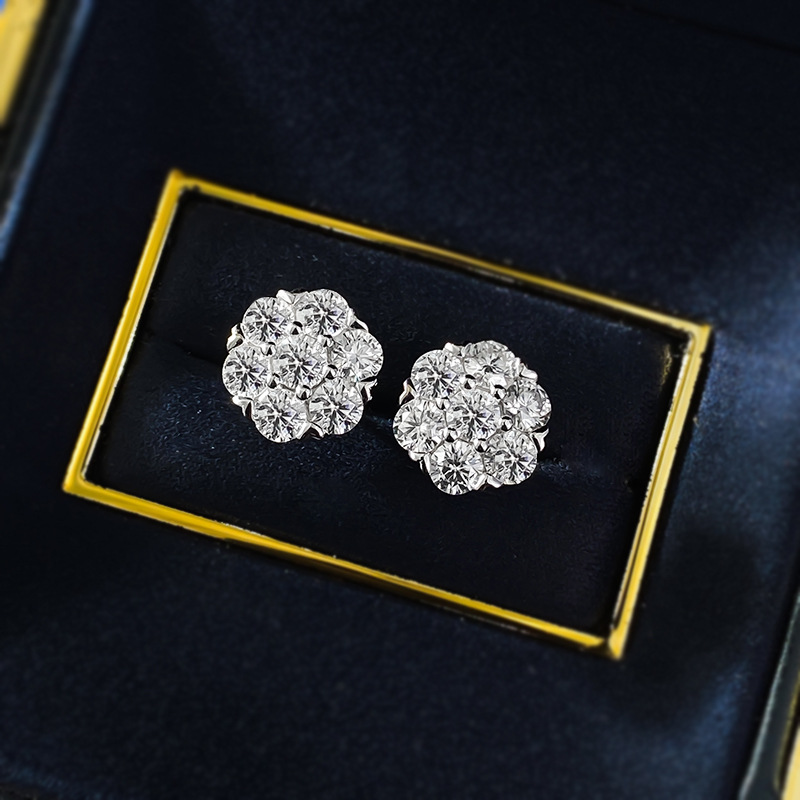
How to Choose a Sustainable Tennis Necklace Lab Grown for Beauty and Value
A sustainable tennis necklace lab grown can strike a rare balance. It looks luxurious, feels timeless, and often makes more sense for shoppers who care about sourcing. Still, two necklaces can look similar online and differ quite a bit in diamond matching, metal quality, and long-term wear, especially when one uses 14K white gold with IGI-graded F-G VS stones and another uses lower-spec H-I SI diamonds in lighter stamp-weight settings.
A little scrutiny helps. If you want a necklace you’ll wear for years, it pays to compare the facts behind the sparkle. I’ve helped hundreds of couples and gift shoppers narrow down fine jewelry choices, and this is one of those pieces where details like a box clasp with double safety, 950 platinum versus 14K gold, and a consistent 3.0mm round brilliant layout really do matter.
Why Buyers Care About a Sustainable Tennis Necklace Lab Grown
Shoppers ask tougher questions now than they did a few years ago. They still want beauty, shine, and comfort. They also want to know where the diamonds came from, whether the gold is recycled, and if the piece is built to last with practical features like four-prong basket settings and a locking box clasp.
A sustainable tennis necklace lab grown appeals to all three concerns at once: style, value, and responsible sourcing. Since a tennis necklace uses a continuous line of diamonds, often 40 to 120 round brilliants depending on whether the necklace is 16 or 18 inches, the sourcing story carries more weight than it might in a simple pendant or pair of 1.00cttw stud earrings.
The term itself can be a little slippery, though. One brand may focus on lab-created diamonds. Another may highlight recycled 18K yellow gold. A third may talk about FSC-certified packaging while saying very little about clasp security, prong retipping, or whether the necklace is matched to a defined color range like F-G or G-H.
A better approach is to review the full picture:
- Lab-grown diamonds with clear grading details such as F-G color, VS1-VS2 clarity, and Excellent or Ideal cut where applicable
- Recycled or responsibly sourced precious metal such as 14K white gold, 18K yellow gold, or 950 platinum
- Strong construction meant for repeated wear, including articulated links and secure prong work
- Honest warranty and repair support for clasp replacement, stone tightening, and professional inspection
- Design quality that won’t feel dated next season, like a classic round brilliant line necklace in a shared-prong setting
What Most Shoppers Actually Want
Most people aren’t looking for a lecture on sustainability. They want a necklace that feels worth the money and easy to trust, whether that means a 5.00cttw graduated line in 14K white gold or a 10.00cttw statement piece in 950 platinum.
They want clean sparkle, solid craftsmanship, and clear information. They also want to know that a sustainable tennis necklace lab grown can still feel special, not like a compromise, especially when the diamonds are matched to a range such as F-VS2 to G-VS1 and the finish is a high-polish rhodium-plated white gold.
And really, who wants to spend thousands on a necklace with vague specs, no IGI or GCAL documentation, and no stated metal purity like 14K or 18K?
Honestly, I think that’s the biggest shift in jewelry shopping right now. People still want something beautiful, but they also want the confidence that comes from knowing exactly what they’re buying, down to whether the necklace uses 2.8mm round brilliants, a hidden box clasp, and a total gram weight that supports daily wear.
What Is a Lab-Grown Diamond Tennis Necklace?
A tennis necklace features a continuous row of individually set diamonds that follow the neckline. Some styles use the same stone size all the way around, such as 58 round brilliants at 0.08 carat each. Others graduate from larger stones in the center to smaller ones near the back, for example a front section built around 0.20ct stones tapering to 0.05ct stones near the clasp.
A lab-grown Diamond Tennis Necklace uses diamonds created in a controlled environment rather than mined from the earth. These are real diamonds, not lookalikes. They have the same chemical composition, crystal structure, and hardness as mined diamonds, whether the center section includes stones like a 1.2ct F-VS2 round brilliant equivalent in quality or smaller calibrated melee.
That last point matters. On the Mohs hardness scale, both mined and lab-grown diamonds rank 10. So a sustainable tennis necklace lab grown is still fine diamond jewelry. The difference is origin, not authenticity, and reputable stones are commonly accompanied by reports from IGI, GIA, or GCAL depending on size and seller practices.
For many buyers, the appeal comes down to two things:
- Lab-grown diamonds often offer better size-to-price value, with 1.00ct lab-grown round brilliants commonly retailing around $800-$1,500 depending on cut, color, and clarity, compared with much higher mined equivalents.
- They can reduce some sourcing concerns, especially when paired with recycled 14K white gold or 18K yellow gold and transparent manufacturing disclosures.
How Lab-Grown Diamonds Are Made
Most lab-grown diamonds are created with either HPHT or CVD, two manufacturing methods used across the fine jewelry trade for stones later cut into shapes like round brilliant, oval, emerald, and pear.
HPHT means high pressure, high temperature. CVD stands for chemical vapor deposition. Both methods produce real diamonds that are then cut, polished, and graded like mined stones, often with finish grades such as Excellent polish and Excellent symmetry on larger certified stones.
GIA explains that lab-grown diamonds can be evaluated by the same core standards used for natural diamonds, including color, clarity, cut, and carat weight. IGI is also widely used for lab-grown diamond grading, and many shoppers look for those reports when comparing a sustainable tennis necklace lab grown. GCAL can also appear in the market, particularly for buyers who want additional light-performance or grading assurance on select stones.
What Makes a Tennis Necklace More Sustainable?
A sustainable tennis necklace lab grown isn’t defined by one feature. It usually reflects a set of better choices rather than a single claim, such as lab-grown round brilliants matched to F-G color, set in recycled 14K gold, and finished with a repairable clasp assembly.
The first factor is diamond origin. Lab-grown diamonds may reduce some mining-related concerns, but energy use still varies by facility and production method. That’s why brand transparency matters, especially if a retailer specifies CVD production, post-growth HPHT treatment disclosure, and third-party grading from IGI, GIA, or GCAL.
The second factor is metal sourcing. Tennis necklaces use a meaningful amount of precious metal because each diamond needs its own setting. If a necklace uses recycled 14K or 18K gold, or even 950 platinum sourced through a documented refining chain, that can improve its overall sustainability profile.
The third factor is lifespan. Jewelry that fails after a short time is rarely the better choice. A necklace with secure shared-prong or four-prong settings, flexible articulation, and a dependable box clasp with figure-eight safety has a stronger case for long-term value.
The fourth factor is aftercare. Repair services, inspections, and warranty coverage help keep a piece wearable for years. We’ve found that customers shopping higher-carat tennis necklaces, such as 8.00cttw to 15.00cttw styles, often ask about clasp security, prong tightening, and service policies before they ask about packaging.
In my experience at StoneBridge, that’s a smart instinct. A necklace that lasts through anniversaries, weddings, milestone gifts, and years of wear is usually the one that delivers the most meaningful value, especially if the underlying build includes a substantial gold weight, precise stone matching, and serviceable settings.
A Simple Comparison Table
| Factor | What to Check | Why It Matters |
|---|---|---|
| Diamond origin | Lab-grown diamonds with grading details such as F-G/VS1-VS2 and IGI, GIA, or GCAL documentation | Helps verify quality and sourcing |
| Metal | Recycled 14K white gold, 18K yellow gold, rose gold, or 950 platinum with disclosed sourcing | Reduces reliance on newly mined metal |
| Construction | Secure shared-prong or four-prong settings with smooth articulation | Supports durability |
| Clasp | Box clasp plus figure-eight safety or double safety latch | Lowers loss risk |
| Service | Warranty, inspections, prong tightening, clasp repair, and stone replacement terms | Adds long-term value |
| Packaging | Recyclable or FSC-certified materials if disclosed | Supports broader lifecycle goals |
Quality Checks for a Sustainable Tennis Necklace Lab Grown
Quality is where many necklaces separate themselves fast. A piece can use real lab-grown diamonds and still fall short if the stones are mismatched or the necklace feels stiff and flimsy, especially in lower-cost builds that use very light 14K cast links and inconsistent 2.5mm to 3.0mm melee.
Start with the 4Cs, but read them in a necklace-specific way, because a line necklace is judged less like a single 2.00ct solitaire and more like a matched suite of dozens of diamonds working together.
Cut and Sparkle
Cut drives brilliance. In a tennis necklace, consistency matters just as much as individual sparkle. If a few stones look bright and the next few look dull, the whole line can feel uneven. For round brilliants, ask whether the diamonds are matched to strong make, and for larger stones request specifics such as Excellent polish, Excellent symmetry, and proportions similar to well-cut rounds rather than generic “good sparkle” language.
Color and Matching
Good matching creates a clean, polished look. Many fine necklaces fall in the near-colorless to colorless range, often around G-H or F-G. One warmer stone in a cooler row can stand out more than most shoppers expect, particularly in 14K white gold where rhodium finish tends to make J-color or tinted stones more noticeable.
Clarity and Value
Eye-clean stones are often the sweet spot in a tennis necklace. VS and SI ranges can both work well, depending on stone size and how carefully the diamonds are matched. A necklace using calibrated 0.10ct stones may look excellent in VS2-SI1, while a high-end piece with larger 0.25ct rounds across the front may justify a tighter range like F-VS2 or G-VS1 for a cleaner overall face-up look.
Carat Weight and Visual Size
Total carat weight tells you the combined diamond weight, not how large the necklace will look. A 10-carat necklace can appear very different depending on stone count, spread, and layout. For example, a 10.00cttw necklace with 100 stones may read as a fine, elegant 2.7mm line, while a 10.00cttw graduated layout with fewer larger center stones can create a bolder visual profile at the neckline.
Craftsmanship and Security
A well-made sustainable tennis necklace lab grown should move smoothly without feeling loose. The settings should look even. The metal should feel polished against the skin, and the clasp should close with real confidence. In practice, that often means consistent seat cutting under each stone, evenly aligned shared prongs, and a box tongue that locks cleanly without excess play.
For security, many buyers prefer a box clasp with a figure-eight safety or double safety latch. That’s especially helpful once you move into higher carat weights, such as 7.00cttw, 10.00cttw, or above, where the necklace carries enough weight that clasp engineering matters almost as much as diamond quality.
According to the FTC’s jewelry guides, sellers should describe diamond products clearly and avoid misleading terminology. Clear grading language and honest specs are a good sign that a retailer takes that seriously, whether the necklace is set with IGI-certified lab-grown rounds or a custom matched suite supported by internal quality documentation.
Here’s what nobody tells you: a necklace can look gorgeous in a still photo and disappoint the second you put it on. If it flips, pinches, or feels awkward at the clasp, you’ll notice every single time you wear it, and that often comes down to articulation, undergallery design, and whether the back section was finished as carefully as the front.
Best Length, Metal, and Style Options
The right sustainable tennis necklace lab grown depends on how you plan to wear it, and the practical choice often starts with exact length measurements like 16 inches, 17 inches, or 18 inches rather than a vague “standard fit.”
A 16-inch necklace usually sits close to the base of the neck and looks dressy. An 18-inch version gives a bit more drape and often layers more easily. If you wear collared shirts, open necklines, or other chains, length matters more than many product pages suggest, and trying to layer a 16-inch tennis line with an 18-inch pendant in 14K yellow gold will create a different effect than pairing two close lengths.
Metal choice changes the mood too:
- 14K white gold feels crisp and bright, and is often rhodium plated for a cooler finish that complements F-G diamonds
- 18K yellow gold adds warmth and contrast, especially with G-H stones and vintage-leaning styling
- 14K rose gold looks softer and a little less traditional, with copper alloy content creating its blush tone
- 950 platinum offers extra density, a naturally white appearance, and strong long-term wear for premium builds
Uniform diamond sizes create a classic, symmetrical look. Graduated styles draw the eye toward the center and can feel slightly softer. It comes down to personal taste and budget, though a graduated design can sometimes deliver more visual impact for the money by placing larger calibrated rounds where they’re seen most.
I’ve also noticed that gift buyers often gravitate toward classic 14K white gold because it feels easy and versatile, while self-purchasers are sometimes more open to 18K yellow gold or rose gold. Neither approach is wrong. It really comes down to personal style, skin tone preference, and how the necklace will fit into the rest of your jewelry wardrobe, whether that includes a cathedral setting with pavé band engagement ring or simple martini-set diamond studs.
If you’re comparing diamond quality before choosing a finished necklace, you can shop lab-grown diamonds by grading details. If you want to see how a tennis necklace fits into a broader collection, browse fine jewelry styles.
Budget Tips Before You Buy
A sustainable tennis necklace lab grown can range from the low thousands to well into five figures. Price depends on total carat weight, metal choice, color and clarity range, and how well the diamonds are matched. As a general benchmark, a fine 14K white gold lab-grown tennis necklace around 3.00cttw may start near $2,500-$4,000, a 5.00cttw version often lands around $4,500-$7,500, and a 10.00cttw necklace with better F-G/VS matching can move into the $9,000-$16,000 range or higher.
In our experience, many shoppers get better results by setting priorities before they compare listings. Decide what matters most: bigger look, brighter color, stronger craftsmanship, or lower spend. The same logic applies to loose stones too, where a 1ct lab-grown diamond often falls around $800-$1,500 and a higher-spec 1ct lab-grown like F-VS2 or E-VS1 may land closer to $1,200-$2,200 depending on cut quality and certification.
Here’s a practical order of operations:
- Set your top budget, such as $4,000, $7,500, or $12,000, before browsing high-carat options.
- Choose your preferred length, usually 16 or 18 inches for classic wear.
- Pick your metal color, such as 14K white gold, 18K yellow gold, or 950 platinum.
- Compare diamond quality ranges like G-H VS versus F-G VS, not just total carat weight.
- Check clasp design, service terms, and whether certification or matching documentation is included.
That process saves time and cuts down on impulse decisions, especially when one retailer is quoting a 5.00cttw necklace in 14K white gold at $4,900 and another is quoting a similar-looking piece at $6,800 because the second one uses tighter F-G VS2 matching and heavier construction.
Honestly, I think a slightly smaller necklace with better matching usually looks more expensive than a larger one with uneven stones. If your budget has limits, that’s often the better tradeoff, particularly if it gets you from mixed H-I SI quality up to a cleaner G-H VS range with a more secure double-safety clasp.
Common Shopping Mistakes
A lot of buyers focus too heavily on total carat weight. Bigger numbers catch the eye, but they don’t guarantee a prettier necklace. Poor matching can make a large necklace look less refined than a smaller one, especially if the row mixes bright F-color stones with noticeably warmer H-I stones in the same front-facing section.
Another mistake is assuming all sustainable claims mean the same thing. One necklace may use lab-grown diamonds but newly mined 18K gold. Another may use recycled gold but offer no grading details. You need both the beauty side and the sourcing side to make a smart call, and ideally some form of documentation from IGI, GIA, or GCAL for larger stones or clear internal matching standards for melee.
Length is another common issue. A necklace can look perfect on a model and sit very differently on you. Check exact measurements and ask for neck-shot video if it isn’t already provided, because a 16-inch line on a slender neck can read like a collar while an 18-inch line may sit lower and layer better with a solitaire pendant.
Don’t ignore the clasp either. A tennis necklace carries real value, and a weak closure can turn excitement into stress. A proper box clasp with figure-eight safeties is a far better sign than a generic lobster clasp on a high-carat diamond line.
If you’re also comparing bridal jewelry, explore engagement ring styles or build a ring with your preferred diamond to see how your necklace choice may pair with other pieces such as a cathedral setting with pavé band or a plain 14K yellow gold solitaire.
Questions Worth Asking a Retailer
Before You Buy a sustainable tennis necklace lab grown, ask a few direct questions that get into the actual build quality and grading standards rather than broad marketing language:
- What color and clarity range are the diamonds matched to, such as F-G VS2 or G-H SI1?
- Is the gold recycled, and if so, what percentage and in what alloy, such as recycled 14K white gold?
- What clasp and safety features are included: box clasp, figure-eight safety, or double safety latch?
- Is there an IGI report, GIA report, GCAL document, or a written internal matching specification?
- What does the warranty cover for prong tightening, clasp repair, rhodium replating, or stone replacement?
- Can the necklace be serviced or repaired later, including solder repair, hinge work, and professional cleaning?
Clear answers usually tell you a lot about the seller. A retailer who can confidently explain whether the necklace uses 3-prong or 4-prong construction, 14K or 18K alloy, and F-G or G-H matching is usually much easier to trust than one relying on generic phrases like “premium sparkle.”
Choosing a Necklace You’ll Still Love Later
The best sustainable tennis necklace lab grown isn’t always the biggest or the cheapest. It’s the one that balances sparkle, comfort, sourcing, and durability in a way that fits your life, whether that’s a 16-inch 5.00cttw line in 14K white gold or an 18-inch graduated 10.00cttw style in 950 platinum.
Look past broad claims and focus on details you can verify: grading, metal content, clasp quality, return terms, and long-term service. A piece that checks those boxes tends to feel better from day one and hold up better over time, particularly when the diamonds are matched within a tight F-G VS range and the setting quality is clean and even across the full length.
If you keep your comparison simple, the decision gets easier. Compare the diamonds. Compare the gold. Compare the craftsmanship. Then choose the necklace you’ll actually want to wear, not just the one with the biggest headline carat number or the lowest price per carat.
And if you’re buying for a proposal weekend, a wedding gift, an anniversary, or a major personal milestone, there’s something especially lovely about choosing a piece that feels meaningful and made to last. Fine jewelry tends to stay in your story for a long time, especially when it’s built with durable precious metal like 14K gold or platinum and supported by proper care.
Care and Maintenance for Long-Term Wear
Even a well-made sustainable tennis necklace lab grown needs routine care. Lab-grown diamonds are real diamonds, so they are generally safe in an ultrasonic cleaner, but the larger issue is whether the necklace settings, hinges, and clasp are secure enough for ultrasonic vibration. A jeweler should inspect prongs and the box clasp before deep cleaning a frequently worn piece.
For home care, warm water, mild dish soap, and a soft baby toothbrush work well on 14K white gold, 18K yellow gold, and 950 platinum tennis necklaces. Rinse thoroughly and dry with a lint-free cloth, paying special attention to the underside of the settings where lotion and skin oils can dull brilliance.
Professional maintenance matters too. I usually recommend a prong and clasp inspection every 6 to 12 months, especially on necklaces above 5.00cttw or styles worn often. If your necklace is 14K white gold, periodic rhodium replating may also be needed to maintain a bright white finish.
Store the necklace flat in a fabric-lined box or separate pouch so the diamonds do not rub against other jewelry. That helps protect the metal framework, especially delicate shared-prong sections and polished surfaces around the clasp tongue and safety arms.
FAQ
Is a sustainable tennis necklace lab grown more eco-friendly than a mined diamond necklace?
Often, yes, but not automatically. A sustainable tennis necklace lab grown may reduce some mining-related impacts, yet energy use, recycled gold content, shipping, and repairability still affect the full picture. Look for brands that explain both diamond origin and metal sourcing with specific details, such as CVD-grown diamonds, recycled 14K white gold, and IGI or GIA documentation where applicable.
How do I know if a lab-grown diamond tennis necklace is good quality?
Start by checking matching across the row. The diamonds should look consistent in brightness, color, and size, and the necklace should move smoothly without loose-feeling links. Ask about the color and clarity range, the clasp type, and whether grading is backed by IGI, GIA, or GCAL. A sustainable tennis necklace lab grown should feel secure, balanced, and easy to trust, especially if it uses a box clasp with figure-eight safety and a defined range like F-G VS2.
Is a lab-grown tennis necklace durable enough for everyday wear?
Yes, if the construction is solid. Diamonds are extremely hard at 10 on the Mohs scale, but the settings, links, and clasp do most of the work in daily wear. Choose a necklace with secure shared-prong or four-prong settings, a dependable box clasp, and a sturdy metal like 14K gold or 950 platinum, then have it checked periodically by a jeweler.
What should I ask before buying a sustainable tennis necklace lab grown online?
Ask for exact specs, not broad claims. You’ll want total carat weight, stone count, metal type, recycled gold details, diamond color and clarity range, clasp style, and any grading documents from IGI, GIA, or GCAL. Videos help too because they show movement, articulation, and stone matching better than still photos, especially on 16-inch and 18-inch styles.
Does a lab-grown diamond tennis necklace hold value over time?
Most buyers are better off thinking about value in terms of wear, style, and quality rather than resale alone. A well-made sustainable tennis necklace lab grown can deliver strong day-one value because it often gives you more visual size for the budget. Timeless design, secure construction, and versatile length usually matter more than headline carat numbers, whether you choose a 5.00cttw 14K white gold necklace or a larger 10.00cttw platinum piece.
What are realistic price ranges for a lab-grown diamond tennis necklace?
For many shoppers, entry fine-jewelry styles in 14K gold start around $2,500-$4,000 for roughly 3.00cttw. Mid-range pieces around 5.00cttw often fall near $4,500-$7,500. Larger or better-matched necklaces, such as 10.00cttw in F-G VS quality or platinum, can range from about $9,000 to $16,000 or more depending on construction, certification, and brand.
Can I clean a lab-grown diamond tennis necklace in an ultrasonic cleaner?
Usually yes, because lab-grown diamonds are real diamonds and are generally ultrasonic cleaner safe. The caution is the jewelry structure, not the diamond origin. If the necklace has loose prongs, worn hinge points, or a compromised box clasp, ultrasonic vibration can aggravate those issues, so a professional inspection is smart before repeated ultrasonic cleaning.
Ready to Find Your Perfect Diamond?
Explore our collection of certified lab-grown diamonds
Shop Diamonds