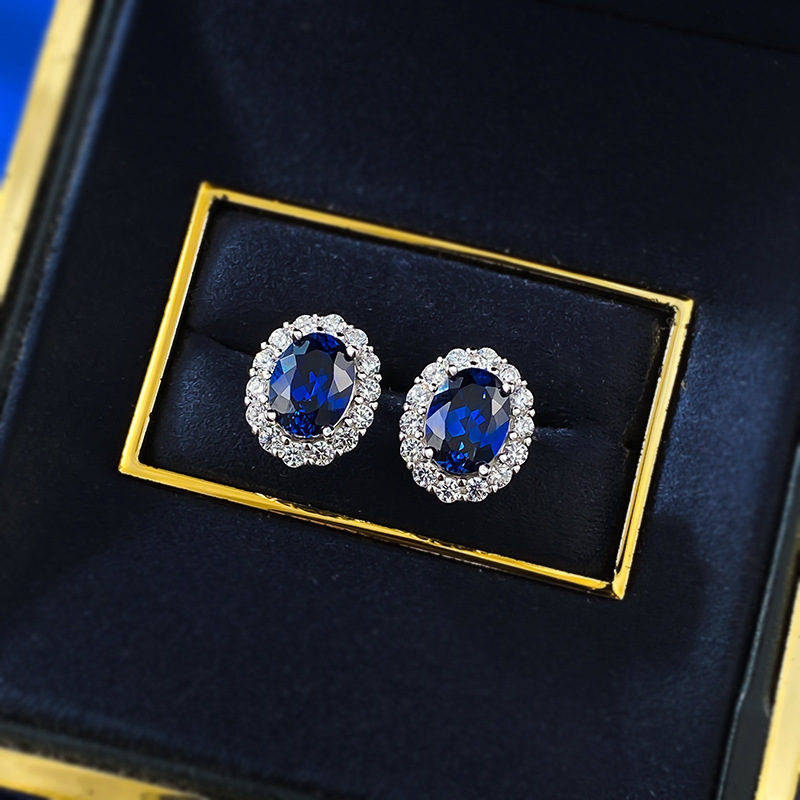
Diamond Drop Earrings Secure Backs: Best Options for Comfort and Safety
Diamond Drop Earrings secure backs can change how a pair feels from morning to night. A good closure keeps the earrings balanced, helps prevent loss, and makes daily wear less stressful. If you've ever reached up to check whether an earring is still there, you already know why this matters.
Drop earrings need more support than studs. They hang below the lobe, move as you walk, and can catch on hair, scarves, or high collars. That extra motion puts more pressure on the closure, so the back has to do real work.
Why Diamond Drop Earrings Secure Backs Matter
Diamond Drop Earrings Secure Backs matter because hanging earrings create swing and pull. Even a well-made pair can tip forward a bit if the closure isn't matched to the design. The heavier the setting, the more noticeable that becomes.
We've found that shoppers usually care about the same five things: security, comfort, ease of use, upkeep, and how the earrings feel after hours of wear. Those points sound simple, but they shape whether a pair becomes a favorite or stays in the box.
A closure should also match the value of the earrings. GIA notes that diamond value can shift sharply with changes in carat weight, cut, color, and clarity. If you're protecting a pair with 1.00 total carat weight or more, stronger retention usually makes sense. If you're still comparing stones, you can explore our lab-grown diamonds before choosing a finished style.
What makes an earring back secure?
The name of the backing tells only part of the story. Fit, metal quality, post thickness, and closure tension matter just as much.
A secure backing usually comes down to three details:
- a precise fit between post and closure
- steady tension or a clean locking action
- durable metalwork that won't bend easily
Ear shape matters too. A closure that feels great on one person may pinch another, sit too low, or angle oddly on a thicker lobe. That's why diamond Drop Earrings Secure Backs should be judged by real wear, not by label alone.
It also helps to think about the earring as a system, not just a pair of stones. The post length, the location of the drop beneath the piercing, and the style of basket or bezel all affect leverage. A short drop with a modest halo may feel stable with a strong friction back, while a long linear design with 1.50 total carat weight can feel much better with a lever or screw mechanism that spreads weight more predictably.
Main Types of Diamond Drop Earrings Secure Backs
Most fine drop earrings use one of four closure styles. Each one solves a different problem, and each suits a different type of buyer.
The most common options are:
- friction backs
- screw backs
- lever backs
- latch backs
Some designs also use integrated hinged closures. Those are less common, though they can work very well on earrings built around that structure.
When you compare styles, look beyond the product photos. Ask whether the post is substantial enough for the weight, whether the hinge is cast or assembled from multiple fine parts, and whether replacement components are easy to source later. Those small questions matter more than buyers often expect.
Screw Back Earrings: Best for Maximum Security
Screw backs are a top choice for Diamond Drop Earrings secure backs when loss prevention comes first. Instead of sliding on with pressure alone, the back twists onto a threaded post. That extra step creates a more deliberate hold.
For expensive earrings, that added security can be worth the time. Our customers often choose screw backs for anniversary gifts, travel jewelry, and larger diamond drops because they want extra peace of mind.
Screw backs tend to make the most sense for:
- larger diamonds
- heavier drop designs
- heirloom pieces
- fine jewelry worn while traveling
Pros of screw backs
- very strong retention
- good match for valuable stones
- less likely to slip off by accident
- familiar choice for premium fine jewelry
Drawbacks of screw backs
- slower to put on and remove
- harder to manage with long nails or limited dexterity
- threads need occasional cleaning
- misalignment can make fastening frustrating
If your top concern is security, screw backs are hard to beat. Not everyone wants to twist on a backing every morning, though. Lever backs often pull ahead for daily wear.
One buying detail that gets missed: threaded posts are not all identical. Some feel smooth and precise, while others are rough or too fine. If the threading catches, cross-threads, or feels sharp, that is a quality issue, not just a minor annoyance. On a fine pair of drop earrings, the back should turn cleanly without forcing.
Lever Back Earrings: Best Overall for Daily Wear
Lever backs are often the best overall answer for Diamond Drop Earrings secure backs. They close with a hinged arm behind the ear, so the earring feels secure without needing a separate loose back.
Many buyers prefer them because they're quick, polished, and comfortable for long wear. They also suit the movement of a drop earring better than a basic push back in many cases.
We've seen lever backs work especially well for office wear, dinners, and weekly wear. If you want a closure that feels secure but doesn't slow you down, this style usually hits the sweet spot.
Pros of lever backs
- easy to put on and take off
- secure feel for frequent wear
- comfortable support for hanging earrings
- clean look behind the ear
Drawbacks of lever backs
- hinge quality varies by maker
- moving parts can wear over time
- poor alignment weakens the closure
- some styles need periodic inspection
GIA and IGI reports tell you about the diamonds, not the mechanics of the earring. If you're buying fine drop earrings, check the hinge quality with the same care you give the stones.
Lever backs also work well for many shoppers with medium to thicker lobes because the closure tends to distribute pressure more evenly than a tight push back. If you often find that posts feel cramped or that earring backs press uncomfortably by midday, a lever design is worth trying before you assume the problem is simply earring weight.
Latch Back Earrings: Sleek and Easy to Wear
Latch backs are another strong option for Diamond Drop Earrings secure backs. They usually click or seat into place as part of the earring's design, which gives them a neat, integrated look.
Many shoppers like latch backs because they feel smoother and less fussy than threaded posts. They also pair well with refined drop silhouettes and some hoop-inspired designs.
Where latch backs work best
Latch backs are often a good fit for:
- medium-weight drop earrings
- sleek, modern silhouettes
- buyers who switch jewelry often
- shoppers who want quick fastening
What to watch for
A latch back is only as good as its alignment. If the closure feels soft, uneven, or too easy to open, it may not give you the security you expect. A jeweler can usually spot that problem fast during a routine check.
Pay attention to how audible or tactile the closure feels. On a strong latch back, you should notice a clear seated action rather than a vague close. If the earring opens when you comb your hair or remove a sweater, the profile may be elegant, but the engineering is not doing enough.
Friction Backs: Fine for Lighter Styles
Friction backs are common, familiar, and easy to use. They rely on tension to hold the backing in place, which makes them quick for everyday wear.
For Diamond Drop Earrings secure backs, friction backs usually rank lower than screw, lever, or latch systems. Hanging earrings create more leverage than close-to-the-ear studs.
Friction backs are still useful for:
- petite drop earrings
- lightweight designs
- budget-friendly fine jewelry
- classic studs with less movement
A well-made friction back can perform nicely, but tension can loosen over time. Many jewelers suggest checking them regularly and replacing worn backs before they become risky.
In practical terms, friction backs tend to work best when the total design is modest in both weight and length. Think small bezel-set drops, tiny diamond bars, or compact cluster styles under about 20 to 25 mm long. Once a design becomes longer, heavier, or more diamond-forward, many shoppers benefit from stepping up to a more secure closure.
Diamond Drop Earrings Secure Backs Comparison Table
Here is a quick side-by-side view of the most common closure styles.
| Back Type | Mechanism | Security | Comfort | Ease of Use | Upkeep | Best For |
|---|---|---|---|---|---|---|
| Screw Back | Threaded post with twist-on back | Excellent | Good | Moderate | Clean threads, inspect fit | High-value diamond drop earrings |
| Lever Back | Hinged arm behind the ear | Very Good | Excellent | High | Check hinge tension | Frequent daily wear |
| Latch Back | Integrated hinged click closure | Very Good | Very Good | High | Check alignment | Sleek drop styles |
| Friction Back | Push-on tension back | Fair to Good | Good | High | Replace worn backs | Lighter earrings |
In plain terms, screw backs usually win on pure retention. Lever backs often win on real-life wearability. Latch backs sit close behind them, especially on well-engineered designs. Friction backs work best on lighter pairs.
How Diamond Size and Setting Affect Back Choice
Backing style should be matched to the diamonds themselves, not chosen in isolation. A pair with 0.25 total carat weight in petite round brilliants places very different demands on the ear than a pair with 2.00 total carat weight in elongated drops or halo frames.
Here are a few useful guidelines shoppers can apply:
- under 0.50 total carat weight: friction, latch, or lever backs can all work well if the design is compact
- 0.50 to 1.00 total carat weight: lever and latch backs often feel more balanced for regular wear
- 1.00 total carat weight and up: lever or screw backs are often the safer choices, especially on longer silhouettes
- very long or articulated drops: prioritize closure strength and weight balance over minimal profile
Setting style matters too. Bezel settings usually protect diamond edges well and can feel smooth against hair and clothing, but they may add a little metal weight. Prong settings can look lighter and brighter, yet they need periodic checks because prongs can catch and loosen with wear. Halo settings can create extra visual spread for the money, though they also add surface area and sometimes increase the earring's tendency to rotate if the back is undersized.
If you are comparing stones, cut quality still does more for sparkle than minor shifts in clarity. Many shoppers are happy in the near-colorless range, such as G to I color, and eye-clean clarities such as VS2 to SI1, depending on the size and shape. On drop earrings, buyers can often prioritize strong cut and overall face-up beauty over paying a steep premium for extremely high clarity that is difficult to appreciate during wear.
Metal Choices and Skin Comfort
The closure only feels comfortable if the metal itself works for your skin and routine. For diamond drop earrings secure backs, the most common fine-jewelry choices are 14k gold, 18k gold, and platinum.
- 14k gold: durable, widely available, and often a practical balance of strength and price
- 18k gold: richer color and higher gold content, but slightly softer than 14k
- platinum: dense, hypoallergenic for many wearers, and excellent for long-term fine jewelry
- sterling silver: less common for higher-value diamond drops and usually not ideal if security and longevity are top priorities
For sensitive ears, ask whether the posts and backs are nickel-free. White gold is popular, but some alloys can bother sensitive skin if the wearer reacts to nickel. Platinum and carefully alloyed yellow or rose gold may be better options in that case.
Metal density can affect comfort as well. Platinum has a premium feel and excellent durability, but it is heavier than gold. On a substantial drop earring, that extra heft can be a benefit or a drawback depending on your lobe thickness and tolerance for weight. If you want the look of a substantial setting without added heaviness, 14k gold often deserves a closer look.
Price Ranges and What You're Paying For
Diamond drop earrings vary widely in price because cost reflects more than carat weight alone. Diamond quality, certification, metal choice, craftsmanship, and closure design all influence the final number.
As a broad guide, shoppers often see ranges like these:
- about $500 to $1,200: petite natural or lab-grown diamond drops in simple settings, often with friction or basic latch backs
- about $1,200 to $3,000: stronger everyday fine-jewelry options with better diamond matching, lever backs, and more refined metalwork
- about $3,000 to $7,500: larger natural diamond drops, premium settings, and more secure or better-engineered closures
- $7,500 and up: luxury pairs with higher total carat weight, stronger color and clarity grades, and more advanced craftsmanship
Lab-grown diamonds can shift those ranges substantially, often allowing buyers to move up in size while keeping the budget similar. Natural diamonds may command more for rarity, while lab-grown stones can offer strong visual value if your priority is a larger, brighter look within a fixed spend.
It is worth asking whether the quoted price includes independent grading for center stones, insured shipping, complimentary first-year inspections, or resizing or adjustment services where relevant. Those details do not always appear in the headline price, but they affect overall value.
Which Backing Style Should You Choose?
The best choice depends on how you wear your jewelry and what you value most.
Choose screw backs if you:
- own or want a high-value pair
- travel often with fine jewelry
- don't mind a slower routine
- want the strongest hold possible
Choose lever backs if you:
- wear drop earrings several times a week
- want comfort and security together
- like quick fastening
- prefer a polished everyday style
Choose latch backs if you:
- like a clean, built-in closure
- want easy on-and-off wear
- prefer a sleek profile
- don't mind checking the hinge now and then
Choose friction backs if you:
- are buying a light pair
- want a lower-cost option
- wear smaller earrings with less movement
- are comfortable replacing backs over time
Buyer scenarios that make the choice easier
A few common situations can help narrow it down.
- For office wear, lever backs are often the easiest choice.
- For anniversary gifts, screw backs can feel more reassuring.
- For dressy evening styles, latch and lever backs both work well.
- For lightweight everyday pairs, friction backs may be enough.
Hair length, sensitivity, and hand strength matter too. Long hair can catch on open shapes. Arthritis or reduced grip can make screw backs annoying. Nickel-free gold and platinum may feel better for sensitive ears.
If you're building a broader jewelry wardrobe, it's smart to compare these closures with other categories too. You can browse our fine jewelry collection, explore engagement rings, or design a custom piece with our ring builder.
Questions to ask before you buy
Whether you shop online or in store, a few direct questions can save you trouble later.
- What is the total carat weight, and is that weight evenly split between the earrings?
- Are the diamonds certified, and by which lab if the stones are large enough to be graded individually?
- What metal are the posts and backs made from?
- Can the closure be serviced or replaced if it loosens over time?
- Do the earrings have a clear return window for comfort issues?
For many buyers, those practical details are more useful than a vague claim that the closure is premium. If a seller cannot explain how the back works or what kind of maintenance it may need, keep asking questions.
Shopping Online vs. In Store
Buying online gives you broader selection and easier price comparison, but it also makes closure details harder to judge. Product photos often focus on the front view and underplay the mechanics behind the ear.
If you buy online, look for close-up images or videos of the back, exact measurements in millimeters, and a stated return policy that gives you enough time to test comfort at home. Secure packaging and insured shipping are especially important for fine earrings because small jewelry boxes can be misplaced if they arrive loosely packed or without a signature requirement.
In-store shopping offers the advantage of trying on different lengths and closure styles side by side. You can check whether the drop sits straight, whether the lever feels firm, and whether the back pinches your lobe after a few minutes. If you are undecided between lever and screw backs, that real-world try-on can settle the question quickly.
Either way, ask about return shipping costs, restocking fees, and whether altered or special-order earrings are final sale. A beautiful pair is much less appealing if the policy makes an exchange difficult when the closure simply does not suit you.
Our Recommendation for Most Shoppers
For most buyers, lever backs are the best option for diamond drop earrings secure backs. They balance comfort, speed, and security better than the other common choices.
Screw backs still take first place for maximum protection. If the diamonds are large, costly, or deeply sentimental, that extra retention is worth serious thought.
So what's the practical ranking?
- best overall: lever backs
- best for maximum security: screw backs
- best sleek alternative: latch backs
- best for lighter styles: friction backs
That ranking matches what we see most often from shoppers and jewelers alike. A closure doesn't need to be complicated. It just needs to suit the weight, motion, and value of the earrings.
Common Buying Mistakes to Avoid
Some of the most expensive earring mistakes happen before the pair is even worn outside the house. A few watch-outs can help you buy with more confidence.
- Choosing by front view alone and ignoring how the back supports the drop
- Buying heavy earrings with basic friction backs because the listing photo looks elegant
- Paying for higher clarity while overlooking mediocre cut or weak closure design
- Assuming all lever backs or screw backs are made to the same standard
- Skipping care instructions and then wearing the earrings in ways that stress the mechanism
Another common mistake is focusing only on total carat weight. Two pairs can both be listed as 1.00 total carat weight yet wear very differently depending on shape, setting, metal thickness, and drop length. The heavier-looking pair is not always the more comfortable one, and the more comfortable pair is not always the one with the safest back. You need both pieces of the picture.
Care, Maintenance, and Inspection
Even the best diamond drop earrings secure backs need occasional care. Skin oils, styling products, and everyday dust can collect around posts, threads, and hinges. Over time, that buildup can make a secure closure feel less precise.
A simple care routine helps:
- wipe earrings after wear with a soft, lint-free cloth
- keep hairspray, perfume, and lotions away from diamonds and metal whenever possible
- store pairs separately so posts and hinges do not bend against other jewelry
- inspect prongs, hinges, and threaded posts regularly in good light
For home cleaning, warm water, mild soap, and a very soft brush are usually enough for many diamond earrings. Dry them fully before storing. Avoid harsh chemicals or rough scrubbing around hinges and threaded components. If the earrings have pavé details or delicate articulated links, gentler handling matters even more.
Professional inspection once or twice a year is a smart habit for frequently worn fine earrings. A jeweler can tighten a loose friction back, check a lever hinge, clean screw threads properly, and confirm that the diamonds remain secure in their settings. That service is usually far cheaper than replacing a lost earring.
Shop Smarter for Secure Diamond Drop Earrings
The right closure can protect your investment and make your earrings easier to enjoy. If you want the strongest hold, start with screw backs. If you want the pair you'll reach for most often, start with lever backs.
Before You Buy, ask a simple question: do you want the most security, the most convenience, or the best balance of both? That answer usually points you in the right direction.
It also helps to match the back to the rest of the purchase. Think about diamond size, metal sensitivity, setting style, and whether you want a Pair for Daily Wear, travel, gifting, or occasional dressier use. Diamond drop earrings secure backs perform best when the closure choice is made with the whole design in mind.
If you'd like help comparing styles, browse our diamond and fine jewelry selection or contact StoneBridge Jewelry for guidance on diamond drop earrings secure backs.
FAQ
What are the most secure backs for diamond drop earrings?
Screw backs are usually the most secure option for diamond drop earrings because they fasten onto a threaded post. Well-made lever backs are also a strong choice, especially for shoppers who want daily ease with reliable retention. If the earrings are heavy or high in value, ask a jeweler to check the closure fit Before You Buy. That small step can lower the risk of loss.
Are screw backs better than lever backs for drop earrings?
Screw backs are better for maximum security, while lever backs are often better for comfort and speed. If you wear your earrings often, lever backs may feel easier to live with day after day. If you're protecting a more expensive pair, screw backs may feel worth the extra effort. The better pick depends on your routine.
Can diamond drop earrings use the same backs as diamond studs?
Yes, some can use similar post-based closures, including friction backs and screw backs. The difference is that drop earrings move more and pull differently on the ear than studs do. Because of that, diamond drop earrings secure backs often need a stronger or better-balanced closure. Lever and latch styles can help with that extra movement.
Which earring backs are best for everyday wear and sleeping comfort?
For everyday wear, lever backs are often one of the most comfortable and practical choices. They feel secure and don't leave you dealing with a separate back. Sleeping in fine earrings usually isn't a good idea, especially with drop styles, because pressure can stress the setting and closure. If comfort is your top concern, lighter earrings are usually the safer bet.
How do I know if my diamond drop earrings are secure enough?
Check whether the closure feels firm, even, and consistent every time you wear it. Screw backs should turn smoothly, and lever or latch closures should close with a clear snap or seated feel. If the earring droops, slides, or feels loose, have it inspected right away. Many jewelers recommend a professional check every 6 to 12 months for frequently worn fine earrings.
Do certified diamonds matter in drop earrings?
Certification matters most as diamond size and value increase. For larger center stones, reports from respected labs such as GIA or IGI can help confirm key details like carat weight, color, and clarity. For smaller accent diamonds, full individual reports are less common, so craftsmanship, matching, and seller transparency become more important. Certification will not tell you whether the earring back is engineered well, so evaluate both the stones and the closure.
What length is best for comfortable diamond drop earrings?
Many shoppers find that shorter to mid-length drops, often around 15 to 30 mm, balance sparkle and comfort well for frequent wear. Longer designs can look dramatic, but they create more swing and often need stronger closures and better weight distribution. If your lobes are delicate or stretched, shorter drops with lever backs are often easier to wear comfortably.
What should I expect from shipping and returns on fine earrings?
For fine diamond earrings, look for insured shipping, secure packaging, and a signature requirement on delivery. A fair return window is also important because comfort and closure feel can only be judged properly after trying the earrings on. Before buying, check whether return shipping is covered, whether there are restocking fees, and whether custom or altered pairs are final sale.
Ready to Find Your Perfect Diamond?
Explore our collection of certified lab-grown diamonds
Shop Diamonds