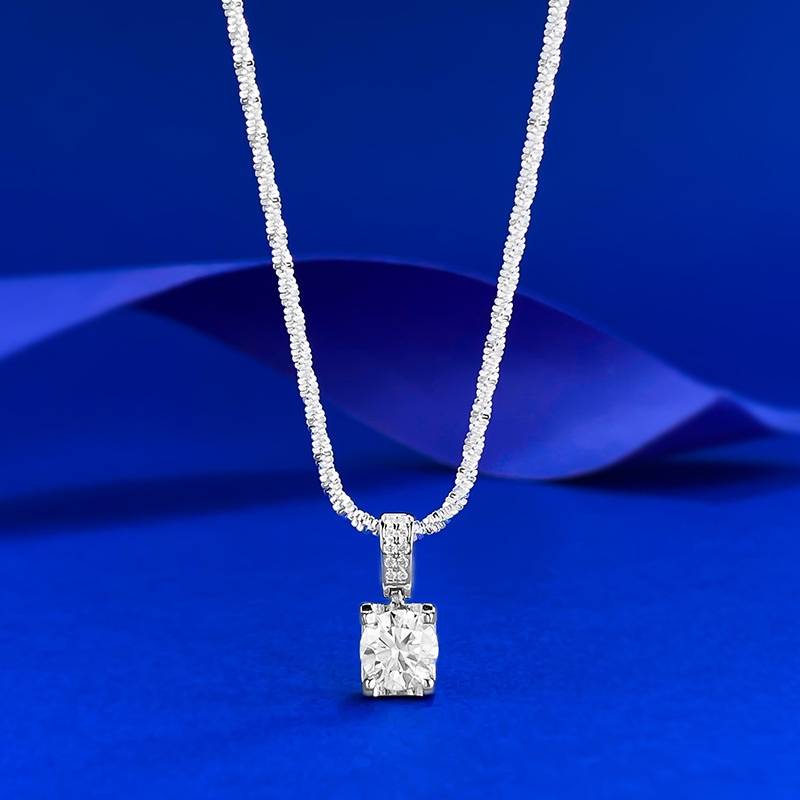
Diamond Chain Necklace Clasp Types: Security, Style, Ease
Diamond Chain Necklace Clasp Types affect more than convenience. They shape how secure a necklace feels, how easy it is to fasten, how polished it looks at the neckline, and how well it holds up over time. For shoppers comparing diamond chain necklaces, the clasp is a small detail that can change the whole experience.
Many customers ask which clasp is best for daily wear, which one looks the cleanest, and which one works for delicate versus heavier pieces. That makes sense. A clasp should match the chain weight, the necklace length, and how often you plan to wear it. The best choice usually balances security, comfort, and craftsmanship rather than appearance alone.
The Gemological Institute of America (GIA) has long stressed that jewelry findings should match the piece’s design and use. That fits what we see in practice too. A well-made clasp should open smoothly, close firmly, and suit the necklace’s scale.
Diamond Chain Necklace Clasp Types to Compare
The main Diamond Chain Necklace clasp types shoppers see most often are lobster clasps, spring ring clasps, magnetic clasps, toggle clasps, and hidden or integrated clasp designs. Each one serves the same basic purpose, but each brings a different mix of security, ease, visibility, and durability.
A simple way to compare them is to ask:
- Does the clasp stay shut during normal wear?
- Can I fasten it with one hand?
- Does it blend into the necklace, or does it stand out?
- Is it right for a light chain, a diamond-accented piece, or a heavier necklace?
- Does the clasp feel in line with the price of the jewelry?
Those questions matter because a necklace can have beautiful diamonds and still feel annoying if the closure is hard to use. The best Diamond Chain Necklace clasp types support daily wear, special occasions, and long-term comfort without getting in the way.
A good clasp also affects how finished the piece looks. A clean, well-sized closure can make a necklace feel more refined. A weak or awkward clasp can make even a lovely design seem less polished.
Lobster Clasp: The Most Trusted Everyday Pick
A lobster clasp is one of the most common diamond chain necklace clasp types. It uses a spring-loaded gate shaped a bit like a claw. You press the lever, the gate opens, and it snaps closed when you release it.
Why shoppers like lobster clasps
Lobster clasps are familiar, so most people trust them right away. Many buyers can fasten them without learning a new motion, and the closure usually feels sturdier than a tiny spring ring. That extra size helps on diamond chain necklaces, especially when the piece is worn often.
The main strengths are easy to spot:
- Strong everyday security
- Broad use in fine jewelry
- Easier replacement if needed
- Better handling on medium-weight chains
- A more substantial feel than tiny clasps
For many shoppers, that mix makes the lobster clasp the safest all-around choice among diamond chain necklace clasp types. It pairs well with box chains, cable chains, rope chains, and many diamond station necklaces.
Where lobster clasps fall short
No clasp is perfect. Lobster clasps can be more visible than hidden options, especially on minimalist necklaces that are meant to look seamless. Some people also find them tricky to use one-handed if the clasp is very small.
Wear over time is another factor. A spring mechanism can loosen after repeated use, especially on lower-quality findings. A crisp, well-made clasp feels far better than one that opens slowly or closes with a soft click.
A few practical drawbacks include:
- Harder to manage with limited hand dexterity
- Small versions are easier to fumble
- Visible hardware may interrupt a sleek design
- Lower-quality springs can weaken over time
Best fit for lobster clasps
Among diamond chain necklace clasp types, the lobster clasp works best for:
- Everyday diamond necklaces
- Medium to slightly heavier chains
- Buyers who want reliable closure
- Gifts where ease and familiarity matter
If you want a necklace for frequent wear, a lobster clasp is usually the safest mainstream pick. Many jewelers favor it because the blend of strength and ease makes sense for fine jewelry.
Spring Ring Clasps: Small, Simple, and Best for Light Chains
Spring ring clasps are another familiar option in diamond chain necklace clasp types. They use a small circular ring with a spring-loaded internal gate. You pull back a tiny lever, insert the connector, and let it close.
Why they’re still used
Spring ring clasps are valued for their low profile. They’re small, neat, and often less expensive than larger closures. On delicate necklaces, that size can be appealing because the clasp doesn’t compete with the pendant or chain.
Their strengths include:
- Minimal visual impact
- Traditional use on fine chains
- Good fit for lightweight necklaces
- Often more affordable
- Simple closure design
For very delicate diamond necklaces, a spring ring clasp can look neat and unobtrusive. If the necklace has a light chain and is worn now and then, this style can work well.
Where spring rings struggle
The biggest issue is size. Small spring ring clasps are harder to grip, especially for buyers with limited dexterity or longer nails. They can also feel less secure on heavier pieces because the mechanism and hardware are so small.
There’s also a wear concern. Because the clasp is tiny, it can be harder to check for loosening over time. If the necklace is put on and taken off often, the spring may weaken.
Common limits include:
- Harder to use than larger closures
- More pinch risk during fastening
- Less ideal for heavier diamond necklaces
- Can feel delicate rather than premium
Best fit for spring ring clasps
Of the diamond chain necklace clasp types, spring rings work best on:
- Thin, lightweight chains
- Short necklaces that don’t carry much weight
- Occasional-wear diamond pieces
- Buyers who want a discreet clasp over easy handling
For a petite pendant or a fine station necklace, a spring ring can make sense. For a heavier diamond chain, most shoppers will prefer a sturdier choice.
Magnetic, Toggle, and Hidden Clasp Options
Some diamond chain necklace clasp types lean more toward ease or style impact. Magnetic clasps, toggle clasps, and hidden clasp systems all serve different shopper needs, and they’re worth comparing side by side.
Magnetic clasps
Magnetic clasps appeal to buyers who want the simplest possible fastening. The two ends connect quickly, which can be a real help for people with limited hand strength or less finger mobility.
Their biggest selling point is ease. A magnetic clasp can make a necklace easier to put on alone, and that matters for everyday jewelry. The trade-off is security. Magnetic clasps are usually less secure than a well-made lobster clasp, especially on active days or heavier necklaces.
Best uses:
- Buyers who need easier fastening
- Light to medium necklaces
- Fashion-forward styles where convenience matters
Toggle clasps
Toggle clasps use a bar that passes through a loop to stay closed. They’re simple to understand, visually distinct, and often chosen for design impact. On some necklaces, the clasp becomes part of the look.
Still, toggles are not the most secure option for all diamond chain necklace clasp types. If the necklace is heavy or the toggle is poorly sized, it can open more easily than a lobster clasp.
Best uses:
- Statement necklaces
- Decorative designs where the clasp is meant to show
- Shoppers who want easy fastening and a bold look
Hidden and integrated clasps
Hidden clasps are popular on premium pieces because they help the necklace look continuous. On a diamond chain necklace, a well-done hidden clasp can make the piece feel cleaner and more elegant. For buyers who care about the look first, that’s a strong advantage.
The downside is that hidden systems vary a lot in how they’re built. Some are excellent. Others are harder to service or less intuitive to use. A hidden clasp should still meet basic standards for strength and smooth operation.
Best uses:
- High-end designs
- Minimalist necklaces
- Buyers who want a refined, uninterrupted look
Which alternative clasp is best?
Among these diamond chain necklace clasp types, the best option depends on the buyer:
- Choose magnetic if ease of use is the top priority.
- Choose toggle if style and accessibility both matter.
- Choose hidden if a discreet, premium look matters most.
For security-first shopping, though, the lobster clasp still tends to lead.
Diamond Chain Necklace Clasp Types Side-by-Side
Here’s a practical comparison to make diamond chain necklace clasp types easier to judge.
| Clasp type | Security | Ease of use | Visual impact | Durability | Best for |
|---|---|---|---|---|---|
| Lobster clasp | High | Moderate | Moderate | High | Everyday wear, medium-weight chains |
| Spring ring clasp | Moderate | Low to moderate | Low | Moderate | Delicate chains, occasional wear |
| Magnetic clasp | Moderate | Very high | Low to moderate | Moderate | Accessibility, convenience |
| Toggle clasp | Moderate | High | High | Moderate | Statement pieces, decorative designs |
| Hidden clasp | High if well made | Moderate | Very low | High | Premium, minimalist necklaces |
Best by use case
- Everyday wear: Lobster clasp
- Formal wear: Hidden clasp or lobster clasp
- Travel: Lobster clasp for security
- Easy self-fastening: Magnetic or larger lobster clasp
- Minimalist design: Hidden clasp
If you compare diamond chain necklace clasp types by wearability, the lobster clasp usually offers the strongest all-around mix. If you compare by visual finish, hidden clasps often look the most seamless.
How to Choose the Right Clasp for Your Necklace
The right clasp depends on more than style preference. Match the clasp to the necklace itself.
1. Consider chain weight and structure
A delicate chain can handle a spring ring or a compact lobster clasp. A heavier diamond chain necklace needs a stronger closure that won’t feel undersized. If the clasp looks too small for the necklace, that’s usually a warning sign.
2. Think about how often you’ll wear it
Daily wear asks more from a clasp. It needs better security and better resistance to wear. A necklace that comes on and off only for special events can lean more on looks. That’s one reason diamond chain necklace clasp types are not one-size-fits-all.
3. Match the clasp to your hand comfort
If tiny closures frustrate you, don’t force one just because it’s traditional. Magnetic clasps, larger lobster clasps, and some toggle styles can be easier to manage. Comfort should count as part of value.
4. Factor in budget and craftsmanship
Clasp quality affects long-term satisfaction. A well-finished clasp with smooth action, secure closure, and durable construction can support the value of a diamond necklace. A cheap clasp can drag down an otherwise beautiful piece.
5. Think about the diamond setting and necklace style
Lab-grown diamond necklaces and natural diamond pieces both benefit from thoughtful clasp selection. For a fine chain with a small pendant, you may want a low-profile closure. For a diamond station necklace, the clasp should blend into the layout without feeling weak.
A few smart buyer questions to ask:
- Will I wear this necklace every day?
- Do I need one-handed fastening?
- Do I want the clasp to disappear visually?
- Does the chain weight call for extra security?
- Does the clasp feel right for the necklace price?
If you’re comparing pieces, shop our diamond jewelry collection to see how clasp design and chain construction work together. You can also browse loose diamonds if you’re planning a custom piece.
Expert Recommendation by Buyer Type
After comparing the most common diamond chain necklace clasp types, the best overall choice for most shoppers is the lobster clasp. It gives the strongest mix of security, familiarity, and broad compatibility with fine jewelry. For everyday wear, that matters more than novelty.
Jewelry professionals often prefer lobster clasps because they work well across many chain styles and weights. In practical quality checks, the best lobster clasps open smoothly, close firmly, and sit in proportion to the necklace. That kind of consistency helps the piece feel dependable, which is exactly what shoppers want from a daily necklace.
The numbers support the idea, too. In U.S. jewelry retail, necklaces remain one of the most commonly gifted fine-jewelry categories, and everyday wear pieces need closures people can trust. We also see a clear pattern in service requests: smaller clasps are more likely to be fumbled or returned for handling concerns than larger ones.
Best by buyer type
- Best overall: Lobster clasp
- Best for ease of use: Magnetic clasp
- Best for minimalist aesthetics: Hidden clasp
- Best for lightweight chains: Spring ring clasp
- Best for decorative style: Toggle clasp
If you need one recommendation for most buyers, choose a lobster clasp. It is the most balanced option among diamond chain necklace clasp types, especially for daily wear and gifting.
If your top concern is appearance, a hidden clasp can be worth a look. If your top concern is dexterity, a magnetic clasp may feel more comfortable. But for security and versatility, the lobster clasp stays ahead.
For help narrowing down chain style, length, or pendant pairing, explore engagement ring design details or use our ring builder for a closer look at matching fine-jewelry design cues. You can also contact our jewelry experts for guidance on clasp and chain selection.
Shop Diamond Chain Necklace Styles With Confidence
Ready to compare diamond chain necklace clasp types with real pieces in mind? Start with necklaces that pair secure closures with clean craftsmanship. Look for smooth clasps, strong chain links, and finishes that support the design instead of pulling attention away from it.
Shop with confidence at StoneBridge Jewelry, where quality, wearability, and design work together. If you want a necklace that feels secure every day, lobster-clasp styles are a smart place to begin.
Shop lab-grown diamonds and find diamond chain necklace styles made for comfort, value, and lasting beauty.
FAQ
What is the most secure clasp type for a diamond chain necklace?
A lobster clasp is usually the most secure mainstream choice for everyday wear. It closes with a spring-loaded gate that offers strong practical security on many chain styles. Clasp quality still matters, though, so a well-made spring ring or hidden clasp can outperform a poor lobster clasp. If security is your top concern, choose a clasp that matches the chain weight and feels firm when closed.
Are spring ring clasps good for diamond necklaces?
Spring ring clasps can work well on delicate, lightweight diamond necklaces. They’re compact and discreet, which makes them a good fit for fine chains and petite pendants. They’re less ideal for heavier pieces or for buyers who want easier handling. If you wear your necklace often, a larger clasp may be a better fit.
Which clasp is easiest to put on a necklace by yourself?
Magnetic clasps are usually the easiest to fasten, followed by larger lobster clasps and some toggle styles. Ease of use depends on hand dexterity, clasp size, and chain length. If self-fastening matters most, test the closure before buying. A clasp that works in the store should still feel simple on a busy morning at home.
Do clasp types change how premium a diamond chain necklace looks?
Yes, clasp type can change the overall look quite a bit. Hidden or well-finished clasps often look smoother and more refined, while bulky or mismatched closures can interrupt the design. The clasp should feel balanced with the necklace, not oversized or awkward. A cleaner clasp can make even a simple chain look more expensive.
What clasp should I choose for a diamond necklace I’ll wear every day?
For daily wear, a lobster clasp is usually the best pick because it balances security, comfort, and durability. It works well on many diamond chain necklace clasp types and gives a familiar fastening experience. If you have accessibility needs or a very delicate chain, another option may suit you better. The key is choosing a clasp you’ll actually use with confidence.
Can diamond chain necklace clasp types help me compare lab-grown and natural diamond necklaces?
Yes, because the clasp is part of the full wear experience in both lab-grown and natural diamond necklaces. A secure, well-made clasp adds confidence no matter which diamond type you choose. The right clasp depends on the chain design, necklace weight, and how you plan to wear it. If two necklaces feel similar, the clasp can be the detail that helps you decide.
Ready to Find Your Perfect Diamond?
Explore our collection of certified lab-grown diamonds
Shop Diamonds