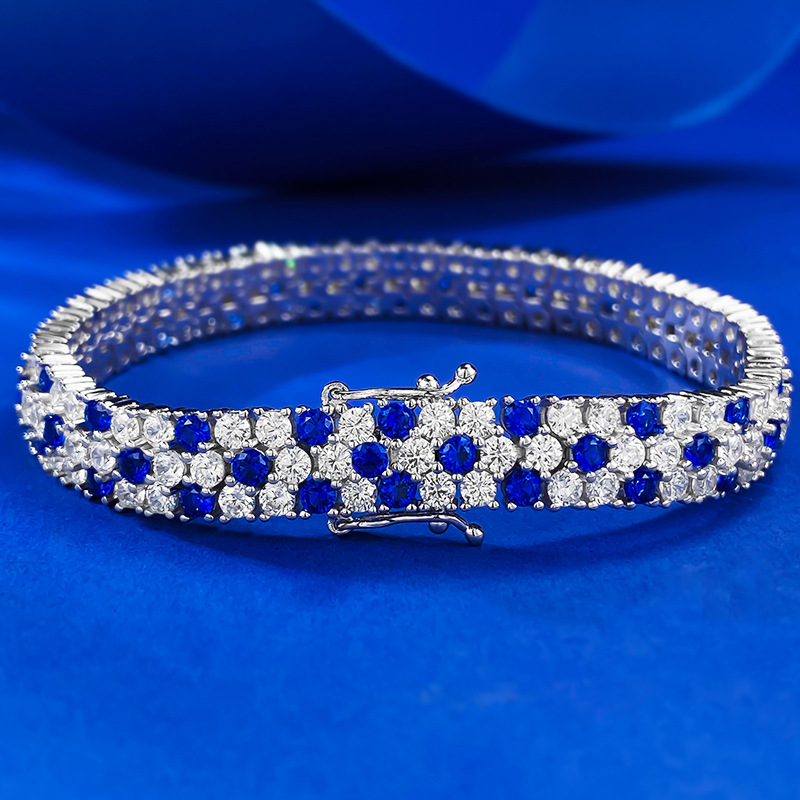
Buy Certified Diamond Tennis Bracelet with Confidence
A Diamond Tennis Bracelet has a quiet kind of confidence. It works with a silk dress, a wool blazer, a watch stack, or a plain white shirt. If you're ready to buy Certified Diamond Tennis bracelet styles, focus on three things: beauty, security, and clear quality details.
StoneBridge Jewelry specializes in premium lab-grown diamond jewelry for shoppers who want sparkle, transparency, and strong value. Many customers want one bracelet they can wear often, not a piece that stays in a box. The right certified tennis bracelet delivers that kind of everyday elegance.
Why Buy Certified Diamond Tennis Bracelet Styles?
A tennis bracelet places many diamonds side by side, so consistency matters. One dull, warm, or poorly matched stone can interrupt the line of sparkle. Certification and detailed product specs help you understand what you're paying for before checkout.
When you buy certified Diamond Tennis Bracelet designs, look beyond the first photo. Review the total carat weight, diamond color, clarity, cut details, metal purity, bracelet length, setting style, and clasp design. Those details tell you more than a bright product image can.
The Gemological Institute of America, or GIA, states that laboratory-grown diamonds have essentially the same chemical, physical, and optical properties as natural diamonds. The main difference is origin. A certified lab-grown Diamond Tennis Bracelet can offer real diamond brilliance with modern sourcing and often better size-for-budget value.
For a bracelet that feels refined now and still makes sense years from now, start with documentation, craftsmanship, and fit.
What Certification Usually Tells You
Certification may describe cut, color, clarity, carat weight, measurements, and growth origin. For a tennis bracelet, the report may apply to individual diamonds, a matched parcel, or a stated quality range for the full bracelet. Read the product page carefully so you know exactly what is included.
Trusted grading names include GIA and IGI, the International Gemological Institute. Both are widely recognized in diamond grading. If you plan to buy certified Diamond Tennis Bracelet styles online, ask how the diamonds are graded and what documents come with the purchase.
Some bracelets include a grading report for each larger diamond, while others use diamonds that are certified as a matched group. Smaller tennis bracelet diamonds are often documented by quality range rather than individual reports because a bracelet can contain 40, 50, or more stones. That is not automatically a problem, but the listing should be clear about whether the stated grades are minimums, averages, or approximate ranges.
Certification doesn't replace good construction. A bracelet still needs even diamond matching, smooth links, secure prongs or bezels, and a clasp that suits its value.
How to Judge Diamond Quality Before You Buy
The 4Cs still matter, even though a tennis bracelet doesn't have one center stone. Cut affects brightness. Color affects how white or warm the diamonds look. Clarity affects how clean the diamonds appear. Carat weight controls the total diamond presence across the wrist.
Most tennis bracelets list total carat weight, often written as TCW. A 4.00 TCW bracelet may contain dozens of diamonds, not one 4-carat stone. As TCW rises, the bracelet usually looks wider, brighter, and more formal.
Before You Buy certified Diamond Tennis Bracelet Options, compare carat weight and quality together. A smaller bracelet with well-matched, lively diamonds can look more expensive than a larger bracelet with uneven stones.
Cut, Color, Clarity, and Carat Weight
Cut has the strongest effect on sparkle. Well-cut diamonds return light cleanly, so they look bright even in modest sizes. Poorly cut diamonds can look flat, even if the bracelet has a higher total carat weight.
Color grades usually run from D, which is colorless, down the alphabet as warmth increases. Many bracelet buyers choose near-colorless diamonds because they offer a clean look and sensible value. Clarity works the same way: eye-clean diamonds often matter more than chasing the highest grade.
For white gold or platinum bracelets, many shoppers prefer diamonds in the D to H range because cooler metals can make warmth easier to notice. In yellow or rose gold, near-colorless diamonds in the G to J range can still look bright because the metal already adds warmth. For clarity, VS and SI-quality diamonds can be excellent for bracelets when they are eye-clean and well matched. Very high clarity grades may increase price without changing how the bracelet looks on the wrist.
Diamond shape also affects the finished look. Round brilliant diamonds create the most classic tennis bracelet style and are prized for lively sparkle. Oval, emerald-cut, pear, and marquise tennis bracelets can feel more fashion-forward, but they require careful matching because shape differences are easier to see across a repeated line of stones.
If you buy certified Diamond Tennis Bracelet designs as a gift, keep the paperwork with the receipt. It can help with insurance records, future appraisals, and care notes.
Fit, Metal, and Setting Details That Matter
A beautiful tennis bracelet should feel easy on the wrist. Most women's tennis bracelets fall around 6.5 to 7.5 inches, with 7 inches often treated as a common standard. The bracelet should move slightly, but it shouldn't slide over the hand.
Measure the wrist with a soft tape, then add about 0.25 to 0.5 inch for comfort. Choose the smaller allowance for a close fit and the larger allowance for a relaxed fit. Heavier bracelets may need a little more room.
If you do not have a soft measuring tape, wrap a strip of paper or string around the wrist bone, mark the overlap, and measure it against a ruler. Measure the wrist where the bracelet will actually sit, not at the widest part of the hand. If the bracelet is a surprise gift, borrow a bracelet the recipient already wears and measure it end to end, including the clasp, then note whether that bracelet fits snugly or loosely.
Metal choice changes the look. White gold keeps the focus bright and icy. Yellow gold adds warmth. Rose gold feels soft and romantic. Platinum has a naturally white color and strong durability, though it usually costs more.
Gold purity matters too. A 14k gold bracelet is often a practical choice for daily wear because it offers a good balance of strength, beauty, and price. An 18k gold bracelet has a richer precious metal content and a more luxurious feel, but it is usually softer and more expensive. Platinum is dense and durable, so it can feel heavier on the wrist; some buyers love that substantial feel, while others prefer the lighter comfort of gold.
Prong, Shared-Prong, and Bezel Settings
Prong settings show more of each diamond and create a classic tennis bracelet look. Shared-prong settings use less metal between stones, giving the bracelet a fluid appearance. Bezel settings wrap each diamond in metal for a smooth edge and extra protection.
If you use your hands often, a lower-profile or bezel-set bracelet may feel easier for daily wear. If you want maximum light return, prong-set designs are hard to beat. Choose certified Diamond Tennis Bracelet styles with clean finishing and secure stone placement.
Four-prong settings give each round diamond a balanced, traditional frame and strong visibility. Three-prong settings can look delicate and airy, but the workmanship must be precise. Shared-prong bracelets can deliver a continuous diamond line with less visible metal, although they should be inspected regularly because neighboring stones rely on some of the same metal structure. Bezel settings are excellent for people who dislike snagging on sweaters, lace, or knitwear.
Compare These Features Before Checkout
Product photos help you picture the style, but specifications help you judge value. Use the table below as a quick checklist Before You Buy certified Diamond Tennis Bracelet designs.
| Feature | Why It Matters | Smart Buyer Tip |
|---|---|---|
| Total carat weight | Controls diamond presence and price | Compare TCW with color, clarity, and cut |
| Diamond matching | Keeps the sparkle even across the wrist | Look for consistent size, tone, and brightness |
| Metal type | Affects color, strength, and cost | Match it to your daily jewelry and skin tone preference |
| Bracelet length | Impacts comfort and security | Measure your wrist before ordering |
| Setting style | Changes sparkle and protection | Choose prong for brilliance or bezel for a smooth profile |
| Clasp design | Helps protect a valuable bracelet | Look for a box clasp with safety features |
StoneBridge Jewelry product pages are built to make comparison easier. You can review diamond details, metal options, and sizing notes before you decide. If you're narrowing choices, contact our jewelry experts for help with fit, carat weight, and style.
Clasp Security and Daily Wear
A clasp is never a minor detail on a diamond bracelet. The bracelet carries value around the entire wrist, so the closure needs to feel dependable. Box clasps are common because they sit neatly and pair well with safety latches.
Look for terms such as safety latch, fold-over safety, double lock, or secure box clasp. Before wearing a new bracelet all day, practice opening and closing it. You should hear or feel a firm lock.
Also check how the links move near the clasp. A quality tennis bracelet should flex naturally without feeling loose, twisted, or sharp. Run a fingertip along the underside; it should feel smooth against the skin. If the bracelet has side safety latches, make sure they sit flush and do not catch on cuffs.
If you plan to buy certified diamond tennis bracelet styles for regular wear, choose a setting and clasp that match your routine. Remove the bracelet during heavy work, sports, swimming, or exposure to bleach and chlorine.
Pricing and Long-Term Value
Price depends on total carat weight, diamond quality, metal type, setting complexity, certification, and craftsmanship. A 2.00 TCW bracelet in 14k gold will usually cost much less than a 5.00 TCW bracelet in platinum. Larger matched diamonds can raise the price quickly because every stone has more individual weight.
As a broad shopping framework, lighter lab-grown diamond tennis bracelets around 1.00 to 2.00 TCW are often the entry point for fine everyday styles. Mid-range bracelets around 3.00 to 5.00 TCW usually deliver the classic look many buyers imagine when they think of a tennis bracelet. Larger designs above 6.00 TCW, especially with higher color and clarity grades or platinum settings, move into more substantial investment and milestone-gift territory. Exact prices change with market conditions, metal choice, diamond specifications, and brand craftsmanship, so compare bracelets by full specs instead of total carat weight alone.
Lab-grown diamonds often let shoppers consider a larger look within the same budget. Industry retail reports have tracked steady consumer interest in lab-grown diamonds, especially among buyers who want transparency and more visible diamond presence. Actual pricing still depends on the bracelet's specs.
The lowest price isn't always the best deal. Thin metal, weak matching, or a light clasp can lead to frustration later. A better value bracelet balances sparkle, structure, comfort, and support.
For more diamond education, review StoneBridge Jewelry's lab-grown diamond selection. You can also browse our fine jewelry collection to compare bracelets with earrings, necklaces, and rings that pair well together.
A Practical Carat Weight Guide
Delicate tennis bracelets under 2.00 TCW suit subtle daily wear. Bracelets around 2.00 to 4.00 TCW feel classic and visible without being too bold for many wrists. Statement styles of 5.00 TCW or more bring stronger presence for formal dressing or milestone gifts.
Wrist size changes how carat weight appears. A 3.00 TCW bracelet may look more substantial on a smaller wrist and more understated on a larger wrist. Diamond size distribution matters as well: a 4.00 TCW bracelet with fewer, larger stones can look bolder than a 4.00 TCW bracelet with more, smaller stones. If you like a sleek line of sparkle, choose smaller stones set closely together. If you want each diamond to be more individually visible, look for a design with larger stones and a slightly more prominent setting.
Before You Buy certified diamond tennis bracelet designs, think about where the bracelet will be worn most. Office? Weddings? Daily errands? The best size is the one you'll actually enjoy wearing.
Common Mistakes to Avoid
One common mistake is buying by total carat weight only. TCW tells you how much diamond weight is in the bracelet, but it does not tell you whether the diamonds are bright, well matched, or securely set. A bracelet with slightly less carat weight and better cut consistency can look more polished.
Another mistake is ignoring bracelet length. A bracelet that is too loose can flip, catch, and feel distracting. A bracelet that is too tight can pinch and strain the clasp. Fit is especially important with heavier tennis bracelets because extra weight can make a loose bracelet slide farther down the hand.
Do not overlook metal thickness and finishing. If the bracelet looks unusually inexpensive compared with similar specs, ask whether the setting is lightweight, whether the clasp includes safety features, and whether the diamonds are matched for color and clarity. Good value should still include sound construction.
Finally, avoid waiting until after purchase to read service policies. Shipping, returns, resizing options, warranty coverage, and inspection recommendations are part of the buying decision. Clear policies help you feel confident before the bracelet arrives.
Care Tips for a Certified Diamond Bracelet
Diamonds are durable, but bracelets need regular care. Clean the piece with warm water, mild soap, and a soft brush when the setting and metal allow it. Dry it with a lint-free cloth.
Avoid harsh household cleaners, especially bleach and chlorine, because they can affect gold alloys and weaken delicate jewelry over time. Put the bracelet on after lotion, sunscreen, perfume, and hairspray so residue does not build up around the stones. If the bracelet looks cloudy, dirt may be sitting underneath the diamonds where light normally enters and reflects.
Store the bracelet separately so it doesn't scratch other jewelry. Schedule periodic professional inspections so a jeweler can check prongs, links, and clasp tension. A quick inspection can catch small issues before they become costly repairs.
For frequent wear, an inspection every six to twelve months is sensible. Ask the jeweler to check for bent prongs, loose stones, worn hinge areas, stretched links, and clasp tension. If you ever hear a rattle, see a stone move, or notice the clasp no longer clicks firmly, stop wearing the bracelet until it is checked.
If you're buying for a milestone, keep the certification, receipt, and care notes together. That simple habit makes insurance and future service easier.
Online Buying Confidence
Buying fine jewelry online feels easier when the retailer gives you enough detail. Look for clear images, close-ups of the clasp, metal purity, total carat weight, diamond quality notes, certification details, sizing help, shipping terms, returns, and warranty information.
Shipping details matter for a valuable bracelet. Look for insured shipping, tracking, signature requirements, and secure packaging. If the bracelet is a gift, confirm delivery timing, whether the package reveals the contents, and whether gift packaging is available. For high-value purchases, plan for someone to be available at the delivery address rather than leaving the package unattended.
Return and exchange policies are just as important. Check the return window, whether the bracelet must be unworn, whether custom lengths or special orders are final sale, and how return shipping is handled. If you are unsure about length, ask about resizing before ordering because tennis bracelets are more complex to size than simple chain bracelets.
If any detail feels unclear, ask before checkout. A trustworthy retailer should help you compare options without pressure. At StoneBridge Jewelry, we help customers choose bracelets that match their wrist size, style, and budget.
Frequently Asked Questions About Certified Diamond Tennis Bracelets
Where can I buy certified diamond tennis bracelet styles online?
You can buy certified diamond tennis bracelet styles from a fine jewelry retailer that shows clear diamond specs, certification details, product photos, and support options. StoneBridge Jewelry offers certified lab-grown diamond tennis bracelets with transparent quality information. Before checkout, compare total carat weight, metal type, length, clasp security, shipping, and returns. You can also view our FAQ for service and shopping details.
Is a certified lab-grown diamond tennis bracelet worth it?
Yes, it can be a smart choice if you want real diamond sparkle, clear documentation, and strong value. Lab-grown diamonds have the same chemical, physical, and optical properties as mined diamonds, according to GIA research. Certification helps you compare quality instead of relying only on photos. For many shoppers, the value comes from getting a brighter or larger bracelet within a planned budget.
What should I check before buying a certified tennis bracelet?
Review diamond quality, total carat weight, metal purity, setting style, bracelet length, clasp design, and certification notes. Look for even diamond matching across the full bracelet. Check whether the clasp has a safety latch or double-lock feature. Read the warranty, return policy, and care guidance before you place the order.
How should a diamond tennis bracelet fit?
A tennis bracelet should sit comfortably with slight movement. Measure your wrist and add about 0.25 to 0.5 inch, depending on whether you prefer a snug or relaxed fit. It shouldn't pinch, and it shouldn't slip over the hand. If you're between sizes, ask for fit guidance before ordering.
Can I wear a certified diamond tennis bracelet every day?
Many certified diamond tennis bracelets work well for regular wear if they have secure settings, a reliable clasp, and a comfortable fit. Choose a lower-profile setting if you're active with your hands. Remove the bracelet during workouts, swimming, heavy chores, and chemical exposure. Professional inspections help keep the diamonds and clasp secure over time.
Which metal is best for a diamond tennis bracelet?
The best metal depends on your style, budget, and wear habits. 14k white gold is popular for a bright, classic look and practical durability. Yellow gold adds warmth and pairs well with traditional jewelry wardrobes. Rose gold softens the look and can feel distinctive without being overly trendy. Platinum is naturally white, dense, and durable, but it usually has a higher price and heavier feel.
How much should I spend on a certified diamond tennis bracelet?
Set a budget based on how often the bracelet will be worn and which specs matter most to you. If size is the priority, lab-grown diamonds may let you choose a higher total carat weight. If long-term daily wear is the priority, reserve part of the budget for secure construction, a dependable clasp, and a metal you enjoy wearing. Compare bracelets with similar TCW, color, clarity, metal, and certification details before deciding.
Shop Certified Diamond Tennis Bracelets at StoneBridge Jewelry
Ready to buy certified diamond tennis bracelet styles with confidence? StoneBridge Jewelry offers premium lab-Grown Diamond Bracelets with refined designs, clear quality details, and helpful support before and after purchase.
A certified diamond tennis bracelet can mark an anniversary, birthday, graduation, promotion, wedding, or personal milestone. It can also become the bracelet you reach for on an ordinary Tuesday. Choose the one that fits your wrist, your wardrobe, and the way you live.
Browse StoneBridge Jewelry's certified lab-grown diamond tennis bracelet styles, compare carat weights and metals, and choose your favorite before popular sizes sell out.
Ready to Find Your Perfect Diamond?
Explore our collection of certified lab-grown diamonds
Shop Diamonds