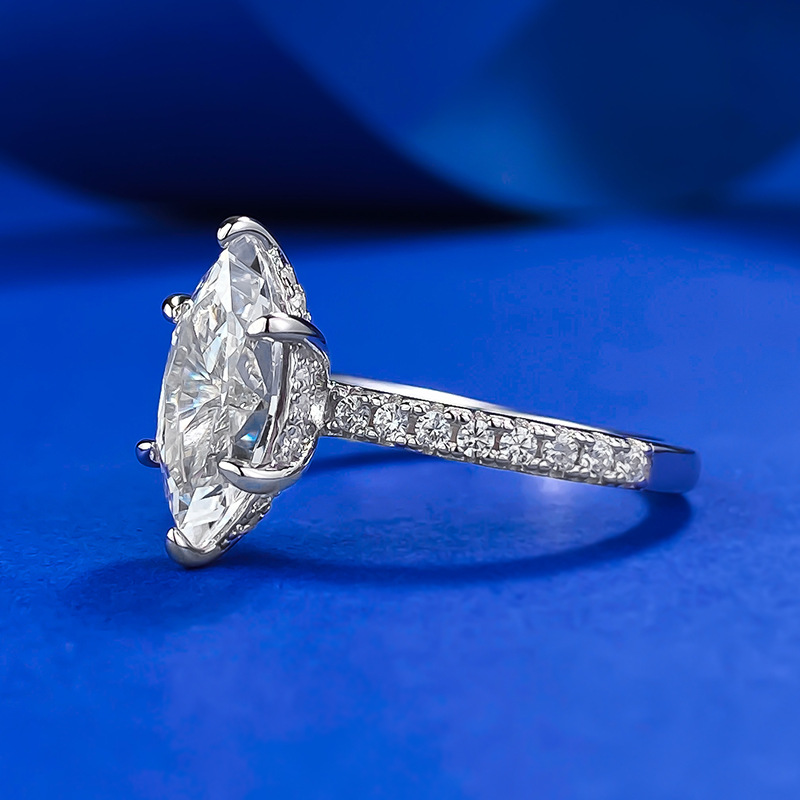
Bridal Jewelry Ring Settings: How to Choose the Right Style
Bridal jewelry ring settings do more than hold a diamond in place. They shape how the ring sparkles, how high it sits, how secure it feels, and how well it pairs with a wedding band. The center stone gets the first look, but the setting decides much of the daily experience.
At StoneBridge Jewelry, we've found that the best choice usually starts with lifestyle, not trends. Do you want a low profile for busy hands? Do you want maximum sparkle from every angle? Or do you want a clean design that stacks easily with a wedding band?
Below, you'll find popular bridal jewelry ring settings compared by beauty, comfort, durability, upkeep, and fit, along with guidance on lab-grown diamonds, metal choices, resizing, and the details shoppers often miss online.
Why Bridal Jewelry Ring Settings Matter
The setting changes the whole character of a ring. A round diamond in a solitaire setting feels classic and quiet. The same diamond in a halo looks larger and brighter. Set it in a bezel, and the ring feels modern, smooth, and protected.
Bridal jewelry ring settings also affect comfort. A tall head can catch on sweaters, gloves, or hair. A lower setting may feel easier for work, travel, parenting, or daily errands.
Many shoppers focus first on carat weight, color, and clarity. Those grades matter, but the mounting affects how the diamond looks on the hand. GIA explains that diamond cut controls much of a stone's brightness, fire, and scintillation, and the setting can change how light reaches the stone.
Lab-grown diamonds make proportion even more important. Because buyers can often choose a larger center stone for the same budget, the setting has to support the size. A 2.00-carat oval may need a stronger shank than a delicate 1.5 mm band can provide.
What a Ring Setting Includes
A ring setting is the structure that secures and presents the center stone. It includes the prongs or bezel, the shank, the basket, the gallery, and any accent stones. Each part affects comfort, security, and style.
Here are the terms you'll see most often:
- Setting: the design that holds and frames the stone
- Mounting: the ring structure before or after the center stone is set
- Center stone: the main diamond or gemstone
- Accent stones: smaller stones used for sparkle or shape
- Shank: the band around the finger
- Prongs: small metal tips that grip the stone
- Basket: the support under the center stone
- Gallery: the visible side area below the stone
- Profile: the height and side view of the ring
These details matter because bridal jewelry ring settings change how a diamond faces up. A high basket can show more of the stone from the side. A bezel gives a smooth rim of metal around the edge. A three-stone setting spreads the design across the finger.
IGI and GIA grading reports list exact diamond measurements in millimeters, not just carat weight. That number matters when choosing a setting. Two 1.50-carat diamonds can look different if one has a wider spread and the other carries more depth.
A Short History of Engagement Ring Settings
The solitaire became a bridal classic because it was simple, wearable, and focused on one stone. As jewelry manufacturing improved, more detailed settings became easier to produce with consistency. Halo, pavé, channel, bezel, cathedral, and tension styles all grew from that mix of craft and changing taste.
Modern shoppers often want a blend of tradition and practicality. Our customers often ask for rings that look special but don't feel fragile. Careful comparison helps narrow the options to bridal jewelry ring settings that suit both the hand and the routine.
Popular Bridal Jewelry Ring Settings Compared
Every setting has trade-offs. Some bring more sparkle. Some protect the stone better. Others make stacking a wedding band easier.
| Setting | Best For | Protection | Sparkle | Upkeep |
|---|---|---|---|---|
| Solitaire | Classic, minimal style | Moderate | Center-stone focused | Low to moderate |
| Halo | A larger face-up look | Moderate | Very high | Moderate |
| Pavé | Glitter along the band | Moderate to low | High | Moderate to high |
| Channel | Smooth side-stone detail | High | Medium | Low to moderate |
| Bezel | Active lifestyles | Very high | Clean and controlled | Low |
| Three-stone | Meaning and width | Moderate | High | Moderate |
| Tension | Architectural style | Moderate | Strong center focus | Specialized care |
| Cathedral | Lift and graceful lines | Moderate | Elegant and open | Moderate |
A useful question is simple: what will matter most on a normal Tuesday? If the ring has to survive a busy routine, durability may matter more than tiny accent stones.
Solitaire Setting
A solitaire setting uses one center diamond on a clean band. Most designs use four or six prongs, though bezel and semi-bezel solitaires also exist. The style keeps attention on the diamond.
This setting works well for minimalist brides, classic shoppers, and anyone who wants flexibility with future bands. It can look refined in platinum, white gold, yellow gold, or rose gold.
Check the prongs and height before you choose. Four prongs show more diamond, while six prongs add another point of contact. A lower solitaire can be more comfortable if you type, wear gloves, or use your hands all day.
For lab-grown diamonds, the solitaire is especially effective. It lets the center stone carry the design without extra detail competing for attention.
Halo Setting
A halo setting surrounds the center diamond with smaller stones. This makes the ring look larger from the top and adds strong sparkle. It is one of the most popular bridal jewelry ring settings for buyers who want immediate visual impact.
Halo styles vary a lot. A hidden halo adds sparkle under the center stone. A double halo creates a bolder look. Cushion, oval, and pear halos can soften or stretch the shape of the ring.
The trade-off is upkeep. Small stones need inspection, and tight spaces can collect lotion or soap. A soft brush and mild soap help at home, but a jeweler should still check the setting every 6 to 12 months.
Pavé Setting and Channel Setting
A pavé setting uses small diamonds set close together along the band. Tiny beads or prongs hold the stones, giving the surface a bright, glittering look. It feels dressy and delicate.
A channel setting places accent stones between two metal walls. The surface feels smoother, and the stones have more protection from daily knocks. It is often a better fit for people who want sparkle with fewer exposed edges.
Choose pavé if you want shimmer from the band and don't mind more care. Choose channel if you prefer a cleaner feel and stronger protection. Both bridal jewelry ring settings need cleaning, but pavé usually needs more frequent inspection.
Bezel Setting
A bezel setting wraps metal around all or part of the center stone. It is one of the most secure options because the diamond edge is protected. It also creates a smooth, modern profile.
This style suits active wear, travel, healthcare work, and anyone who wants fewer snag points. It can make emerald cuts, ovals, and round diamonds look crisp and intentional.
Some buyers worry that a bezel will reduce sparkle. It can block a little side light, but a well-cut diamond still looks bright. The gain in security is worth it for many daily wearers.
Three-Stone, Tension, and Cathedral Settings
A three-stone setting places a center diamond between two side stones. The design has familiar symbolism, but it also adds visual width. It works well with round, oval, emerald, pear, and trillion side stones.
A tension setting uses pressure from the metal to hold the diamond, creating a floating look. It can be striking, but resizing may be limited. Choose this style only from a jeweler who understands the engineering.
A cathedral setting raises the center stone with arches of metal from the shank. It gives the ring height and elegance without needing extra stones. The added lift can create more snag risk, so try to view the side profile before buying.
How to Choose Bridal Jewelry Ring Settings for Real Life
Choosing bridal jewelry ring settings gets easier once you define the job the ring has to do. A ring worn every day needs comfort, security, and a care plan. A ring worn more gently may allow for finer details.
Start with these questions:
- Do you want the center stone to look as large as possible?
- Do you need a low-profile ring for work or hobbies?
- Do you prefer clean metal or extra sparkle?
- How often are you willing to clean and inspect the ring?
- Do you want a straight wedding band to sit flush?
At StoneBridge Jewelry, we often use these questions before discussing metal color. They make the decision practical. Style still matters, but the ring also needs to feel good after the excitement of the first try-on.
Match the Setting to Your Routine
If you work with your hands, wear gloves, lift weights, or care for young children, lower-profile bridal jewelry ring settings often make sense. Bezel, channel, and low solitaire designs reduce snagging and help protect the diamond.
High prongs, ornate halos, and pavé-heavy bands can still work. They simply ask for more care. You may need to remove the ring before workouts, gardening, cleaning, or any task that could bend metal.
Comfort can be the deciding factor. A ring that feels too tall in the store may become annoying after a month of daily wear.
Match the Setting to Diamond Shape and Size
Different diamond shapes suit different settings. Round brilliants are flexible and work in almost any style. Ovals, pears, marquise, and radiants often look best in settings that support their length.
Emerald cuts look clean in bezels, solitaires, and cathedral settings because the lines stay sharp. Cushion cuts often pair well with halos because the border adds softness and spread.
For lab-grown diamonds, size balance matters. A 1.50-carat diamond often pairs well with a band around 1.8 mm to 2.2 mm, depending on the design and metal. Larger stones may need more metal for long-term strength.
Match the Setting to Metal and Wedding Band Fit
Metal choice changes both look and wear. Platinum is dense, naturally white, and strong for prongs. White gold offers a similar color at a lower price, though it usually needs rhodium plating over time.
Yellow gold adds warmth and contrast. Rose gold gives a softer look that works well with vintage-inspired bridal jewelry ring settings. Your skin tone, style, and maintenance preference can all guide the choice.
Wedding band fit is just as important. Some high baskets and cathedral settings allow a straight band to sit flush. Low baskets, bezels, and certain halos may create a small gap. If you want a tight bridal set, ask about the gallery Before You Buy.
What to Check Before You Buy
Photos can hide important details, especially online. View the ring from the top, side, and underside if possible. A 360-degree video is even better.
Use this checklist before choosing bridal jewelry ring settings:
- Confirm the diamond's millimeter measurements, not only carat weight
- Check band width and thickness
- Review the setting height from the finger to the top of the stone
- Ask whether the wedding band will sit flush
- Look closely at prong size and placement
- Ask how accent stones are secured
- Review resizing limits before purchase
- Confirm inspection, warranty, return, and repair policies
Small numbers can make a big difference. A band that measures 1.5 mm may feel delicate next to a large center stone. A 2.0 mm band may still look slim while offering more strength.
Questions to Ask a Jeweler
Clear answers are a good sign. Before buying, ask:
- How is the center stone secured?
- Can this ring be resized, and by how many sizes?
- How often should the prongs or bezel be checked?
- Are the halo or pavé stones individually set?
- What happens if an accent stone loosens?
- Will this setting fit the wedding band I want?
- Can I see the band width, stone height, and gallery depth?
A good jeweler won't rush these answers. For a ring you'll wear for years, details matter.
How to Compare Settings Online
Online shopping works best when the specs are complete. Compare the same diamond shape across several bridal jewelry ring settings so you can see how the mounting changes the look. A round diamond in a solitaire will feel very different from a round diamond in a halo.
Look for center stone size, band width, accent diamond count, setting height, metal type, and resizing notes. If those details are missing, ask before ordering.
You can explore engagement rings, compare loose stones in our lab-grown diamond collection, or use the StoneBridge ring builder to see how shape, metal, and setting work together. For more finished styles, browse fine jewelry designs and compare proportions.
Common Setting Mistakes to Avoid
A beautiful ring can still be the wrong ring. The most common mistake is choosing sparkle before structure. Pavé and halo styles can be stunning, but they add more small stones and more maintenance points.
Another mistake is ignoring height. A tall setting may look elegant in a photo and feel awkward in daily life. If the wearer uses their hands constantly, a low profile can be more practical.
Resizing is another detail shoppers miss. Simple solitaires and many three-stone rings are often easier to adjust. Tension settings, eternity pavé bands, and channel designs may have tighter limits.
Don't skip maintenance planning. Prongs can wear down, bezels can loosen, and small stones can shift. That doesn't mean the ring was poorly made; it means metal changes with use.
Care for Bridal Jewelry Ring Settings
Good care keeps bridal jewelry ring settings bright and secure. Clean your ring at home with warm water, mild dish soap, and a soft brush. Rinse well and dry it with a lint-free cloth.
Avoid chlorine, bleach, abrasive cleaners, and harsh chemicals. Remove your ring before swimming, heavy lifting, gardening, cleaning, and workouts that could strike the ring against equipment.
Set a professional inspection every 6 to 12 months. Choose the shorter end of that range for pavé, halo, or high-prong styles. During inspection, the jeweler should check prongs, accent stones, shank wear, residue, and any signs of bending.
Keep your paperwork current too. Save the grading report, appraisal, sizing notes, and repair records. If your ring features a lab-grown diamond, the appraisal should list the stone details and setting description clearly.
Choosing the Setting That Feels Right
The best bridal jewelry ring settings balance style with daily wear. A solitaire keeps the focus on the center stone. A halo or pavé setting adds sparkle. A channel or bezel setting gives more protection. A three-stone, tension, or cathedral design adds shape and presence.
Think in three layers: how it looks, how it feels, and how it will age. If all three work, you're much more likely to love the ring years from now.
StoneBridge Jewelry can help you compare bridal jewelry ring settings, lab-grown diamonds, metals, and wedding band fit with practical guidance. Start with your lifestyle, then choose the design that makes the diamond look right at home.
FAQ
What are the most secure bridal jewelry ring settings for everyday wear?
Bezel and channel settings are often the most secure choices because they use more metal to protect the diamond or accent stones. A low-profile solitaire can also work well if the prongs are sturdy and checked on schedule. For everyday wear, look at both setting height and stone exposure. A lower ring with fewer snag points usually handles routine use better.
Which engagement ring setting makes a diamond look bigger?
Halo settings, slim solitaires, and some cathedral settings can make a diamond look larger from the top. Elongated shapes such as oval, pear, marquise, and radiant cuts can also create more finger coverage. The best bridal jewelry ring settings for size usually balance spread, band width, and center stone height. Don't judge by carat weight alone; millimeter measurements tell a clearer story.
Is a pavé setting or channel setting better for daily wear?
A channel setting is usually better for active daily wear because the accent stones sit between protective metal walls. Pavé gives more glitter, but the tiny stones and beads are more exposed. If you want sparkle with less snagging, channel is the safer pick. If you love a delicate shimmer, pavé can work with regular cleaning and inspections.
Can bridal jewelry ring settings be resized after purchase?
Many settings can be resized, but not all of them allow large changes. Solitaires and some three-stone rings are usually easier to adjust than tension settings, eternity pavé bands, or full channel bands. Ask for the resizing range Before You Buy. It's also smart to confirm whether resizing affects the warranty.
Are lab-grown diamonds suitable for all ring settings?
Yes, lab-grown diamonds can be used in the same bridal jewelry ring settings as mined diamonds. The key is matching the setting to the diamond's shape, size, and measurements. Larger lab-grown diamonds may need a stronger band or more secure head for daily wear. A jeweler can help check the proportions before the ring is made.
Ready to Find Your Perfect Diamond?
Explore our collection of certified lab-grown diamonds
Shop Diamonds