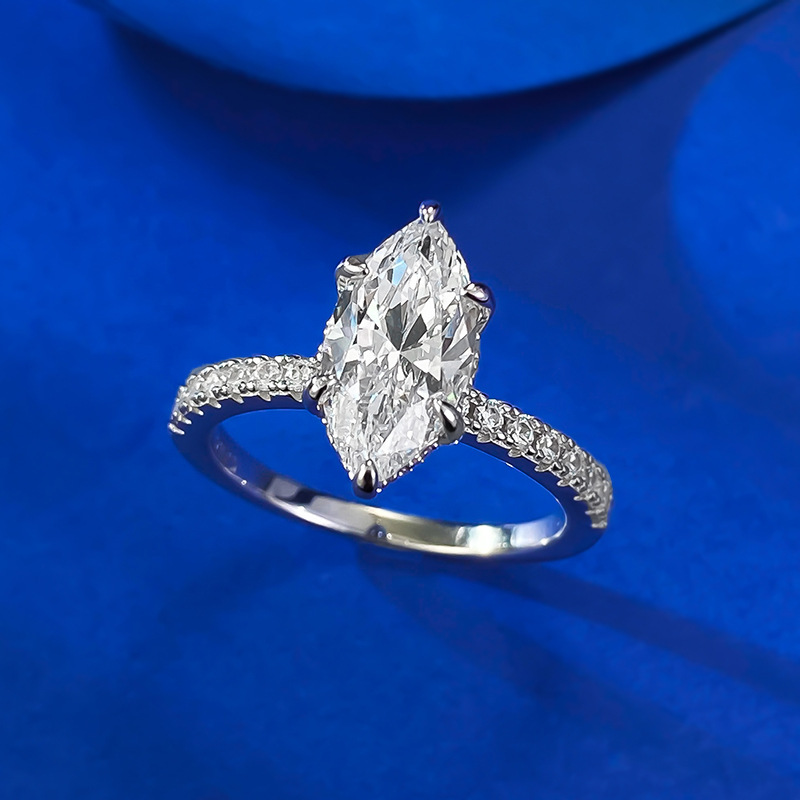
Best Color Grade for Solitaire: D-F vs G-J Diamonds
Choosing the best color grade for solitaire engagement rings is a real buying decision, not a grading chart quiz. A solitaire puts one diamond in the spotlight, so color, cut, carat weight, clarity, shape, and metal all affect the finished look.
Most buyers compare colorless D-F diamonds with near-colorless G-J diamonds. Both ranges can look beautiful. The right choice depends on how white you want the diamond to appear, how sensitive your eye is to warmth, and where you want your budget to go.
The practical question is simple: would you rather pay for the highest color category, or choose a slightly lower grade that still looks white once set? For many shoppers, the answer becomes clear only after comparing stones by shape and setting.
Best Color Grade for Solitaire Rings: The Quick Answer
For most buyers, the best color grade for solitaire rings is G-H. These grades often look bright and white in a finished ring, especially in well-cut round brilliant lab-grown diamonds. They also leave more room in the budget for carat weight, setting quality, or a better cut.
D-F is the premium choice. It suits buyers who want the colorless category on the report, a cooler white look, a platinum or white gold setting, a larger center stone, or a step cut such as emerald or Asscher.
I-J can work well too, but it needs the right setting. Yellow gold and rose gold soften diamond warmth, while platinum and white gold can make warmth easier to see. If size matters more than an icy tone, I-J deserves a careful look.
At StoneBridge Jewelry, we’ve found that many solitaire shoppers are happiest starting with G-H, then comparing one grade higher or lower in the exact shape they want. That simple side-by-side check often prevents overspending on color that won’t be visible on the hand.
How Diamond Color Grading Works
Diamond color is graded on the GIA D-to-Z scale. D is the highest color grade, and Z shows the most visible yellow or brown tint within the standard scale. D, E, and F are colorless. G, H, I, and J are near-colorless.
That gives shoppers 23 letter grades from D through Z, but solitaire buyers usually focus on the first 7 grades: D through J. The difference between these grades can look small in daily wear. It becomes more noticeable as the diamond gets larger, the shape shows more body color, or the setting uses a cool white metal.
GIA explains that color grading is done under controlled lighting by comparing a diamond with master stones. That method removes some distractions, such as sparkle and setting reflections. A mounted solitaire is different. You see it in motion, near skin tone, and under changing light.
The best color grade for solitaire rings is not always the highest grade. It’s the grade that looks right in the ring you plan to wear.
Why Solitaire Settings Show Color More Clearly
A solitaire has no halo or side stones to pull attention away from the center diamond. The stone carries the whole design. If there is warmth, you may notice it more easily than you would in a busier ring.
Open prong settings also reveal the diamond from the side. A stone may look very white face-up but show a hint of warmth through the profile. This is more common in larger diamonds, elongated shapes, and step cuts.
Cut quality can help. A well-cut diamond returns more light, which can make slight warmth harder to see. A dull or poorly proportioned diamond may show body color more clearly because it has less brightness to distract the eye.
Protect cut before upgrading color. A lively H color round can look better than a higher-color diamond with weak light performance.
D-F Diamonds: Premium Colorless Solitaire Choice
D-F diamonds are the top color range for shoppers who want a crisp, icy-white solitaire. If the best color grade for solitaire means the highest color category to you, start here.
D is the highest grade on the GIA scale. E and F also sit in the colorless range and often look nearly identical to D without controlled grading conditions. In a finished ring, many people cannot separate E from F with the naked eye.
D-F grades pair especially well with platinum and white gold. These metals create a cool frame around the diamond, so a colorless stone looks clean and bright from the top and side.
They are also smart for step cuts. Emerald and Asscher cuts have broad, open facets that do not hide body color as well as round brilliant cuts. If you want a 2.00 carat emerald cut in platinum, D-F or G will usually feel safer than I-J.
Pros of D-F Color
D-F diamonds give you the most colorless look available in the standard grading range. They are a strong match for buyers who notice warmth quickly or want premium grading credentials.
They also reduce second-guessing. If you know you want platinum, a large center stone, or a step cut, paying for a higher color grade can bring peace of mind.
For heirloom-style purchases, that emotional factor matters. Some buyers simply love knowing their solitaire sits in the colorless category.
Cons of D-F Color
The main trade-off is price. Colorless diamonds usually cost more than near-colorless diamonds with similar cut, clarity, and carat weight. Lab-grown diamonds often make that jump more manageable, but it still affects the overall ring budget.
The visual difference can also be subtle. In a well-cut round brilliant solitaire, the gap between F and G may be hard to see once the diamond is mounted.
If your budget is fixed, moving into D-F could mean choosing a smaller diamond, simpler setting, or lower clarity. Don’t give up excellent cut just to gain a color grade.
G-J Diamonds: Best Value Range for Many Solitaires
G-J diamonds are the value-focused range for many solitaire rings. They can still look white once set, especially when the cut is strong and the setting supports the stone well.
For most StoneBridge Jewelry shoppers, the best color grade for solitaire value sits in G-H. G is just below the colorless range, yet it often appears bright and clean in a finished ring. H offers strong value and can still look white in many round brilliant solitaires.
I and J need more context. They can look soft and warm in yellow gold or rose gold. In white metal, they may show more color from the side, especially in open baskets or elongated shapes.
This range can free up budget for things people notice right away. A slightly larger, well-cut G color diamond may look more impressive on the hand than a smaller D color diamond bought at the same price.
Pros of G-J Color
G-J grades offer more flexibility. You can often choose a larger carat weight, a more detailed setting, or a better cut without pushing the budget as far.
G-H diamonds are especially useful because they balance whiteness and value. In many round brilliant solitaires, they face up white to most viewers.
I-J can be a smart choice in warm metals. The setting color makes the diamond’s warmth feel intentional rather than mismatched.
Cons of G-J Color
Warmth becomes easier to see as size increases. A 2.50 carat I color oval in platinum will usually show more warmth than a 1.00 carat H color round in yellow gold.
Shape matters too. Oval, pear, marquise, emerald, and Asscher cuts can reveal color more clearly than round brilliant cuts. If you choose one of these shapes, compare the actual stone instead of relying on the grade alone.
Color sensitivity varies from person to person. Some shoppers spot warmth right away. Others notice sparkle, size, and shape first.
D-F vs G-J Diamond Color Comparison
The best color grade for solitaire shopping becomes clearer when you compare each range in a real ring context.
| Color Range | Face-Up Look | Best Metals | Best Shapes | Budget Effect | Best For |
|---|---|---|---|---|---|
| D-F colorless | Icy white, crisp, premium | Platinum, white gold | Emerald, Asscher, oval, pear, marquise, larger rounds | Highest color cost | Buyers who want maximum whiteness |
| G-H near-colorless | White to most eyes once set | Platinum, white gold, yellow gold, rose gold | Round, cushion, radiant, many ovals | Strong value | Buyers who want whiteness and savings |
| I-J near-colorless | Slight warmth may show | Yellow gold, rose gold, mixed metals | Round, cushion, selected radiant cuts | More size flexibility | Buyers who value carat weight or warmth |
D-F is the luxury colorless route. It makes sense when the grade itself matters, when the setting is cool-toned, or when the diamond shape shows color easily.
G-H is the strongest all-around value for many buyers. It usually looks white in a finished solitaire and saves money for upgrades that may be more visible.
I-J can be beautiful, but choose it with the full ring in mind. Metal color, prong color, diamond size, and shape all affect the result.
Best Color Grade for Solitaire by Metal
Metal color can change how white a diamond looks. Platinum and white gold create a bright, cool frame. If you want that crisp look, D-H is the safest range.
D-F gives the iciest appearance in white metals. G-H gives a very white look with better value. Many shoppers choose G or H in white gold after seeing that the diamond still looks clean once mounted.
Yellow gold and rose gold are more forgiving. G-J grades can work beautifully because the warm metal softens contrast. A G-H diamond in yellow gold still looks quite white, while I-J can help stretch the budget toward a larger stone.
Prong color matters because the prongs sit right against the diamond. White prongs can make the edge of the stone look brighter. Yellow or rose prongs create a warmer overall feel. A yellow gold band with white gold or platinum prongs is a smart middle path.
For design comparison, browse StoneBridge Jewelry’s engagement ring settings or use the ring builder to pair diamonds with different metals.
Best Color Grade for Solitaire by Shape
Round brilliant diamonds are the most forgiving. Their faceting creates strong sparkle and light return, which can hide slight warmth. For many round solitaire rings, G-H is the sweet spot.
Emerald and Asscher cuts are less forgiving. Their step-cut facets create broad flashes of light instead of intense sparkle. For these shapes, D-G is often safer, especially in platinum or white gold.
Oval, pear, marquise, and radiant cuts vary by proportions. Elongated shapes can show warmth near the ends or along the body. Larger carat weights make that easier to see.
Use these starting points before you compare individual stones:
- Round brilliant solitaire: G-H for best value; D-F for premium whiteness.
- Emerald or Asscher solitaire: D-G for a cleaner white look.
- Oval, pear, or marquise solitaire: F-H for many white-looking rings.
- Cushion or radiant solitaire: G-H for balance; I-J in warm metals with careful selection.
- Diamonds above 2.00 carats: consider one grade higher if you’re color-sensitive.
These are guidelines, not rules. Two diamonds with the same color grade can look different because cut, fluorescence, proportions, and facet pattern all affect appearance.
Who Should Choose D-F, G-H, or I-J?
Choose D-F if you want the premium colorless category. This path suits buyers who prefer an icy-white diamond, want platinum or white gold, plan to buy a step cut, or know they are color-sensitive.
Choose G-H if you want the best color grade for solitaire value. This is our most common practical recommendation because G-H diamonds often look white once set while keeping the budget more flexible.
Choose I-J if you are using yellow gold or rose gold, prioritizing size, or prefer a warmer diamond personality. Review these grades more carefully in white metals and elongated shapes.
A simple decision path helps:
- For a platinum solitaire with a cool white look, compare D-F and G-H.
- For a round brilliant with strong value, start with G-H.
- For yellow gold or rose gold and a larger diamond, compare H-J.
- For emerald or Asscher cuts, lean toward D-G.
- If you notice warmth quickly, move one grade higher.
- If the budget is firm, protect cut quality before color.
Carat weight changes the decision too. Around 0.75 to 1.25 carats, G-H often looks very white. Around 1.50 to 2.00 carats, shape and metal become more important. Above 2.00 carats, many buyers prefer D-H unless they want a warmer look.
Certification, Fluorescence, and Lab-Grown Diamond Details
A grading report gives you the facts behind the diamond. GIA and IGI reports list color, clarity, measurements, polish, symmetry, and other details that help you compare stones fairly.
For lab-grown diamonds, review the report for growth method and any treatment disclosures when listed. Check the measurements, not just the carat weight. Two 2.00 carat diamonds can face up differently if one is cut deeper than the other.
Fluorescence deserves a look. In some diamonds, fluorescence has little visible effect. In others, it can change the way the stone appears in certain lighting. Ask to compare real images, videos, or side-by-side views when possible.
The best color grade for solitaire rings should work with the whole diamond, not just one line on the report. Color matters, but cut, shape, and setting can change what your eye sees first.
StoneBridge Recommendation
For most shoppers, G-H is the best color grade for solitaire rings. It gives a bright white look, strong value, and more room for the details people notice every day.
Choose D-F if you want the highest colorless category, a platinum or white gold setting, a larger diamond, or a step-cut shape. Choose I-J if you love warm metals, want more size for the budget, or prefer a softer tone.
Our customers often tell us the side-by-side comparison makes the decision much easier. Many expect to choose D-F, then feel just as happy with G or H after seeing the stone in the intended setting. Others spot warmth quickly and prefer paying more for D-F. Both reactions are valid.
The best color grade for solitaire is the one that looks white enough to you, fits your setting, and keeps the rest of the ring in balance.
Shop Solitaire Diamond Color Grades
If you want the best color grade for solitaire value, start with G-H lab-grown diamond solitaires. Compare recommended options in StoneBridge Jewelry’s lab-grown diamond solitaire rings collection.
For a premium icy-white look, compare D-F lab-grown diamonds. These grades are ideal for platinum, white gold, larger diamonds, step cuts, and buyers who want the top color category. Browse StoneBridge Jewelry’s lab-grown diamonds and filter by color, shape, carat weight, and certification.
If you are still choosing the ring design, compare metal first. Platinum and white gold make color easier to judge, while yellow gold and rose gold give near-colorless diamonds a warmer setting. You can also explore more diamond education in our diamond collection before narrowing your search.
Need help choosing between two stones? Contact our jewelry experts for guidance on color, cut, shape, and setting fit.
Buying Takeaway
The best color grade for solitaire rings is usually G-H for shoppers who want a white look and strong value. G-H diamonds often appear white once set, especially in round brilliant cuts, and they can free up budget for carat weight, setting quality, or a stronger overall diamond.
Upgrade to D-F if you want the colorless category, an icy-white white-metal solitaire, a larger center stone, or a step cut such as emerald or Asscher. Choose I-J selectively if you are setting the diamond in yellow gold or rose gold, prioritizing size, or drawn to a warmer look.
Before You Buy, compare certified lab-grown diamonds by cut, color, clarity, carat weight, shape, fluorescence, and setting metal. The report matters. So does the finished ring on your hand.
Ready to choose your solitaire? Shop StoneBridge Jewelry’s recommended lab-grown diamond solitaire rings, compare D-F and G-H options, and build a Ring That Fits your eye, your style, and your budget.
FAQ
What is the best color grade for a solitaire engagement ring?
For most buyers, G-H is the best color grade for a solitaire engagement ring because it usually looks white once set and offers better value than D-F. Choose D-F if you want the colorless category or a cooler look in platinum or white gold. Consider I-J for yellow gold or rose gold if you want a larger diamond and don’t mind a softer tone. Always compare the grade with the diamond’s shape, size, and cut quality.
Is G color good enough for a solitaire diamond?
Yes, G color is a strong choice for a solitaire diamond. It sits at the top of the near-colorless range and often looks bright white in a well-cut round brilliant. Many shoppers choose G because it keeps the ring looking refined while saving money for carat weight or the setting. If you are choosing a large oval, emerald, or Asscher cut, compare G next to F before you decide.
Can you see color in an H color solitaire diamond?
Most people do not see obvious color in an H color solitaire once it is mounted. H performs especially well in round brilliant diamonds with excellent cut quality. Warmth may show more in larger stones, step cuts, elongated shapes, or open white-metal settings. If your eye catches warmth quickly, compare H with G and F in the same metal.
Should I choose D color or G color for a solitaire ring?
Choose D color if you want the highest grade on the report and the iciest white appearance. Choose G color if you want a diamond that still looks very white while leaving more budget for size, cut, or setting details. For many solitaire rings, G is the more practical value choice. For a large step cut in platinum, D may be worth the upgrade.
What color grade is best for a yellow gold solitaire ring?
G-J color grades can work beautifully in a yellow gold solitaire ring. The warm metal helps slight diamond warmth look natural, especially with I or J color stones. Choose G-H if you want a whiter look, or I-J if you want more size for the budget. White prongs can help the center diamond look brighter while keeping the yellow gold style.
Ready to Find Your Perfect Diamond?
Explore our collection of certified lab-grown diamonds
Shop Diamonds