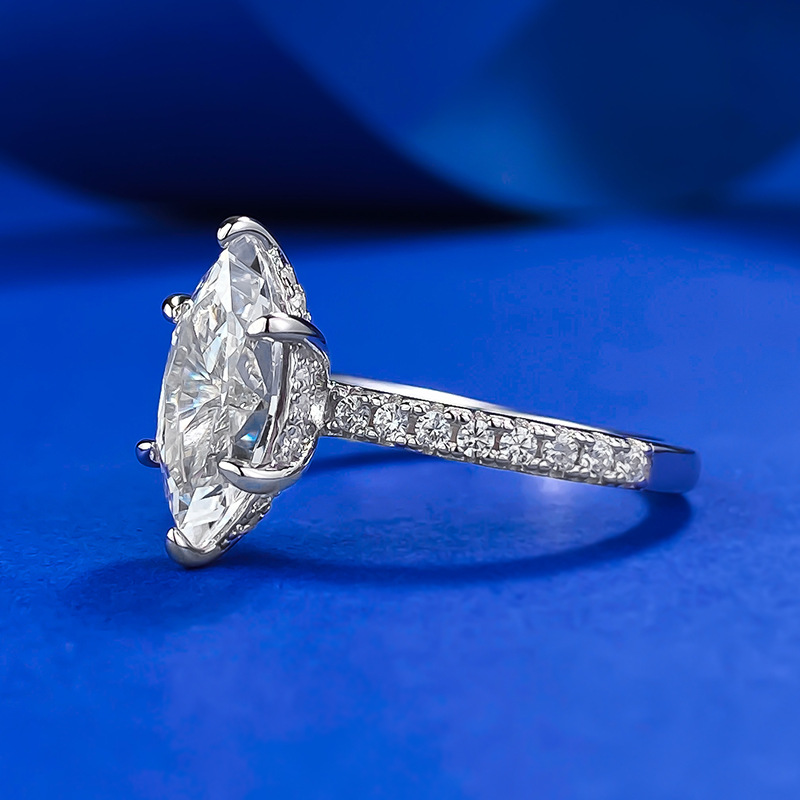
Asscher Cut Hidden Halo Ring Certification Checklist
An Asscher Cut Hidden Halo Ring certification checklist gives you a calmer way to shop. Asscher cuts are beautiful, but they do not hide much. Their open table and step facets can reveal inclusions, uneven symmetry, and heavy depth faster than many brilliant cuts.
A hidden halo adds another layer to review. The center diamond may have a strong grading report, yet the finished ring still needs careful inspection. Are the pave stones even? Does the center stone sit level? Will the gallery work with the wedding band you want?
This Asscher Cut Hidden Halo Ring certification checklist helps you check the diamond, the setting, and the purchase paperwork Before You Buy. I’ve helped many couples compare Asscher cuts side by side, and the confident choices almost always happen when they look at the report, videos, close-ups, and policies together instead of relying on one polished product photo.
Why This Asscher Cut Hidden Halo Ring Checklist Matters
The Asscher cut has a crisp, square shape with cropped corners and a hall-of-mirrors look. That clean geometry is the appeal. It is also why small details matter so much.
GIA explains that diamond grading evaluates the 4Cs: carat weight, color, clarity, and cut-related finish details. For fancy shapes like Asscher cuts, many reports do not give a single overall cut grade the way they often do for round brilliants. That means you need report data and real visuals.
IGI and GIA both issue reports for laboratory-grown diamonds, and those reports should clearly state the lab-grown origin. If a seller avoids that disclosure, pause. A credible report protects you from vague claims and gives your insurer clearer records.
A hidden halo sits below the center stone, so it can look subtle from the top and detailed from the side. That side sparkle depends on tiny accent stones, clean metalwork, and secure prongs. The Asscher Cut Hidden Halo Ring certification checklist keeps both parts of the ring in view, which matters when this ring may become part of a proposal, wedding, or deeply personal gift.
What Makes Asscher Hidden Halo Rings Different
An Asscher Cut Diamond is usually square, with a length-to-width ratio close to 1.00. Many shoppers like ratios from 1.00 to 1.03 because they look balanced on the hand. Ratios around 1.04 or 1.05 can still look square, depending on the corners and facet pattern.
Carat weight can mislead you. A 2.00 carat Asscher with extra depth may face up smaller than a well-cut 1.85 carat stone. Measurements in millimeters often tell you more about visible size than carat weight alone.
The hidden halo should support the diamond, not distract from it. From the side, the accent stones should form a neat line beneath the center. From the top, the prongs should protect the cropped corners without covering too much of the diamond.
Use a quick gut check: if the ring looks great only from one angle, keep asking questions. A well-made hidden halo should look intentional from the top, side, and underside (trust me, I’ve seen gorgeous top-view rings lose their magic from the side).
Asscher Cut Details to Review
Start with the face-up pattern. The windmill shape should look balanced, not twisted. The center should look clean, and the steps should turn on and off with movement.
Next, check the table, depth, polish, and symmetry. Excellent or very good polish and symmetry are common targets for buyers who want a crisp Asscher look. Numbers matter, but your eye still gets a vote.
Ask for high-resolution images and video of the actual diamond. A straight-on video shows pattern and symmetry. A tilt video shows how the facets perform in motion.
For many Asscher cuts, shoppers start by looking at table percentages in the mid-to-high 60s and depths that do not bury too much weight. These are not hard rules, because the full facet pattern matters, but they are useful warning lights. If an Asscher looks small for its weight, has a very deep pavilion, or shows a dark, frozen center in video, ask for a comparison stone before committing.
Hidden Halo Details to Review
The hidden halo needs close-up inspection. Look at the side profile, gallery, bridge, and prong work. The accent diamonds should be even in size, color, and brightness.
Check the shank thickness and the underside finish. Thin shanks can feel delicate, but very thin metal may wear faster over time. Ask whether resizing is limited by pave, metal type, or design shape.
Ask about wedding band fit, too. Some hidden halos allow a straight band to sit close. Others leave a gap or work better with a contoured band. Honestly, I think this is one of the most overlooked questions because everyone is focused on the engagement ring first, but the Wedding Band Pairing can change how the whole set feels.
Also ask how the hidden halo is set. Shared-prong, bead-set, and micro-pave halos each have a different look and maintenance profile. A very fine micro-pave halo can be graceful and refined, but it may need more careful wear than a sturdier bead-set style. If the wearer works with gloves, weights, tools, or frequent hand sanitizer, durability should carry more weight than the tiniest possible profile.
Core Asscher Cut Hidden Halo Ring Certification Checklist
Use this asscher Cut Hidden Halo Ring Certification Checklist Before you place the order. It covers the diamond report, the finished setting, and the records you will need later.
- Verify the grading lab, such as GIA, IGI, or GCAL.
- Match the report number to the listing and, if available, the laser inscription.
- Check carat weight, measurements, color, clarity, polish, and symmetry.
- Confirm the diamond is listed as lab-grown or laboratory-created.
- Review table, depth, ratio, face-up spread, and windmill pattern.
- Inspect hidden halo alignment, accent stones, prongs, and gallery finish.
- Read the warranty, resizing rules, return policy, and appraisal process.
- Save the grading report, invoice, warranty, appraisal, and ring photos.
A grading report is not the same as an appraisal. The report identifies and grades the diamond. An appraisal estimates value for insurance. A warranty explains service coverage. You need all three for a complete file.
If you are comparing center stones first, browse StoneBridge's certified lab-grown diamonds. If you are still testing settings, the custom ring builder can help you see how Metal, Stone Size, and profiles change the final look.
Check the Diamond Grading Report
The asscher Cut Hidden Halo Ring certification checklist starts with the report number. Look for the issuing lab, shape description, carat weight, measurements, color, clarity, polish, symmetry, and fluorescence if listed.
For lab-grown diamonds, the report should clearly say laboratory-grown, laboratory-created, or lab-grown. Some reports also list CVD or HPHT growth. Both methods can produce excellent diamonds, but the disclosure should be clear.
If the diamond has a laser inscription, ask the jeweler to confirm it under magnification. Then verify the report number through the lab's online report check tool when possible. The core details should match the product listing line by line.
Pay attention to the wording around treatments. A standard lab-Grown Diamond Report should not leave you guessing about post-growth treatment, color treatment, or origin. If a report is abbreviated, ask whether a full report is available. For a significant center stone, especially one over one carat, a full grading document is usually more useful than a short identification card because it gives you measurements and finish details you can compare.
Check the Asscher Proportions
Asscher cuts reward balance. A near-square ratio, even corners, and a clean step pattern usually matter more than chasing the largest carat number. Do not buy by weight alone.
Depth affects spread. A deep stone can hide weight in the pavilion, which makes the diamond look smaller from the top. A shallow stone can lose the layered, architectural look people love in an Asscher.
Compare at least three diamonds in the same carat range. Note the millimeter measurements, ratio, depth, table, and videos. This makes the asscher Cut Hidden Halo Ring certification checklist much more useful than a simple grade comparison.
For example, two 2.00 carat Asscher diamonds might differ noticeably in spread. One may measure around 7.0 mm across, while another may sit closer to 6.7 mm because more weight is hidden in the depth. That difference can be visible once the stone is set. It can also affect how the hidden halo appears from the side, because a deeper stone may require a taller setting to accommodate the pavilion.
Check the Setting Craftsmanship
Diamond certification does not certify the ring setting. The jeweler's quality control matters here. Hidden halos use small accent stones and tight metalwork, so small flaws can affect comfort and durability.
Look for even pave, clean beads, smooth metal edges, and secure prongs. The center diamond should sit level. The halo should not look crowded, crooked, or rough from the side.
Ask what happens if an accent stone loosens. Good warranty terms, cleaning guidance, and inspection services can save stress later. I’ve had customers ask this after falling in love with a delicate hidden halo online, and it is one of the smartest questions to raise before checkout (yes, even on a budget).
Prong shape is especially important with an Asscher cut because the clipped corners need protection. Claw prongs can look elegant and minimal, while rounded prongs can feel softer and more traditional. Either can work, but they should be even, polished, and placed so they secure the corners without covering the geometric outline that makes an Asscher distinctive.
How to Read the Report Like a Pro
The asscher Cut Hidden Halo Ring certification checklist works best when you read the report with the images open. Paper grades tell you what the diamond is. Photos and videos show how it behaves.
Two lab-grown Asscher diamonds can both be 2.00 carats, F color, and VS1 clarity. One may look bright, balanced, and crisp. The other may look smaller, darker in the center, or less lively because of its proportions.
Weigh these details first:
| Detail | Why It Matters | What to Check |
|---|---|---|
| Measurements | Show visible size better than carat alone | Compare millimeters across similar weights |
| Clarity | Step facets can reveal inclusions | Review magnified images and center clarity |
| Symmetry | Shapes the windmill pattern | Check report grade and face-up image |
| Polish | Supports crisp reflections | Look for clean, sharp facet edges |
| Color | Broad facets can show warmth | Match grade to metal color and preference |
| Lab-grown disclosure | Confirms origin | Check report wording and listing copy |
| Setting finish | Affects daily wear | Review side views and warranty terms |
GIA notes that clarity grades consider size, number, position, nature, and relief of inclusions. Position matters a lot in Asscher cuts. An inclusion under the table may bother you more than one near a corner.
Color, Clarity, and Carat Priorities
Color is personal. D, E, and F lab-grown Asscher diamonds look icy in platinum or white gold. G and H can still look white to many eyes, especially in yellow or rose gold.
Clarity deserves extra care. Many buyers prefer VS2 or higher for Asscher cuts because the open table makes inclusions easier to spot. Some SI1 stones can be eye-clean, but you need clear images to know.
Carat weight should fit the proportions. A 1.90 carat Asscher with strong spread and symmetry may look better than a deeper 2.00 carat stone. The hidden halo adds profile sparkle, but it cannot rescue a dull center diamond.
The asscher Cut Hidden Halo Ring certification checklist helps you stay balanced. Choose a stone that looks clean to your eye, suits your metal, and has measurements that support the price. Here’s what nobody tells you: the “best” ring is not always the one with the highest specs. It is the one that makes you pause, smile, and feel sure.
Practical Spec Targets by Budget
If you want a practical starting point, many lab-grown Asscher buyers do well with F to H color, VS1 to VS2 clarity, excellent or very good polish, and excellent or very good symmetry. If the budget allows, E color and VVS clarity can be beautiful, but they are not always the smartest place to spend if the stone’s pattern is weaker.
For a smaller center stone, such as 1.00 to 1.50 carats, you may have more flexibility on clarity if the inclusion is off to the side and the diamond is eye-clean. For a larger 2.00 to 3.00 carat Asscher, the open table gives you more area to inspect, so clarity and patterning become more important. Larger step cuts also show body color more clearly, especially in white metal.
Price ranges change with market conditions, diamond availability, metal, and customization, but it helps to think in brackets. A lab-grown Asscher Hidden Halo Ring may start in the low thousands for a modest center stone and simple 14k gold setting. Mid-range designs with a 1.50 to 2.50 carat center often land several thousand dollars higher depending on color, clarity, and craftsmanship. Platinum, larger center stones, higher clarity, and custom pave details can move the price up quickly. Always compare the full ring price, not just the center diamond price, because hidden halo labor and accent diamond quality are part of what you are buying.
Metal Choices for an Asscher Hidden Halo
The metal changes both the look and the maintenance of the ring. Platinum has a naturally white color and a dense feel. It is a strong choice for prongs and heirloom-style durability, though it can develop a soft patina and usually costs more than 14k gold.
White gold gives a bright, polished look at a lower price than platinum, but it is commonly rhodium plated. That plating can wear over time, especially on the underside of the ring, so ask how often replating may be needed and whether it is included in service.
Yellow gold creates a warm contrast with an Asscher cut. It can make near-colorless diamonds feel a little softer and more romantic, which many buyers love. Rose gold adds blush warmth, but it is not ideal for every skin tone or every wedding band pairing. If the center diamond is in the D to F range and you want an icy look, consider white prongs on a yellow or rose gold shank so the stone faces up brighter.
Metal purity matters too. 14k gold is often more durable for everyday wear than 18k because it contains a higher percentage of alloy metals. 18k has a richer color, especially in yellow gold, but it can be slightly softer. If the design has fine pave down the shank, ask the jeweler which alloy they recommend for long-term wear rather than choosing by color alone.
Sizing, Comfort, and Daily Wear
Ring size is not just a number. Band width, finger shape, weather, and stack height all change how a ring feels. A hidden halo setting can sit higher than a classic solitaire, so the ring may rotate more if the size is loose. If the wearer is between sizes, ask whether sizing beads, a slightly wider shank, or a comfort-fit profile would help.
Asscher hidden halo Rings with Pave on the shank may have resizing limits. A plain lower shank is easier to adjust than pave that runs three-quarters or all the way around the band. Eternity-style pave can be beautiful, but it is less forgiving if the wearer’s size changes after pregnancy, weight changes, or years of daily wear.
Think about lifestyle before choosing a very high setting. A taller gallery can show off the hidden halo and allow more light around the diamond, but it may catch on sweaters, pockets, gloves, and hair. A lower basket can feel more secure for active wear, though it may limit Wedding Band Options. Neither is automatically better; the right choice depends on how the ring will be worn.
Online Buying Steps Before Checkout
Before You Buy, compare the listing and report. The report number, carat weight, measurements, color, clarity, polish, symmetry, and origin should align. If one detail does not match, ask for a clear answer in writing.
Request visuals of the actual diamond or finished ring whenever possible. You want a top view, side view, gallery view, and magnified image of the center stone. A hidden halo cannot be judged from a top-view render alone.
Read the return policy before payment. Asscher patterning is personal, and the diamond you love on paper may not be your favorite on your hand. A clear return window gives you breathing room.
Save your documents in one folder. Keep the grading report, invoice, appraisal, warranty, return terms, and any custom design notes. If you insure the ring, your carrier may ask for the report and appraisal.
You can also compare finished styles in StoneBridge's lab-grown engagement rings or browse fine jewelry options at StoneBridge Jewelry if you are matching a wedding band or anniversary piece.
Shipping, Returns, and Insurance Questions
Before checkout, confirm how the ring ships. A fine jewelry shipment should be insured in transit, trackable, and packaged discreetly. Ask whether an adult signature is required and whether the package can be held at a carrier location if the proposal timing is sensitive.
Custom rings often have different return rules than ready-to-ship rings. If you choose a special-order Asscher, custom setting, engraved band, uncommon ring size, or modified hidden halo, the return window may be shorter or unavailable. Get those terms in writing before you pay, not after the ring arrives.
Insurance is easiest when your paperwork is complete. Many buyers add the ring to a homeowners or renters policy, while others prefer a specialty jewelry insurer. Either way, the insurer may ask for the invoice, grading report, appraisal, photos, and description of the setting. If the hidden halo has accent diamonds, the appraisal should describe them as part of the finished ring, not just mention the center stone.
Care and Maintenance After the Ring Arrives
An Asscher cut looks best when it is clean. Step facets can show lotion, soap film, and fingerprints more plainly than some busier brilliant cuts. At home, use warm water, mild dish soap, and a soft brush, then dry with a lint-free cloth. Avoid harsh chemicals, bleach, and abrasive cleaners, especially around pave and rhodium-plated white gold.
Hidden halos need periodic inspection because the accent stones are small and often set in delicate metal. Have the prongs and pave checked at least once or twice a year, and sooner if the ring takes a hard knock. If you hear a rattle, feel a snag, or notice a missing bead of metal, stop wearing the ring until a jeweler checks it.
Daily habits make a difference. Remove the ring for heavy lifting, gardening, swimming, cleaning, and gym equipment. Chlorine can be hard on metal alloys, and weights can bend a shank or loosen pave. Store the ring in its own pouch or box compartment so the Asscher diamond does not scratch other jewelry and other pieces do not rub against the hidden halo.
Common Certification Mistakes to Avoid
The asscher Cut Hidden Halo Ring certification checklist also helps you avoid expensive shortcuts. The most common mistake is treating any document as a true grading report. A sales sheet, brand card, or appraisal is useful, but it is not the same as an independent lab report.
Another mistake is ignoring the setting because the diamond is certified. The center stone may be excellent while the halo is uneven or the prongs are too bulky. Always inspect the finished ring.
Shoppers also over-focus on one grade. Higher color does not always beat better clarity, stronger symmetry, or a cleaner face-up pattern. You want the best mix for your budget and taste.
Do not skip the policy review. Resizing limits, accent stone coverage, cleaning services, and return windows all affect ownership. A ring is not only a purchase; it is something you will wear, service, insure, and probably glance at more times than you expect during the first few weeks.
One more mistake is assuming all accent diamonds are automatically the same quality as the center stone. They rarely receive individual grading reports, so ask for the stated accent diamond quality, such as approximate color, clarity, and total carat weight. In a hidden halo, mismatched or gray-looking melee can make the side profile look dull even when the center Asscher is excellent.
Finally, do not rely only on computer renders. Renders can help you understand the design, but they may not show prong thickness, pave texture, center stone personality, or real-life height. If the exact finished ring is not available to view before shipment, ask for production photos, quality control photos, or a clear explanation of what will be inspected before the ring leaves the jeweler.
Final Buying Checklist
Use this final asscher Cut Hidden Halo Ring Certification Checklist Before you decide:
- Confirm an independent report from GIA, IGI, GCAL, or another credible lab.
- Verify the report number online and match it to the listing.
- Confirm lab-grown disclosure on both the report and product page.
- Review measurements, ratio, table, depth, polish, and symmetry.
- Study videos for windmill balance, contrast, and center clarity.
- Inspect the hidden halo for alignment, pave quality, and prong security.
- Check metal type, shank thickness, wedding band fit, and resizing limits.
- Review warranty, return policy, appraisal process, and care instructions.
- Confirm shipping insurance, signature requirements, and return eligibility.
- Ask about accent diamond quality, total accent carat weight, and service coverage.
- Store every document for insurance and future service.
The right ring brings together verified diamond quality and careful craftsmanship. Certification gives you facts. Visual review gives you confidence. A well-made setting makes the ring ready for daily life.
Keep the asscher Cut Hidden Halo Ring certification checklist close while you compare options. It will help you ask better questions, spot weak documentation, and choose a ring that feels as good in person as it looks online.
Ready to Find Your Perfect Diamond?
Explore our collection of certified lab-grown diamonds
Shop Diamonds