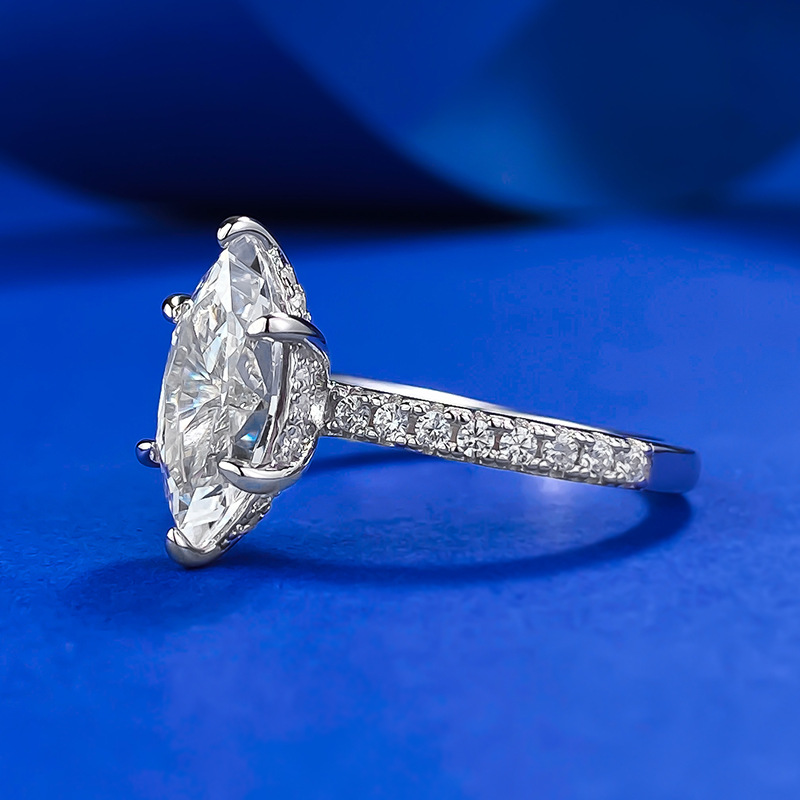
18k vs 14k Gold Ring Comparison: Which Gold Is Better?
Choosing between 18k and 14k gold changes how your ring looks, wears, feels, and fits your budget. This 18k vs 14k gold ring comparison gives you the practical details before you choose an engagement ring, wedding band, anniversary ring, or everyday gold ring.
Here is the simple difference: 18k gold is 75% pure gold, while 14k gold is 58.3% pure gold. The rest is alloy metal, such as silver, copper, zinc, palladium, or nickel, depending on the color and maker. Those alloys strengthen the ring and shape the final tone.
So which one is better? It depends on your life, your design, and how often you wear your jewelry. A thin Pave Engagement Ring needs different strength than a wide bezel-set anniversary band. Someone who lifts weights, travels often, or works with their hands may need a different ring than someone who wears fine jewelry mostly for dinners and special events.
18k vs 14k Gold Ring Comparison at a Glance
A useful 18k vs 14k gold ring comparison starts with one question: how will you wear the ring most days? Both metals are solid fine jewelry choices. Both work for lab-grown Diamond Engagement Rings, wedding bands, solitaire settings, hidden halos, stackable rings, and custom jewelry.
The tradeoff is clear. 18k gold gives you a richer gold color and higher precious metal content. 14k gold gives you stronger daily wear, better bend resistance, and a lower starting price.
Use this quick guide before you compare styles:
- Choose 18k gold for richer yellow gold color and a more luxurious feel.
- Choose 14k gold for daily durability, thinner bands, and active routines.
- Choose 18k gold if purity matters more than scratch resistance.
- Choose 14k gold if you want more budget left for the diamond or setting.
- Ask about alloy metals if you have skin sensitivities.
The 18k vs 14k gold ring comparison is not about good versus bad. It is about fit. A well-made 14k gold ring can be a better daily choice than a delicate 18k ring, while a substantial 18k yellow gold ring can feel richer and more special.
What 18k and 14k Gold Mean
Karat measures gold purity. It is not the same as Diamond Carat Weight. A 2 carat lab-grown diamond describes the diamond's weight, while an 18k gold ring describes the purity of the metal holding it.
Pure gold is 24k, but pure gold is too soft for most rings worn every day. Jewelers mix gold with stronger metals to improve wear and create yellow, white, and rose gold tones. Industry hallmarking often marks 18k gold as 750, which means 750 parts gold per 1,000. 14k gold may be stamped 585, meaning 585 parts gold per 1,000.
Both 18k and 14k gold are solid gold when properly made. They are not gold plated, gold filled, or vermeil. The gold alloy runs through the whole ring, not just the surface.
Why Alloy Content Matters
Gold purity affects color, price, weight, and wear. More pure gold usually creates a warmer tone and a higher precious metal value. More alloy usually improves strength, especially for prongs, thin shanks, and delicate details.
Still, metal is only one part of ring performance. Band thickness, prong shape, stone size, setting height, pave work, and finishing all matter. A sturdy 18k cathedral setting can outlast a poorly made 14k ring with thin prongs.
We've found that customers make the best choice when they match the metal to their routine. If you plan to wear the ring through work, errands, travel, childcare, and weekends, durability should carry real weight. If the ring is a meaningful heirloom piece with a substantial design, 18k gold may be the more satisfying choice.
18k Gold Rings: Rich Color and Higher Purity
In any 18k vs 14k gold ring comparison, 18k gold stands out for color and purity. It contains 18 parts gold out of 24, or 75% pure gold. That higher gold content gives yellow gold a deeper, warmer look that many shoppers notice right away.
18k yellow gold often suits vintage-inspired rings, classic solitaires, bezel settings, oval diamonds, emerald-cut diamonds, and heirloom-style designs. It can make a lab-grown diamond feel warmer without taking away sparkle. Many buyers choose it because it looks traditional, rich, and quietly luxurious.
White gold is a little different. Most White Gold Rings are rhodium plated, so the surface finish affects the final color more than the karat alone. In white gold, 18k and 14k may look similar when both are freshly plated.
Pros of 18k Gold Rings
18k gold has a strong visual payoff, especially in yellow gold. If you love a deeper gold tone, it may be worth the higher price. The 75% gold content also appeals to shoppers who care about precious metal purity.
Key benefits include:
- Richer yellow gold color than 14k in most formulas.
- Higher pure gold content at 75%.
- A premium feel for engagement rings and anniversary jewelry.
- Strong appeal for heirloom-style and vintage-inspired designs.
- Beautiful contrast with lab-grown diamonds.
18k gold works best when the ring has enough structure. A bezel, wider band, cathedral shoulder, or sturdy solitaire can help protect the softer metal. If you want 18k gold for daily wear, choose the setting as carefully as the karat.
Cons of 18k Gold Rings
The main drawback is softness. Since 18k gold has more pure gold, it can show scratches, tiny dents, and wear faster than 14k gold. That does not make it fragile, but it does ask for more care.
Price is the other factor. 18k gold usually costs more because it contains 75% gold instead of 58.3%. If your budget is fixed, that price difference may leave less room for a larger lab-grown diamond, better cut grade, or extra setting details.
White gold buyers should plan for upkeep. Both 18k and 14k white gold may need rhodium replating as the bright finish wears. Many jewelers suggest checking a frequently worn ring every 6 to 12 months, especially if it has prongs or pave stones.
14k Gold Rings: Strength for Daily Wear
14k gold is the practical favorite for many Engagement Rings and Wedding bands. In this 18k vs 14k gold ring comparison, 14k often wins for daily durability because it has more strengthening alloy. It contains 58.3% pure gold and 41.7% alloy metal.
That extra alloy helps the ring resist bending, scratching, and wear. It is especially useful for thin bands, pave settings, hidden halos, stackable rings, and rings that rarely come off. If you work with your hands, travel often, exercise regularly, or want an easy daily ring, 14k gold deserves a close look.
14k gold is not a lesser metal. It is solid fine jewelry and one of the most common Choices for Engagement rings in the United States. Its lower price simply gives many shoppers more room for the diamond, setting, or wedding band.
Pros of 14k Gold Rings
14k gold offers a strong mix of beauty, value, and wear resistance. It still looks and feels like fine jewelry, but it usually handles everyday life better than 18k gold. For most daily rings, that balance matters.
Strong reasons to choose 14k gold include:
- Better durability for everyday wear.
- Stronger bend resistance in thin bands and prongs.
- More budget-friendly pricing than 18k gold.
- Excellent value for lab-grown diamond engagement rings.
- Smart performance for stackable bands and wedding bands.
The price difference can be useful. Some shoppers put the savings toward a larger center stone, a better cut grade, or a more detailed setting. A better cut can have a bigger visual impact than a higher gold karat because cut drives brilliance and sparkle.
Cons of 14k Gold Rings
14k yellow gold usually looks a little lighter than 18k yellow gold. Some people prefer that softer tone. Others want the richer warmth of 18k.
The higher alloy content can also matter if your skin reacts to certain metals. Nickel is a common concern in some white gold alloys. If you've had reactions before, ask about the exact alloy blend or consider platinum.
14k gold is durable, but it is not scratch-proof. Remove it before heavy lifting, harsh cleaning, swimming in chlorine, or any task that could hit the band or prongs. Simple habits make a big difference.
18k vs 14k Gold Ring Comparison Table
This side-by-side 18k vs 14k gold ring comparison shows the differences shoppers usually care about most.
| Factor | 18k Gold Rings | 14k Gold Rings | Best Fit |
|---|---|---|---|
| Gold content | 75% pure gold | 58.3% pure gold | 18k for higher purity |
| Hallmark | Often stamped 750 | Often stamped 585 | Both are standard fine jewelry marks |
| Alloy content | 25% alloy | 41.7% alloy | 14k for added strength |
| Yellow gold color | Deeper and warmer | Lighter and softer | 18k for richer color |
| Scratch resistance | Good, but softer | Usually stronger | 14k for heavy wear |
| Bend resistance | Depends on design | Usually better | 14k for thin bands |
| Price | Typically higher | Typically lower | 14k for upfront value |
| White gold care | May need rhodium replating | May need rhodium replating | Similar upkeep |
| Best wearer | Careful wearer, luxury buyer | Active wearer, daily ring buyer | Choose by lifestyle |
A quick verdict helps: 18k gold is best for rich color and purity. 14k gold is best for durability and value. The full answer still depends on ring weight, setting style, diamond choice, and how often you'll wear it.
Color, Price, Care, and Comfort
A strong 18k vs 14k gold ring comparison should go beyond purity numbers. A ring lives on your hand. It touches keys, door handles, luggage, lotion, soap, gym equipment, and countertops.
That daily contact affects the best metal choice. Desk work is usually easier on jewelry than healthcare work, restaurant work, construction, childcare, gardening, or regular weightlifting. Hands-on routines put more pressure on prongs, shanks, and tiny pave beads.
Durability and Ring Style
14k gold generally performs better for heavy daily wear. Its higher alloy content helps support prongs and reduce bending. That is helpful for thin bands, pave designs, and rings with delicate details.
18k gold can still work for daily wear if the ring is built well and worn with care. A lower profile, thicker shank, bezel setting, or cathedral design can improve protection. If you love 18k gold but live an active life, choose a stronger setting instead of a very thin one.
Our customers often choose 14k gold for engagement rings they never want to take off. They often choose 18k yellow gold for pieces where color, tradition, and heirloom feeling matter most.
Yellow, White, and Rose Gold Differences
Yellow gold shows the biggest color difference. 18k yellow gold usually looks warmer and more saturated. 14k yellow gold tends to look lighter and a bit more understated.
White gold depends on alloy and rhodium plating. Rhodium gives white gold its bright, cool finish. As the plating wears, the warmer tone underneath can show, so replating may be needed.
Rose gold depends heavily on copper. Some 14k rose gold formulas look pinker because they contain more alloy. Some 18k rose gold formulas look softer and warmer. Always compare real samples if color matters to you.
The Gemological Institute of America, or GIA, grades diamond color on a D-to-Z scale, with D being colorless. Metal color can affect how the eye reads a diamond, especially from the side. A near-colorless diamond may look crisp in white gold, while yellow gold can create a warmer frame.
Price and Long-Term Value
18k gold usually costs more because it contains more pure gold. Final ring price also depends on metal weight, labor, setting complexity, diamond selection, and current gold market prices. A wide 14k band can cost more than a very thin 18k band because total weight matters.
14k gold often gives better upfront value. For Lab-Grown Diamond Buyers, that can mean more budget for carat weight, cut quality, or design details. IGI and GIA reports can help you Compare Lab-Grown Diamonds by carat weight, color, clarity, cut, polish, symmetry, and measurements.
Long-term value is not only resale. It includes comfort, maintenance, wearability, and whether the ring still Fits Your Life years from now. If you want a ring that feels easy every day, 14k may deliver more satisfaction. If you love the glow of 18k yellow gold, that pleasure may be worth the premium.
Who Should Choose 18k or 14k Gold?
No single metal wins every 18k vs 14k gold ring comparison. The best choice depends on your habits, Style, and Budget. Start with use, then color, then price.
Choose 18k gold if you want richer color, higher purity, and a more traditional precious metal feel. It is a strong choice for yellow Gold Engagement Rings, anniversary rings, heirloom-style designs, bezel settings, and substantial solitaires.
Choose 14k gold if you want a ring built for constant wear. It is a smart choice for engagement rings, wedding bands, travel jewelry, stackable bands, thin rings, and active routines.
Before you decide, ask yourself:
- Will I wear this ring every day?
- Am I hard on jewelry?
- Do I prefer richer yellow gold or stronger daily wear?
- Would I rather spend more on metal or on the diamond?
- Do I need a nickel-free alloy or another sensitive-skin option?
- Does the setting design support my metal choice?
If you're still comparing designs, browse lab-grown diamond engagement rings, explore fine jewelry styles, compare loose stones in our diamond collection, or start a custom design with the StoneBridge ring builder.
StoneBridge Jewelry Recommendation
For most daily-wear shoppers, StoneBridge Jewelry recommends 14k gold as the best all-around choice. It offers real gold beauty, strong durability, and better value. It also works well for solitaires, pave bands, hidden halos, cathedral settings, and wedding bands.
18k gold is the better pick if rich color and higher purity matter most. It shines in yellow gold and feels especially right for heirloom-inspired rings, anniversary jewelry, and designs with enough structure to protect the metal.
The most practical 18k vs 14k gold ring comparison comes down to this: choose 14k for everyday strength and choose 18k for richer color. If you want both, consider a sturdy 18k design with a thicker band or bezel setting.
Best winners by category:
- Best for everyday durability: 14k gold.
- Best for rich yellow gold color: 18k gold.
- Best for budget-conscious lab-grown diamond buyers: 14k gold.
- Best for heirloom-style jewelry: 18k gold.
- Best for thin bands and active lifestyles: 14k gold.
- Best for higher gold purity: 18k gold.
Shop 14k and 18k Gold Rings
If you want the best mix of durability, beauty, and value, start with 14k gold lab-grown Diamond Engagement Rings. 14k gold handles daily wear well and can leave more room in your budget for diamond size, cut quality, or setting details.
If your heart is set on deeper gold color, explore 18k gold rings. The higher gold content gives yellow gold extra warmth and creates a premium feel for meaningful engagement rings and anniversary pieces.
Shop by priority:
- For everyday strength and value, view 14k gold engagement rings.
- For richer color and higher gold purity, view 18k gold engagement rings.
- For more diamond styles, explore lab-grown diamond rings.
- For bands made for daily wear, browse wedding bands.
You can also use our ring sizing guide before ordering or contact StoneBridge Jewelry experts for help Choosing the Right metal, diamond, and setting.
Ready to Find Your Perfect Diamond?
Explore our collection of certified lab-grown diamonds
Shop Diamonds