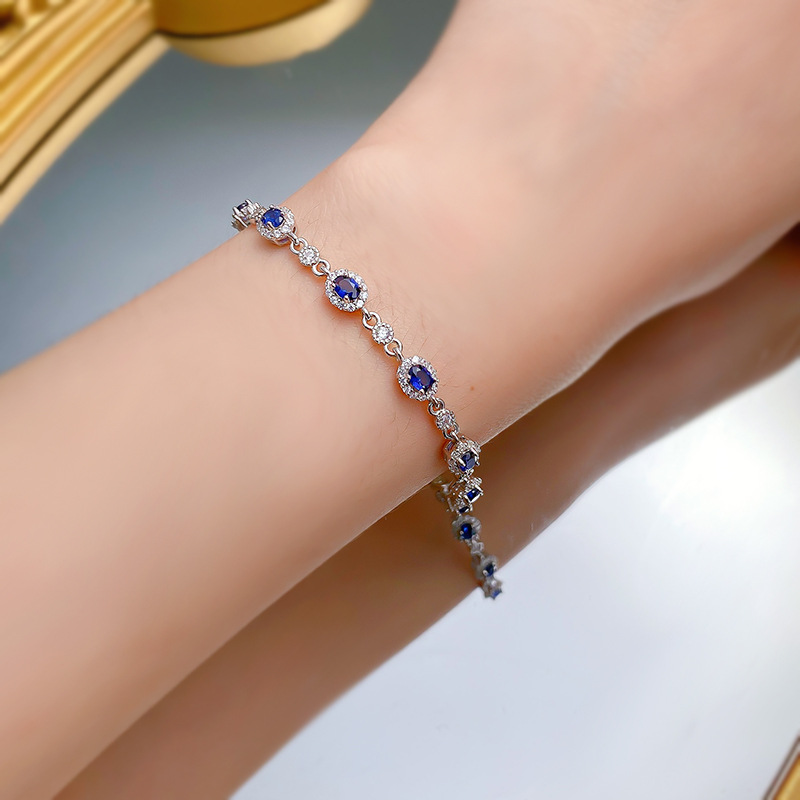
Tennis Bracelet Metal Choices: Gold, Platinum, and Rose Gold
Tennis Bracelet Metal choices affect more than color. They shape comfort, weight, scratch resistance, upkeep, and long-term value. If you are comparing metals for daily wear or a gift, the right one should fit your routine as well as the diamonds do. The best choice depends on how you plan to wear the bracelet, how much maintenance you want, and the look you want on your wrist.
Why Tennis Bracelet Metal Choices Matter
Tennis bracelet metal choices matter because the metal does the real work. It holds each stone, supports the clasp, and gives the bracelet its feel on the wrist. A bracelet can look almost identical in a photo and feel very different in person.
Customers who wear a bracelet three to five days a week usually care most about weight and maintenance. A lighter white gold piece can feel easy and low profile. Platinum feels denser and more substantial, which some buyers love and others notice right away.
The metal also changes the way the diamonds read. White metals make stones look cooler and brighter. Yellow gold adds warmth, and rose gold gives the piece a softer, modern tone. If you want a deeper look at diamond quality, our diamond buying guide is a useful place to start.
Common Tennis Bracelet Metal Choices Compared
The best tennis bracelet metal choices usually come down to four factors: color, durability, upkeep, and price. Here is the practical view.
| Metal | Look | Durability | Maintenance | Best For |
|---|---|---|---|---|
| 14k white gold | Bright, clean, modern | Strong for frequent wear | Rhodium replating over time | Everyday sparkle on a budget |
| 18k white gold | Rich white tone | Good, but softer than 14k | Rhodium replating | Buyers who want a richer finish |
| 14k yellow gold | Warm and classic | Very good | Simple cleaning | Daily wear and traditional style |
| 18k yellow gold | Deep gold color | Slightly softer | Routine care | Buyers who want a luxe gold look |
| Platinum | Naturally white and dense | Excellent | Occasional polishing | Premium daily wear |
| Rose gold | Warm blush tone | Very good | Easy cleaning | A softer, fashion-forward look |
White Gold vs Yellow Gold
White gold is one of the most popular tennis bracelet metal choices because it makes diamonds look crisp. It has a clean, bright surface, but that surface often needs rhodium replating to stay white. Yellow gold skips that extra step, which makes ownership simpler.
GIA notes that 14k gold is 58.5% pure gold, while 18k gold is 75% pure gold. That difference matters. More alloy usually means more hardness, while more pure gold usually means richer color.
If you want a bracelet that blends easily with other white-metal pieces, white gold makes sense. If you already wear yellow gold rings or earrings, the match can look more natural. For a broader look at coordinating pieces, browse our fine jewelry collection.
Platinum and the Feel of Weight
Platinum is one of the strongest tennis bracelet metal choices for long-term wear. It is dense, naturally white, and does not need rhodium plating. That makes it appealing if you want a metal that ages without a lot of surface maintenance.
It also feels different. Platinum has more presence on the wrist, which some buyers read as luxury and others read as heavier. If you like a bracelet that feels secure and substantial, that extra weight can be a real advantage.
Platinum often comes marked as PT950, which means 95% platinum. That purity level is part of why many jewelers recommend it for heirloom pieces.
Rose Gold's Warm, Modern Look
Rose gold has earned its place among tennis bracelet metal choices because it feels current without being loud. The copper alloy gives it that soft pink tone, and the color flatters many skin tones.
It also works well if your jewelry wardrobe mixes metals. Customers often choose rose gold when they want something distinct without feeling trendy in a way that will date quickly. It pairs especially well with warm-toned watches and layered bracelets.
Diamond Specs to Match the Metal
Tennis bracelet metal choices should be made alongside diamond quality, because the two work together. The metal can improve the visual effect, but it cannot fix weak diamond proportions or poor matching from stone to stone.
For a classic tennis bracelet, many buyers look for well-matched round brilliants with good symmetry and consistent color. If the bracelet uses natural diamonds, a practical starting point is often near-colorless grades such as G to H and clarity in the VS2 to SI1 range, depending on how visible the stones are. The exact sweet spot changes with stone size. Smaller diamonds can hide inclusions more easily, while larger stones may justify higher clarity and color.
Cut quality matters most for sparkle. Even in a bracelet, cut controls how much light the stones return. If you are comparing natural diamonds, look for grading from a respected lab such as GIA or AGS. For lab-grown diamonds, look for clear, consistent grading from a reputable laboratory and confirm the stone count, total carat weight, and whether the bracelet is made with matching grades across the full length.
It also helps to understand total carat weight versus individual stone size. A bracelet can be listed as 5 carats total weight and still feel very different from another 5-carat bracelet depending on how many stones it has, how large each stone is, and how much metal surrounds them. More stone coverage usually looks more dramatic, but it can also add weight and increase cost.
If you are buying for everyday wear, balance the metal and diamond specs. For example, a 14k or platinum setting paired with well-cut stones around G-H color can deliver a bright appearance without pushing the budget into unnecessary territory. For a more luxe gift, 18k gold with higher color stones can create a richer, warmer presentation.
Setting Styles and Security
Setting style affects how secure the bracelet feels, how much metal you see, and how easy the piece is to repair. This is where tennis bracelet metal choices become practical, not just aesthetic.
The most common construction is a prong setting, either with individual prongs for each stone or a shared-prong design that reduces visible metal. Individual prongs can offer more security because each stone has its own support, but they can also create a slightly more pronounced texture along the top of the bracelet. Shared-prong designs look sleek and can make the diamonds appear larger, though they may require more careful inspection over time because each link plays a role in holding multiple stones.
Bezel or half-bezel styles are less traditional for a classic tennis bracelet, but they are worth considering if you prioritize protection. More metal around each stone reduces exposure to knocks and snagging. The tradeoff is a slightly heavier look and less light entering the stones from the sides.
The clasp deserves the same attention as the setting. A box clasp with a double safety latch is one of the better options for Diamond Tennis Bracelets because it offers redundancy. A hidden tongue clasp alone is not enough on a valuable piece. Ask whether the bracelet has a safety catch, how the clasp is reinforced, and whether the bracelet includes figure-eight or push-button security features.
Metal choice also affects repairability. White gold is easier to resize or rework in many cases, while platinum can be more labor-intensive but is also highly durable. If the bracelet is made with many small links, ask how easy it will be to service one damaged section without disturbing the rest of the piece.
How to Choose a Tennis Bracelet Metal for Your Lifestyle
Tennis bracelet metal choices should follow your habits, not just your taste. If you plan to wear the bracelet often, start with durability. If the piece is mainly for events, you can lean more on color and style.
For daily wear, platinum and 14k gold are usually the safest bets. They stand up well to sleeves, stacking, and regular movement. For lighter use, 18k gold can be a smart choice because it gives you richer color and a more luxurious feel.
Skin sensitivity matters too. Platinum is often a good option for people who react to certain alloys. If you want gold, ask whether the piece is nickel-free. A bracelet that irritates your wrist will not get worn, no matter how good it looks.
Budget should include future care. White gold may need replating. Some bracelets need clasp checks or stone tightening over time. That is why the cheapest piece is not always the least expensive one to own.
Use this simple checklist:
- Decide how often you will wear the bracelet.
- Match the metal to the jewelry you already own.
- Check whether you want low maintenance or richer color.
- Ask about alloy content if your skin is sensitive.
- Set aside room in your budget for future service.
If you like to compare custom details Before You Buy, our custom ring builder is a helpful way to study metal color and finish on another fine-jewelry piece.
Price Ranges and What Drives Cost
Price is one of the most useful filters when comparing tennis bracelet metal choices, but it is easy to misread a quote if you focus only on the headline number. The final price usually reflects metal type, total diamond weight, setting complexity, clasp quality, and the labor required to build the bracelet.
In general, 14k gold tends to be the most accessible precious-metal option, with 18k gold running higher because it contains more pure gold. Platinum usually costs more than gold because it is denser, heavier to manufacture, and more expensive to work with. Rose gold is often priced similarly to yellow gold in a comparable purity level, though exact pricing depends on the design and market conditions.
As a practical reference point, the metal itself is usually only one part of the total bill on a Diamond Tennis Bracelet. In lower-carat or lab-grown designs, metal choice can influence the final price more noticeably. In higher-end natural diamond bracelets, the diamond quality and total carat weight often dwarf the metal premium. That means a platinum upgrade may be a modest percentage increase on a high-value bracelet, but a more visible jump on a simpler piece.
Do not forget the costs that appear after purchase. White gold maintenance, professional cleaning, occasional tightening, and shipping for service can change the ownership cost over time. A slightly more expensive bracelet that needs less frequent care can be the better value.
Fit, Sizing, and Comfort
A tennis bracelet should sit comfortably, but not so loose that it flips or slides over the hand. This is another area where tennis bracelet metal choices affect real-world wear. Heavier metals feel more substantial, while lighter metals can disappear on the wrist more easily.
Most bracelets are sized around standard wrist lengths, often near 7 inches for women’s styles, but that is not a universal rule. The right size depends on wrist circumference, bracelet width, and how much drape you want. A snug fit can feel elegant but may twist less comfortably. A looser fit allows movement but can rotate and show the underside more often.
As a rule of thumb, you want enough room for one finger to slide comfortably under the bracelet without the piece slipping over the wrist bone. If you are buying a gift, measure an existing bracelet the recipient already wears or compare against a soft tape measure around the wrist. If the bracelet is intended for layering, you may prefer a slightly more fitted size so it stacks cleanly with a watch or bangles.
Weight also affects comfort. Platinum usually feels heavier than gold in the same design, which some buyers appreciate and others notice immediately. If the wearer does not usually wear substantial jewelry, a lighter 14k option may be the better introduction. If they prefer a noticeable, substantial piece, platinum or a wider gold bracelet can feel more secure.
Resizing a tennis bracelet is not always simple. Because the stones are distributed across linked sections, adjustments often require removing links or rebuilding a section of the bracelet. Before buying, ask whether the bracelet can be sized, what the cost is, and whether the design has enough room to make a clean adjustment later.
Care and Maintenance by Metal
Different tennis bracelet metal choices age differently, and knowing that Before You Buy prevents surprises later. Routine care is simple, but each metal has its own maintenance pattern.
White gold should be inspected for surface wear and rhodium loss. When the finish starts to look slightly warmer or less bright, replating restores the clean white appearance. The timing depends on wear frequency, skin chemistry, and contact with lotions or soaps. If you want a bright white look with less service, platinum avoids that specific maintenance step.
Yellow gold is generally easy to maintain. Gentle soap, warm water, and a soft brush are usually enough for home cleaning, though professional inspection is still useful. Rose gold is similarly straightforward, though its copper content means the color may show minor character shifts over time if the bracelet is worn hard or exposed to frequent chemicals.
Platinum does not lose metal in the same way gold alloys can, but it can develop a patina. Some buyers like that softer, satin-like finish because it reads as elegant and lived-in. If you want a brighter surface, a jeweler can polish it periodically.
All tennis bracelets benefit from the same basic habits:
- Remove the bracelet before sports, heavy lifting, or manual work.
- Keep it away from chlorine, bleach, and harsh cleaning products.
- Store it separately so the links and stones do not rub against other pieces.
- Schedule periodic checks for loose stones and clasp wear.
Even a durable bracelet can fail if the clasp is ignored. A quick inspection once or twice a year is a reasonable habit for a piece that may be worn often.
Shipping, Returns, and Buying Safely Online
Buying a tennis bracelet online can be efficient, but only if the seller makes the process clear. This matters because the metal, setting, and sizing may look different once the bracelet is in hand.
Look for fully insured shipping, signature confirmation, and a secure return window. A 14-day return policy can be workable, but 30 days is more comfortable if you are comparing against other pieces or need time to test fit. Confirm whether the bracelet must be returned unworn and with all tags, boxes, and paperwork intact. If the seller charges restocking fees, those should be visible before checkout.
Ask how the bracelet is packaged. A valuable tennis bracelet should ship in secure, discreet packaging with documentation that lists the metal type, diamond quality, total carat weight, and any lab reports. If the piece is appraised, verify whether the appraisal is for insurance purposes or a replacement estimate, because those figures are not always the same as the sale price.
For custom or made-to-order bracelets, review the estimated production time. Platinum pieces can take longer to manufacture than gold pieces, and holiday demand can extend lead times. If the bracelet is a gift, build in enough time for shipping, inspection, and any possible size adjustment.
Be wary of listings that hide important details. A vague description that says only “Diamond Tennis Bracelet” without metal purity, stone grading, clasp type, or total carat weight is not enough to compare intelligently. Better sellers make it easy to verify exactly what you are buying.
Tennis Bracelet Metal Choices: Mistakes to Avoid
One common mistake is choosing a metal based only on showroom lighting. Bright lights make white metals and diamonds look sharper than they often do in normal life. A bracelet that looks perfect in a display case can feel too cold or too reflective once you wear it outside the store.
Another mistake is ignoring future care. White gold may need replating. Softer high-karat gold can show wear sooner. If you want to keep a piece looking fresh with less fuss, factor those service costs into the total price.
Mixed-metal mismatch can also create regret. If you want a cohesive look, your bracelet should echo the tone you already wear most often. If you like contrast, make that choice on purpose instead of hoping it works out later.
Tennis bracelet metal choices should also respect comfort. A bracelet that pinches, irritates, or feels too heavy will sit unused. Style matters, but wearability wins in the long run.
Another common miss is overbuying on metal and underbuying on craftsmanship. A platinum bracelet with poor stone security is a bad purchase. A simpler 14k design with good prongs, a strong clasp, and well-matched stones is often the smarter buy. The goal is a bracelet that stays beautiful and wearable, not just one with the highest material price tag.
Final Way To Narrow It Down
The easiest way to sort tennis bracelet metal choices is to work from use first and style second. Start with how often you will wear it. Then decide how much upkeep you want, how much weight you like, and whether you want a cooler or warmer look.
If you want the most practical everyday option, 14k gold and platinum are the strongest places to start. If you want richer color, look at 18k gold. If you want a softer tone with a modern edge, rose gold is worth a close look.
Then check the details that make the piece worth keeping: diamond grading, clasp security, stone alignment, sizing, and seller policies. Those factors matter just as much as the metal color. A bracelet that fits your wrist, your wardrobe, and your maintenance tolerance is the one most likely to stay in rotation.
The best choice is the one you will actually wear. That is the real test.
FAQ
What metal is best for a tennis bracelet I wear every day?
For daily wear, tennis bracelet metal choices usually narrow to platinum and 14k gold. Both are sturdy and handle regular movement well. Platinum gives you a heavier, more substantial feel, while 14k gold is often easier on the budget. If you stack your bracelet with other pieces, ask how much wear the clasp and underside will take.
Is platinum worth the extra cost for a tennis bracelet?
Platinum can be worth it if you want a dense, low-maintenance metal that does not need rhodium plating. It also tends to feel more secure on the wrist, which many buyers like for diamond bracelets. The tradeoff is price and weight. If you wear fine jewelry often, that extra durability can justify the jump.
Does white gold need replating on a tennis bracelet?
Yes, white gold often needs rhodium replating to keep its bright white surface. How often depends on wear, skin chemistry, and how much friction the bracelet gets. If you wear it several times a week, expect service sooner than you would with platinum. Ask your jeweler what maintenance schedule they recommend Before You Buy.
Should I choose 14k or 18k gold for a tennis bracelet?
Choose 14k if you want a tougher bracelet for regular wear. Choose 18k if you care more about deeper color and higher gold content. GIA's purity figures make the tradeoff clear: 14k is 58.5% pure gold, while 18k is 75% pure gold. The better pick depends on whether strength or richness matters more to you.
How do I match a tennis bracelet to the rest of my jewelry?
Start with the metal you already wear most often in rings, earrings, and necklaces. If your collection is mostly one tone, matching it usually gives you the cleanest look. If you like mixed metals, choose the bracelet tone that shows up most in your daily wardrobe. That way, the piece feels easy to wear instead of forced.
Ready to Find Your Perfect Diamond?
Explore our collection of certified lab-grown diamonds
Shop Diamonds