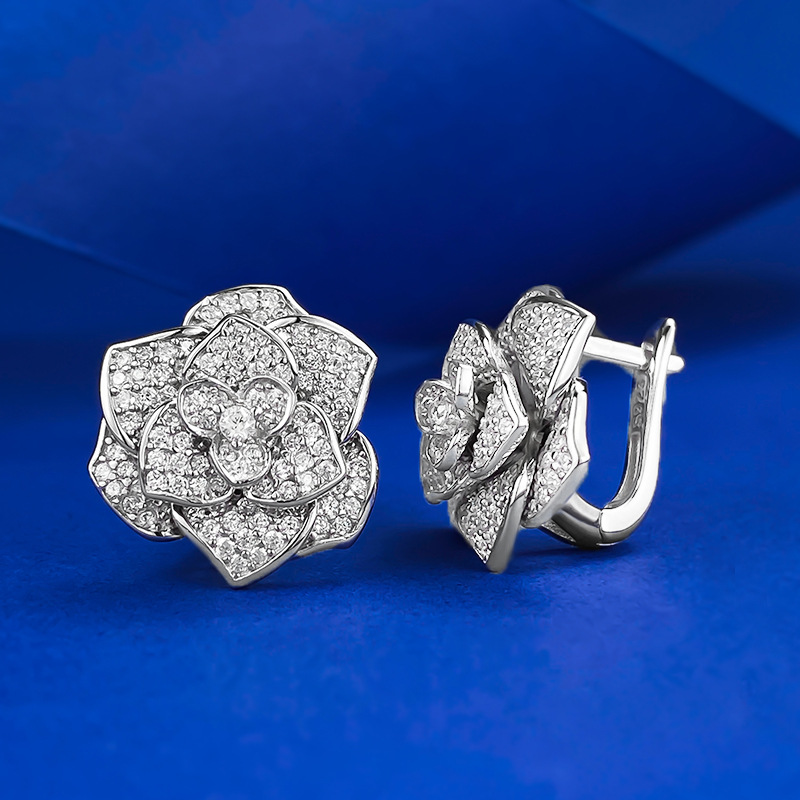
Sustainable Jewelry with IGI Certificate: Lab-Grown vs Mined Diamonds
Buying a diamond now means looking beyond the brightest stone in the case. You want beauty, fair pricing, lasting quality, and proof that the story behind the diamond makes sense. Sustainable jewelry with IGI certificate gives shoppers a clear way to compare lab-grown diamond jewelry with mined diamonds sold as ethical or conflict-free.
The practical question is simple: which option gives you better transparency, value, and peace of mind? For many StoneBridge Jewelry customers, the answer is IGI-certified lab-grown diamond jewelry. It offers verified diamond details, a disclosed lab-grown origin, and strong price-to-size value.
Mined diamonds can also be beautiful and responsibly sourced. The proof behind those claims can vary from one seller to another. A grading report may confirm diamond quality, but it may not explain the full mining footprint, labor practices, or chain of custody.
What Sustainable Jewelry with IGI Certificate Really Means
Sustainable jewelry with IGI certificate usually refers to fine jewelry set with IGI-certified lab-grown diamonds. These diamonds are grown in controlled settings using advanced technology instead of being extracted from the earth. IGI, the International Gemological Institute, grades the diamond and identifies it as laboratory grown on the report.
An IGI grading report may include the diamond shape, measurements, carat weight, color grade, clarity grade, cut grade for round diamonds, polish, symmetry, fluorescence, report number, and laser inscription details. Those specifics help you compare diamonds without guessing.
This matters because phrases like ethical diamonds, green jewelry, and conflict-free diamonds can sound reassuring but mean different things. Some claims are backed by clear sourcing policies. Others are broad marketing terms with little detail.
A smart buyer should ask six questions before choosing diamond jewelry:
- Is the diamond independently graded?
- Does the report confirm whether it is lab-grown or mined?
- Can the seller explain its sourcing standards?
- Are sustainability claims specific and easy to verify?
- How much diamond quality does the budget buy?
- Is the setting built well enough for daily wear?
Sustainable jewelry with IGI certificate works well because it starts with documented facts. You can review the report, compare quality grades, choose a metal, and match the design to your budget.
Why IGI Certification Helps Buyers Shop Smarter
Third-party grading keeps the conversation grounded. Product photos can flatter a diamond, but a grading report gives you details you can compare across stones. IGI and GIA both use established grading language for the 4Cs: cut, color, clarity, and carat weight.
GIA introduced the modern 4Cs system in the 1950s, and those categories still guide diamond buying today. Cut has a major effect on brilliance, especially in round brilliant diamonds. A poorly cut diamond can look flat even if the color and clarity grades seem strong.
IGI is especially common in the lab-grown diamond market. Many online jewelers use IGI reports because buyers need reliable data before purchasing remotely. For sustainable jewelry with IGI certificate, the report adds a first layer of trust.
The certificate is only part of the purchase. You should also check the jeweler’s metal standards, return policy, warranty, shipping practices, and product details. A great diamond still needs a secure setting.
Option A: IGI-Certified Lab-Grown Diamond Jewelry
IGI-certified lab-grown diamond jewelry is the leading choice for shoppers who want sustainable jewelry with IGI certificate. Lab-grown diamonds are real diamonds. They have the same carbon crystal structure as mined diamonds and rate 10 on the Mohs hardness scale.
The difference is origin. Lab-grown diamonds are created through methods such as CVD, short for Chemical Vapor Deposition, or HPHT, short for High Pressure High Temperature. Mined diamonds form naturally deep in the earth and reach the market through extraction, sorting, cutting, trading, and retail channels.
For many buyers, lab-grown diamonds offer a cleaner buying path. You can get verified quality, clear origin disclosure, and often a larger or higher-grade diamond for the same budget.
Popular options include:
- IGI-certified lab-grown diamond engagement rings
- Lab-grown diamond stud earrings
- Solitaire necklaces and diamond pendants
- Lab-grown diamond tennis bracelets
- Wedding bands and anniversary bands
- Stackable diamond rings
We’ve found that customers comparing engagement rings often feel more confident once they can review the IGI Report Number, diamond measurements, and cut details before buying. It turns an emotional purchase into a clearer decision.
Benefits of Sustainable Jewelry with IGI Certificate
The biggest benefit is proof. Sustainable jewelry with IGI certificate gives you a report that confirms both quality details and lab-grown origin. That makes it easier to compare two diamonds side by side.
Lab-grown diamonds also tend to offer stronger price-to-size value. Exact prices change, but shoppers often see that the same budget can move them into a larger carat weight, better color, higher clarity, or more detailed setting.
There is also the mining question. Lab-grown diamonds reduce reliance on new diamond mining, which can disturb land and require water, energy, and heavy equipment. Their environmental footprint still depends on electricity sources and production practices, so it’s smart to choose jewelers that share clear sustainability standards.
Watchouts Before You Buy Lab-Grown Jewelry
Sustainable jewelry with IGI certificate is a strong option, but don’t buy on the certificate alone. Check cut quality, proportions, setting craftsmanship, and seller policies.
For round diamonds, look closely at cut grade, polish, symmetry, and measurements. For fancy shapes like oval, emerald, pear, cushion, or radiant, review videos, length-to-width ratio, bow-tie appearance, and how the stone sits in the setting.
Resale is another point to understand. Lab-grown diamond resale markets can be less predictable than mined diamond markets. Most customers Buy Fine Jewelry for personal meaning and daily wear, not short-term resale, but it helps to Know Before You purchase.
Diamond Specs That Usually Offer the Best Value
For most engagement rings, a lab-grown center diamond in the D to H color range and VS1 to SI1 clarity range gives a bright, clean look without paying for grades you may not see in daily wear. Round brilliant diamonds should ideally have an Excellent or Ideal cut grade, with very good to excellent polish and symmetry. For fancy shapes, cut grade is less standardized, so the video and proportions matter more.
Oval, pear, and marquise diamonds should be checked for a strong bow-tie, which is the dark band that can appear across the center. A slight bow-tie is common, but a heavy one can make the diamond look dull. Emerald and asscher cuts show inclusions more easily because of their open step-cut facets, so many buyers prefer VS2 or better clarity for those shapes. Cushion and radiant cuts can hide inclusions well, making them practical choices for buyers who want more size for the price.
Carat weight should be balanced against measurements. Two diamonds can both weigh 1.50 carats, but one may face up larger if its proportions are better. Always compare millimeter size, not just carat weight. For example, a well-cut 1.40 carat oval may look similar in presence to a deeper 1.60 carat oval while costing less and sparkling more.
Option B: Ethical Mined Diamond Jewelry
Mined diamond jewelry remains the traditional choice for shoppers who value natural geological origin. Some buyers love knowing their diamond formed deep in the earth over long periods of time. That feeling is personal, and it matters.
Many mined diamonds are sold as ethical or conflict-free. Those terms can be useful, but they do not always prove low environmental impact. A conflict-free diamond is not automatically carbon neutral, fully traceable, or mined with the highest labor and land standards.
The Kimberley Process, launched in 2003, was created to help stop rough diamonds used to fund rebel conflicts from entering legitimate trade. It was an important step for the industry. Conflict-free compliance still does not cover every sustainability concern, such as emissions, water use, land restoration, or worker conditions.
A mined diamond may come with a respected grading report from GIA, IGI, or another lab. That report helps you judge quality. It usually does not act as a complete supply chain audit.
What to Ask About Ethical Mined Diamonds
If you prefer mined diamonds, ask for specific proof rather than broad claims. Good questions include:
- Is there a grading report?
- Can the seller identify the mine or country of origin?
- Does the supplier use traceability programs?
- Are labor and community standards documented?
- Is recycled gold or platinum available for the setting?
- Are environmental practices explained clearly?
Some mined diamonds are responsibly sourced and well documented. The challenge is consistency. Compared with sustainable jewelry with IGI certificate, mined diamond jewelry often requires deeper research because the supply chain is longer and harder to verify.
Pros and Cons of Ethical Mined Diamonds
Mined diamonds appeal to buyers who want natural origin, classic luxury, and traditional rarity. They are widely available in engagement rings, heirloom pieces, and high-jewelry designs.
The tradeoff is price and traceability. Mined diamonds often cost more per carat than similar lab-grown diamonds. Their sourcing claims can also be harder to confirm unless the jeweler provides clear origin documents and supplier standards.
If a seller uses the word ethical but cannot explain what it means, pause. Ask for the report, sourcing policy, and metal details Before You Buy.
Lab-Grown vs Mined Diamonds: Side-by-Side Comparison
Both choices can be beautiful. The stronger option depends on your priorities, but sustainable jewelry with IGI certificate tends to win for buyers who want transparency, value, and clear documentation.
| Comparison Category | IGI-Certified Lab-Grown Diamond Jewelry | Responsibly Sourced Mined Diamond Jewelry | Likely Winner |
|---|---|---|---|
| Certification | IGI report confirms quality and lab-grown origin | Quality reports may be available, sourcing proof varies | IGI-certified lab-grown |
| Origin | Created in a controlled lab setting | Extracted from natural deposits | Buyer preference |
| Price-to-size value | Often allows larger or higher-grade diamonds for the budget | Usually higher cost per carat | IGI-certified lab-grown |
| Appearance | Same optical and chemical properties as mined diamonds | Natural diamond beauty | Tie |
| Durability | 10 on the Mohs hardness scale | 10 on the Mohs hardness scale | Tie |
| Mining impact | Avoids new diamond mining | Mining can affect land, water, and ecosystems | IGI-certified lab-grown |
| Traceability | Lab-grown origin is disclosed on the report | Mine-to-market proof varies | IGI-certified lab-grown |
| Resale perception | Market can be less predictable | Traditional resale perception may be stronger | Mined diamond |
| Best fit | Buyers who want proof, value, and modern sourcing | Buyers who want natural origin and deeper sourcing research | Depends on priority |
For everyday wear, origin does not change diamond hardness. Both lab-grown and mined diamonds can handle engagement rings, earrings, bracelets, and necklaces when set properly.
Sparkle comes mainly from cut quality, not the origin story. If you want the brightest look, focus on proportions, symmetry, polish, and how the diamond performs in video or in person.
Budget, Metal, and Setting Choices That Affect the Final Piece
Price depends on diamond size, shape, quality, metal, and setting complexity. As a general shopping framework, lab-grown diamond solitaire rings often give buyers more flexibility in the $1,000 to $4,000 range than mined diamond rings with similar visual presence. Larger lab-grown center stones, premium color and clarity grades, hidden halos, pavé bands, and platinum settings can move the price higher. Mined diamond rings with comparable size and grades often require a larger budget, especially above 1.00 carat.
Metal choice changes both appearance and maintenance. 14k gold is durable and practical for daily wear, while 18k gold has a richer color but is slightly softer. White gold usually needs rhodium plating over time to keep its bright white finish. Yellow gold is classic and forgiving because it can make near-colorless diamonds look warm and intentional. Rose gold offers a soft pink tone, but buyers with metal sensitivities should ask about alloy content. Platinum is naturally white, dense, hypoallergenic, and excellent for prongs, but it costs more and develops a patina with wear.
Setting style also affects durability. A four-prong solitaire shows more of the diamond, while a six-prong setting gives extra security for round stones. Bezel settings protect edges well and suit active lifestyles, though they can make the diamond appear slightly more framed. Pavé bands add sparkle but require more care because small stones can loosen after impact. Low-profile settings are practical for people who use their hands often, while high-profile settings create a more dramatic look and can allow a wedding band to sit flush.
Who Should Choose Sustainable Jewelry with IGI Certificate?
Choose sustainable jewelry with IGI certificate if you want a diamond purchase that feels clear from the start. You’ll see the quality grades, origin disclosure, and report number before you commit.
This choice is especially strong for engagement rings. A center stone is a major purchase, and buyers deserve more than a pretty photo. With an IGI report, you can compare a 1.25 carat F VS1 oval with a 1.50 carat G VS2 oval using real details.
Lab-grown diamonds also work beautifully for jewelry with many stones. Stud earrings, tennis bracelets, anniversary bands, and necklaces can use multiple diamonds, so the value advantage adds up quickly.
Our customers often tell us they want a piece that feels special without feeling wasteful. Sustainable jewelry with IGI certificate fits that mindset because it pairs beauty with clear documentation.
Who Should Choose Ethical Mined Diamond Jewelry?
Choose a mined diamond if natural origin matters most to you. Some shoppers want the romance of a diamond formed by nature, and they are willing to pay more for that story.
If that sounds like you, ask more questions. Request the grading report, origin details, supplier standards, and any traceability information. Also ask whether the setting uses recycled precious metal.
Mined diamonds can be the right choice when the documentation is strong. Without that proof, an ethical label may not give you enough information to judge the purchase.
StoneBridge Recommendation: The Best Balance of Proof and Beauty
For most shoppers comparing sustainable jewelry with IGI certificate against ethical mined diamonds, StoneBridge Jewelry recommends IGI-certified lab-grown diamond jewelry. It offers verified quality, disclosed origin, strong value, and modern design flexibility.
That recommendation is not about dismissing mined diamonds. It’s about giving buyers more confidence with less guesswork. A certificate, clear product page, and well-made setting make the decision easier.
Before buying sustainable jewelry with IGI certificate, check these five details:
- IGI report number and matching diamond specifications
- Cut quality, proportions, and visual performance
- Metal choice and setting craftsmanship
- Responsible sourcing details and recycled metal options
- Return policy, warranty, and shipping standards
For rings, look at prong security, shank thickness, gallery design, and comfort. For earrings, check backs and diamond matching. For tennis bracelets, clasp safety and flexibility matter. For necklaces, review chain strength and pendant construction.
Want help comparing styles? You can browse StoneBridge lab-grown diamonds, shop engagement rings, explore fine jewelry, or design your own ring.
How to Shop Sustainable Jewelry with IGI Certificate Online
Start with the report. Confirm that the IGI report number matches the listed diamond details, including shape, carat weight, measurements, color, clarity, polish, symmetry, fluorescence, and lab-grown origin.
Next, review the setting. A diamond with excellent grades still needs strong craftsmanship. Look for secure prongs, smooth finishing, proper stone alignment, and a metal that suits your lifestyle.
Then compare the seller’s standards. Does the jeweler explain sourcing? Are recycled metals available? Is the warranty clear? Can you return or exchange the piece if it’s not right?
A simple rule helps: if a claim sounds impressive, look for the proof. Sustainable jewelry with IGI certificate works best when the certificate, setting quality, and brand policies all support each other.
Fit, Sizing, and Wearability Details to Confirm
Ring size should be checked before ordering, especially for engagement rings and eternity bands. Wider bands often feel tighter than thin bands, so some buyers need a quarter-size adjustment. Eternity bands can be difficult or impossible to resize because diamonds continue around the full shank. If you are unsure, a half-eternity or three-quarter eternity design gives more flexibility.
For necklaces, chain length changes how the pendant sits. A 16-inch chain usually rests near the collarbone, 18 inches is the most common everyday length, and 20 inches gives a slightly lower look. For diamond studs, total carat weight is split between both earrings, so a 1.00 carat total weight pair usually means about 0.50 carat per ear. For tennis bracelets, a secure box clasp with a safety latch or double safety is worth prioritizing, especially for higher-carat designs.
Shipping, Returns, and After-Sale Care
Before checkout, review shipping insurance, signature requirements, production timelines, and return windows. Fine jewelry should ship securely and be insured for the full purchase value. If the piece is made to order, confirm whether it is returnable or final sale. Custom sizing, engraving, and custom diamond selections can change return eligibility.
After the jewelry arrives, keep the IGI report and order documentation in a safe place. Clean diamond jewelry with warm water, mild dish soap, and a soft brush, then dry with a lint-free cloth. Avoid chlorine, harsh chemicals, and abrasive cleaners. Have prongs, clasps, and pavé stones inspected periodically, especially on rings and bracelets worn every day.
Common Mistakes to Avoid
One common mistake is buying the largest carat weight possible while ignoring cut. A smaller well-cut diamond can look brighter and more balanced than a larger stone with poor proportions. Another mistake is overpaying for color or clarity grades that are not visible once the diamond is set. Many buyers are better served by choosing a well-cut G or H color VS2 diamond than stretching for a D color diamond with weaker cut performance.
Another mistake is overlooking the setting. Thin prongs, an overly delicate shank, or a poorly finished gallery can create problems later. A ring worn every day should feel comfortable, balanced, and secure. If you work with your hands, travel often, lift weights, or frequently wear gloves, ask whether a lower-profile design, bezel, cathedral support, or slightly thicker band would be more practical.
Finally, do not assume every certificate tells the same story. A grading report confirms gemological facts, but it does not replace a jeweler’s policies. Pair the IGI report with clear product photos, transparent sourcing language, warranty details, and a fair return policy.
Shop StoneBridge IGI-Certified Lab-Grown Diamond Jewelry
If you’re comparing sustainable jewelry with IGI certificate to mined diamonds sold as ethical, lab-grown diamond jewelry is the stronger choice for most buyers. You get certified quality, conflict-free origin, strong design choice, and more control over your budget.
Shop StoneBridge favorites:
- IGI-certified lab-grown diamond engagement rings
- Lab-grown diamond stud earrings
- Lab-grown diamond tennis bracelets
- Lab-grown diamond necklaces
The best diamond is not just the one with the biggest sparkle. It’s the one you can understand, verify, and feel good wearing. Sustainable jewelry with IGI certificate gives you that foundation.
Ready to Find Your Perfect Diamond?
Explore our collection of certified lab-grown diamonds
Shop Diamonds