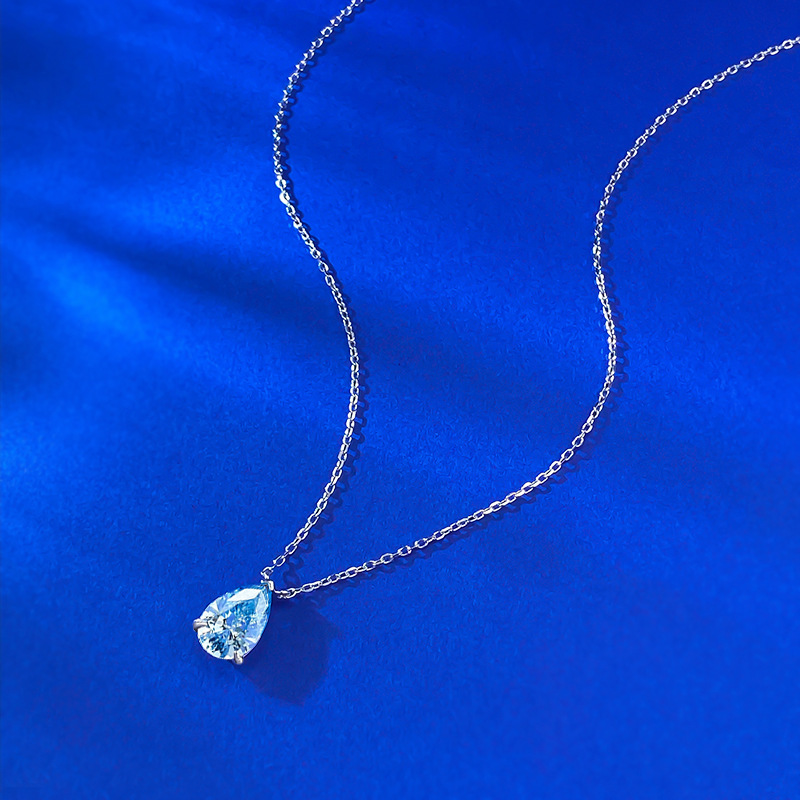
Round Solitaire Pendant vs Oval Pendant: Which Diamond Necklace Fits Best?
Choosing a diamond necklace can feel simple until you compare two favorites side by side. Round Solitaire Pendant vs oval pendant is one of the most common style questions we hear at StoneBridge Jewelry, and for good reason. Both look polished. Both can be worn every day. They just create very different effects.
A round solitaire pendant gives you classic sparkle in its cleanest form. An oval pendant gives you graceful length, a larger-looking outline, and a slightly more personal feel. So which one fits the wearer best?
The right answer depends on sparkle, face-up size, budget, neckline, and personal style. If you're buying a gift, it also depends on how well you know the recipient's taste. This guide keeps the round solitaire pendant vs oval pendant choice practical, clear, and easy to act on.
Round Solitaire Pendant vs Oval Pendant: The Quick Difference
A round solitaire pendant features one round diamond, usually a round brilliant cut, set on a chain. The design is centered, balanced, and familiar. The eye goes straight to the diamond.
An oval pendant also uses one main diamond, but the longer shape changes the look. Most oval diamonds are modified brilliant cuts, so they can still sparkle well. Their outline feels softer and more elongated than a round stone.
The round solitaire pendant vs oval pendant decision is not only about shape. It affects how large the diamond appears, how the necklace sits on the neckline, and how safe the style feels as a gift.
Here is the short version:
- Choose round if you want the most classic look and the most predictable sparkle.
- Choose oval if you want a diamond that often looks larger for its carat weight.
- Choose round for the safest gift choice.
- Choose oval for a more graceful, style-driven look.
- Choose either shape if the setting, chain, and diamond report are strong.
We've found that customers who want an easy everyday necklace often lean round. Customers who already wear layered chains, elongated rings, or softer silhouettes often fall for oval.
Why Shape Changes the Whole Necklace
Diamond shape does more than change the outline. It changes light return, visual spread, and the way the pendant frames the chest. A round diamond creates a neat point of sparkle. An oval diamond draws the eye up and down, especially in a vertical setting.
The Gemological Institute of America, or GIA, grades diamonds using the 4Cs: cut, color, clarity, and carat weight. For round brilliant diamonds, GIA cut grades are especially useful because round cuts have more standardized proportion guidelines. Fancy shapes, including ovals, need more visual review because two stones with similar grades can look quite different.
Numbers help here. A round brilliant diamond usually has 57 or 58 facets, depending on the culet. A 1.00 carat round diamond often measures about 6.4 to 6.5 mm across, while a 1.00 carat oval may measure close to 8.0 x 5.5 mm, depending on its proportions. That extra length is why many oval pendants look bigger on the neckline.
If you want to compare loose stone options first, you can shop lab-grown diamonds at StoneBridge Jewelry through our diamond collection. If you want to compare finished pieces, browse our fine jewelry collection and look at chain length, setting style, and diamond shape together.
Round Solitaire Pendant: Classic Sparkle and Easy Styling
A round solitaire pendant is the diamond necklace many people picture first: one round diamond, a simple setting, and a clean chain. It works because it doesn't try too hard. The shape feels balanced with T-shirts, blouses, sweaters, workwear, and evening dresses.
In the round solitaire pendant vs oval pendant comparison, round has the sparkle advantage. A well-cut round brilliant is designed to return light in a very predictable way. That matters in a pendant because the diamond sits near the face and catches movement throughout the day.
Round also wins on gifting confidence. If you don't know whether someone prefers vintage, minimal, romantic, or modern jewelry, a round solitaire pendant is usually the lower-risk choice. It feels familiar without feeling plain.
The trade-off is price. Round diamonds often cost more per carat than fancy shapes because demand is high and cutting yield can be lower. Lab-grown diamonds can soften that price gap, but round stones may still sit at a premium compared with ovals of similar color and clarity.
Best Settings for a Round Solitaire Pendant
A four-prong setting shows more of the diamond and gives the pendant a light, open feel. A basket setting adds structure under the stone, which can help it sit neatly against the skin. A bezel setting wraps the diamond edge in metal and gives the necklace a smooth, modern finish.
Metal choice changes the mood quickly:
- White gold looks crisp and bright.
- Yellow gold feels warm and classic.
- Rose gold adds a soft, romantic tone.
- Platinum feels weighty, durable, and naturally white.
For daily wear, many shoppers like 0.50 to 1.50 carats. That range feels noticeable without looking too formal. For a stronger statement, 2.00 carats and up can look striking on an 18-inch chain.
Who Should Choose Round?
Choose a round solitaire pendant if the wearer loves clean jewelry, bright sparkle, and easy styling. It suits someone who wants one necklace they can put on without checking the outfit first.
Round is also the better choice if sparkle is the top priority. The round brilliant cut has a long track record for brightness, fire, and scintillation. If the pendant is a surprise gift, round usually makes the decision easier.
In short, round solitaire pendant vs oval pendant favors round for timeless style, simple elegance, and everyday reliability.
Oval Pendant: Longer Lines and Bigger Visual Presence
An oval pendant has a different kind of charm. It is still elegant and diamond-focused, but the elongated outline adds movement. It can look refined, graceful, and a little less expected than a round solitaire.
In the round solitaire pendant vs oval pendant debate, oval often wins on size appearance. Because the stone spreads across more length, it can look larger than a round diamond with the same carat weight. That can be useful if you want more presence without moving up in carat size.
Oval pendants also flatter many necklines. Set north-south, an oval creates a lengthening effect. Set east-west, it feels more modern and relaxed.
The main caution is cut variation. Oval diamonds can show a bow-tie effect, which appears as a darker band across the center. A soft bow tie is common and can be acceptable. A strong bow tie can make the stone look less bright.
Many buyers prefer an oval length-to-width ratio around 1.30 to 1.50. Shorter ovals look fuller. Longer ovals look slimmer and more dramatic. Neither is automatically better; the right shape depends on the wearer's eye.
Best Settings for an Oval Pendant
A prong setting keeps the oval outline clear and lets more light reach the diamond. A bezel setting protects the ends and gives the pendant a sleek frame. A halo adds more sparkle and can make the pendant look larger.
Chain length matters too. A 16-inch chain places the diamond closer to the collarbone. An 18-inch chain is the most versatile for many necklines. A 20-inch chain gives the oval more drop and works well for layered looks.
If the wearer stacks necklaces, an oval pendant often works best as the lowest focal point. It gives the set a clear finish without looking heavy.
Who Should Choose Oval?
Choose an Oval pendant if the wearer likes graceful jewelry with a bit of personality. It is not loud, but it is not the default either. That makes it a lovely choice for someone who enjoys subtle style details.
Oval is also smart if visual size matters. The longer outline gives more coverage on the neckline. With a clean bezel or prong setting, it can feel substantial without looking overdone.
The oval side of round solitaire pendant vs oval pendant is best for shoppers who want elegance, presence, and a more personal silhouette.
Round vs Oval Diamond Pendant: Side-by-Side Comparison
The easiest way to compare round solitaire pendant vs oval pendant is to look at the buying factors together. Both can be excellent choices. They just serve different priorities.
| Factor | Round Solitaire Pendant | Oval Pendant |
|---|---|---|
| Sparkle | Most predictable in a well-cut round brilliant | Can be very bright, but varies more by stone |
| Face-up size | Balanced and compact | Often looks larger because of its length |
| Price per carat | Often higher | Often stronger visual value |
| Style | Classic and timeless | Graceful and slightly modern |
| Gift appeal | Safest for most recipients | More personal and style-specific |
| Neckline effect | Centered point of sparkle | Lengthening line on the chest |
| Quality checks | Cut grade is easier to compare | Bow tie, symmetry, and ratio need review |
| Best fit | Classic jewelry lovers | Wearers who like elongated shapes |
Round diamonds lead in predictable brilliance because the cut style is highly studied. Oval diamonds lead in visual spread because their shape carries weight across more length.
Still, don't judge the pendant by shape alone. Review the diamond report, measurements, color, clarity, polish, symmetry, setting quality, chain gauge, and clasp. A slightly smaller diamond in a better setting can be the smarter buy.
Sparkle, Size, and Value: What Matters Most?
If sparkle matters most, round is usually the better pick. A well-cut round brilliant uses its facet pattern to return light with strong brightness and fire. That's why round diamonds remain the benchmark for sparkle in many jewelry categories.
If size appearance matters most, oval deserves a close look. A 1.00 carat oval often appears larger than a 1.00 carat round because the eye notices its length. In a pendant, that difference can be easy to see from normal conversation distance.
If value matters most, compare lab-grown options in both shapes. Lab-Grown Diamond Pendants may let you choose a larger carat weight, a higher color grade such as D, E, or F, or a clarity grade such as VS1 or VVS2 while staying within budget. That flexibility can make the round solitaire pendant vs oval pendant choice feel less limited.
Also check the full build. A secure lobster clasp, smooth prongs, sturdy jump rings, and a well-finished basket or bezel all add value. A pendant is not just a diamond; it is a piece of jewelry that has to wear well.
Which Pendant Works Better as a Gift?
Buying for yourself is one thing. Buying for someone else is harder, right?
For gifts, round is the safer choice. It is classic, widely loved, and easy to style. A round solitaire pendant works for birthdays, graduations, anniversaries, bridal gifts, and milestone moments.
Oval works best when you know the recipient likes elongated shapes or more distinctive jewelry. If she wears oval rings, marquise accents, pear shapes, layered chains, or soft romantic styles, an oval pendant may feel more thoughtful.
If you're unsure, look at the jewelry she already wears. Simple studs, tennis bracelets, diamond bands, and crisp basics usually point toward round. Layered necklaces, wrap dresses, silk blouses, and unique rings may point toward oval.
Expert Pick: Round Solitaire Pendant vs Oval Pendant
There is no single winner for every shopper. Still, round solitaire pendant vs oval pendant does have a clear pattern. Round is the better all-around classic. Oval is the better choice for visual size and graceful shape.
Choose round if you want maximum sparkle, long-term versatility, and the safest gift. It looks right in white gold, yellow gold, rose gold, or platinum. It also ages well because the design is not tied to a trend.
Choose oval if you want a larger-looking diamond and a more personal necklace. It feels elegant, flattering, and a touch more fashion-aware. Just give the diamond a closer visual review before buying.
Before You Choose, check three things:
- Diamond quality: Review certification, measurements, color, clarity, polish, symmetry, and visible performance.
- Setting security: Check that prongs are even, bezels are smooth, and the stone sits safely.
- Chain durability: Match the chain gauge and clasp to the pendant's value and daily-wear plans.
Need help choosing specs, chain length, or setting style? You can contact StoneBridge Jewelry's experts Before You Buy.
Shop Round and Oval Diamond Pendants
Ready to compare round solitaire pendant vs oval pendant styles in finished necklaces? Start with the look you want most.
For classic sparkle, shop round solitaire diamond pendants. This is the dependable choice for daily luxury, gifting, and timeless styling. View styles at Round Solitaire Diamond Pendants.
For elongated elegance, shop oval diamond pendants. This shape offers graceful presence, a larger-looking outline, and a more distinctive profile. View styles at Oval Diamond Pendants.
Before You Buy, compare carat weight, millimeter measurements, color grade, clarity grade, setting style, chain length, clasp quality, and certification from labs such as GIA or IGI.
The simple rule still works: choose round for classic brilliance and choose oval for elongated elegance. The best pendant is the one she'll reach for often, not the one that only looks good on paper.
FAQ
Is a round solitaire pendant or oval pendant better for everyday wear?
Both can work well for daily wear, but round is usually the easiest all-purpose choice. Its balanced shape sits neatly with casual outfits, office clothes, and dressier looks. Oval is also practical if the setting protects the diamond's ends and the chain feels sturdy. For daily use, choose a secure prong, bezel, or basket setting and a comfortable 16- to 18-inch chain.
Does an oval pendant look bigger than a round solitaire pendant?
An oval pendant often looks larger than a round solitaire pendant with the same carat weight. The longer outline spreads more diamond across the neckline, so the eye reads it as more substantial. Always compare millimeter measurements, not carat weight alone. A bezel or halo can also make either shape look larger.
Which sparkles more, a round solitaire pendant or an oval pendant?
A well-cut round brilliant usually sparkles more predictably than an oval diamond. Round diamonds have more standardized cut grading, while oval diamonds vary by proportions, facet pattern, and bow-tie visibility. That does not mean oval pendants look dull. It means you should review photos, video, and the diamond report before choosing one.
Is round solitaire pendant vs oval pendant better for a gift?
For most surprise gifts, a round solitaire pendant is the safer pick. It is classic, familiar, and unlikely to clash with the recipient's style. An oval pendant can feel more personal if the wearer already likes elongated shapes or layered necklaces. If you cannot check her jewelry box first, round keeps the style risk low.
Are lab-grown diamond pendants good for round and oval styles?
Yes, lab-Grown Diamond Pendants are a strong choice for both round and oval styles. They can offer more flexibility on carat weight, color, clarity, or setting quality for the same budget. For round stones, compare cut grade and light performance. For oval stones, check symmetry, length-to-width ratio, and bow-tie visibility Before You Buy.
Ready to Find Your Perfect Diamond?
Explore our collection of certified lab-grown diamonds
Shop Diamonds