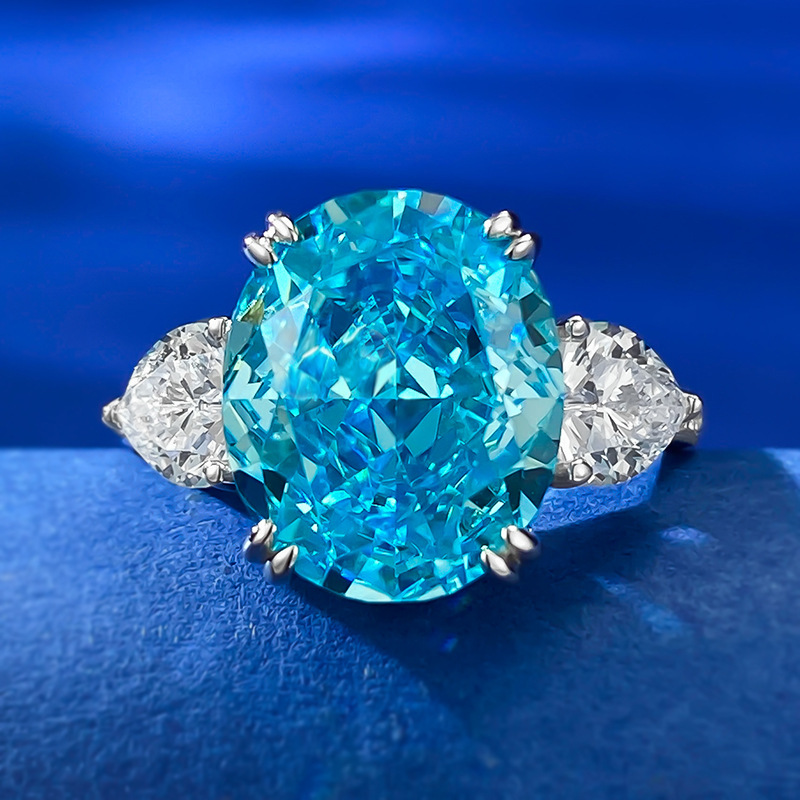
Princess Lab Grown Diamond Price Guide: Smart Costs by Carat
Shopping for a square brilliant diamond usually starts with one question: what should you pay? This Princess Lab Grown Diamond Price guide gives you a clear starting point. If you're comparing loose stones, planning an engagement ring in 14K white gold, or balancing size with quality, knowing the usual price ranges helps you spend with more confidence.
A princess cut Lab Grown Diamond offers a crisp shape, bright sparkle, and strong finger coverage. For many buyers, it also opens the door to a larger or better-looking diamond than a mined option at the same budget. Prices still vary a lot from one stone to the next, so it helps to know what actually drives cost, whether you're considering a 1.00ct G-VS2 princess or a 1.50ct F-VS1 princess with an IGI report.
I've helped hundreds of couples choose center stones that feel special without pushing them past their comfort zone, and princess cuts come up again and again for one simple reason: they give you a lot of visual impact for the money. A well-cut 1.20ct H-VS2 princess in a cathedral setting with a pavé band can look strikingly substantial without crossing into the price territory of a round brilliant with the same grades.
How This Princess Lab Grown Diamond Price Guide Helps You Compare
A princess cut Lab Grown Diamond is square or slightly rectangular with pointed corners and brilliant-style faceting. It stays popular for engagement rings because it looks clean, modern, and lively. You'll see it often in four-prong solitaires, hidden halo designs, and three-stone rings with tapered baguette or trapezoid side stones.
A good princess Lab Grown Diamond price guide does more than list a number. It shows how carat weight, color, clarity, cut details, grading, and setting style change the final price. That's useful because two diamonds with the same carat weight can look similar on paper while selling for very different amounts, such as a 1.00ct I-SI1 at $900 versus a 1.00ct F-VS1 at $2,400.
Lab Grown Diamonds are real diamonds with the same chemical, physical, and optical properties as mined diamonds. Both IGI and GIA grade lab grown diamonds, and GCAL may also appear in the market, which makes side-by-side comparison easier. We've found that shoppers who compare certificates, 360-degree videos, and millimeter measurements like 5.6 x 5.5 mm versus 5.3 x 5.3 mm usually make better buying decisions than those who shop by carat alone.
In my years at StoneBridge, I've seen buyers relax almost instantly once they understand that price isn't random. There are patterns to it, and once you know those patterns, shopping gets a whole lot less stressful, especially when comparing certified options like an IGI 1.50ct G-VS2 against a GIA 1.40ct H-VS1.
Why Buyers Keep Choosing Princess Cuts
Princess cuts stay in demand for a few simple reasons, especially for buyers who want a square outline with brilliant faceting and lower per-carat pricing than a round brilliant:
- Their square outline looks sharp and current, often with a length-to-width ratio close to 1.00-1.05.
- Their faceting creates strong brilliance and lively flash, especially in stones with Very Good or Excellent polish and symmetry.
- They often face up larger than some other shapes of similar weight when millimeter spread is strong.
- They work well in solitaire, pavé, halo, and three-stone settings, including low-profile baskets and cathedral mounts.
- They usually cost less than round diamonds of similar quality, sometimes by 15% to 30% in comparable lab-grown categories.
Want a modern shape without paying round-cut premiums? This shape delivers that balance well. A 1.25ct G-VS2 princess can cost noticeably less than a 1.25ct G-VS2 round brilliant, yet still look bold in a 950 platinum solitaire with V-prongs.
What Affects Princess Cut Lab Diamond Pricing
Every useful princess Lab Grown Diamond price guide starts with the same core factors: carat, color, clarity, cut quality, certification, and retailer markup. These details work together, and one change can shift price quickly, especially when you move from a 0.90ct H-SI1 to a 1.00ct G-VS2.
Carat weight drives the biggest jumps. Prices often rise at 1.00, 1.50, 2.00, and 3.00 carats because buyers search those milestone sizes first. A 0.90ct princess measuring roughly 5.4 mm can cost much less than a 1.00ct measuring 5.6 mm even if the visible size difference is small.
Color also matters, but many shoppers don't need the highest grade to get a bright look. In white metals like 14K white gold or 950 platinum, G to I color often gives strong value. In 14K yellow gold or 14K rose gold, some buyers comfortably go a little warmer, such as I or J color, because the metal itself softens color contrast.
Clarity affects price too, though not always in a way you can see without magnification. A princess cut with VS2 or SI1 clarity can still look eye-clean, especially around the center of the table. You may not need to pay for VVS1 or IF clarity if the stone looks clean in person or on video at normal viewing distance.
Here's what nobody tells you early enough: a lot of shoppers overspend on paper grades they will never notice once the ring is on a hand. Paying $600 more for a jump from VS2 to VVS2 on a 1.20ct stone is not always the best use of your budget if that money could instead upgrade the setting to a cathedral pavé design in 14K white gold.
Cut, Certification, and Shape Details
Princess cuts need careful review because labs don't always assign an overall cut grade in the same way shoppers expect with round diamonds. Check table percentage, depth percentage, polish, symmetry, and actual measurements. Many buyers start with a table around 62% to 72% and depth around 68% to 75%, then narrow from there using video performance.
Certification matters because it gives you a standard reference. IGI and GIA are the reports most buyers know best, and GCAL can also appear for certain premium listings. According to GIA grading standards, the report should list measurements, clarity characteristics, finish grades, and any treatment disclosures. IGI reports often include growth method details such as CVD or HPHT as well.
Princess cuts also tend to be priced below round brilliants because they often preserve more of the original rough crystal. That can improve yield during cutting. As a result, a princess Lab Grown Diamond Price guide often shows a lower cost per carat than round diamonds in similar quality bands, such as a 1.00ct F-VS2 princess at $1,600 compared with a 1.00ct F-VS2 round at $2,800-$4,200.
I've also seen two princess cuts with nearly identical stats look completely different on video. One 1.30ct G-VS1 may show crisp contrast and bright corner return, while another 1.30ct G-VS1 looks dark in the center because of weaker proportions. That is why cut details and actual spread deserve a closer look than many shoppers give them.
Princess Lab Grown Diamond Price Guide by Carat and Quality
The ranges below reflect common online pricing for certified princess cut Lab Grown Diamonds, typically carrying IGI or GIA documentation. Prices move with inventory, grading combinations, and retailer sourcing, but these numbers give you a realistic baseline for shopping.
Typical Loose Diamond Price Ranges
| Carat Weight | Value Tier | Balanced Tier | Premium Tier |
|---|---|---|---|
| 0.50 ct | $250-$450 | $450-$700 | $700-$1,000 |
| 0.75 ct | $450-$800 | $800-$1,200 | $1,200-$1,700 |
| 1.00 ct | $700-$1,300 | $1,300-$2,000 | $2,000-$3,000 |
| 1.50 ct | $1,200-$2,100 | $2,100-$3,400 | $3,400-$5,000 |
| 2.00 ct | $1,900-$3,200 | $3,200-$5,200 | $5,200-$7,800 |
| 3.00 ct | $3,800-$6,000 | $6,000-$9,500 | $9,500-$14,000+ |
Those estimates cover loose stones only. Once you add a setting, accent diamonds, and metal choice, the final budget goes up. A 1.00ct IGI-certified princess paired with a 14K white gold solitaire usually lands far below the cost of the same stone in a 950 platinum hidden halo.
For many shoppers, 1.00 to 1.50 carats is the sweet spot. A 1.00ct princess cut often starts around $700 for a value-focused loose stone and can reach $3,000 in a premium quality range. A balanced 1.20ct G-VS2 princess may fall around $1,600-$2,400, while a 1.50ct F-VS2 often ranges around $2,800-$4,200 depending on spread and report.
At 2.00 carats, prices rise more sharply. A small shift from VS1 to VS2, or from F color to H color, can save hundreds or even more than $1,000 depending on the stone. For example, a 2.00ct F-VS1 might sit near $5,800 while a 2.00ct H-VS2 can be closer to $3,900-$4,600.
At 3.00 carats, proportions become critical. A deep stone can carry weight where you can't see it, so always compare millimeter spread. A 3.00ct princess measuring 8.2 x 8.1 mm can look more impressive than another 3.00ct measuring 7.7 x 7.6 mm, even if the certificate grades are similar.
If you're buying for a proposal and want that wow moment when the ring box opens, this is where smart balancing really pays off. A 1.75ct G-VS2 princess in a hidden halo setting with a 14K white gold pavé band can easily outshine a smaller higher-clarity stone that cost more on paper.
Best Value Tiers for Different Buyers
Value tier works well if size is your top goal. These diamonds often trade premium color or clarity for a bigger look, such as choosing a 1.50ct I-SI1 instead of a 1.00ct F-VS1.
Balanced tier fits most engagement ring shoppers. It usually blends near-colorless appearance, eye-clean clarity, and solid overall beauty. A common sweet-spot example is a 1.20ct G-VS2 or 1.50ct H-VS2 with IGI certification.
Premium tier suits buyers who want stronger color, stronger clarity, and top presentation. These stones often pair with custom or more detailed settings, such as a 950 platinum cathedral setting with a hidden halo and French-set pavé.
If you'd like to compare current certified options, you can shop lab-grown diamonds by shape and carat and filter by princess, IGI, GIA, GCAL, or specific ranges like F-VS2 and G-VS1.
Setting Costs and Total Ring Budget
A princess Lab Grown Diamond price guide only tells part of the story if you're buying a ring, not just a loose stone. The setting changes your final budget in a big way, especially when you move from a simple 14K yellow gold solitaire to a 950 platinum cathedral pavé ring.
Common Settings and Starting Price Ranges
| Setting Type | Typical Starting Range |
|---|---|
| Simple solitaire | $500-$1,200 |
| Hidden halo | $900-$1,800 |
| Pavé band | $1,000-$2,200 |
| Full halo | $1,200-$2,800 |
| Three-stone | $1,500-$3,500+ |
A solitaire is usually the most budget-friendly choice. It keeps the focus on the center diamond and suits princess cuts well, especially with secure V-prongs and a supportive basket. A classic four-prong solitaire in 14K white gold often starts around $500-$900.
A halo costs more, but it can make the center stone look larger. Pavé bands add sparkle down the shank, though they usually cost more than plain metal designs because of the added melee and labor. Three-stone rings bring extra presence and meaning, especially when paired with trapezoid or bullet side stones, but they also increase the overall spend.
Metal matters too. 14K white gold often costs less than platinum, while 18K white gold generally sits in the middle depending on design complexity. Yellow and rose gold can also help slightly warmer diamonds look better, which may let you choose an H or I color center without giving up beauty.
A buyer choosing a 1.50ct loose princess diamond at about $2,500 could end up near $3,200 with a basic solitaire in 14K white gold. That same center stone might land closer to $4,500 or more in a hidden halo or three-stone design, and a custom 950 platinum cathedral setting with pavé shoulders can push the total higher still. If you're comparing full ring costs, browse our engagement ring collection or try the ring builder for custom combinations.
For engagement rings especially, the setting does more than hold the diamond. It shapes the whole personality of the piece. Some people want a clean Tiffany-style solitaire, others want extra sparkle from a hidden halo and micro-pavé shank, and both can be the right choice.
How to Get Better Value Without Giving Up Beauty
The best princess Lab Grown Diamond price guide helps you spend smarter, not just cheaper. Most buyers can save money without losing visible beauty, especially when they target practical combinations like G-H color, VS2-SI1 clarity, and IGI certification.
Start with face-up appearance. A lively princess cut with good spread often looks better than a deeper stone with extra weight hidden below the surface. Always compare measurements, not just carat, because a 1.00ct with a 5.7 mm spread may outperform another 1.00ct closer to 5.3 mm.
Practical Ways to Save
-
Buy just under milestone weights
- 0.90 instead of 1.00 carat
- 1.40 instead of 1.50 carats
- 1.90 instead of 2.00 carats
-
Stay in the near-colorless range
- G, H, and I often look bright once set in 14K white gold or platinum
- 14K yellow gold or 14K rose gold can make a warmer stone look great
-
Choose eye-clean clarity
- VS2 or SI1 often gives strong value
- Check inclusions near the corners, under the table, and along the girdle
-
Review certification carefully
- Stick with IGI, GIA, or GCAL reports
- Match the report to the listing details, laser inscription, and video
-
Protect the corners
- Princess cuts have pointed edges
- V-prongs, double claw prongs, or secure corner coverage help with daily wear
One of the easiest mistakes is paying for a grade jump you can't actually see. Why spend more on VVS1 clarity if a VS2 already looks eye-clean? In many cases, that money works harder in a better setting, a heavier shank, or a slightly larger center stone such as a 1.40ct H-VS2 instead of a 1.20ct F-VVS2.
Smart buyers focus on what will actually be visible when the ring is worn every day. A 1.25ct G-VS2 princess in a well-made 14K white gold hidden halo usually makes a stronger impression than a smaller D-VVS1 stone with average spread and no design detail.
Buying Online: What to Check Before You Order
Online diamond shopping works well if you stay methodical. Set your total budget first, then separate the loose diamond amount from the setting amount. For example, a $4,500 ring budget might mean $3,000 for a 1.50ct H-VS2 princess and $1,500 for a 14K white gold pavé setting.
Filter by shape, carat range, certification, and your target color and clarity bands. After that, check real images or 360-degree videos. Stock photos don't tell you enough about a princess cut's brightness, patterning, or corner inclusions, especially if you're comparing a 1.20ct G-VS2 against a 1.20ct H-VS1.
Return policy matters too. Look for an inspection window, insured shipping, and clear upgrade terms. We've also found that buyers feel more comfortable when they can ask a gem expert to compare two or three shortlisted stones by measurements, fluorescence, and report details from IGI, GIA, or GCAL.
Need a second opinion? You can browse fine jewelry styles or contact our jewelry team for help narrowing down options like a 1.00ct F-VS2 solitaire or a 1.50ct G-SI1 hidden halo ring.
I've talked with plenty of customers who started out nervous about buying a diamond online and ended up thrilled with the process once they had a few trusted comparison points. A video, a certificate, and exact dimensions like 6.1 x 6.0 mm tell a much better story than carat alone.
Real-World Wear, Security, and Long-Term Care
This princess Lab Grown Diamond price guide should also answer the everyday questions. How will the ring wear? Will the corners stay protected? Does the style fit your routine? Those answers often come down to setting engineering, metal choice, and whether the diamond is mounted high or low.
Ring size changes visual impact. A 1.00ct princess cut can look substantial on a size 4.5 finger and more understated on a size 8. Lifestyle matters too. If you use your hands a lot, a low-set basket, a cathedral shoulder, or a bezel-inspired protective layout may make more sense than a delicate high-profile design.
Craftsmanship affects long-term durability just as much as the diamond itself. Ask whether the setting was made for a princess cut, whether the corners are protected with V-prongs, and how secure the side stones are. In pavé styles, also ask whether the melee are shared-prong, bead-set, or French-set because maintenance needs can vary.
When this ring is meant to mark an engagement, anniversary, or once-in-a-lifetime gift, durability matters for emotional reasons too. People want to wear these pieces through real life, not keep them tucked away in a box, which is why many buyers choose 14K gold for everyday strength or 950 platinum for density and prong security.
Care Tips for Princess Cut Rings
- Clean the ring with warm water, mild soap, and a soft brush every couple of weeks, especially under the basket where lotion collects.
- Ultrasonic cleaner use is generally safe for lab-grown diamonds, but only if the ring has no loose pavé, fragile side stones, or damaged prongs.
- Skip abrasive cleaners, chlorine bleach, and harsh household chemicals that can affect 14K white gold rhodium finish or loosen settings over time.
- Have prongs, V-caps, and accent stones checked by a jeweler every 6 to 12 months.
- Store the ring separately in a fabric-lined box or soft pouch since diamond can scratch gold, platinum, and other jewelry.
- Keep your jewelry insurance active and update the policy if you reset the diamond into a new mounting.
Sharp corners need routine attention. That's not a flaw. It's just part of owning this shape, especially in designs with exposed points or finer claw-style prongs.
Final Buying Takeaways for Princess Lab Diamonds
A strong princess Lab Grown Diamond price guide should help you compare beauty, not just numbers on a certificate. The smartest shoppers focus on carat, measurements, eye-clean clarity, near-colorless grades, and secure settings built for pointed corners, whether that means a 14K white gold solitaire or a 950 platinum hidden halo.
Keep these points in mind:
- Compare by spread and sparkle, not carat alone; a 1.20ct with better millimeter size can outperform a deeper 1.30ct.
- Use IGI, GIA, or GCAL certification as your baseline for grading consistency.
- Consider just-under milestone sizes like 0.90ct, 1.40ct, and 1.90ct for better pricing.
- Budget for the full ring, not only the loose stone, including metal type such as 14K white gold, 18K yellow gold, or 950 platinum.
- Choose a setting that protects the corners well, especially with V-prongs or a secure basket designed for princess cuts.
A well-bought princess cut Lab Grown Diamond can give you bold style, strong sparkle, and excellent value. A 1.50ct G-VS2 princess in a cathedral setting with a pavé band can look luxurious while staying far below the cost of a comparable mined diamond. If you're ready to compare options, shop lab-grown diamonds, browse engagement rings, or explore fine jewelry.
FAQ
How much does a 1 carat princess lab grown diamond cost?
A 1 carat Princess Lab Grown Diamond usually costs about $700 to $3,000 for a loose stone. A value-focused 1.00ct I-SI1 may sit near $700-$1,100, while a stronger 1.00ct F-VS1 or F-VS2 can land around $2,000-$3,000 with IGI or GIA certification. If you're building a ring, add roughly $500 to $2,800 or more for the setting depending on whether you choose a 14K white gold solitaire, a hidden halo, or a three-stone design.
Why is a princess lab grown diamond often cheaper than a round diamond?
Princess cuts often retain more of the original rough during cutting, which can help keep prices lower. Round brilliants usually have higher demand and more cutting loss, so they often cost more per carat. In real shopping terms, a 1.00ct F-VS2 princess may cost around $1,600-$2,400, while a 1.00ct F-VS2 round brilliant can run closer to $2,800-$4,200 depending on certification and cut quality.
What color and clarity should I choose for a princess cut lab grown diamond on a budget?
A strong value target is usually G to I color and VS2 to SI1 clarity. In many rings, that range looks bright and clean without the added cost of grades most people won't notice. A 1.20ct H-VS2 or 1.50ct G-SI1 can be an excellent buy if the stone is eye-clean and lively on video. Check the report from IGI, GIA, or GCAL closely for inclusions near the corners and under the table.
Is a princess cut lab grown diamond a good choice for an engagement ring?
Yes, it's a very popular engagement ring shape because it mixes modern style with strong sparkle. It also tends to offer better value than round diamonds, which helps many buyers get more size for the budget. The biggest thing to watch is corner protection. Choose V-prongs, a secure basket, or another setting built specifically for princess cuts, such as a 14K white gold cathedral solitaire or a 950 platinum hidden halo with protected corners.
How do I use a princess lab grown diamond price guide while shopping online?
Use the guide to set a realistic price range by carat, then narrow your search by color, clarity, and certification. After that, compare videos, measurements, and setting costs so you see the full picture. A good princess Lab Grown Diamond price guide should help you estimate total ring budget, not just loose diamond cost. If two stones look similar, pick the one with better spread, stronger corner brightness, and a trusted report from IGI, GIA, or GCAL rather than chasing a higher paper grade.
Ready to Find Your Perfect Diamond?
Explore our collection of certified lab-grown diamonds
Shop Diamonds