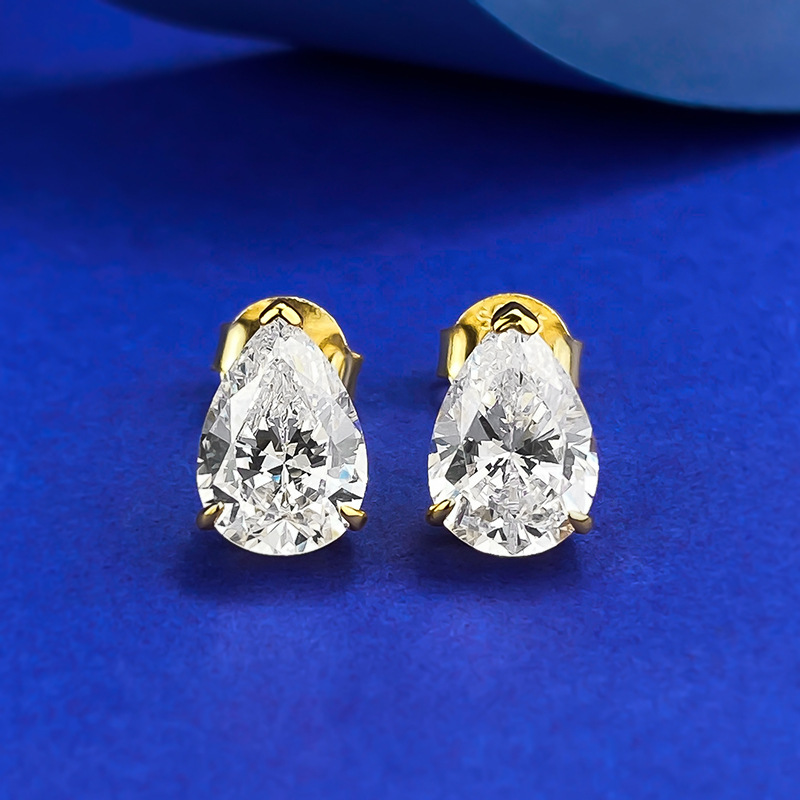
Princess Diamond Stud Earrings Price: Smart Buyer Guide
Princess Cut Diamond studs have a clean square shape, sharp corners, and a bright flash that feels polished without trying too hard. If you're comparing princess Diamond Stud Earrings price options, don't stop at the number on the product page. The better question is simple: what are you getting for that price?
Carat weight, cut quality, color, clarity, metal, setting design, earring backs, and certification all affect value. A 1.00 CTW pair in 14K gold won't price the same as a 2.00 CTW pair in platinum with higher grades and screw backs.
Many StoneBridge Jewelry customers want the same thing: a pair that looks beautiful, feels secure, and makes sense for the budget. Lab-grown princess diamond studs often help buyers reach that balance because they offer real diamond beauty at a more accessible price than comparable mined diamonds.
What Sets Princess Diamond Stud Earrings Price?
Princess Diamond Stud Earrings price starts with Total Carat Weight, often shown as CTW or TCW. A 1.00 CTW pair usually means each earring holds about a 0.50 carat diamond. A 2.00 CTW pair usually means each diamond is about 1.00 carat.
That difference matters. Larger diamonds cost more because each individual stone is bigger, not just because the total weight doubles. The face-up look on the ear also changes a lot between 0.50 CTW, 1.00 CTW, and 2.00 CTW pairs.
Quality matters just as much as size. The Gemological Institute of America, or GIA, uses the 4Cs: carat, cut, color, and clarity. Those standards help buyers compare diamonds in a clear way instead of relying on vague terms like premium sparkle or luxury grade.
For lab-grown diamonds, grading reports from respected labs such as IGI or GIA can confirm the listed details. That includes carat weight, measurements, color, clarity, and origin. Certification doesn't make a diamond prettier by itself, but it helps you know what you're buying.
Carat Weight and Visible Size
Princess Diamond Stud Earrings price rises as total carat weight increases. Common everyday sizes include 0.50 to 0.75 CTW for subtle sparkle, 1.00 to 1.50 CTW for a balanced look, and 2.00 CTW or more for a bolder gift or statement pair.
A smaller pair can still look refined, especially on petite earlobes. Mid-size pairs often give the best mix of daily comfort and visible shine. Larger studs feel more dramatic and may need stronger backs for Comfort and Security.
Look at millimeter measurements, not only carat weight. Two princess cut diamonds with the same carat weight can face up a bit differently because of depth and proportions. A well-matched pair usually looks better than a mismatched pair with a lower sticker price.
As a rough visual guide, a 0.50 CTW pair may use two diamonds near 3.5 mm each, while a 1.00 CTW pair may be closer to 4.4 to 4.6 mm each. A 2.00 CTW pair often lands around 5.5 to 5.8 mm per diamond, depending on depth and cut. Exact measurements vary, but these ranges help you picture the difference Before You Buy.
Princess cuts can look a little more compact than round diamonds of the same carat weight because of the square outline and depth distribution. That is not a flaw; it is part of the shape. If maximum spread is your top priority, compare millimeters carefully. If crisp geometry and modern sparkle matter more, princess cuts can be a strong choice.
Cut, Color, Clarity, and Matching
Cut has a strong effect on sparkle. A well-cut princess diamond reflects light across the top of the stone, while a poorly cut one can look flat. Since earrings move when you turn your head, good light return makes a real difference.
Color grades also affect princess diamond Stud Earrings Price. Many shoppers choose near-colorless grades such as G-H or H-I for earrings because they look bright on the ear and often offer strong value. Yellow gold and rose gold can make a slightly warmer diamond look softer, while white gold and platinum tend to highlight whiteness.
Clarity is about internal and surface marks. For earrings, eye-clean diamonds often make sense because people don't inspect studs as closely as an engagement ring. VS and select SI grades can offer smart value when the inclusions aren't easy to see without magnification.
Matching deserves special attention. Princess cuts have straight edges, so size or alignment differences can stand out. Ask whether the two diamonds are matched for measurements, color, clarity, and overall face-up appearance.
For most stud earrings, an excellent buying target is a pair that looks clean to the naked eye, has similar table size and depth, and shows an even pattern of brightness across both stones. Avoid pairs where one diamond looks glassy and the other looks lively. Even if the grades seem close on paper, the earrings should perform as a pair.
Princess cuts do not receive the same simple cut grade on every lab report that round brilliants often do, so review proportion information when it is available. A very deep princess cut can hide weight below the surface, making the diamond look smaller than expected. A very shallow stone may lose light and look watery. Balanced proportions usually give the best value for studs.
Lab-Grown Princess Diamond Stud Earrings Price vs. Mined Diamonds
Lab-grown diamonds are real diamonds. They have the same carbon crystal structure as mined diamonds and rate 10 on the Mohs hardness scale, the highest rating used for gemstone hardness. The main difference is origin: one grows in a controlled lab, and the other forms underground over natural geologic time.
For many buyers, lab-grown diamonds make princess Diamond Stud Earrings price easier to manage. You may be able to choose a larger CTW, a better color grade, or a more secure setting while staying within budget. That's one reason lab-grown diamond studs have become a popular choice for gifts and everyday fine jewelry.
Mined diamonds appeal to shoppers who value tradition and natural origin. Lab-grown diamonds appeal to buyers who want transparency, beauty, and better size-for-budget value. Price matters, but it should not be the only deciding factor.
Compare like with like. Match CTW, color, clarity, cut quality, certification, metal, and backings before judging the difference. A certified, well-matched lab-grown pair may be a better buy than a cheaper pair with vague details.
Why Lab-Grown Studs Can Offer More Value
Lab-grown princess diamond studs often let shoppers move up one size range without stretching the budget as much. For example, a buyer considering 1.00 CTW mined studs may find that lab-grown options make 1.50 CTW or higher grades more realistic.
The savings can also go toward details you feel every day. Better backs, heavier settings, and finer metal choices can improve comfort and peace of mind. For larger studs, screw backs or locking backs are worth a serious look.
Customers often tell us they want earrings they can wear several times a week, not a pair that stays in the box. That makes the full value picture more useful than chasing the lowest princess diamond stud earrings price.
Typical Price Ranges to Expect
Actual pricing changes with the diamond market, promotions, metal costs, and the exact specifications of the pair. Still, it helps to have realistic ranges before you compare options. Lab-grown princess diamond studs in 14K gold may start in the few-hundred-dollar range for smaller CTW pairs, move into the mid-hundreds to low thousands for 1.00 to 1.50 CTW pairs, and increase from there for 2.00 CTW and above.
Mined princess diamond studs with similar specs often cost noticeably more, especially as the individual diamonds approach 1.00 carat each. Higher color grades, higher clarity grades, platinum settings, and premium backs can all push the price upward. A pair listed at a much lower price than similar options may still be legitimate, but it deserves a careful review of certification, measurements, color, clarity, return terms, and setting weight.
For budget planning, decide whether size, grade, or metal matters most. If size is the priority, lab-grown diamonds in 14K gold may give you the strongest visible presence. If heirloom durability and a naturally white metal matter more, platinum may be worth the added cost. If you want the best balance, a near-colorless, eye-clean lab-grown pair in 14K or 18K gold is often a practical middle ground.
Metal, Settings, and Backs That Change the Cost
Metal choice shapes the look and the price. 14K gold is popular because it balances durability, beauty, and cost. 18K gold has a richer gold content. Platinum usually costs more, but it offers natural whiteness, density, and long-term strength.
White gold gives princess diamond studs a bright, classic look. Yellow gold adds warmth and contrast. Rose gold feels soft and romantic. The right choice depends on the wearer's style and the jewelry they already own.
Settings also influence princess diamond stud earrings price. Four-prong settings show more diamond and create a traditional stud profile. Basket settings add structure. Martini settings sit close to the ear. Bezel settings wrap metal around the edge, which can help protect the pointed corners of a princess cut.
Backings are easy to overlook, but they matter. Push backs are simple and common. Screw backs add security for daily wear, travel, and larger diamonds. Locking backs may cost more, yet they can be worth it for buyers who want extra confidence.
Setting Tradeoffs for Princess Cuts
Princess cut diamonds have pointed corners, so the setting should do more than hold the stone in place. It should protect those corners from knocks, snags, and pressure. V-prongs or well-shaped corner prongs are common because they shield the vulnerable points while keeping the square outline visible.
A four-prong basket setting is a classic choice if you want light entry and a clean profile. It usually shows more diamond than a bezel and can feel timeless. The tradeoff is that prongs should be checked over time, especially if the earrings are worn daily.
A bezel setting is more protective because metal surrounds the diamond edge. It can make the earring look slightly larger from a distance because of the metal frame, but it also changes the sparkle pattern by covering more of the sides. For active wearers, frequent travelers, or anyone who wants a sleek modern look, that tradeoff may be worthwhile.
Martini settings sit close to the lobe and often feel delicate, but they can tilt inward on very soft or stretched piercings. Basket settings usually distribute weight a bit more evenly. For 1.50 CTW and larger pairs, comfort and angle on the ear become more important than they may seem in product photos.
Quick Price Factor Checklist
Use this Checklist Before You compare two pairs:
- Total carat weight for the pair, not one earring
- Individual diamond measurements in millimeters
- Color and clarity grades for both stones
- Cut details, symmetry, and face-up match
- Metal type, such as 14K gold, 18K gold, or platinum
- Setting style and corner protection
- Backing type, warranty, returns, and shipping timing
If one pair costs less, check what changed. It may have lower color, lower clarity, lighter settings, basic backs, or no grading report. Sometimes the lower princess diamond stud earrings price is fair. Sometimes it means you're giving up details you'll miss later.
How to Compare Princess Diamond Stud Earrings Price Online
Online shopping gives you more choices, but it also makes careful comparison more important. Product photos can look similar at first glance. The specifications tell the real story.
Start by setting a budget range. Then choose a CTW range that fits the wearer's style. From there, compare color, clarity, cut quality, certification, metal, setting, and backs.
A simple buying order works well:
- Pick a budget you feel good about.
- Choose a CTW range, such as 0.75, 1.00, 1.50, or 2.00 CTW.
- Decide between lab-grown and mined diamonds.
- Select white gold, yellow gold, rose gold, or platinum.
- Review grading reports and measurements.
- Check return terms, warranty, and delivery dates.
- Choose the pair with the best full-value profile.
Need a faster comparison? Review two or three pairs with nearly the same CTW first. Princess diamond stud earrings price becomes much easier to judge when you're not comparing a small pair with basic backs against a larger certified pair in platinum.
You can also shop lab-grown diamonds to compare diamond quality across shapes and sizes, or browse fine jewelry styles if you're building a complete jewelry wardrobe.
Product Page Details Worth Reading
Strong product pages should list the diamond shape, total carat weight, color, clarity, metal, setting style, and backing type. If the earrings include certified diamonds, review the report numbers and measurements before checkout.
Photos help, but videos can be even better. Diamonds show fire and brilliance through movement. Model images also help you judge scale on the ear.
Check the practical details too. Shipping timing, return windows, financing options, and customer support can matter as much as the earrings themselves, especially if you're buying for a birthday, anniversary, graduation, or wedding event.
Look for clear language about whether the listed carat weight is exact, approximate, or a minimum total weight. Fine jewelry often allows small weight tolerances, but the product page should be transparent. A pair described as approximately 1.00 CTW may not have exactly 0.50 carat in each ear, yet the two stones should still appear balanced.
Also review whether the diamonds are sold with individual grading reports, a jewelry appraisal, or a brand certificate. For smaller studs, some retailers provide summary grading rather than individual lab reports. That can be acceptable when the price reflects it, but for higher-value pairs, lab documentation adds useful confidence.
Shipping, Returns, and After-Sale Service
Shipping and return policies are part of the total value. If you need the earrings by a specific date, confirm processing time, shipping speed, signature requirements, and whether the item is made to order. A beautiful pair that arrives after the anniversary or graduation may not solve the real buying need.
Return windows should be easy to understand. Check whether returns are allowed on special orders, customized settings, engraved pieces, or final-sale promotions. Also check whether the retailer charges return shipping, restocking fees, or requires the original packaging and reports.
After-sale service matters for stud earrings because backs can loosen and prongs can wear. A useful warranty or service policy may include manufacturing defect coverage, inspection guidance, and help with replacement backs. For valuable pairs, insured shipping during service is another detail worth asking about before checkout.
Choosing the Right Pair for Daily Wear or a Gift
Princess Cut Diamond Studs work because they are simple, bright, and easy to style. They dress up a white shirt, soften a blazer, and add a clean finish to eveningwear. They also pair well with necklaces, bracelets, rings, hoops, and huggies.
For daily wear, comfort matters. A lower-profile setting can sit close to the ear and feel easy all day. Larger studs may feel better with screw backs or locking backs.
For gifts, a balanced mid-size pair is often a safe choice. It feels special without being too bold for work or casual outfits. If you're unsure, choose classic metal colors and secure backs.
If the recipient already owns hoops or drop earrings, princess diamond studs still make sense because they fill a different role. They are the pair someone reaches for when they want sparkle without fuss.
Sizing Tips for Different Lifestyles
For a first pair of diamond studs, 0.75 to 1.00 CTW is a versatile range. It gives visible sparkle without feeling too formal. This size is also comfortable for many people who wear earrings from morning to night.
For someone who already owns small studs, 1.50 CTW can feel like a meaningful upgrade. It has more presence in photos and evening lighting, but it can still work with workwear and casual outfits. For 2.00 CTW and above, consider the wearer's earlobe size, piercing position, and comfort preferences before choosing the biggest available pair.
If the earrings are for a child, teen, or second piercing, smaller total carat weights may be more practical. If they are for a milestone anniversary or major birthday, a larger lab-grown pair can deliver a memorable look while keeping the budget controlled.
Care and Long-Term Value
Diamond is hard, but fine jewelry still needs care. Clean studs with warm water, mild soap, and a soft brush when needed. Rinse well and dry with a lint-free cloth.
Avoid harsh chemicals, especially around gold settings. Store studs away from other earrings so the diamonds don't scratch metal or loosen delicate pieces. A soft pouch or lined jewelry box compartment works well.
Schedule occasional inspections with a jeweler. Prongs, backs, and setting tension can loosen over time. This is especially useful for princess cuts because the corners should stay protected.
Long-term value comes from wear. A pair worn weekly can be a smarter buy than dramatic earrings saved for rare events. That's why princess diamond stud earrings price should be measured against beauty, comfort, security, and how often you'll enjoy them.
Remove diamond studs before swimming, heavy exercise, sleeping, or applying hair products if you want to reduce buildup and stress on the settings. Chlorine can affect some metals, and lotions or sprays can leave a film that dulls sparkle. A quick at-home cleaning restores brightness, but prevention keeps the earrings looking crisp between professional checks.
Common Mistakes That Cost Buyers Money
One common mistake is shopping by carat weight alone. A larger pair with poor cut quality, weak matching, or vague grading may not look as good as a slightly smaller pair with better sparkle and cleaner documentation. Size is important, but it should not carry the whole decision.
Another mistake is ignoring the backs. Buyers sometimes choose the least expensive pair, then realize the backs feel too light for the diamond size. Secure backs are especially important if the earrings will be worn at work, while traveling, or during long events where checking them constantly is not realistic.
Some shoppers overpay for clarity they cannot see. Very high clarity grades can be beautiful, but earrings are viewed from a normal social distance. If an eye-clean VS2 or SI1 pair looks bright and matched, spending more for a much higher clarity grade may not improve the visible look enough to justify the cost.
Others go too warm in color for a white metal setting without realizing the contrast may be noticeable. Warmer diamonds can be lovely in yellow gold or rose gold, but white gold and platinum make color easier to spot. If you prefer a bright white look, stay in the near-colorless range or compare the diamonds in the chosen metal before buying.
Finally, avoid buying from a product page that hides key information. If you cannot find CTW, metal purity, backing type, diamond origin, color, clarity, or return terms, the low price may not be as attractive as it first appears. Transparency is a major part of value.
Princess Diamond Stud Earrings Price: Final Buying Tips
Princess diamond stud earrings price depends on CTW, cut, color, clarity, certification, metal, setting style, and backing security. The best pair isn't always the cheapest pair. It's the one that looks balanced, feels comfortable, and comes with details you can trust.
Lab-grown princess diamond studs can be a smart choice if you want more size or quality for the budget. Look for clear specifications, matched stones, respected grading, and sturdy craftsmanship. If a product page feels vague, keep comparing.
Before checkout, confirm the practical details: total carat weight, individual diamond size, metal type, setting design, back style, shipping date, return window, and any grading or appraisal paperwork. These details protect your budget and help you choose earrings that feel as good in real life as they look online.
StoneBridge Jewelry offers premium lab-grown diamond options for shoppers who want refined design, transparent details, and strong value. You can explore engagement rings for diamond education across settings, or use our ring builder if you're comparing diamond shapes for a future custom piece.
Ready to choose your earrings? Shop princess cut diamond studs while preferred sizes and settings are available. If you're deciding between two pairs, StoneBridge Jewelry specialists can help you compare scale, specs, and princess diamond stud earrings price with confidence.
Ready to Find Your Perfect Diamond?
Explore our collection of certified lab-grown diamonds
Shop Diamonds