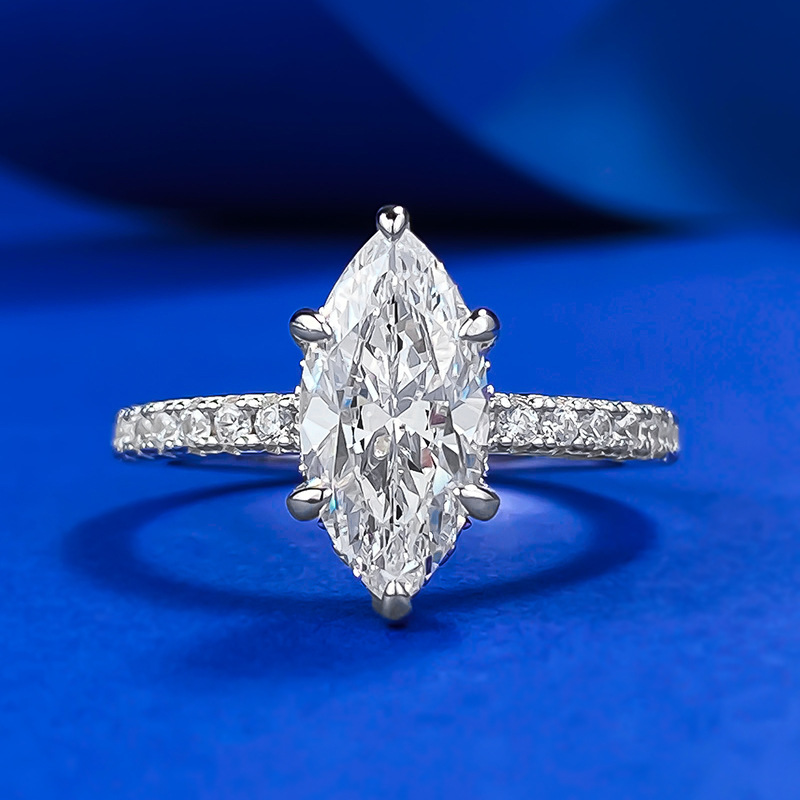
Princess Cut Engagement Ring Compare: Solitaire vs Halo Value, Sparkle, and Style
A good princess Cut Engagement Ring compare starts with a simple choice: do you want a clean solitaire that keeps all eyes on the center diamond, or a halo that adds extra sparkle and a bigger visual footprint? Princess cut rings stay popular for a reason. They offer bright sparkle, crisp corners, and a modern square shape that feels sharp without looking cold.
The setting changes almost everything. It affects how large the ring looks, how often you’ll clean it, how well the corners are protected, and how your budget gets used.
Most shoppers end up weighing the same two styles side by side: the princess cut solitaire engagement ring and the princess cut halo engagement ring. You’ll see how they differ in look, sparkle, size effect, upkeep, durability, and price so you can buy with more confidence.
StoneBridge Jewelry specializes in lab-grown diamond designs, and we’ve found that many shoppers can move up in carat weight or diamond quality by pairing the right setting with a lab-grown center stone.
Princess Cut Engagement Ring Compare: What Matters Most
A useful princess Cut Engagement Ring compare needs to go beyond style names. The real question is how the ring will perform once you wear it every day.
Princess Cut Diamonds are loved for strong brilliance and a square or near-square outline. They usually attract buyers who want more edge than a round diamond but still want plenty of sparkle. The tradeoff is clear: those pointed corners need smart protection, so the setting matters more here than it does with some other shapes.
Most shoppers are trying to answer a few practical questions:
- Which style makes a princess cut diamond look bigger?
- Which setting protects the corners better?
- Which ring is easier to clean?
- Which option gives better value for the budget?
- Which one will still feel right years from now?
Those are the questions this Princess Cut Engagement Ring compare is built to answer.
We’ll compare both options using these points:
- Style and appearance
- Sparkle and light return
- Perceived size on the finger
- Durability and corner protection
- Cleaning and maintenance
- Budget and price structure
- Wedding band fit
- Long-term flexibility
Quality matters just as much as style. GIA notes that fancy shapes such as princess cuts don’t follow the same simple cut-grade shorthand many buyers know from round brilliants. That means polish, symmetry, proportions, and face-up beauty deserve close attention. In plain English, two 1.00 carat Princess Cut Diamonds can look very different once they’re set.
If you’re still comparing stones, you can shop lab-grown diamonds or browse engagement rings by setting style to see how different designs change the final look.
Option A: Princess Cut Solitaire Engagement Ring
A solitaire is the reference point in almost any princess cut engagement ring compare. It puts the focus where many buyers want it: on the center diamond, with no surrounding frame to split attention.
That’s the appeal. A princess cut solitaire engagement ring feels clean, tailored, and timeless. The shape already has strong visual structure, so it doesn’t need much decoration to stand out.
A solitaire also makes diamond quality easier to judge. With fewer design details competing for attention, you’ll notice the stone itself more clearly, including:
- Symmetry from corner to corner
- Brightness across the table
- Sharp edge definition
- Polish quality
- Prong placement
This style often makes the most sense for buyers who want to put more of their budget into the center diamond. Instead of paying for a halo frame or heavier pavé work, you can direct that money toward carat, color, or clarity.
That budget advantage becomes more noticeable with lab-grown stones. Our customers often find that a lab-grown princess cut solitaire gives them room to step up in size or quality without pushing past budget.
Solitaire Design Details That Affect the Final Look
Not all solitaires look the same. Small design choices can change the ring more than many people expect.
Metal choices
- Platinum: durable, naturally white, and dense
- 14K white gold: bright and often cost-conscious
- 14K yellow gold: warm contrast against a white diamond
- 14K rose gold: softer tone with a modern feel
Prongs and corner protection
Princess cuts need secure corner coverage. V-prongs or protective corner prongs are often the best fit because they shield the most vulnerable points of the diamond.
Basket and height
An open basket makes cleaning easier. A lower profile can feel more practical for daily wear, while a taller setting can create a more dramatic look and leave more room for a flush band.
Band width
A slim band can make the center stone look larger. A wider band gives the ring a stronger presence and a more substantial feel.
Pros and Cons of a Princess Cut Solitaire
Pros
- Timeless, center-stone-focused style
- Easier to clean than most halo designs
- Lower setting cost in many cases
- Works well with many wedding bands
- Great for minimalist or classic tastes
Cons
- Less finger coverage than a halo
- The center diamond has to carry the full look
- Poor prong design can leave corners exposed
- Some buyers may find it too simple
A solitaire tends to suit shoppers who want clean design, easier upkeep, and long-term versatility.
Option B: Princess Cut Halo Engagement Ring
A halo answers a different need in a princess cut engagement ring compare. Instead of keeping the look minimal, it boosts visual presence.
The center princess cut diamond is framed by smaller accent diamonds. That added border usually creates more sparkle and makes the ring look larger from the top view. If finger coverage matters to you, this is often the style that gets your attention first.
A halo also works well with the geometry of a princess cut. A square halo keeps the edges crisp. A cushion halo softens the outline a little. A hidden halo gives extra shimmer from the side while keeping the top cleaner.
This popularity isn’t hard to explain. More diamonds mean more flashes of light and a wider visible outline. The extra detail does come with tradeoffs.
Halo settings usually need more cleaning than solitaires. Lotion, soap, and daily dust can collect around tiny accent stones and dull the shine faster. The setting also has more points that need attention because small pavé diamonds may need periodic inspection.
Halo Design Details Worth Comparing
If you’re doing a princess cut engagement ring compare, don’t group all halos together. They can look and wear quite differently.
- Standard square halo: follows the center shape closely for a geometric look
- Cushion halo: rounds the outside edge for a softer style
- Hidden halo: adds sparkle below the center stone rather than around the top outline
Accent diamond size matters too. Fine micro-pavé gives a delicate shimmer. Slightly larger melee creates a stronger frame and a bolder Look on the Hand.
Band design also changes the effect. A plain shank keeps attention on the halo. Pavé shoulders extend the sparkle across more of the finger.
Pros and Cons of a Princess Cut Halo
Pros
- High overall sparkle
- Larger-looking top view
- More decorative look
- Helps a modest center stone feel bigger
- Strong choice for glamour-focused buyers
Cons
- Needs more frequent cleaning
- Small accent stones should be checked over time
- The frame can compete with the center diamond
- Some halo styles feel less flexible with changing tastes
A halo usually fits buyers who want presence, brilliance, and a dressier feel.
Princess Cut Engagement Ring Compare Table: Side-by-Side Differences
A side-by-side view makes this decision easier. Here’s a practical princess cut engagement ring compare table that covers the points most shoppers care about.
| Comparison Point | Princess Cut Solitaire | Princess Cut Halo | Why It Matters |
|---|---|---|---|
| Overall style | Clean, classic, minimal | Detailed, sparkling, statement-like | Match the ring to your taste |
| Sparkle level | Strong if the center diamond performs well | Very high from center stone plus accents | Halo usually shows more total scintillation |
| Perceived size | True to actual center size | Looks larger because the halo adds surface area | Halo often creates more finger presence |
| Focus on center diamond | Maximum emphasis on the main stone | Attention is shared with the halo | Solitaire showcases diamond quality more clearly |
| Durability | Strong with proper V-prongs and basket design | Strong, but more small stones to monitor | Both need secure corner protection |
| Maintenance | Easier to clean and inspect | Needs more frequent cleaning | Solitaire is lower maintenance |
| Wedding band fit | Often easier with straight bands | May need a contour band depending on design | Band pairing affects daily wear |
| Setting cost | Usually lower | Usually higher because of accent stones and labor | Solitaire often gives better budget efficiency |
| Visual impact | Refined and restrained | Bold and bright | Halo wins on visual spread |
| Long-term flexibility | Very high | Moderate to high | Solitaire often feels easier to live with over time |
The broad pattern is clear, but the center diamond still matters most. GIA and IGI grading reports can help, yet they don’t tell the full story for princess cuts. Look at the stone itself when possible.
Pay close attention to:
- Symmetry: corners should line up cleanly
- Polish: smooth facets help the diamond look crisp
- Length-to-width ratio: around 1.00 to 1.05 often gives a square look
- Table and depth balance: these affect brightness and spread
- Face-up life: the diamond should look bright, not dark or flat
For daily wear, the setting has to protect the corners well. That’s true in every princess cut engagement ring compare, no matter which style you prefer.
Price, Value, and Lab-Grown Diamond Strategy
Price is where many shoppers pause. Should you spend more on the setting or more on the center stone?
A solitaire usually has the lower setting cost. That can free up room in your budget for a better center diamond. A halo often costs more because of extra accent diamonds and added labor, but it can also make a smaller center stone look larger.
So which gives the better value? It depends on what you want your budget to do.
- If you want the strongest center stone for the money: solitaire often wins
- If you want the biggest visual footprint for the money: halo may win
- If you want easier upkeep: solitaire is usually the better fit
- If you want more sparkle without a big jump in center carat: halo is often the better use of budget
Lab-grown diamonds shift the math in your favor. In many cases, shoppers can save 30% to 50% compared with a similar mined diamond, depending on the exact specs and market timing. That can mean moving from a 0.90 carat center to a 1.20 carat center, or upgrading color and clarity while staying in the same budget range.
We’ve also seen many buyers choose a lab-grown solitaire first, then add visual impact later with a pavé wedding band. Others go straight to a halo because they want that larger look on day one.
If you’d like to test both approaches, build your ring online or browse fine jewelry styles to compare different combinations.
Which Princess Cut Ring Style Fits You Best?
The best princess cut engagement ring compare ends with a simple match between design and lifestyle. Both styles can be excellent. They solve different problems.
Choose a solitaire if you want:
- Classic style with a clean look
- Easier cleaning and fewer maintenance concerns
- Maximum focus on the center diamond
- Better budget allocation toward diamond quality
- Easier wedding band pairing
- A ring that stays flexible with changing tastes
Choose a halo if you want:
- More sparkle from every angle
- A larger-looking ring without a huge center-stone jump
- More finger coverage
- Decorative detail and visual drama
- A dressier overall style
What if you like parts of both? That’s common. Hidden halos, plain-shank halos, and solitaire rings paired with diamond bands can all land in the middle.
Lifestyle matters too. Buyers with very active hands often lean toward a lower-profile solitaire because it tends to be simpler to clean and maintain. Halo rings can still work for daily wear, but they benefit from routine checks, especially if the setting includes fine pavé.
Quick Buyer Scenarios
The minimalist buyer
A princess cut solitaire in platinum or white gold usually fits best. It looks crisp, stacks easily, and keeps the center stone front and center.
The sparkle-first buyer
A square halo or cushion halo often makes more sense. It adds brightness, finger coverage, and a more dramatic look.
The value-focused lab-grown shopper
Compare total visual impact against center-stone quality. If top diamond quality matters most, solitaire may be the smarter move. If size effect matters more, halo may stretch the look further.
The unsure buyer
Try comparing a hidden halo against a solitaire with a pavé wedding band. That side-by-side test often makes the answer obvious.
Expert Take: Which Option Delivers Better Long-Term Value?
If you want one universal winner from this princess cut engagement ring compare, you probably won’t get one. The better choice depends on what you value most.
For long-term flexibility, lower upkeep, and budget efficiency, a well-made princess cut solitaire often comes out ahead. You spend less on the setting and more on the center diamond. Over time, many buyers appreciate that simplicity.
For bigger visual impact, more sparkle, and stronger finger coverage, a halo can absolutely be the better buy. A well-proportioned halo can make a 1.00 carat princess cut center look more substantial than a plain solitaire with the same center weight.
Craftsmanship matters either way. GIA and IGI both emphasize grading details, but ring performance also depends on how the setting is built. For princess cuts, corner protection isn’t optional. For halos, stone seating and pavé quality matter just as much.
If you want the short version:
- Best for timeless value: princess cut solitaire
- Best for maximum sparkle: princess cut halo
- Best for low maintenance: solitaire
- Best for a larger-looking ring on a tighter center-stone budget: halo
Shop Smarter After Your Princess Cut Engagement Ring Compare
The goal of a princess cut engagement ring compare is to help you choose with less second-guessing. If you want a classic look that directs attention to the center stone, start with a princess cut solitaire in platinum or white gold.
If you want more sparkle and a larger-looking profile, compare that against a princess cut halo with pavé accents or a hidden halo detail. Seeing them side by side often tells you more than specs alone.
Before You Buy, compare these details closely:
- Center diamond carat weight and measurements
- Symmetry and polish grades
- Certification, such as GIA or IGI
- Metal type and prong style
- Basket construction and corner protection
- Wedding band fit
- Return policy, warranty, and service support
StoneBridge shoppers can explore engagement rings, shop lab-grown diamonds, or use the ring builder to compare settings, stone sizes, and overall value more clearly.
A final gut check helps too. Do you want the center diamond doing all the work, or do you want a setting that adds more sparkle around it? That answer usually points you in the right direction.
FAQ
Which is better in a princess cut engagement ring compare: solitaire or halo?
Neither style is better for everyone. A solitaire usually makes more sense if you want timeless style, easier maintenance, and more of your budget going into the center diamond. A halo often works better if you want stronger sparkle and a larger-looking ring. In a princess cut engagement ring compare, the right pick comes down to whether you value simplicity or visual impact more.
Do princess cut halo engagement rings look bigger than solitaire rings?
Most of the time, yes. A halo adds a border of small diamonds around the princess cut center, which increases the visible top surface and makes the ring look larger on the finger. The effect can be subtle or dramatic depending on halo thickness, center measurements, and band width. If you want a softer version of that effect, a hidden halo is worth comparing.
Are princess cut engagement rings durable enough for everyday wear?
Yes, they are, as long as the setting is built well. Diamond ranks 10 on the Mohs hardness scale, but princess cuts have pointed corners that need protection from V-prongs or reinforced corner prongs. That’s why setting quality matters so much in a princess cut engagement ring compare. We usually suggest routine inspections once or twice a year to keep the ring secure.
Is a princess cut solitaire engagement ring more affordable than a halo setting?
In many cases, yes. A solitaire usually costs less because it uses fewer accent stones and requires less intricate labor than a halo setting. That can leave more room for a larger center diamond or stronger color and clarity grades. Still, total price depends on the metal, the diamond specs, and how detailed the setting is.
What should I look for when comparing lab-grown princess cut engagement rings?
Start with face-up beauty, not just the grading report. Compare symmetry, polish, brightness, shape precision, and how secure the corners look in the setting. Then review certification, setting quality, wedding band fit, and store policies like returns or warranty support. If you’re making a princess cut engagement ring compare, those details often matter more than chasing one spec in isolation.
Ready to Find Your Perfect Diamond?
Explore our collection of certified lab-grown diamonds
Shop Diamonds