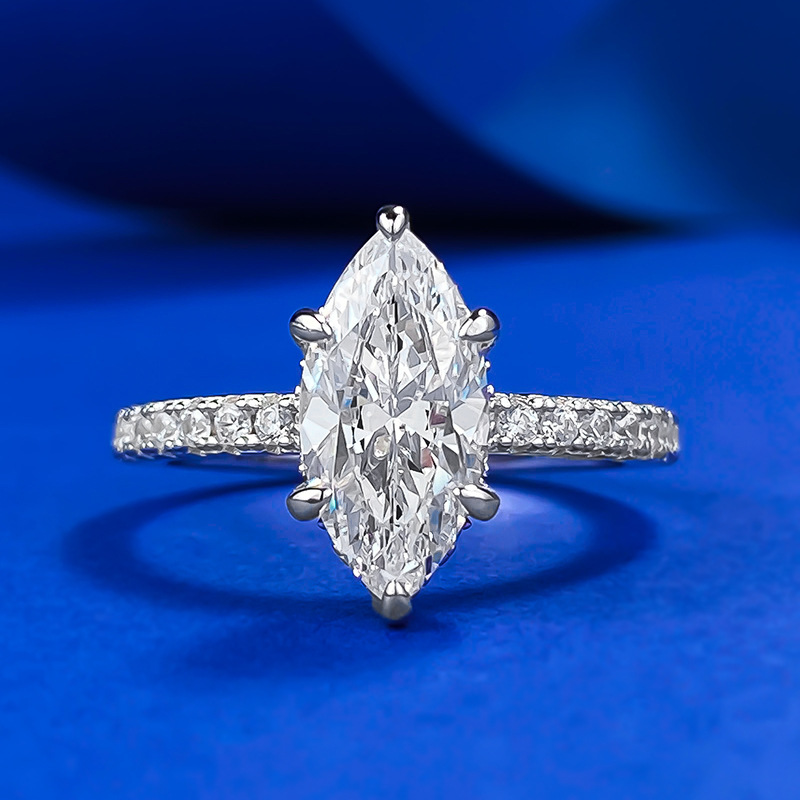
Oval vs Round Solitaire Ring: Shape, Sparkle, Size, and Value
Choosing an Oval vs Round solitaire ring can feel simple at first. One shape is long and graceful. The other is classic and perfectly balanced. Then you try them on, compare carat sizes, and notice how differently they Look on the Hand.
Both styles put one center diamond in the spotlight. That makes the diamond shape, cut quality, measurements, and setting style matter even more. At StoneBridge Jewelry, we see most shoppers choose between these two shapes for three reasons: sparkle, size appearance, and long-term style.
This oval vs round solitaire ring comparison keeps the details practical. You'll see how each shape looks, how it wears, what affects price, and which one may fit your priorities best.
Oval vs Round Solitaire Ring Basics
An oval vs round solitaire ring comparison starts with the setting. A solitaire ring features one center stone with no side diamonds competing for attention. The design is clean, direct, and easy to love, but it doesn't hide much.
An oval solitaire ring uses an elongated brilliant-style diamond. It has curved edges, soft ends, and a longer outline that can make the finger look slimmer. A round solitaire ring uses the round brilliant cut, the most recognized diamond shape in engagement rings.
The choice usually comes down to a few questions. Do you want the diamond to look larger for its carat weight? Do you want the most predictable sparkle? Do you prefer a shape that feels classic, or one with a little more personality?
A slim band can make either shape look more prominent. A 1.8 mm to 2.0 mm shank often gives a solitaire a delicate look while keeping enough structure for daily wear. A low basket feels practical, while a higher cathedral setting gives the diamond more presence.
Why the Solitaire Setting Shows Everything
A solitaire setting is honest. It shows the center diamond from almost every angle, so small details become easier to notice.
For ovals, length-to-width ratio, outline, and bow-tie visibility can change the whole look. Many shoppers like oval ratios from about 1.35 to 1.45 for a balanced shape, while ratios closer to 1.50 create a longer, more dramatic look.
For rounds, cut quality drives the beauty. The Gemological Institute of America, or GIA, grades round brilliant cut using factors such as brightness, fire, scintillation, polish, symmetry, and durability. That gives buyers a clear starting point for comparison.
Carat weight alone won't tell the full story. A 2-carat oval may measure around 10.0 x 7.0 mm, depending on proportions. A 2-carat round brilliant often measures near 8.1 mm across. Same carat weight, very different face-up shape.
Oval Solitaire Rings: What to Know
An oval solitaire ring looks elegant, soft, and slightly unexpected. In an oval vs round solitaire ring comparison, oval often wins for visible size and finger coverage.
The shape has a romantic feel, yet it still looks clean in a simple setting. It works well in platinum, white gold, yellow gold, and rose gold. East-west oval settings can also give the ring a modern twist.
Oval diamonds use brilliant-style faceting, so they can sparkle beautifully. Ovals need careful review because most grading reports don't give them the same standardized cut grade used for round brilliants. Look at the actual diamond, not just the certificate.
Oval Solitaire Ring Pros
An oval solitaire ring is a strong choice if you want size presence without adding side stones. The longer outline spreads across more of the finger, which can make the diamond look larger than a round stone of the same carat weight.
Many of our customers choose ovals because they want a ring that feels classic but not predictable. The shape is graceful, flattering, and easy to style with plain or pavé wedding bands.
Oval solitaire benefits include:
- Larger face-up look than many round diamonds at the same carat weight
- Elongated shape that can make fingers appear longer
- Soft, romantic outline with modern appeal
- Strong value potential in certified lab-grown diamonds
- Distinctive style that still feels timeless
Oval Solitaire Ring Cons
Oval diamonds can show a bow-tie effect across the center. A light bow tie is common and may not bother you. A dark, distracting bow tie can make the diamond look less lively.
Symmetry also matters. Look for even shoulders, balanced curves, and ends that don't look too pinched. A small difference in outline can change how polished the ring feels.
Possible drawbacks include:
- Bow-tie effect may be visible in the center
- Cut quality varies from stone to stone
- Some ovals look uneven if symmetry is weak
- The shape feels less traditional than round
- Prong placement needs care at the tips and sides
The best way to judge an oval is through high-resolution video, magnified images, and millimeter measurements. Certification from IGI or GIA also helps confirm color, clarity, carat weight, and lab-grown origin.
Round Solitaire Rings: What to Know
A round solitaire ring is the classic engagement ring image for good reason. It looks balanced, bright, and familiar. In an oval vs round solitaire ring decision, round usually wins for sparkle consistency and tradition.
A round brilliant diamond usually has 57 or 58 facets, depending on whether a culet is present. Those facets are arranged to return light in a very studied way. That's why round diamonds often set the benchmark for brilliance.
Round diamonds also make comparison shopping easier. GIA cut grades for round brilliants range from Excellent to Poor, and many lab-grown round diamonds also include detailed cut information on IGI reports. Review images and video along with the grading report for a fuller view of the stone.
Round Solitaire Ring Pros
Round solitaires are easy to wear and easy to pair. They work with straight wedding bands, curved bands, pavé bands, and simple gold bands. The shape also looks natural in nearly every metal color.
If you want a ring that will still feel right decades from now, round is the safest choice. It doesn't rely on trends. It simply looks like an engagement ring.
Round solitaire benefits include:
- Strong brilliance potential when well cut
- Classic shape with broad long-term appeal
- Easier diamond comparison through cut grades
- Simple wedding band pairing
- Balanced look on almost every hand
Round Solitaire Ring Cons
Round diamonds often cost more per carat than fancy shapes, including ovals. They can also look smaller face-up because their diameter is compact compared with an elongated oval.
Some shoppers also find round solitaires too traditional. If you want a ring with a little more visual movement, an oval may feel more personal.
Possible drawbacks include:
- Higher cost per carat in many diamond comparisons
- Less finger coverage than many ovals of the same carat weight
- More familiar look, which may feel less unique
- Less budget flexibility at larger carat sizes
A round diamond is best for buyers who want reliable sparkle, symmetry, and a ring style that never needs explaining.
Oval vs Round Solitaire Ring Comparison Chart
The oval vs round solitaire ring choice isn't about one shape being better for everyone. It's about matching the ring to your eye, your budget, and your daily routine.
| Comparison Point | Oval Solitaire Ring | Round Solitaire Ring | Best Fit |
|---|---|---|---|
| Overall look | Elongated, graceful, distinctive | Symmetrical, classic, traditional | Oval for softness; round for heritage style |
| Sparkle | Bright when well cut, but varies | Very consistent when cut well | Round has the edge for predictable brilliance |
| Face-up size | Often looks larger per carat | Looks balanced but more compact | Oval gives more visual spread |
| Price | Often lower per carat than round | Often higher per carat | Oval may stretch the budget further |
| Cut review | Needs video and image checks | Easier to compare by cut grade | Round is simpler to evaluate |
| Finger effect | Lengthens the hand visually | Suits almost every hand shape | Oval is especially flattering for length |
| Timelessness | Classic with a fresh feel | The most traditional solitaire | Round is the safest classic |
For many lab-grown diamond shoppers, the oval vs round solitaire ring decision becomes a value question. Lab-grown diamonds have the same optical, chemical, and physical properties as mined diamonds, but they often allow buyers to compare larger sizes or higher grades within budget.
Price and Value: Oval vs Round Solitaire Ring
Round diamonds often carry a price premium because demand is high and cutting standards are strict. Ovals, as fancy shapes, may give you more visible size for the money.
That difference matters in a solitaire. Since there are no side stones, the center diamond does all the work. A 1.50-carat oval can look more prominent than a 1.50-carat round because the oval spreads lengthwise across the finger.
Round diamonds offer a different kind of value: confidence. Their cut is easier to grade, easier to compare, and easier to predict. If sparkle performance is your top concern, a round brilliant with an Excellent or Ideal cut grade can feel reassuring.
Before buying either shape, compare these details:
- Lab report from IGI, GIA, or another respected grading lab
- Carat weight and exact millimeter measurements
- Color and clarity grades checked against real images
- Cut grade for rounds or proportion details for ovals
- Face-up video, side view, and sparkle pattern
- Setting height, prong style, and band width
You can shop certified lab-grown diamonds or design your ring with our ring builder to compare shape, carat weight, and setting style together.
Who Should Choose an Oval Solitaire Ring?
Choose an oval solitaire if you want a ring that looks larger, feels elegant, and has a softer shape than a round brilliant. The oval vs round solitaire ring choice often points to oval for shoppers who want finger coverage and a refined profile.
If you want the diamond to look a little bigger without moving up in carat weight, an oval is worth trying. The longer shape can make a noticeable difference on the hand.
Oval solitaires suit romantic, modern, and vintage-inspired styles. Yellow gold gives the shape warmth. Platinum or white gold makes the diamond look crisp. Rose gold adds a soft, romantic tone.
For active wear, choose a secure setting with well-placed prongs. A low to medium basket can reduce snagging. Six prongs or protective end prongs can add peace of mind.
If fit is still on your checklist, review our ring size guide before ordering.
Best Oval Solitaire Ring Styles
A four-prong oval solitaire shows more of the diamond and keeps the look delicate. A six-prong oval solitaire adds a stronger frame around the stone. A cathedral setting gives the ring more structure and visual lift.
A hidden halo basket is a good choice if you want a clean solitaire view from the top with a little sparkle from the side. An east-west oval solitaire turns the diamond horizontally for a sleek, modern look.
If you want a larger-looking, elegant ring, shop oval lab-grown diamond solitaire rings.
Who Should Choose a Round Solitaire Ring?
Choose a round solitaire if you want classic sparkle, easy styling, and a ring that feels timeless from every angle. In an oval vs round solitaire ring comparison, round is best for buyers who value symmetry and tradition.
Round diamonds pair well with almost any wedding band. A straight band often sits neatly beside a round solitaire, depending on the setting. The shape also works with minimalist, vintage-inspired, and heirloom-style designs.
A six-prong round solitaire gives a balanced, traditional look. A four-prong setting shows more diamond edge. A low-profile basket keeps the ring practical for daily wear.
Round is also a smart choice if you don't want to second-guess the shape later. It has been the most recognized engagement ring style for generations, and it still looks current.
You can explore engagement rings or browse fine jewelry styles if you want to compare solitaire rings with other designs.
Best Round Solitaire Ring Styles
A six-prong Tiffany-style solitaire is the classic pick. It frames the diamond evenly and gives the stone a secure, rounded outline.
A cathedral round solitaire adds height and support. A knife-edge band draws the eye toward the center stone. A low basket setting is best if you want comfort and less snagging.
If you want maximum classic sparkle, shop round lab-grown diamond solitaire rings.
Expert Pick: Which Shape Is Better?
The better shape depends on what you want to see every day. Choose oval if you want a larger-looking diamond, elegant length, and a style that feels personal. Choose round if you want the most classic sparkle and the easiest comparison process.
StoneBridge Jewelry often recommends oval lab-grown diamond solitaires for value-focused shoppers who want more finger coverage. The shape can look bigger without requiring the same carat jump, which may leave room in the budget for a better color grade, cleaner clarity, or a setting you love.
Round lab-grown diamond solitaires are our recommendation for shoppers who want the safest classic. The cut grading is clearer, the sparkle is predictable when the diamond is well cut, and the style pairs easily with future bands.
A beautifully chosen oval can look more impressive than an average round. A top-quality round can outshine an oval with a heavy bow tie. The certificate matters, but your eyes matter too.
Use this quick decision guide:
- Choose oval for larger visual size and a graceful outline.
- Choose round for classic brilliance and symmetry.
- Choose oval if visible spread per dollar matters most.
- Choose round if cut precision matters most.
- Choose either shape with a certified lab-grown diamond and a secure setting.
The oval vs round solitaire ring decision should feel exciting, not stressful. Both shapes can be beautiful for a lifetime when the diamond is well chosen and the setting fits your lifestyle.
Shop by Your Priority
If you want length, elegance, and a larger face-up look, start with oval solitaire rings. If you want classic brilliance and easy wedding band pairing, start with round solitaire rings.
Before You Buy, compare certification, measurements, color, clarity, cut details, and setting height. If you want a second opinion, contact our jewelry experts for help choosing the best oval vs round solitaire ring for your budget and style.
Ready to Find Your Perfect Diamond?
Explore our collection of certified lab-grown diamonds
Shop Diamonds