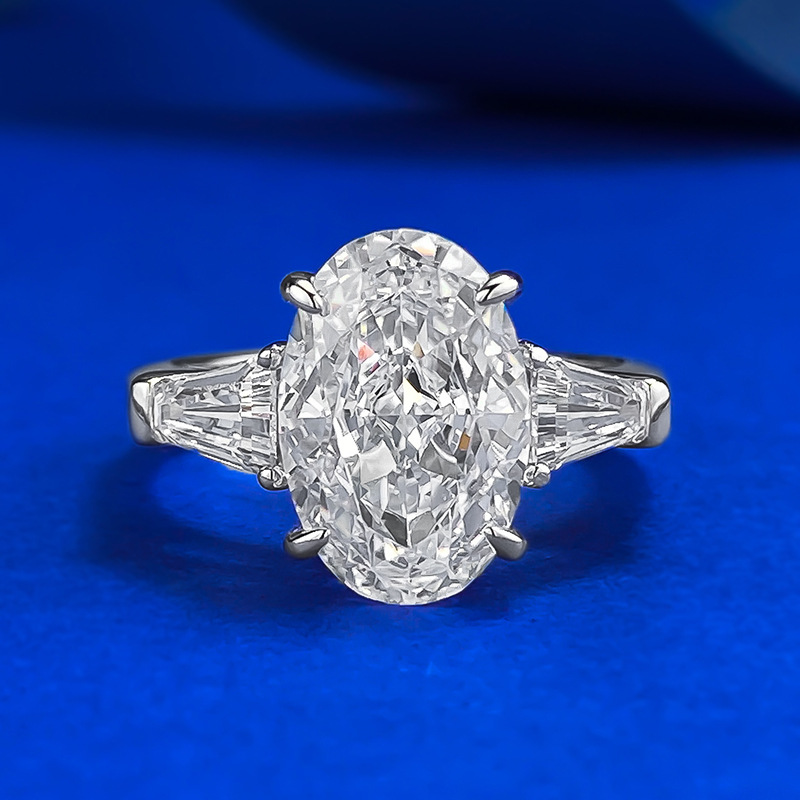
Oval vs Round Lab-Grown Diamonds for Engagement Rings: Which Shape Fits Your Style and Budget?
Choosing between oval vs round lab-grown diamonds for engagement rings comes down to more than taste alone. The shape you pick affects how large the stone looks, how it sparkles, how it sits in a setting, and how far your budget goes. For shoppers comparing a proposal ring, that matters a lot.
Round cuts feel timeless and balanced. Oval diamonds read a little softer and more elongated, which can create a bigger face-up look on the finger. Both are strong options, and both work beautifully in modern engagement rings. The better choice depends on what you want most: classic brilliance, a larger visual spread, or a shape that complements your hand and lifestyle.
Why Diamond Shape Matters When Choosing an Engagement Ring
Diamond shape affects the entire look of the ring, not just the center stone. Two stones with the same carat weight can appear very different once they’re set. That’s why shoppers comparing oval vs round lab-grown diamonds for engagement rings should look beyond the carat number.
A shape changes three big things:
- Face-up size: Oval diamonds usually cover more surface area across the finger than round diamonds of the same weight.
- Sparkle pattern: Round diamonds tend to produce the most uniform brilliance because of their facet structure.
- Style personality: Round diamonds feel classic and symmetrical, while oval diamonds can look elegant, romantic, and slightly more distinctive.
This mix of appearance and practicality is why the shape choice influences budget and everyday wear. If you want a proposal ring that feels iconic, round may be the safer bet. If you want a larger-looking center stone with a graceful silhouette, oval diamonds can be very appealing.
Shape also affects how the ring pairs with the setting. A round diamond usually fits almost any setting style with ease. Oval diamonds can look especially beautiful in settings that emphasize length, such as a solitaire or hidden halo.
Style, budget, and lifestyle all matter
A good ring decision balances what you love with how you’ll wear it. If the ring will be worn daily, comfort and durability matter. If the goal is maximum sparkle, cut quality should lead the shopping list. If you’re trying to stretch the budget, the shape can make a surprising difference.
According to GIA guidance on cut and light performance, proportions and symmetry have a major impact on brilliance. That’s true for laboratory created diamonds too. A well-cut stone will outperform a poorly cut stone, no matter the shape.
Lab-Grown Diamonds Explained: The Science Behind the Sparkle
Before comparing oval vs round lab-grown diamonds for engagement rings, it helps to understand what lab-grown diamonds actually are. The terms laboratory created diamonds, cultured diamonds, man-made diamonds, and engineered diamonds are all common consumer terms for the same category: diamonds grown in controlled conditions rather than mined from the earth.
These are real diamonds. They have the same carbon crystal structure, the same hardness rating of 10 on the Mohs scale, and the same core optical properties as mined diamonds. They are not imitation stones like cubic zirconia or other synthetic gemstones used to mimic diamond appearance.
Two main growth methods are used today:
- CVD diamonds are created through chemical vapor deposition, where carbon-rich gas deposits layers of diamond on a seed crystal.
- HPHT process diamonds are made under high pressure and high temperature, replicating the natural conditions that form diamonds deep underground.
Both methods can produce beautiful stones for engagement rings. The growth method does not automatically determine beauty or value. Cut, color, clarity, and proportions still drive the finished look.
What lab-grown means for shoppers
For many buyers, the appeal of lab-grown diamonds is simple. You can often get more size, better color, or stronger visual impact for the same budget than with mined diamonds. That makes oval vs round lab-grown diamonds for engagement rings especially relevant, because shape can stretch value even further.
Some shoppers worry that lab-grown stones are lesser in quality. In practice, the better question is whether the specific diamond has strong grading and good cutting. A well-made lab-grown diamond can be an excellent proposal ring center stone.
The important thing is transparency. Look for independent grading reports from respected labs such as IGI or GIA, and review the exact measurements, proportions, polish, and symmetry. That paperwork helps you compare one stone to another with confidence.
Oval Diamonds vs Round Diamonds: Side-by-Side Comparison
When shoppers compare oval vs round lab-grown diamonds for engagement rings, the decision usually turns on three questions: Which looks brightest? Which looks bigger? Which offers better value?
Here’s a practical side-by-side view.
| Feature | Oval Diamonds | Round Diamonds |
|---|---|---|
| Sparkle style | Broad flashes of light, can show bow-tie darkness if cut poorly | Consistent brilliance and balanced sparkle |
| Face-up appearance | Often looks larger for the same carat weight | Looks proportional and classic |
| Finger coverage | Elongated shape extends along the finger | Compact, symmetrical look |
| Price behavior | Often offers more visible size per dollar | Usually carries a premium because of demand |
| Setting flexibility | Beautiful in solitaire, hidden halo, and east-west styles | Works easily with nearly every setting style |
| Style feel | Elegant, graceful, slightly distinctive | Timeless, iconic, traditional |
Brilliance and sparkle
Round diamonds are famous for sparkle because their facet arrangement is optimized for light return. If your top priority is the most consistent brilliance, round diamonds usually win. They tend to create a lively, even pattern of flashes from edge to edge.
Oval diamonds can still sparkle beautifully, but they behave a little differently. Instead of the perfectly symmetrical return you see in round stones, oval diamonds often show longer flashes of light. That can look elegant and soft. The tradeoff is the bow-tie effect, a darker band across the center that appears in many oval stones to some degree.
A light bow-tie is normal. A heavy one can make the stone look uneven. So when shopping oval diamonds, video views and in-person inspection matter more than carat weight alone.
Face-up size and finger coverage
One reason oval diamonds are so popular in engagement rings is appearance. An oval diamond often looks larger than a round diamond of the same carat weight because it spreads across more millimeters on the finger.
For example, a 1.00-carat oval may measure roughly around 8 x 6 mm, while a 1.00-carat round may measure closer to 6.4 to 6.5 mm across, depending on cut. Those differences can affect how substantial the ring feels once mounted.
That face-up spread is one of the strongest arguments for oval vs round lab-grown diamonds for engagement rings when budget matters. If you want the center stone to look bigger without jumping up in carat weight, oval diamonds often deliver.
Price and value
Round diamonds usually cost more per carat than oval diamonds. Part of that comes from demand, and part comes from cutting efficiency. More of the rough diamond is often lost when cutting a round brilliant, which can influence pricing.
Lab-grown diamond pricing is already more accessible than mined diamond pricing, but shape still matters. An oval can help you maximize visible size within a set budget, while a round may cost a bit more for the same weight and quality.
The exact gap depends on the stone. A high-color, high-clarity oval with excellent symmetry may still cost more than a lower-quality round. So always compare the complete spec sheet, not just the shape.
Setting compatibility
Round diamonds are the easiest to pair with nearly any setting. They look natural in solitaires, halos, pavé bands, and three-stone designs.
Oval diamonds are also versatile, but they shine in settings that highlight their length. Popular choices include:
- Solitaire settings for a clean, elegant look
- Hidden halo settings for extra brightness under the center stone
- Three-stone designs with tapered side stones
- East-west settings for a modern twist
The setting should support the stone, not fight it. A poor mount can make even a great diamond look less impressive.
How to Choose Between Oval and Round for Your Proposal Ring
The best way to choose between oval vs round lab-grown diamonds for engagement rings is to match the shape to the wearer’s style and daily routine. A ring should look beautiful, feel comfortable, and hold up in everyday life.
Match the shape to the hand
Oval diamonds often flatter longer or narrower fingers because their elongated shape creates a graceful line. They can also make shorter fingers appear more extended.
Round diamonds are more balanced and symmetrical, which works well on many hand shapes. If the wearer prefers classic proportions and clean geometry, round diamonds are a reliable choice.
A quick guide:
- Choose oval diamonds if you want an elongated, elegant look and more apparent size.
- Choose round diamonds if you want the most classic sparkle and timeless symmetry.
- Choose oval diamonds if you’re drawn to a softer silhouette that feels slightly distinctive.
- Choose round diamonds if you want a shape that never feels trendy.
Think about lifestyle and durability
Diamond shape changes wearability. Round diamonds have no pointed ends, which can make them less vulnerable to snagging than some elongated shapes. Oval diamonds still have smooth curves, so they’re generally practical for daily wear, but the longer profile can make the stone more exposed depending on the setting.
If you work with your hands, wear gloves often, or want a proposal ring that feels easy to live with, setting height and prong style matter just as much as the shape itself. Low-set solitaires can reduce snag risk. Protective halos can also help shield the center stone.
Pick the right setting style
Different settings complement each shape in different ways.
Best settings for oval diamonds:
- Solitaire for a clean, elongated focus
- Hidden halo for subtle extra sparkle
- Three-stone design with tapered or pear side stones
- East-west setting for a modern, fashion-forward look
Best settings for round diamonds:
- Solitaire for an iconic presentation
- Halo for extra brilliance and presence
- Three-stone setting for a balanced, traditional design
- Pavé band for added shimmer without overpowering the center stone
If you’re still deciding, it can help to explore engagement ring styles and compare how each shape changes the final look.
Practical Buying Tips for Lab-Grown Engagement Rings
Buying a diamond ring becomes easier when you know where to focus. The same rules apply whether you’re comparing oval vs round lab-grown diamonds for engagement rings or narrowing down a shortlist of candidates.
Look at the full cut picture
Cut quality matters more than almost anything else for sparkle. Check:
- Proportions: How the diamond’s measurements relate to its visual shape.
- Symmetry: Whether the facets line up cleanly.
- Polish: How smooth the diamond’s surface is.
- Light performance: How well the stone returns brightness across the face.
For round diamonds, cut grades are often easier to compare because the standard is more established. For oval diamonds, there’s more variation in face-up shape and bow-tie appearance, so visual review is especially important.
Read the grading report carefully
A grading report is your best evidence of what you’re buying. Look for:
- Carat weight
- Color grade
- Clarity grade
- Measurements in millimeters
- Polish and symmetry grades
- Growth method if listed
IGI and GIA are both well-known names in diamond grading. For lab-grown stones, the report helps confirm that the diamond is properly identified and described.
Balance carat, setting, and budget
The center stone is only one part of the final ring. A smart buyer balances the diamond with the setting so the whole piece looks intentional.
That means you may want to:
- Choose a slightly smaller oval and spend more on a high-quality setting
- Select a round with excellent cut and keep the setting minimal
- Use a halo or pavé band to increase presence without overextending budget
- Save by choosing a lower clarity grade if the stone is eye-clean
If budget is the priority, oval diamonds often give you more visible size for the money. If sparkle and symmetry are the priority, round diamonds may be worth the premium.
Check vendor policies
Before You Buy, review the return window, shipping insurance, resizing policy, and upgrade options. A good return policy matters because diamond shape is partly a visual decision. What looks perfect online may feel different on the hand.
If you want help comparing specs, you can shop our lab-grown diamonds or try our ring builder to see how each shape looks in different settings.
Common Mistakes to Avoid When Comparing Oval and Round Lab-Grown Diamonds
Shoppers often make the same few mistakes when comparing oval vs round lab-grown diamonds for engagement rings. Avoiding them can save time and money.
- Focusing only on carat weight: Two stones with the same weight can look very different.
- Ignoring bow-tie effect in oval diamonds: A strong dark band can reduce visual appeal.
- Choosing a trend over long-term comfort: The ring should still feel right years later.
- Skipping the grading report: You need measurements and quality grades to compare stones accurately.
- Overlooking the setting: A great diamond can look underwhelming in the wrong mount.
A thoughtful purchase starts with the diamond, but it ends with the full ring.
FAQ: Oval vs Round Lab-Grown Diamonds for Engagement Rings
Are oval lab-grown diamonds cheaper than round lab-grown diamonds for engagement rings?
Generally, yes, oval lab-grown diamonds can offer more visible size for the price, while round diamonds often carry a higher price premium because of demand and cutting efficiency. The exact difference depends on carat weight, cut quality, and retailer pricing. If you’re comparing ring options closely, look at millimeter measurements, not just the carat label.
Which sparkles more: oval diamonds or round diamonds?
Round diamonds typically produce the most consistent sparkle because their facet pattern is optimized for brilliance. Oval diamonds can still be very lively, but shoppers should watch for bow-tie darkness and compare stones in person or through videos. If sparkle is your top priority, round diamonds usually have the edge.
Do oval lab-grown diamonds look bigger than round diamonds?
Often they do, because the elongated shape covers more surface area across the finger. That face-up spread is one reason oval diamonds are popular for buyers who want a larger look without increasing carat weight as much. The effect depends on the diamond’s exact length-to-width ratio and setting.
What is the best setting for an oval lab-grown diamond engagement ring?
A solitaire, hidden halo, or slim pavé setting often works well because it highlights the elongated shape. The best choice depends on whether the goal is maximum center-stone focus, extra sparkle, or added protection. Oval diamonds also look beautiful in three-stone designs with tapered side stones.
How do CVD diamonds and HPHT diamonds compare when choosing an engagement ring?
Both are real laboratory created diamonds, and the growth method does not automatically determine beauty. The more important factors are cut quality, color, clarity, and how well the stone is matched to the ring design. A strong grading report and good visual inspection matter more than the production method alone.
Final Takeaway: Choosing the Right Shape for Your Engagement Ring
Oval vs round lab-grown diamonds for engagement rings is really a comparison of priorities. Round diamonds give you classic symmetry and consistent brilliance. Oval diamonds give you a graceful silhouette, strong finger coverage, and often a bigger look for the budget.
If the proposal ring needs to feel timeless and unmistakably traditional, round diamonds are hard to beat. If the goal is maximum visible size with a softer, more elongated profile, oval diamonds can be the stronger choice. Either way, focus on cut quality, grading, and the setting that supports the stone best.
If you’re narrowing down options, browse our educational resources, compare settings, or explore our engagement rings to see how each shape transforms the final look. The right ring is the one that fits both the style and the story behind it.
Ready to Find Your Perfect Diamond?
Explore our collection of certified lab-grown diamonds
Shop Diamonds