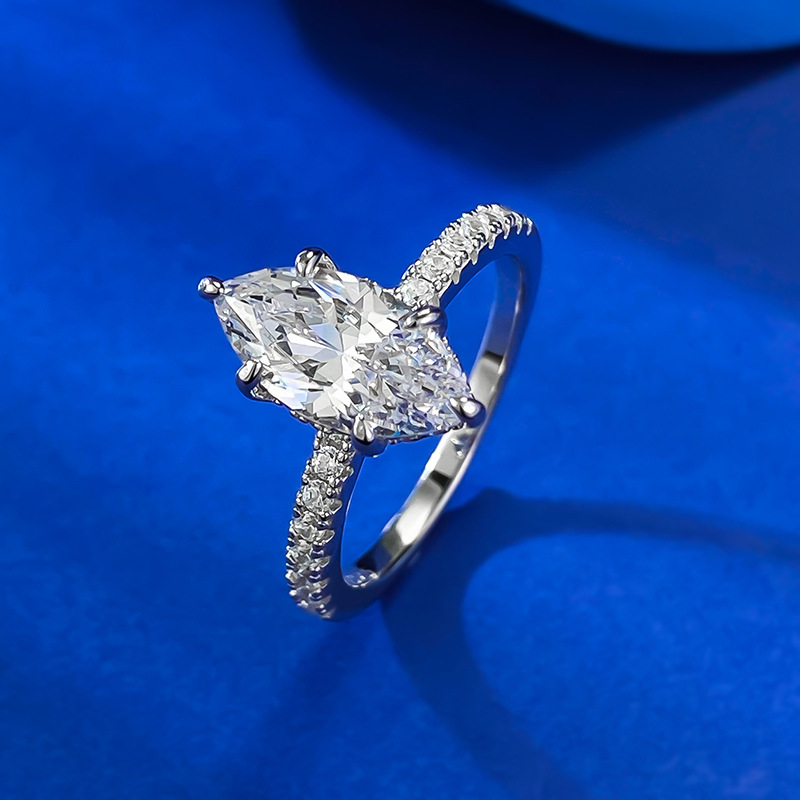
Oval Eternity Band Cost Comparison: Prices, Value, and Buying Tips
Oval Eternity Band Cost Comparison: What Drives the Price?
An Oval Eternity Band cost comparison helps explain why two rings that look similar online can carry very different price tags. The biggest cost factors are total carat weight, diamond type, diamond matching, metal, setting style, ring size, and finishing quality.
Oval Eternity Bands make a strong impression because the diamonds continue around the entire finger. The elongated oval shape can also appear larger face-up than some other cuts at a similar carat weight. That combination makes this style popular for wedding bands, anniversary rings, milestone gifts, and stacked diamond looks.
What should you actually pay for one? The answer depends on how you plan to wear it. A daily wedding band needs Comfort and Security. A statement anniversary ring may call for larger stones and a bolder profile.
I've helped many couples compare eternity bands for weddings, anniversaries, and surprise gifts, and the happiest buyers usually choose balance over bragging rights. The best ring is rarely just the biggest one. It is the one that gives you the right sparkle, fit, and durability for your budget.
Why Oval Eternity Bands Look So Bright
Oval diamonds spread their weight across a longer shape. This can make each stone look generous on the hand without requiring the highest possible carat weight. In a full eternity design, that effect repeats around the entire ring.
The result is continuous sparkle from every angle. A half-eternity band shows diamonds mainly across the top. A full Oval Eternity Band keeps the pattern going, which raises both the material cost and the visual payoff.
The shape also flatters many hands. Ovals create a soft lengthening effect, and they pair well with solitaire engagement rings, plain gold bands, pavé bands, and other diamond jewelry. They have that polished, romantic look people notice right away, but they still feel wearable enough for real life.
Key Factors in an Oval Eternity Band Cost Comparison
A useful oval Eternity Band Cost comparison starts with the specifications. Price is not based on one feature alone. It comes from how the diamonds, metal, setting, size, and labor work together.
Unlike a solitaire ring, an eternity band needs many stones that match closely. The jeweler must align color, clarity, size, outline, and sparkle. If one oval looks warmer, cloudier, wider, or slimmer than the others, the whole band can feel uneven.
GIA's well-known 4Cs are color, clarity, cut, and carat weight. They give buyers a clear way to compare diamond quality. For lab-grown diamonds, GIA and IGI also grade qualifying stones, which helps shoppers review specs with more confidence.
Key price drivers include:
- Total carat weight: More diamond weight usually means a higher price.
- Diamond matching: Better matching creates a cleaner, more luxurious look.
- Diamond quality: Color, clarity, proportions, and brilliance all affect value.
- Metal type: 14k gold, 18k gold, and platinum have different material costs.
- Ring size: Larger sizes may need more diamonds and more metal.
- Setting style: Shared-prong, prong, bezel, and low-profile designs vary in labor.
- Craftsmanship: Smooth finishing and secure setting matter for long-term wear.
Total Carat Weight and Stone Size
Total carat weight is one of the clearest cost factors in an oval eternity Band Cost Comparison. A 2.00 carat total weight band will usually cost less than a 5.00 carat total weight band if the metal and diamond quality are similar.
The increase is not always linear. Larger oval diamonds can be harder to match, especially in a full circle. Bigger stones may also need a stronger setting and a more careful layout.
For daily wear, many shoppers prefer a moderate carat weight. It gives real sparkle while keeping the band lower and easier to stack. For a milestone gift, a higher-carat band can feel more celebratory, especially when it marks a wedding anniversary, new chapter, or deeply personal promise.
Try not to choose by carat weight alone. Look at height, width, side profile, and how the ring feels between your fingers. Honestly, I think comfort is where a lot of people underestimate the decision (trust me, I've seen it happen).
Diamond Quality, Shape, and Matching
Diamond quality matters because every stone is visible. Color grade affects how white or warm the diamonds look. Clarity affects how clean they appear, though small band stones do not always need the same clarity grade as a large center diamond.
Oval diamonds also vary in shape. Some look long and elegant. Others are wider and softer. Bow-tie effect, symmetry, and facet pattern can change how much life each stone shows.
For eternity bands, matching often matters more than chasing the highest grade on paper. A well-matched band with bright, consistent stones can look better than a higher-grade ring with uneven ovals. Here's what nobody tells you: your eye notices harmony before it notices a tiny difference on a grading chart.
Oval Eternity Band Cost Comparison by Diamond Type
Diamond type is a major part of any Oval Eternity Band cost comparison. Most buyers compare lab-grown oval eternity bands with mined diamond versions. Both are real diamonds, and both can be beautiful.
GIA explains that laboratory-grown diamonds have essentially the same chemical, physical, and optical properties as natural diamonds. They are not simulants like cubic zirconia or moissanite. They are diamonds created in controlled growth environments rather than formed underground.
Lab-grown diamonds often give shoppers more room in the budget. You may be able to choose a larger total carat weight, a better setting, or a preferred metal for the same spend. Mined diamonds usually cost more because natural origin, mining, sorting, and supply all affect price.
A simple comparison:
| Feature | Lab-Grown Oval Eternity Band | Mined Diamond Oval Eternity Band |
|---|---|---|
| Diamond type | Real diamond grown in a lab | Real diamond formed underground |
| Price profile | Often more budget-friendly for similar appearance | Often higher due to natural origin |
| Visual difference | Usually hard to see at similar quality | Usually hard to see at similar quality |
| Best use of budget | More size, better setting, or finer metal | Natural origin and tradition |
| Buyer fit | Value-focused sparkle | Origin-focused purchase |
Lab-Grown Oval Eternity Bands
Lab-grown oval eternity bands are a strong fit for buyers who want visible sparkle without stretching the budget too far. Since a full eternity band uses diamonds all the way around, savings on diamond sourcing can make a real difference.
Many customers use that flexibility to choose better matching or a more secure setting. Others move from 14k gold to 18k gold or platinum. Some simply prefer a larger look for the same budget.
In my experience at StoneBridge, lab-grown eternity bands often give couples the breathing room to choose the ring they actually want, not just the one that barely fits the spreadsheet (yes, even on a budget). That can make the whole purchase feel lighter and more joyful.
If you want to compare loose diamond options before choosing a finished band, you can shop lab-grown diamonds at StoneBridge Jewelry. Reviewing diamond specs first can make the final ring choice feel much easier.
Mined Diamond Oval Eternity Bands
Mined diamond oval eternity bands appeal to buyers who value natural origin and tradition. They often carry a higher price than lab-grown designs with similar visible specs.
That higher price does not automatically mean the band will look brighter on the hand. If color, clarity, cut quality, matching, and setting work are similar, the unaided-eye difference can be small. The real question is whether natural origin is worth the premium to you.
Compare total carat weight, metal purity, setting style, warranty, and return policy before deciding. A side-by-side review will show whether the higher cost supports your priorities.
Metal and Setting Choices That Affect Cost
Metal and setting style shape both price and wearability. This part of an oval Eternity Band Cost comparison is easy to overlook, but it has a major effect on comfort and durability.
Gold gives buyers several looks and price points. 14k gold is 58.3% pure gold, while 18k gold is 75% pure gold. That means 18k has richer gold content, while 14k often offers a practical balance of strength and cost.
Platinum is naturally white and dense. Most fine platinum jewelry is 90% to 95% platinum, which can increase weight and price. It also develops a soft patina over time, which some buyers love.
Setting style changes the final cost too. Shared-prong settings show more diamond and less metal. Bezel settings wrap metal around each stone for a smoother, more protected edge. Low-profile settings can make the ring easier to wear every day.
Gold vs. Platinum
Choose 14k gold if you want durability and value. It works well for daily wear and comes in white, yellow, and rose tones. White gold may need rhodium plating over time to keep its bright white finish.
Choose 18k gold if you want richer color and a more luxurious gold content. It is especially beautiful in yellow or rose gold. It may cost more than 14k gold because of the higher gold percentage.
Choose platinum if you want a naturally white metal with a substantial feel. It usually costs more than gold because it is denser and can require more labor to finish.
Prong, Shared-Prong, and Bezel Settings
Shared-prong settings are popular because they let oval diamonds take center stage. They create a bright, open look and can make the band feel very fluid.
Traditional prong settings can also be secure when made well. The key is clean alignment and enough metal to hold each stone safely. A full eternity band takes more impact at the palm, so weak setting work is a poor place to save money.
Bezel settings use more metal around each diamond. They may cost more in labor, but they offer a sleek outline and added protection. They are worth considering if you want smoother edges or a more modern look.
Budget Tiers for an Oval Eternity Band Cost Comparison
A realistic oval Eternity Band Cost comparison should use price ranges rather than one fixed number. Diamond markets, metal prices, ring size, and inventory all change. Budget tiers still help you shop with a clear plan.
Entry-luxury lab-grown oval eternity bands often start in the lower four-figure range. These rings usually use more wearable carat weights and practical settings. They can be excellent for wedding bands and everyday stacks.
Premium bands sit higher in price because they use larger stones, stronger matching, finer metal, or more detailed setting work. This tier is often the sweet spot for anniversary gifts and upgraded bridal stacks.
Statement bands can move into higher four-figure or five-figure pricing, especially with mined diamonds or larger total carat weights. They deliver major sparkle, but they also need careful comfort checks.
For current styles, you can browse fine jewelry and compare product pages by carat weight, metal, setting, and profile.
How to Compare Value Beyond Price
The lowest price is not always the best value. A band with uneven stones, rough edges, or weak prongs can cost more over time through repairs or disappointment.
Look at the full ownership experience. Does the band feel smooth? Are the stones straight? Does the sparkle look even from one diamond to the next? Can you wear it with your engagement ring without rubbing?
I always tell shoppers to think about the ring on a Tuesday morning, not just under jewelry-store lighting. If it feels comfortable, secure, and easy to live with, you are much more likely to love it years from now.
Review warranty, returns, care guidance, and customer support as part of the decision. Clear policies matter, especially for a ring that may be difficult to resize.
Sizing, Comfort, and Daily Wear
A full eternity ring needs accurate sizing. This is one of the most practical parts of an oval eternity Band Cost Comparison because resizing can be limited or impossible.
Unlike a plain band, a full eternity ring has diamonds around the entire circle. There may be no plain metal section to cut and adjust. If the size is wrong, the ring may need to be remade.
Measure your finger when your hands feel normal, not unusually cold or swollen. If you plan to stack rings, size with the stack in mind. Wider bands and higher-carat styles can feel tighter than slim rings.
Use StoneBridge Jewelry's ring sizing guide before ordering. If you are unsure, ask for help rather than guessing. Guessing is how people end up with a gorgeous ring that sits in the box, and nobody wants that.
Care and Maintenance
Clean your oval eternity band with warm water, mild dish soap, and a soft brush. Rinse well and dry it with a lint-free cloth. Avoid bleach, harsh cleaners, and abrasive products.
Have the setting inspected from time to time, especially if you wear the ring daily. Diamonds on the underside of a full eternity band touch desks, steering wheels, gym equipment, and hard surfaces more often than stones on the top.
Remove the band for weightlifting, gardening, heavy cleaning, and high-impact work. Small habits help protect the prongs, stones, and metal finish.
How to Choose the Best Band for Your Budget
Use a step-by-step oval eternity band cost comparison Before You Buy. It keeps the choice clear and helps you spend on the details that matter most.
Start with your budget and purpose. Will this be a daily wedding band, an anniversary ring, or a statement piece? Then choose lab-grown or mined diamonds based on your priorities.
Next, select a total carat weight that balances sparkle and comfort. Choose metal based on color, durability, and maintenance. Then compare setting styles and confirm your size.
A smart buying checklist:
- Set your budget range.
- Decide how often you will wear the band.
- Compare lab-grown and mined diamond options.
- Choose a total carat weight that feels comfortable.
- Pick 14k gold, 18k gold, or platinum.
- Select prong, shared-prong, bezel, or low-profile setting details.
- Confirm sizing before ordering.
- Review warranty, returns, and care support.
If you want a custom look, you can also explore the ring builder to compare design choices before committing.
Best Choices by Buyer Type
For everyday wedding band wear, choose a lower-profile oval eternity band with secure prongs. A moderate carat weight can still look bright while staying comfortable.
For anniversary gifts, consider a premium band with stronger diamond presence. Oval diamonds feel romantic, elegant, and personal without looking too trendy. There is something especially sweet about giving a band that says, "I'd choose you all over again."
For statement jewelry, larger oval diamonds and a full eternity layout create serious impact. Check the height and side profile first so the ring feels as good as it looks.
For value-focused shoppers, lab-grown oval eternity bands often make the most sense. They can give you more visible sparkle, better matching, or finer metal for the same budget.
Shop Oval Eternity Bands at StoneBridge Jewelry
An oval eternity band cost comparison should make shopping easier, not more stressful. Once you understand carat weight, diamond type, matching, metal, setting, sizing, and craftsmanship, the right choice becomes much clearer.
StoneBridge Jewelry focuses on fine lab-grown diamond jewelry with careful finishing and practical wearability. Our customers often ask whether they should spend more on size or quality. In many cases, the better choice is a balanced band with strong matching, secure setting, and a comfortable profile.
Compare current styles, review the details, and confirm your size Before You Order. Full eternity bands are precise pieces, and the right fit matters from the first wear.
If you need help choosing between carat weights, metals, or setting styles, contact the StoneBridge Jewelry team. We will help you find an oval eternity band that fits your budget, your stack, and the way you live.
FAQ
How much should I budget for an oval eternity band?
Many lab-grown oval eternity bands start in the lower four-figure range, while larger or mined diamond designs can reach higher four-figure or five-figure pricing. The final cost depends on total carat weight, diamond quality, metal, ring size, and setting style. For the best value, compare the full specs instead of shopping by price alone.
Are lab-grown oval eternity bands worth it?
Lab-grown oval eternity bands are worth considering if you want strong sparkle and more control over your budget. They are real diamonds, and GIA notes that laboratory-grown diamonds share essentially the same optical, chemical, and physical properties as mined diamonds. Compare color, clarity, cut, matching, and setting quality before you choose.
What raises the price most in an oval eternity band?
Total carat weight usually has the biggest effect, especially as each oval diamond gets larger. Diamond matching, color grade, clarity, metal choice, and setting labor also raise the price. Larger ring sizes may cost more because they can require extra diamonds or more metal.
Can I wear an oval eternity band every day?
Yes, you can wear an oval eternity band daily if the setting is secure and the fit is right. Choose a lower-profile design if you use your hands often or plan to stack it with other rings. Clean it gently at home and schedule periodic inspections to catch loose prongs early.
Can a full oval eternity band be resized?
Full oval eternity bands are often difficult or impossible to resize because diamonds go all the way around the ring. If the size is wrong, remaking the ring may be safer than altering the pattern. Measure carefully, account for stacking, and ask a jeweler for sizing help before ordering.
Ready to Find Your Perfect Diamond?
Explore our collection of certified lab-grown diamonds
Shop Diamonds