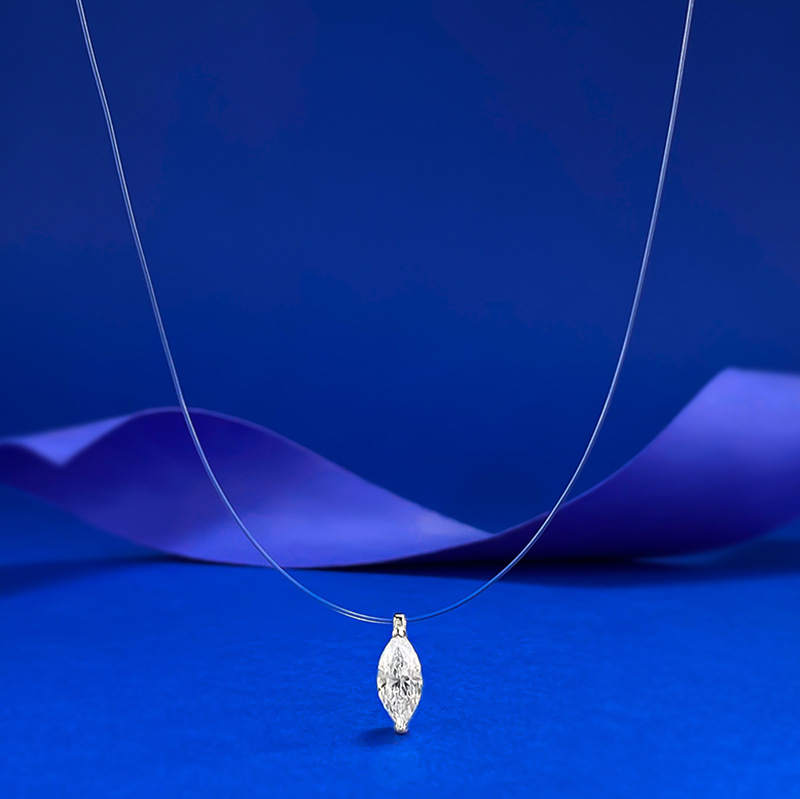
Marquise Cut Solitaire Diamond Pendant Insurance Checklist
Protect Your Pendant Before You Wear It
A Marquise Cut Solitaire Diamond Pendant insurance checklist belongs in your buying plan, not in a drawer after something goes wrong. This style looks simple at first: one elongated diamond, one clean setting, one fine chain. Every detail affects replacement value.
A pendant can slip off during travel, catch on clothing, break at the clasp, or disappear from a hotel room. The marquise shape also has two pointed tips, so prong security matters. Waiting until a claim can leave you with missing records when you need them most.
At StoneBridge Jewelry, I’ve helped customers choose lab-Grown Diamond Pendants for birthdays, anniversaries, wedding-day gifts, and those sweet “just because” moments that end up meaning the most. The happiest shoppers are usually the ones who save documents, photos, and insurance notes right after purchase (trust me, I’ve seen the scramble when they don’t). The marquise cut Solitaire Diamond Pendant insurance checklist below helps you protect the necklace, the budget behind it, and the reason you bought it.
Why Marquise Pendant Insurance Matters
A Solitaire Diamond Pendant often carries both financial value and personal meaning. It may mark a birthday, promotion, anniversary, proposal celebration, wedding morning, or private milestone. Since it hangs from a chain, it faces risks that rings and earrings don't always share.
Common pendant risks include broken chains, clasp failure, accidental drops, theft, prong damage, and mysterious disappearance. Mysterious disappearance means the item is gone, but you can't prove exactly how it was lost. Some jewelry policies cover it; many basic home policies don't.
The Insurance Information Institute notes that standard homeowners and renters policies often place special limits on jewelry theft. A common limit is around $1,500, though policy terms vary by insurer and state. That limit may sit far below the replacement cost of a premium diamond pendant.
A scheduled personal property rider or standalone jewelry policy can offer broader coverage. Depending on the policy, it may cover loss, theft, accidental damage, repair, worldwide travel, and replacement with comparable quality. Use this Marquise Cut Solitaire Diamond Pendant insurance checklist to compare those details before you wear the necklace often.
Pendant Details That Set the Insurance Value
Insurance value starts with proof. An insurer, appraiser, or jeweler needs more than the words diamond pendant. They need the features that make your necklace specific.
Record the diamond shape, carat weight, color, clarity, measurements, polish, symmetry, fluorescence if listed, metal type, setting style, chain length, chain style, clasp, and hallmarks. A 1.00 carat marquise lab-Grown Diamond Pendant in 14k gold will not price the same as a 2.00 carat pendant in platinum. Even two marquise diamonds with the same carat weight can look different if their length-to-width ratios differ.
GIA explains diamond quality through the 4Cs: cut, color, clarity, and carat weight. For fancy shapes such as marquise, measurements and outline matter because they shape the face-up look. IGI and GIA both grade lab-grown diamonds, so keep the grading report if your pendant includes one.
Your marquise cut solitaire diamond pendant insurance checklist should clearly state lab-grown diamond if that is what you purchased. Lab-grown diamonds are real diamonds, but replacement policies should match the original type. Clear wording helps prevent a replacement offer that misses the diamond's size, quality, or design profile.
Marquise Diamond Specifications to Save
The marquise cut has a long, narrow shape with two pointed ends. Many buyers like it because it can look larger face-up than some other cuts of the same carat weight. That visual impact makes detailed records even more useful.
Save the carat weight, color grade, clarity grade, measurements, table, depth, polish, symmetry, and length-to-width ratio if available. Many marquise diamonds fall near a 1.75:1 to 2.25:1 ratio, though taste varies. A slimmer stone feels sleek; a wider stone can look bold and balanced.
Photos help too. Take close-ups of the front, side, back, prongs, bail, chain, clasp, and metal stamp. Add those photos to your marquise cut solitaire diamond pendant insurance checklist so a future claim has visual proof.
Setting, Metal, Chain, and Clasp Details
The pendant is more than the center diamond. The setting, bail, chain, and clasp all carry value. They also affect repair cost.
Write down whether the piece is 14k yellow gold, 14k white gold, 18k gold, rose gold, or platinum. Note the setting style and whether the marquise tips use V-prongs or another protected design. The pointed ends deserve special attention because they can chip or loosen if the setting is damaged.
Record chain length, chain width, chain style, and clasp type. Cable, box, wheat, and rope chains differ in weight and durability. If your coverage protects only the diamond, it may not fully protect the necklace you actually own.
Marquise Cut Solitaire Diamond Pendant Insurance Checklist
Use this marquise cut solitaire diamond pendant insurance checklist as soon as your order arrives. Complete it before daily wear, travel, or gifting.
- Save proof of purchase, including your StoneBridge Jewelry receipt, order confirmation, SKU, product page, and purchase date.
- Save diamond details, including shape, carat weight, color, clarity, measurements, and grading report if included.
- Photograph the pendant from the front, side, back, clasp, bail, chain, hallmarks, and close-up setting angles.
- Ask your insurer whether a recent receipt is enough or whether they require a professional appraisal.
- Compare a standalone jewelry policy with a scheduled homeowners or renters rider.
- Confirm coverage for theft, loss, accidental damage, mysterious disappearance, travel, repair, chain failure, and clasp failure.
- Ask whether replacement is based on comparable kind and quality.
- Check whether you can choose StoneBridge Jewelry or another trusted jeweler for replacement or repair.
- Review deductibles, exclusions, claim steps, and appraisal update rules.
- Store the necklace in a lined box, safe, or travel case when you're not wearing it.
- Review the policy every year, especially after repairs, appraisal updates, address changes, or jewelry upgrades.
This marquise cut solitaire diamond pendant insurance checklist also helps with gifts. If the pendant is a surprise, prepare the receipt, photos, appraisal, and product details before you give it. If the recipient will insure it, share copies in a secure folder. It is not the most romantic part of a gift, I know, but it is one of the most caring.
For comparison shopping, browse StoneBridge's curated selection of lab-grown diamond jewelry and save product details before checkout. If you want to compare diamond specs first, review our lab-grown diamond options before selecting a pendant.
Documents Insurers Usually Request
Most insurers ask for proof of ownership and value before they add coverage. A clean file can speed up approval and reduce confusion later. Keep digital copies and one backup in a safe place.
Collect the sales receipt, order confirmation, product description, SKU, grading report, appraisal, photos, video, warranty notes, and repair records. A receipt proves what you paid. An appraisal may show current retail replacement value.
Short video is useful as well. Slowly rotate the pendant so the diamond shape, setting height, bail, chain, clasp, and hallmarks are visible. Add the video to your marquise cut solitaire diamond pendant insurance checklist with the date recorded.
Questions to Ask Before You Choose Coverage
Ask direct questions Before You Buy a policy. You don't want a pleasant premium and a weak claim result. Write down the answers and store them with your documents.
Ask whether the policy covers theft, accidental loss, damage, mysterious disappearance, and worldwide travel. Ask if it covers a broken chain, damaged clasp, loose prong, or chipped marquise tip. Ask whether you must use the insurer's jeweler or whether you can choose your own.
Ask about deductibles, exclusions, appraisal updates, and claim timing. Some policies treat unattended luggage, gym lockers, swimming, or international travel differently. Your marquise cut solitaire diamond pendant insurance checklist should include those policy answers, not just purchase records.
Cost, Appraisal, and Replacement Value
Jewelry insurance premiums often cost about 1% to 2% of the insured value per year, though quotes vary by location, deductible, insurer, claim history, and coverage type. For a pendant worth several thousand dollars, that annual cost may feel reasonable. The key is matching the coverage to the real replacement risk.
Underinsurance creates one problem: your policy limit may not cover a comparable pendant. Overinsurance creates another: you may pay extra premium on an inflated value that does not improve replacement quality.
Honestly, I think the best insurance conversation is not “What is the cheapest premium?” It is “What happens if I actually need to replace this pendant?” That one question reveals a lot about the policy.
Use this simple comparison while working through your marquise cut solitaire diamond pendant insurance checklist:
| Coverage Option | Common Benefit | Common Limitation | Best For |
|---|---|---|---|
| Standard homeowners or renters coverage | May include limited jewelry protection | Often has jewelry caps and exclusions | Lower-value pieces or short-term coverage |
| Scheduled jewelry rider | Lists the pendant on an existing policy | May require appraisal and affect home policy claims | Buyers who prefer one insurer |
| Standalone jewelry policy | Often designed for loss, theft, repair, and travel | Separate premium and underwriting | Premium pendants and frequent wearers |
| No insurance | No ongoing premium | Owner pays full replacement cost | Low-value pieces only |
A receipt may be enough for a newer pendant if the insurer accepts recent proof of purchase. Higher-value pieces often need a formal appraisal from a qualified jewelry appraiser. Ask which value sets your coverage: purchase price, appraised value, or insurer-approved replacement value.
Lab-Grown Diamond Replacement Details
Lab-grown diamond replacement should match the original as closely as possible. The policy should account for shape, carat weight, color, clarity, measurements, metal, setting, chain, and clasp. For a marquise pendant, outline matters as much as numbers on paper.
If a replacement diamond has a very different length-to-width ratio, the pendant may not feel like the same piece. Keep your StoneBridge product details so a jeweler can reference the original design. This step makes your marquise cut solitaire diamond pendant insurance checklist much stronger.
Here's what nobody tells you: two lab-grown marquise diamonds can have the same carat weight and still give completely different personalities. One may look long and graceful; another may look fuller and more dramatic. If you loved the original silhouette, make sure your records capture that shape (yes, even on a budget).
Care Habits That Support a Future Claim
Insurance helps after a covered event. Good care lowers the chance of damage in the first place. It also shows that you treated the pendant responsibly.
Check the necklace often for a loose stone, bent prong, weak clasp, thinning chain link, or stiff bail. If something feels loose, stop wearing it and contact a jeweler. Don't wait for a prong problem to become a missing diamond.
Many jewelers suggest professional inspections every 6 to 12 months for fine jewelry worn often. Choose the shorter interval if you wear the pendant daily, travel with it, or layer it with other necklaces. Cleaning can reveal issues hidden by lotion, sunscreen, lint, or skin oils.
Good habits are simple: put the pendant on after perfume and lotion, remove it before swimming or exercising, and store it separately so the chain doesn't knot. Use a travel case with individual compartments. Keep it in a safe spot when it's not on your neck.
In my years helping StoneBridge customers think through everyday wear, I’ve noticed that the pieces people love most are the ones they reach for without thinking. That is exactly why a pendant needs practical care habits, not a complicated routine.
When to Update Your Insurance File
Update your marquise cut solitaire diamond pendant insurance checklist whenever the necklace changes. That includes a new chain, new clasp, reset diamond, upgraded stone, repair, fresh appraisal, or address change. Location can affect premiums, so tell your insurer if you move.
Review coverage once a year. Lab-grown diamond pricing, metal costs, labor rates, and retail replacement conditions can shift. A quick review helps keep your policy aligned with the pendant you own today.
Buy With Clear Records From StoneBridge Jewelry
Insurance prep should make a purchase feel calmer, not harder. A marquise solitaire pendant is elegant, sharp, and easy to wear, but it still deserves careful records. Clear product information helps you insure it from the start.
Before checkout, review the diamond shape, carat weight, color, clarity, measurements, metal, setting, chain length, clasp, return policy, and service options. Save screenshots or PDFs of key details if you want a backup. Then add the receipt and photos after delivery.
If you have questions, contact our jewelry experts for help comparing pendant details and documentation needs. You can also explore engagement rings or design ideas in the ring builder if you're matching a pendant with other fine jewelry.
A strong marquise cut solitaire diamond pendant insurance checklist gives you control before a loss ever happens. Document the pendant, compare coverage, confirm exclusions, and care for the necklace well. Then wear it with the confidence a beautiful piece deserves.
FAQ
Do I need insurance for a marquise cut solitaire diamond pendant?
Yes, insurance is a smart choice for a marquise cut solitaire diamond pendant, especially if replacing it out of pocket would be difficult. Pendants can be lost, stolen, damaged, or separated from the chain during normal wear. Ask about coverage for theft, accidental loss, damage, and mysterious disappearance before you choose a policy.
What documents do I need to insure a marquise diamond pendant?
Most insurers ask for a receipt, product details, photos, and sometimes a professional appraisal. If your pendant has a lab-grown diamond grading report from GIA, IGI, or another lab, keep that too. Your file should show the diamond shape, carat weight, color, clarity, measurements, metal, chain, clasp, and setting style.
How much does marquise pendant insurance usually cost?
Jewelry insurance often costs about 1% to 2% of the insured value per year, but your quote may differ. Location, deductible, claim history, policy type, and item value all affect price. Compare the premium with the coverage details, not just the final number.
Will jewelry insurance cover a broken chain or damaged marquise setting?
Some policies cover chain failure, clasp damage, prong repair, and accidental damage to the setting, while others exclude those issues. Ask your insurer to explain repair coverage in writing. For a marquise diamond, confirm whether damage to the pointed tips or protective prongs is covered.
Should I insure a lab-grown marquise diamond pendant differently?
The process is similar, but your documents should clearly say lab-grown diamond. Include the exact specifications so replacement matches the original pendant as closely as possible. A clear marquise cut solitaire diamond pendant insurance checklist helps the insurer compare shape, size, quality, metal, chain, and design details.
Ready to Find Your Perfect Diamond?
Explore our collection of certified lab-grown diamonds
Shop Diamonds