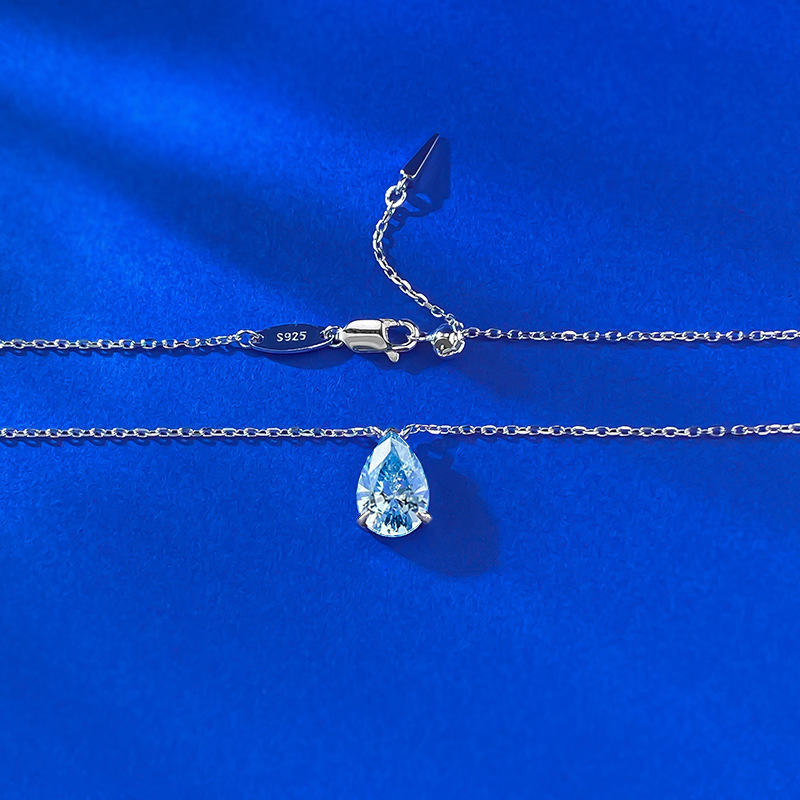
GIA Report Lookup Report Verification Before You Buy
Buying a diamond online should feel exciting, not risky. GIA Report Lookup Report verification gives you a direct way to check a diamond's grading details Before You Pay. It matters for engagement rings, lab-grown diamonds, and any fine jewelry with a meaningful center stone.
A product page can look polished and still have an error. A certificate image can be cropped, blurry, or attached to the wrong listing. The GIA Report Check tool lets you compare the report number and diamond details against GIA's own database.
That one step can protect your budget and your peace of mind. If you're choosing a ring for a proposal, why leave the grading details to guesswork? I've helped many couples compare diamonds before they choose the one, and the buyers who verify the paperwork almost always feel calmer at checkout.
What GIA Report Lookup Report Verification Means
GIA Report Lookup report verification means checking a GIA report number through the Gemological Institute of America's official Report Check database. GIA is one of the most recognized independent gem labs in the jewelry trade. Its grading system helped define the 4Cs: color, clarity, cut, and carat weight.
The goal is simple. You want to know whether the diamond listed by a retailer matches the diamond described on the GIA report. For a GIA-graded stone, the lab record is the best source for grading facts.
A GIA report can confirm the diamond's shape, measurements, carat weight, color grade, clarity grade, polish, symmetry, fluorescence, and cut grade when applicable. It may also show a laser inscription number. For example, a round brilliant diamond might measure 7.35 x 7.38 x 4.55 mm and carry a 1.50 carat weight.
A GIA report does not confirm retail price, seller ownership, current condition after grading, or whether the seller has the diamond in stock. It verifies grading data. The retailer still needs to prove the full offer is clear, fair, and supported.
GIA Report vs. Appraisal
A grading report and an appraisal do different jobs. A GIA diamond report describes the stone's gemological traits. An appraisal often estimates replacement value for insurance and may include the setting, metal, and finished ring.
That difference matters. A ring bought for $2,700 might receive a $4,800 insurance appraisal, but that does not mean the loose diamond has a $4,800 resale value. For buying decisions, gia report lookup report verification is better for checking diamond quality.
Use appraisals after purchase for coverage planning. Use grading reports before purchase to compare diamonds more fairly. Honestly, I think this is one of the most misunderstood parts of diamond shopping because an appraisal can sound more official than it really is for comparing quality.
Why GIA Report Lookup Report Verification Matters Online
Online diamond shopping gives you more choice, but it also asks you to read details carefully. gia report lookup report verification helps confirm that the stone on the listing matches the grading document shown by the seller.
Mistakes happen. A report number may be mistyped by one digit. A listing may show a representative image. A certificate screenshot may belong to another diamond with similar grades (trust me, I've seen it happen).
Small grade changes can move price sharply. A 1.50 carat round diamond with G color, VS1 clarity, and Excellent cut can cost far more than a 1.50 carat diamond with I color, SI2 clarity, and Good cut. The stones may sound close, but buyers should not pay for one and receive the other.
We've found that customers often feel more comfortable comparing diamonds once they match the report number, measurements, and grades themselves. It turns a vague trust question into a clear checklist. You don't need gemology training to do it.
Details to Compare Line by Line
Before checkout, compare these details across the retailer page, uploaded report, and GIA lookup result:
- Report number
- Diamond shape and cutting style
- Measurements in millimeters
- Carat weight
- Color and clarity grades
- Cut grade for round brilliant diamonds
- Polish, symmetry, and fluorescence
- Laser inscription, if listed
If the listing says 1.80 carat F VS1 and the lookup shows 1.80 carat H VS2, stop. That is not a harmless formatting issue. Ask for a written explanation or choose another diamond.
How to Use the Official GIA Report Check Tool
The official GIA Report Check tool is the direct path for gia report lookup report verification. Find the GIA report number on the product page, PDF, certificate image, or inscription note. Enter that number into GIA's online lookup tool.
Then compare the results with the retailer's listing. The carat weight, shape, measurements, color, clarity, and cut information should line up. Abbreviations such as EX for Excellent are normal, but the grades themselves should not change.
This step is especially useful for lab-grown diamond engagement rings. Two oval lab-grown diamonds near 2.00 carats may both look bright in photos. One may have E color and VS1 clarity, while another has G color and VS2 clarity. Those are not the same buying choice.
For round brilliant diamonds, cut grade carries extra weight because it affects brightness, fire, and sparkle. For fancy shapes, measurements and proportions help you judge face-up size. A 57% table and 61.8% depth can wear differently than a deeper stone with the same carat weight.
Strengths of Official Verification
gia report lookup report verification has clear advantages:
- It comes from the lab that issued the report.
- It checks independent grading, not just retailer text.
- It can reveal mismatched reports or listing errors.
- It helps compare similar diamonds by real specifications.
- It is usually free and quick to use.
It also has limits. GIA does not set the store's price, ship the ring, size the setting, or manage returns. A verified report tells you what GIA graded, not every detail of the sale.
That is why the strongest buying process uses both sources. Let GIA confirm the grading data. Let the retailer explain the finished jewelry, price, policies, and service.
Retailer Certificates, Listings, and Appraisals
Retailer documentation still matters. A product page gives you details that a GIA report will not show, such as metal type, ring size options, warranty, shipping estimate, and return policy.
A strong listing may include diamond shape, carat weight, color, clarity, cut, setting style, metal, images, video, and price. These details help you compare a platinum solitaire against a yellow gold hidden halo or a three-stone ring. You can also compare finished designs through engagement rings before choosing a specific stone.
Retailer certificates and uploaded reports are useful for browsing. Still, gia report lookup report verification gives you the extra check that the report number matches GIA's record. For a high-value center stone, screenshots should not be the only proof.
Appraisals have a place too. They help with insurance and replacement value after purchase. They should not replace independent diamond grading when a GIA report number is available.
What Retailer Details Confirm
Retailer documents can confirm the full shopping offer:
- Setting style, such as solitaire, halo, or three-stone
- Metal type, including 14k gold, 18k gold, or platinum
- Total carat weight for multi-stone jewelry
- Price, financing, shipping, and return terms
- Warranty, resizing, and care options
- Product photos, videos, and availability
This context is useful. A GIA report will not tell you whether a ring is ready to ship or whether a pendant is gift-ready. It also will not tell you if a pair of studs lists 1.00 ctw as the combined weight of both earrings.
For finished jewelry, use the retailer page and the lab report together. If the piece includes a certified center stone, complete gia report lookup report verification Before You Order.
GIA Report Lookup vs. Retailer-Only Verification
The better method depends on what you need to confirm. gia report lookup report verification checks the diamond's grading record. Retailer documentation explains the sale, the design, and the service behind the piece.
| Verification method | Best use | Main strength | Limit |
|---|---|---|---|
| Official GIA Report Check | Confirming GIA grading details | Direct lab source | Does not confirm seller ownership or policies |
| Uploaded certificate image | Quick document review | Convenient during browsing | Can be blurry, outdated, or mismatched |
| Product listing | Comparing price, setting, and terms | Shows the full offer | Not independent grading proof |
| Jewelry appraisal | Insurance planning | Gives replacement value | Not the same as a grading report |
| Sales support | Clarifying details | Helps resolve questions | Claims should be written down |
Accuracy is the main reason to use the lookup. Independence is the second. GIA grades the stone; it does not sell the ring or set the retailer's price.
Retailer information brings the buying details into focus. You need to know the setting, metal, shipping date, warranty, and return window. You also need clear photos or video so you can judge the diamond's appearance.
Fraud prevention works best when all records agree. The report number, shape, measurements, carat weight, color, clarity, and cut grade should match across the listing, certificate, and GIA database. If they do, confidence rises.
How Verification Connects to Price, Metal, and Setting Choices
After the report matches, look at the diamond in the context of the finished ring. A verified 1.50 carat diamond is not automatically the better buy if it sits in a setting that does not suit the wearer's lifestyle, finger size, or budget. The paperwork tells you what the diamond is. The setting determines how it wears every day.
Metal choice changes both appearance and upkeep. 14k gold is durable and often more budget-friendly than 18k gold, making it practical for daily wear. 18k gold has a richer color and higher gold content, but it can show wear a little faster. Platinum costs more up front, yet its density and naturally white tone make it a favorite for prongs around colorless or near-colorless diamonds. White gold usually needs rhodium replating over time, especially on rings worn daily.
Setting style also affects price and maintenance. A simple solitaire may leave more budget for the center stone, while a halo can make the ring look larger from the top. Pavé and hidden halo designs add sparkle but include more small diamonds that should be checked during routine service. Low-profile settings can be comfortable and secure, but they may not allow every wedding band to sit flush. Cathedral settings lift the stone and create presence, though they can catch more easily on gloves or sweaters.
Use the report to avoid overpaying for grades you cannot appreciate in the finished design. For many engagement rings, a well-cut G or H color diamond can look beautifully white in white gold or platinum, while yellow gold can be forgiving enough to consider I or J color in some shapes. Clarity should be judged with magnified video and practical expectations: an eye-clean VS2 or SI1 may be smarter than paying heavily for VVS clarity that looks the same without magnification.
Budget Ranges and Tradeoffs to Check
Price varies by natural versus lab-grown origin, shape, certification, and current market conditions, but ranges help you ask better questions. A lab-grown diamond engagement ring with a certified center stone may start around the low thousands, while larger 2.00 to 3.00 carat designs can move into several thousand dollars depending on color, clarity, cut, and setting. Natural diamonds with similar grades usually cost significantly more, especially above 1.00 carat and near popular thresholds such as 1.50 or 2.00 carats.
Watch the carat weight breakpoints. A 1.90 carat diamond can face up very close to a 2.00 carat diamond but may cost less because it sits below a major pricing mark. The same idea applies to 0.90 versus 1.00 carat and 1.40 versus 1.50 carat stones. Measurements matter here: a well-proportioned 1.90 carat oval may look larger than a deeper 2.00 carat oval that carries weight in its depth.
Do not spend the entire budget on the center stone without accounting for the setting, tax, resizing, shipping insurance, and possible appraisal costs. If your total budget is $3,500, a $3,300 loose diamond may leave too little room for the ring itself. A balanced purchase might reserve $700 to $1,500 for the setting, depending on metal and accent diamonds, then use the remaining budget for the best verified center stone.
Who Should Use GIA Report Lookup Report Verification
Use gia report lookup report verification for higher-value diamonds, online purchases, engagement rings, and any stone advertised as GIA graded. The more money and emotion involved, the more important the check becomes.
Retailer-only review can work during early browsing. You may still be choosing between oval and emerald cut, white gold and yellow gold, or a $1,500 and $3,500 budget. At that stage, filters and images help you narrow the field.
Once you choose a specific certified diamond, verify the report. A simple process works well:
- Shortlist rings or loose diamonds from a trusted retailer.
- Review photos, videos, price, setting, and policies.
- Copy the GIA report number exactly.
- Run gia report lookup report verification through GIA.
- Match the grades and measurements to the listing.
- Ask for written clarification if anything differs.
StoneBridge Jewelry shoppers can compare design, budget, and diamond details across lab-grown diamond engagement rings and fine jewelry gifts. If you want to choose a stone and setting together, the ring builder can also help you compare options more clearly.
Lab-Grown Diamond Engagement Rings
Lab-grown diamond buyers benefit strongly from verification. Many lab-grown diamonds are graded by GIA, IGI, GCAL, or other labs, so always check which lab issued the report. If it is a GIA report, use the GIA lookup.
Price differences can come from small grading changes. Two 2.00 carat round lab-grown diamonds may both be bright, but one may have better symmetry or a more balanced depth percentage. gia report lookup report verification helps you see those differences before you commit.
For a proposal ring, that confidence matters. You are not just buying a chart of grades. You are choosing the diamond that will be worn, photographed, insured, and remembered. In my experience at StoneBridge, the sweetest proposal stories usually start with someone trying hard to get the details right, not someone chasing the biggest stone on the page.
Here's what nobody tells you: the best diamond is not always the highest grade on paper. Sometimes it is the stone that balances beauty, budget, setting style, and the person who will wear it every day (yes, even on a budget).
Fine Jewelry Gifts and Everyday Pieces
For earrings, pendants, bracelets, and anniversary gifts, the right level of documentation depends on the piece. A major center stone deserves report verification. Smaller accent diamonds may rely more on product-level quality standards and retailer trust.
Total carat weight deserves special attention. A pair of diamond studs listed as 1.00 ctw usually means the two earrings together weigh about 1.00 carat, not 1.00 carat each. Clear listings prevent confusion.
If grade, size, or certification affects your choice, ask questions before checkout. A good jeweler will explain the paperwork in plain language. Gifts carry feeling with them, whether it is a graduation pendant, anniversary band, or just-because pair of studs, so it is worth making sure the details match the moment.
Red Flags During Report Verification
Do not rush if something feels off. gia report lookup report verification should make the purchase clearer, not more confusing.
Watch for these warning signs:
- The GIA report number does not appear in the lookup tool.
- Core grades differ from the retailer listing.
- The certificate image is cropped or missing the report number.
- An appraisal is presented as a grading report.
- The return policy is hard to find.
- The seller pushes for payment before resolving document questions.
Some differences are harmless. A retailer may round measurements slightly or shorten Excellent to EX. A mismatch in color, clarity, carat weight, or report number is different.
Ask the retailer for written clarification. If the answer still does not match the documents, choose another diamond with cleaner records. I know that can feel disappointing when you already pictured the ring, but walking away from a questionable listing is almost always the smarter move.
Sizing, Shipping, Returns, and Care Before Checkout
Verification is only one part of a safe purchase. Before you place the order, confirm the ring size and resizing rules. Many solitaire rings can be resized within a reasonable range, but eternity bands, intricate pavé designs, tension settings, and rings with engraving may be harder or more expensive to adjust. If the proposal is a surprise, choose a retailer with a practical resizing policy rather than guessing and hoping.
Shipping details should be just as clear as the diamond grades. Look for insured shipping, signature requirement, discreet packaging, tracking, and an estimated production timeline if the ring is made to order. A ring needed for a specific travel date or proposal plan should have a written delivery estimate, not only a general processing window.
Read the return policy before falling in love with the photos. Check how many days you have, whether custom or engraved pieces are final sale, who pays return shipping, and whether the ring must be unworn with all documents included. Keep the GIA report, receipt, box, and any appraisal together; missing paperwork can slow service or returns.
Care expectations matter too. Prongs should be checked periodically, especially on rings with tall settings or pavé accents. Clean diamond jewelry with warm water, mild soap, and a soft brush unless the jeweler gives different instructions. Avoid wearing fine jewelry during heavy lifting, chlorine exposure, gardening, or activities that could bend prongs. A verified diamond still needs a secure setting and regular care to stay beautiful.
Expert Buying Recommendation
The best buying path is simple: verify the report, then compare the full offer. Use gia report lookup report verification whenever a GIA report number is provided. Then confirm the ring design, price, metal, size, warranty, shipping, and return policy with the retailer.
Before checkout, save the report, receipt, and appraisal if one is provided. These records can help with insurance, service, and future care. They also make the purchase easier to understand years later.
StoneBridge Jewelry focuses on transparent product details, curated lab-grown diamond options, and clear support before purchase. If you're comparing two diamonds, our team can help you read the grades and understand the tradeoffs. Shop verified styles through diamonds, engagement rings, or jewelry when you're ready.
A diamond purchase should feel informed, not pressured. gia report lookup report verification gives you the lab-backed facts, while a trusted jeweler helps you choose the piece that Fits Your Style, budget, and moment.
Ready to Find Your Perfect Diamond?
Explore our collection of certified lab-grown diamonds
Shop Diamonds