
Modern couples planning their engagement face unprecedented choice. They can select ethical jewelry brands offering certified fair trade diamonds, or they can default to traditional retailers with opaque supply chains and vague claims about conflict-free stones. Research from the Gemological Institute of America reveals that approximately 70% of engagement ring shoppers now actively research ethical sourcing practices before purchasing. This represents a fundamental transformation in how consumers evaluate diamond jewelry.
One couple came to StoneBridge Jewelry after spending months agonizing over their purchase. They wanted a ring that reflected their values—sustainability, fair labor, zero connection to conflict minerals—but they also wanted something stunning. The moment she opened the box and saw the light dance through her IGI-certified oval lab diamond, every doubt dissolved. "I didn't know ethical could look this beautiful," she said later.
Why Ethical Diamond Sourcing Matters for Modern Couples
What drives this dramatic shift in purchasing behavior?
Couples refuse to accept opaque supply chains. They demand documented proof that their wedding bands with Lab Grown Diamonds or natural diamond engagement rings meet specific ethical standards. The demand has pushed ethical jewelry brands to adopt stricter certifications, more transparent supply chains, and sustainable manufacturing processes compliant with Fair Trade USA standards. Brands that cannot provide verifiable documentation lose market share to competitors who can.
A bride recently told me she spent three years in the jewelry industry before choosing her own engagement ring. "I saw what happened behind the cases," she shared. "Diamonds changing hands so many times, nobody knowing where they came from. When it was my turn to choose, I needed proof. I needed a certificate in my hand before I'd say yes." Her 1.3-carat round brilliant—IGI-certified, laboratory-grown—now sits on her finger alongside a wedding band she helped design herself.
Lab-grown diamonds have fundamentally reshaped the ethical jewelry landscape.
These stones offer identical chemical, physical, and optical properties to mined diamonds while eliminating concerns about conflict minerals and unethical labor practices. The technology behind Lab Grown Diamond production has advanced significantly through High Pressure High Temperature (HPHT) and Chemical Vapor Deposition (CVD) processes, making them indistinguishable from natural stones without professional gemological equipment. at StoneBridge Jewelry, every lab-grown diamond over 0.5 carats includes documentation from IGI or GCAL confirming its laboratory origin.
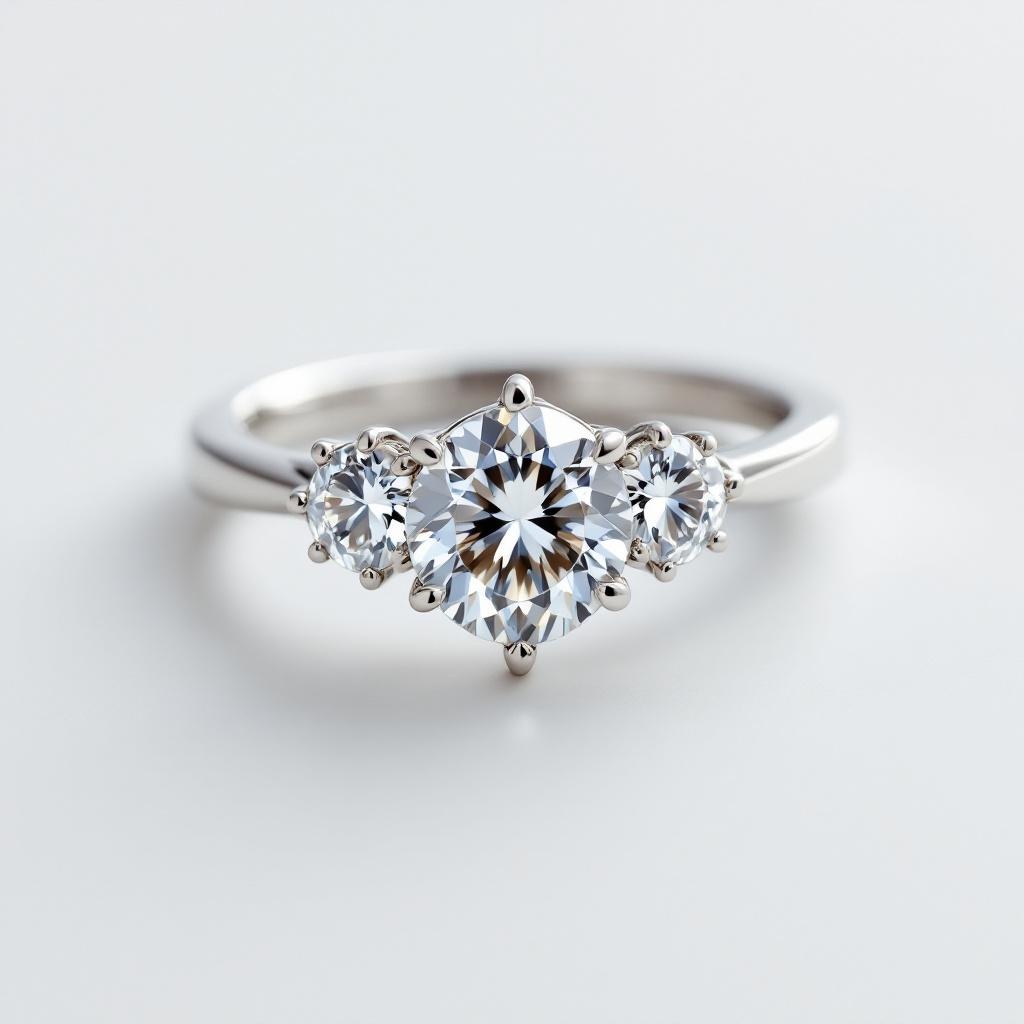
Lab-Grown Diamonds vs Natural Diamonds: An Ethical Comparison
Understanding how are Lab Grown Diamonds made helps you make informed ethical choices.
These stones form through two primary methods. High Pressure High Temperature (HPHT) simulates the extreme conditions deep within Earth's mantle where natural diamonds form, using pressures exceeding 5 GPa and temperatures above 1,500°C. Chemical Vapor Deposition (CVD) builds diamond layers atom-by-atom in controlled laboratory chambers at temperatures between 700-900°C, producing stones with the same crystal structure as mined diamonds.
How substantial is the environmental impact difference?
Mining one carat of natural diamond requires moving approximately 250 tons of earth, consumes massive amounts of water, and generates significant carbon emissions estimated at 57 kg of CO2 per carat. Lab-created diamonds require roughly 250 kilowatt-hours of energy—roughly the same as driving an electric car 750 miles—generating approximately 17 kg of CO2 equivalent per carat. While both methods have environmental footprints, lab-grown options consistently demonstrate lower overall impact.
Cost considerations favor lab-created stones significantly. Lab Grown Diamond engagement rings typically cost 30-40% less than natural diamond equivalents of comparable quality. A 1.5-carat round brilliant lab grown diamond graded F-VS1 that retails for $4,500 could cost $7,200 or more in mined form.
Worth every penny? For many, yes.
Value retention remains a consideration for investment-minded buyers. Natural diamonds have historically held value better than lab-created alternatives, with GIA-certified stones retaining approximately 50-60% of retail value. However, for couples purchasing diamonds for personal enjoyment rather than investment, the cost savings and ethical benefits typically outweigh value retention concerns.
Colored Lab Grown Diamonds represent an emerging trend in sustainable luxury. These stones occur when trace elements like nitrogen (producing yellow hues), boron (producing blue hues), or irradiation alter the crystal structure during formation. Available in pink, blue, yellow, and green hues, colored stones offer unique aesthetic options while maintaining ethical sourcing standards. Fancy-colored natural diamonds command astronomical prices—a 1-carat natural pink diamond can exceed $100,000—while their lab-created counterparts typically retail between $3,000-$5,000.
| Factor | Lab Grown Diamonds | Natural Diamonds |
|---|---|---|
| Environmental Impact | ~17 kg CO2/carat, 250 kWh energy | ~57 kg CO2/carat, 250 tons earth moved |
| Ethical Sourcing | Consistent, verifiable origin | Varies by Kimberley Process certification |
| Price (1ct equivalent) | $1,500-$5,000 (IGI/GCAL certified) | $4,000-$20,000+ (GIA certified) |
| Value Retention | Moderate (40-50% retail value) | Historically strong (50-60% retail value) |
| Color Options | All colors via CVD/HPT treatment | Limited, expensive for fancy colors |
What Defines a Truly Ethical Jewelry Brand
Diamond certification explained by experts involves understanding grading reports from recognized laboratories.
The Gemological Institute of America (GIA) established the standard grading system used worldwide, documenting the 4Cs—carat weight, cut quality, color grade, and clarity—along with any treatments or enhancements. Other reputable laboratories include the International Gemological Institute (IGI) and the Gemological Center of America (GCAL), both of which certify lab-grown stones with designations indicating laboratory origin.
The Kimberley Process Certification Scheme addresses conflict diamonds in natural stone markets. This international initiative requires participating countries to certify that rough diamond exports are conflict-free. However, critics note that the scheme's definition of "conflict-free" focuses narrowly on rebel movements, potentially overlooking other human rights concerns in mining regions. Lab-created diamonds sidestep this certification limitation because no mining is involved at all.
Does Fair Trade USA certification provide stronger guarantees?
Fair trade certifications extend beyond diamond-specific standards. Organizations like Fair Trade USA audit entire supply chains, examining worker treatment, environmental practices, and community impact. Reputable ethical jewelry brands hold multiple certifications demonstrating compliance across different ethical dimensions, including JVC (Jewelers Vigilance Committee) guidelines for responsible sourcing.
The Jewelers Vigilance Committee (JVC) provides guidelines specifically for the jewelry industry. Their ethical sourcing framework helps brands identify responsible suppliers, implement traceability systems using blockchain technology, and communicate their practices honestly to consumers. Brands following JVC guidelines demonstrate commitment to industry-leading ethical standards through third-party audits.
Looking at Lab Grown Diamond trends 2026, the industry shows continued growth and innovation. Consumer awareness has increased substantially, with major retailers including Signet and De Beers' Lightbox expanding their lab-created offerings. Technological improvements have reduced production costs while improving stone quality through advanced CVD chambers. Colored diamond varieties have expanded in pink, yellow, blue, and green, and manufacturing has become more energy-efficient as renewable energy sources become standard in laboratory settings.
Top Ethical Jewelry Brands for Certified Fair Trade Diamonds
StoneBridge Jewelry has established itself as a leader in ethical diamond sourcing.
Our commitment begins with mandatory certification for every stone we sell. Each lab-grown diamond over 0.5 carats includes documentation from IGI or GCAL confirming its laboratory origin with specific grading details. We publish detailed supplier information and third-party audit results on our website, allowing customers to verify every claim independently.
The wedding bands with Lab Grown Diamonds collection demonstrates how sustainable materials and ethical manufacturing create heirloom-quality pieces. We use recycled 14K white gold, 18K yellow gold, and 950 platinum in all our settings, and our production facilities maintain strict environmental standards compliant with SCS Global Services sustainability certifications. Every piece undergoes quality inspection before shipping, backed by our lifetime manufacturer warranty.
Comparing leading ethical diamond retailers reveals common themes and important differences.
StoneBridge Jewelry excels in transparency and customer education. Our ring builder tool helps couples design custom pieces using cathedral settings, pave bands, or solitaire designs while explaining every material choice. Customer satisfaction ratings consistently exceed 4.8 stars, and our jewelry experts provide free consultations for complex questions about 4Cs grading and ethical sourcing documentation.
Clean Origin focuses exclusively on lab-created diamonds, offering competitive pricing and solid IGI certification documentation for stones ranging from 0.5ct to 3ct. Their streamlined approach works well for budget-conscious shoppers seeking straightforward ethical options with G-H color grades and VS1-VS2 clarity.
Brilliant Earth leads in supply chain traceability, using blockchain technology to track diamond origins from CVD or HPHT laboratory through final setting. Their pricing reflects premium positioning starting at $2,000 for 1ct stones, but their documentation standards including GCAL certification set industry benchmarks for transparency.
James Allen (owned by Signet) offers virtual try-on technology and extensive inventory exceeding 200,000 diamonds, though their ethical positioning varies across different product lines with some natural diamond emphasis.
Premium ethical brands distinguish themselves through warranty coverage and customer service.
StoneBridge provides complimentary cleaning and inspection for life using ultrasonic and steam cleaning methods, while some competitors limit coverage to one year or prohibit professional cleaning services. Our ethical jewelry experts are available seven days weekly for questions about care, sizing, or design modifications.
Lab Grown Diamond Buying Guide: Making Your Selection
Best diamond shapes for engagement rings depend on lifestyle, budget, and personal preference.
Round brilliants remain the most popular choice at approximately 60% of all diamond sales, offering maximum light return with Ideal cut proportions including 53-58% depth and 58-62.5% table. However, fancy shapes like oval, pear, and emerald cuts often provide better value per carat while appearing larger on the finger due to elongated proportions.
Oval diamonds have surged in popularity. They create an elegant elongated effect that flatters most hand shapes, typically using 1.4-1.5 length-to-width ratios for optimal appearance. Emerald cuts offer Art Deco appeal with their step-cut faceting pattern featuring concentric rectangular facets. Pear-shaped stones combine round and marquise elements, working beautifully in pendant settings or three-stone engagement ring designs with side stones.
What should you prioritize when selecting a Lab Grown Diamond engagement ring?
Cut quality above all other factors. A well-cut diamond with Excellent or Very Good cut grades from GIA or IGI reports will outshine a poorly-cut stone with better specifications. Look for crown angles between 33-36 degrees, pavilion angles of 40.6-41 degrees, and girdle thicknesses of thin to medium for optimal light performance in round brilliants.
Understanding the 4Cs helps you allocate your budget effectively. For lab-created stones, color and clarity differences are less apparent than in natural diamonds due to controlled growth processes. Consider prioritizing carat weight within your budget, as size difference is immediately visible while subtle grading variations require 10x magnification. Many couples find that VS1-VS2 clarity and G-H color provide excellent appearance without premium pricing, avoiding the unnecessary cost of D-F grades.
Budget allocation for wedding bands with Lab Grown Diamonds deserves careful consideration. Industry data suggests allocating 50-60% of your total diamond budget to the engagement ring featuring the center stone, leaving 40-50% for the wedding band and anniversary pieces. Matching metals—14K white gold, 18K yellow gold, or 950 platinum—and design elements create cohesive sets, though many couples prefer contrasting styles like pairing a pavé engagement ring with a simple comfort-fit wedding band.
Matching Bands and Anniversary Options
Couple rings symbolizing matching commitment have evolved beyond identical designs.
Modern couples often choose coordinated pieces that share metal type or design elements without being identical. StoneBridge's collection includes wedding ring options in various widths (2mm comfort-fit, 4mm traditional, 6mm statement) and profiles, allowing each partner to select their preferred Comfort and Style while maintaining visual harmony in 14K or 18K precious metals.
An eternity band featuring diamonds around the entire band represents commitment and works beautifully for anniversaries or as wedding bands themselves. These pieces typically feature VS clarity melee diamonds (0.02-0.05 carats each) set in shared prong or channel settings. Anniversary ring designs often incorporate larger center stones or personalized engravings in fonts like Script or Block lettering. The choice between eternity band and anniversary ring depends on lifestyle factors—eternity bands catch on clothing more easily but offer maximum 360-degree sparkle.
One anniversary, a customer ordered a matching band for his wife without realizing she'd selected a delicate pavé setting that couldn't accommodate traditional soldered bands. The discovery came two weeks before their anniversary dinner. Our team redesigned a convertible ring that could slide over her engagement ring without permanent alteration—three stones on either side that would frame the center diamond. She cried when she opened the box. "It's perfect," she said. "It looks like they were always meant to be together."
Proposal ring etiquette has shifted considerably regarding lab-grown stones. Modern couples appreciate the ethical advantages and cost savings, with many proposal scenarios now specifically mentioning the sustainable choice. The 4Cs specifications matter more than origin, and partners increasingly value thoughtful choices over traditional expectations. A well-designed engagement ring featuring a 1.2ct F-VS1 lab-created diamond in a cathedral setting with pavé band conveys the same commitment as any mined stone alternative.
Caring for Your Ethical Diamond Jewelry
Learning how to care for Lab Grown Diamonds ensures your pieces maintain brilliance for decades.
Despite their exceptional hardness (10 on the Mohs scale), diamonds collect oils from skin contact and exposure to lotions or cosmetics. Regular cleaning prevents buildup that dulls sparkle, using appropriate methods based on your specific setting and metal type.
At-home cleaning works well for routine maintenance of most diamond jewelry set in 14K or 18K gold. Mix warm water with mild dish soap, soak the piece for 15-20 minutes, then brush gently with a soft toothbrush, paying attention to the back of the setting where debris accumulates. Rinse thoroughly and dry with a lint-free cloth. For lab-grown diamonds specifically, ultrasonic cleaners are safe when using low-frequency vibrations, and steam cleaners effectively remove embedded oils without risk to the stone or metal setting. Avoid harsh chemicals including chlorine bleach, which can damage gold alloys.
Professional cleaning every six to twelve months keeps settings secure and stones brilliant.
At StoneBridge, we offer complimentary cleaning and inspection for all purchases. Our gemologists check prong security on pavé and channel settings, shank condition for signs of thinning, and overall integrity during each service visit. We recommend removing rings during activities involving chemicals, impact risk, or extreme temperature changes.
Safe storage prevents damage between wearings. Keep diamond pieces separate from other jewelry to avoid scratching softer gems. Fabric-lined jewelry boxes with individual compartments provide ideal protection. Store pieces loose rather than tangled to prevent scratches between contact points. Consider removing rings during swimming (chlorine exposure), exercise (impact risk), and household cleaning (chemical exposure).
Warranty and repair services from ethical jewelry brands protect your investment long-term. StoneBridge's lifetime manufacturer warranty covers manufacturing defects including prong retipping, stone tightening, and material flaws. Our service team handles resizing (up to 2 sizes for standard rings), prong tightening, and restoration work at reasonable rates. Always verify warranty terms before purchase, as coverage varies dramatically across retailers ranging from limited one-year policies to comprehensive lifetime coverage.
Lab Grown Diamonds vs Moissanite: Making the Right Choice
Moissanite and Lab Grown Diamonds differ significantly despite similar visual appearance.
Moissanite is a silicon carbide crystal discovered in meteorite fragments, now produced synthetically for jewelry through the Lely Process. Diamond is pure carbon with a face-centered cubic crystal structure. These differences in atomic composition affect durability, optical properties, and appearance under various lighting conditions.
The most noticeable difference involves refractive properties. Moissanite displays strong fire (colored light separation) with a refractive index of 2.65, creating rainbow flashes especially in direct sunlight. Diamonds show less fire with a refractive index of 2.42 but more brilliance (white light return). Moissanite exhibits double refraction through the table, which can appear as facet doubling visible under magnification—a key identification characteristic.
Durability comparisons favor diamond slightly for long-term wear. While moissanite scores 9.25 on the Mohs scale and diamond scores 10, both materials perform excellently for everyday wear in engagement rings. Diamond's superior hardness provides better scratch resistance for pavé settings with melee stones, though moissanite handles normal impact reasonably well without chipping or fracturing under standard use conditions.
Ethical purchasing alignment depends on your priorities. Lab Grown Diamonds eliminate mining concerns while moissanite production uses approximately 25-30% less energy per carat than diamond production. Both options avoid conflict minerals, but diamond certification through GIA, IGI, or GCAL laboratories provides more standardized documentation than moissanite grading, which varies between suppliers. For couples prioritizing gemological authenticity, documented 4Cs grading, and certified ethical sourcing, lab-created diamonds offer clearer verification advantages with comprehensive laboratory reports.
Celebrity Influence: Celebrity Lab Grown Engagement Rings Setting Trends
High-profile couples have embraced Ethical Engagement Rings, normalizing lab-created stones for mainstream audiences.
Notable celebrity lab grown engagement rings include pieces chosen by performers, athletes, and public figures who specifically cited sustainability as a purchasing factor. These selections carry significant cultural weight, particularly for millennials and Gen Z demographics researching ethical alternatives online.
Celebrity selections influence consumer preferences through social media visibility and press coverage. When public figures share their engagement ring photos, millions of potential buyers consider similar options featuring comparable shapes, settings, and diamond specifications. Lab-grown diamonds benefit from this exposure because their lower cost allows celebrity-quality styling at accessible price points—achieving 2-3 carat center stones that would cost $50,000+ in mined form for under $6,000.
Trending celebrity-inspired designs include large oval stones in delicate cathedral settings with pavé bands, colorful fancy yellow diamonds reminiscent of classic Hollywood glamour requiring HTS treatment, and vintage-inspired halo configurations featuring micro-pavé accent stones. These styles appear frequently in StoneBridge's most popular designs, adapted for everyday budgets while maintaining aesthetic appeal with specifications like 1.5-2ct center stones in G-H color grades.
Affordable versions of trending designs make style accessible without compromising ethical standards.
A celebrity-inspired Oval Engagement Ring featuring a 2-carat lab-created center stone in an H-VS1 grade with halo setting retails under $5,000 at StoneBridge compared to $50,000+ for mined equivalents. Couples can achieve aspirational aesthetics while making responsible purchasing decisions, using savings to fund honeymoon travel, home purchases, or other shared priorities.
Our Expert Recommendation: The Best Ethical Diamond Choice
After extensive review of ethical jewelry brands and certified fair trade diamonds, clear patterns emerge for different buyer priorities.
Lab-created diamonds consistently outperform natural stones on ethical metrics when supply chain documentation is properly verified through IGI, GCAL, or GIA certification. For most couples, lab-grown certified diamonds represent the most responsible choice available. The combination of documented origin from verified CVD or HPHT laboratories, lower environmental impact (approximately 17 kg CO2 per carat versus 57 kg for mined equivalents), and accessible pricing creates compelling advantages over natural alternatives requiring Kimberley Process documentation.
StoneBridge Jewelry recommends considering several factors when making your selection:
For couples prioritizing maximum value: A 1.5-carat oval lab diamond in G color and VS2 clarity offers exceptional size and appearance at approximately $2,800 for the stone alone from IGI-certified inventory. Pair with a simple 950 platinum cathedral setting for timeless elegance under $4,500 total including setting and labor.
For style-conscious buyers: Colored Lab Grown Diamonds in fancy yellow or pink provide unique visual impact at reasonable prices through CVD treatment processes. A 1-carat cushion-cut pink lab diamond graded Fancy Intense Pink by GCAL that would cost six figures in nature retails for approximately $3,200 at StoneBridge, set in an 18K rose gold floral-inspired mounting.
For traditional preferences: Round brilliant lab-created diamonds in F-G color and VS1-VS2 clarity deliver classic appearance with modern ethics. A 1-carat stone with GIA-graded Excellent cut proportions pairs beautifully with any setting style—solitaire, halo, or three-stone—and typically retails between $2,200 and $3,500 depending on certification and vendor.
Featured Recommendations with Direct Links
Our team has curated selections for common purchasing scenarios:
[Best Overall] 18K White Gold Classic Solitaire with IGI-Certified Lab Diamond — Timeless design meets verified ethical sourcing. This 1.2-carat round brilliant in H color and VS1 clarity with Good cut grade represents our most popular engagement ring configuration. The 18K white gold 4-prong cathedral setting provides secure stone protection while showcasing maximum light return. Explore our full collection in the engagement rings section.
[Best Value] 950 Platinum/Palladium Wedding Band Collection — Budget-friendly bands featuring lab-created VS clarity melee diamonds. These pieces prove that ethical sparkle doesn't require premium pricing. Browse our matching bands collection for coordinated sets in comfort-fit or traditional profiles.
[Best Unique] Colored Lab Diamond Statement Ring — Make a bold ethical statement with fancy colored center stones from our IGI-certified inventory. Our designers specialize in custom configurations using pink, yellow, or blue lab-created diamonds in cushion, radiant, or pear cuts. Discover options in our jewelry collection.
[Best Gift] Lab Diamond Pendant Necklace — Anniversary and milestone gifts featuring verified IGI or GCAL lab-created stones. Versatile designs work from casual 18K chain settings to formal platinum platinum bail configurations. Explore our necklace selection for gift inspiration featuring 0.5-1ct center stones.
For personalized guidance, our jewelry experts are available through our contact page to discuss your specific requirements, timeline, and budget constraints. Custom orders typically complete within 3-4 weeks, and rush options exist for shorter timelines including expedited shipping and express CAD design services.
Frequently Asked Questions
What is the difference between Lab Grown Diamonds and natural diamonds ethically?
Lab Grown Diamonds are created in controlled CVD or HPHT laboratory environments, eliminating concerns about conflict minerals and unethical mining practices associated with natural diamond extraction. Natural diamonds may carry risks related to labor practices and environmental impact, though certified fair trade natural diamonds do exist with proper Kimberley Process and Fair Trade USA documentation. Lab-created options consistently rank higher on ethical sourcing metrics because their production avoids mining entirely, with verifiable IGI or GCAL laboratory origin documentation.
How can I verify that my ethical jewelry brand is actually certified?
Look for specific certifications such as GIA, IGI, or GCAL grading reports documenting the 4Cs for individual stones. Reputable ethical jewelry brands should provide documentation about their supply chain, sustainability practices compliant with SCS Global Services standards, and fair trade partnerships. StoneBridge publishes third-party audit results and supplier information on our website, allowing customers to verify every claim before purchasing. Don't hesitate to ask brands directly for their certification documentation—legitimate ethical diamond jewelry companies will happily provide IGI or GCAL certificates showing laboratory origin.
Are Lab Grown Diamond engagement rings more affordable than natural diamonds?
Yes, Lab Grown Diamond engagement rings typically cost 30-40% less than natural diamond equivalents of comparable quality. A 1.5-carat lab-created engagement ring featuring a G-VS2 oval stone with IGI certification retails for approximately $4,500, compared to $7,200 or more for a GIA-certified mined equivalent. These savings allow couples to afford bigger center stones (2ct versus 1.5ct for equivalent budget), more elaborate settings featuring pavé halos or three-stone configurations, or allocate funds toward other wedding expenses or honeymoon travel.
Do ethical jewelry brands offer wedding rings with Lab Grown Diamonds that match engagement rings?
Most ethical jewelry brands, including StoneBridge, offer coordinated collections designed for couples seeking matching bands in matching metals (14K white gold, 18K yellow gold, or 950 platinum). These include wedding ring and marriage band options featuring IGI-certified melee diamonds that complement Lab Grown Diamond engagement rings in both style and ethical sourcing standards. Our ring builder tool helps couples create custom coordinated sets sharing metal types and design elements like shared prongs or channel settings.
What diamond shapes are most popular for Sustainable Engagement Rings in 2026?
Oval, emerald, and pear cuts remain trending for sustainable engagement rings due to their classic appeal and efficient use of rough diamond material during CVD growth. Colored Lab Grown Diamonds in cushion and radiant cuts are also gaining popularity as couples seek unique yet ethical alternatives to traditional colorless stones. Oval-Cut Lab Diamonds (typically 1.4-1.5 L/W ratio) appear frequently in celebrity engagement ring photos, influencing consumer preferences toward elongated shapes that appear larger on the finger.
What's involved in caring for Lab Grown Diamond jewelry?
Regular cleaning keeps your stones brilliant. For lab-grown diamonds in gold settings, use warm water with mild dish soap, soak for 15-20 minutes, then brush gently with a soft toothbrush. Ultrasonic cleaners are safe for lab-grown diamonds set in solid metal mountings, and steam cleaners effectively remove embedded oils. Professional cleaning every six to twelve months checks prong security for pavé settings and overall integrity. Store pieces separately in fabric-lined compartments to avoid scratching softer gems.
What makes wedding bands with lab grown diamonds a good choice for couples?
Wedding bands with lab grown diamonds offer the same beauty and durability as natural stone alternatives while maintaining ethical sourcing standards with IGI or GCAL certification. These bands typically cost 30-40% less, allowing couples to allocate budget toward other wedding expenses or choose more elaborate designs featuring pavé detailing or larger melee stones. Lab-created VS clarity melee diamonds (0.02-0.05 carats each) used in wedding bands provide sparkle without compromising environmental or ethical values.
Are colored lab grown diamonds a good alternative to natural fancy colored diamonds?
Colored lab grown diamonds offer stunning alternatives to natural fancy colored diamonds at a fraction of the cost through trace element introduction during CVD growth processes. Pink hues result from nitrogen aggregation, blue from boron doping, and yellow from nitrogen content. A 1-carat natural pink diamond graded Fancy Vivid Pink by GIA can cost over $100,000, while its GCAL-certified lab-created counterpart in Fancy Intense Pink retails for approximately $3,000-$5,000. These unique pieces appeal to couples seeking distinctive, personalized jewelry reflecting individual style without astronomical price tags.
Choosing ethical jewelry brands offering certified fair trade diamonds represents one of the most meaningful decisions couples can make when planning their engagement. The combination of documented ethical sourcing, environmental responsibility, and accessible pricing makes lab-created diamonds the clear choice for modern couples prioritizing both beauty and values. StoneBridge Jewelry stands ready to help you find the perfect certified fair trade diamonds that reflect your commitment to each other and to a more sustainable future.