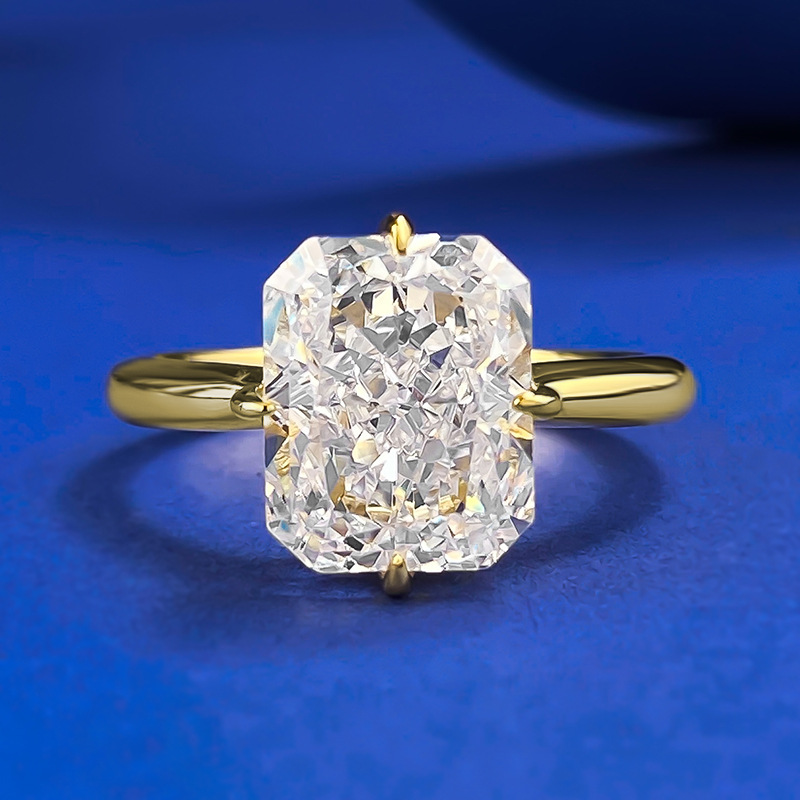
Emerald Engagement Ring Carat Cost: A Buyer’s Guide to Size, Price, and Value
What Emerald Engagement Ring Carat Cost Really Means
Emerald engagement ring carat cost is one of the first things shoppers check, and for good reason. The price can change quickly once you move from a 1 carat stone to a 2 carat or 3 carat diamond.
Carat weight only tells part of the story. A 1.90 carat emerald-cut diamond can cost less than a 2.00 carat stone, and it may look nearly the same on the hand if the measurements are strong.
There’s also a common mix-up to clear up early. Some shoppers mean a green emerald gemstone ring, while others mean an emerald-cut diamond engagement ring. This guide focuses on emerald-cut lab-grown diamond engagement rings.
That distinction matters because emerald cuts show shape, clarity, and proportion more openly than many other diamond styles. The best emerald engagement ring carat cost is not always the lowest price. It’s the price that gives you a clean-looking diamond, the right visual size, and a setting built for long-term wear.
StoneBridge Jewelry works with lab-grown diamonds, so shoppers can often choose a larger center stone, a better clarity grade, or a stronger setting without pushing the budget too far. If you’re weighing size against beauty, start by looking at the full ring rather than the carat number alone.
What Changes Emerald Engagement Ring Carat Cost?
Emerald engagement ring carat cost depends on more than the weight shown on the grading report. The final price reflects the diamond, metal, setting, craftsmanship, and overall finish.
Carat weight still plays a major role, especially around popular markers like 1 carat, 1.5 carats, 2 carats, and 3 carats. Prices often rise near those round numbers because many buyers search for them first.
Carat vs. Face-Up Size
Carat measures weight, not visual spread. That matters with emerald cuts because their elongated shape can look larger on the finger than a round diamond of the same weight.
A length-to-width ratio around 1.30 feels balanced and classic. Ratios between 1.40 and 1.50 create a longer, slimmer look. Two diamonds with the same carat weight can wear very differently, so millimeter measurements deserve as much attention as the carat number.
For example, one 2 carat emerald cut may measure close to 8.5 by 6.0 mm, while another may face up closer to 8.1 by 5.8 mm depending on depth and proportions. Both can be accurately graded as 2 carats, but the first may look more substantial on the hand. A very deep emerald cut can hide weight in the pavilion, which raises cost without giving the buyer much extra visual size.
Why Clarity Matters More in Emerald Cuts
Emerald cuts have broad, open facets. GIA notes that clarity grading considers the size, number, position, and visibility of internal features. In plain terms, inclusions are easier to see in this shape than in a round brilliant diamond.
GIA uses an 11-grade clarity scale, from Flawless to Included. For emerald-cut diamonds, many shoppers aim for eye-clean stones in the VS1 to VVS2 range, though a carefully selected VS2 can still be a smart buy.
When comparing clarity, pay attention to where the inclusion sits. A small feather near the edge may be less noticeable than a dark crystal under the center table. Emerald cuts do not have the same intense sparkle pattern that can disguise inclusions in brilliant cuts, so a close video, magnified image, or expert review is useful before you commit.
Lab-Grown Diamonds Change the Value Equation
Lab-grown diamonds usually cost less per carat than mined diamonds with similar grades. That can make emerald engagement ring carat cost more flexible.
Rather than settling for a smaller stone, buyers may move up in size, improve clarity, or choose a more detailed setting. At StoneBridge Jewelry, many customers compare options between 1.5 and 2.5 carats because that range often gives a strong mix of presence and price.
Cut Quality, Polish, and Symmetry
Emerald-cut diamonds are step cuts, so the cut quality is judged differently than a round brilliant. Many grading reports do not assign an overall cut grade to emerald cuts, which makes the details even more important.
Look for excellent or very good polish and symmetry whenever possible. Strong symmetry helps the parallel facets create the clean “hall of mirrors” look emerald cuts are known for. If the facets look uneven, the diamond may appear dull or glassy even with a high color and clarity grade.
Table and depth percentages also affect value. There is no single perfect number for every emerald cut, but many attractive stones fall roughly in the mid-60% range for depth and table. Extremely shallow stones may look washed out, while overly deep stones may look smaller than their carat weight suggests.
Emerald Engagement Ring Carat Cost by Size
Emerald engagement ring carat cost by size should always be viewed as a range. Two rings with the same carat weight can land at very different price points depending on color, clarity, certification, metal, and setting style.
Here’s a simple way to think about the main size bands:
| Carat Range | What It Feels Like | Value Focus |
|---|---|---|
| 1.00 to 1.49 carats | Slim, elegant, easy to wear | Color and clarity upgrades |
| 1.50 to 1.99 carats | Noticeable without feeling oversized | Strong spread and eye-clean clarity |
| 2.00 to 2.99 carats | Popular luxury range | Certification and balanced proportions |
| 3.00 to 3.99 carats | Bold, high-impact look | Secure setting and careful review |
| 4.00 carats and up | Statement piece | Custom design and expert guidance |
For a side-by-side look, you can explore our engagement rings and compare emerald-cut styles by size and setting.
Typical Price Ranges to Expect
Exact prices change with diamond availability, metal market pricing, and setting details, but practical ranges can help you plan. A lab-grown emerald-Cut Engagement Ring around 1 carat may often fall in the low four figures when set in a simple 14k gold solitaire. A 1.5 carat ring commonly moves higher depending on clarity and color, especially if the stone is G color or better and VS clarity or better.
For many shoppers, 2 carat lab-grown emerald engagement rings are where the budget starts to vary more widely. A simple 2 carat solitaire may cost far less than a 2 carat ring with a platinum setting, pavé band, hidden halo, and high-clarity center stone. In the 3 carat and 4 carat ranges, the spread between an average stone and a carefully selected stone becomes more noticeable because clarity, measurements, and proportion issues are easier to see.
As a planning guideline, set aside part of the budget for the setting instead of spending everything on the center diamond. A durable, well-made setting can add several hundred to several thousand dollars depending on metal and design. That cost is not just decorative; it affects security, comfort, and how the ring holds up over years of daily wear.
1 Carat to 1.5 Carat Emerald Engagement Rings
This range works well for daily wear, minimal settings, and buyers who care more about refinement than maximum size. A well-cut emerald shape can still look substantial because the corners are trimmed and the outline is clean.
In this price band, emerald engagement ring carat cost often leaves room for a better metal choice or a cleaner clarity grade. Many shoppers like a solitaire because it keeps the diamond front and center. For a little extra sparkle, a hidden halo can add lift without changing the overall feel too much.
If your budget is fixed, compare a 1.25 carat diamond with stronger clarity against a 1.50 carat diamond with lower clarity. In emerald cuts, the cleaner 1.25 carat stone may look more refined, especially in close-up viewing. This is also a strong range for buyers who want platinum, since the smaller center stone may leave enough room in the budget for a more premium metal.
2 Carat to 3 Carat Emerald Engagement Rings
This is the sweet spot for many buyers. The ring has real presence, the shape reads clearly from across the room, and the price can still make sense with a lab-grown stone.
A 2 carat emerald cut often looks elegant on most hands, but clarity deserves closer attention as the stone gets larger. Small inclusions that may hide in a smaller diamond can show more easily in this shape. For strong value, look closely at VS1, VVS2, and carefully screened VS2 stones.
In this size range, the setting should be chosen with stability in mind. A very thin band may look delicate in photos, but it may not balance a longer emerald cut well. A band around 1.8 mm to 2.2 mm can still look refined while giving the ring more structure. If you choose pavé, ask how the accent stones are secured and whether the design allows future resizing.
4 Carat and Larger Emerald Engagement Rings
A 4 carat emerald-cut ring makes a clear statement. It draws attention right away, so the setting needs to support both the size and the shape.
At this size, emerald engagement ring carat cost reflects more than weight. It also reflects the need for secure prongs, strong metal, and a design that protects the corners. A bezel, reinforced prongs, or a custom three-stone layout can be worth the added cost.
Larger emerald cuts also magnify proportion issues. A stone that is too deep may feel expensive without looking as large as expected, while a stone with an overly wide table can look flat. For 4 carats and above, request exact measurements, certification details, and clear imagery before finalizing the ring. A custom design consultation is often the safest route because the mounting should be built around the exact dimensions of the diamond.
How to Compare Emerald Engagement Ring Carat Cost and Value
Emerald engagement ring carat cost only makes sense when you compare the full ring, not just the loose diamond. The center stone matters, but so do certification, metal, setting style, and craftsmanship.
Start with the grading report. IGI and GIA reports show the diamond’s measurements, carat weight, color, clarity, polish, and symmetry. That gives you a cleaner way to compare one stone with another instead of relying on photos alone.
Check These Details First
- Confirm the diamond is certified by IGI or GIA.
- Review the exact millimeter measurements.
- Compare the color and clarity grade in the metal you want.
- Look at the length-to-width ratio.
- Decide if you want a solitaire, halo, pavé, bezel, or three-stone setting.
- Check how the corners are protected.
- Compare the full ring price, not only the diamond price.
The same carat weight can tell a very different story depending on the setting. A solitaire is usually the most budget-friendly option and keeps the look clean. A pavé band adds sparkle and usually increases the price. A three-stone ring can cost more as well, but it often makes the center diamond feel larger.
You can also browse lab-grown diamonds if you want to compare loose stones before choosing a setting, or use our ring builder to see how different choices affect the final price.
Color and Clarity Choices That Make Sense
For emerald cuts, clarity usually deserves more attention than color. The open table can reveal inclusions sooner, so an eye-clean stone is often the better buy.
Color choice depends on the metal. G or H color can look crisp in many settings, while I color may work nicely in yellow or rose gold. Platinum and white gold tend to show diamond color more clearly, so some buyers choose a higher color grade for those metals.
If you want a bright white look in platinum or 14k white gold, D through G color is a conservative choice. If you want the best price-to-appearance balance, G or H color is often a practical target. For yellow gold or rose gold, H or I color can be attractive because the warm metal softens the diamond’s body color. The goal is not to buy the highest grade on paper; it is to choose a grade that looks right in the finished ring.
Certifications and Diamond Specs to Request
A grading report should match the exact diamond being sold, including carat weight, measurements, color, clarity, and report number. For lab-grown diamonds, the report should clearly identify the stone as laboratory-grown. IGI reports are common in the lab-grown market, while GIA reports are also respected and widely recognized.
Beyond the report, ask for practical viewing details when available. A high-quality video can show whether the diamond has a pleasing step-cut pattern, whether the center looks lively, and whether inclusions are visible without magnification. For emerald cuts, a still image can hide issues that video reveals, such as a dark center, uneven reflections, or a watery appearance.
Also confirm whether the diamond has any treatments or post-growth processes noted on the report. Many lab-grown diamonds are excellent choices, but transparency matters. A clear certification trail makes it easier to insure the ring, compare value, and feel confident about what you are buying.
Setting Styles That Change the Price
A plain solitaire often gives the best value per dollar. It puts the center diamond first and keeps the design simple.
Hidden halos, pavé bands, and three-stone designs add more sparkle and more labor. They also raise emerald engagement ring carat cost because you’re paying for accent stones and extra craftsmanship. If you want a ring that feels more custom, that added cost may make sense.
A bezel setting can cost more than a simple prong setting, but it gives strong edge protection and a sleek modern look. Four-prong settings show more of the diamond, while double claw prongs can add security and a refined finish. Three-stone emerald rings often use tapered baguettes, trapezoids, or smaller emerald cuts as side stones; these designs can be beautiful, but matching the side stones well requires careful selection.
Metal Choices and Long-Term Wear
Metal choice affects both cost and maintenance. 14k gold is popular because it balances durability, color, and price. 18k gold has a richer color because it contains more pure gold, but it can cost more and may feel slightly softer in daily wear. Platinum is dense, naturally white, and highly durable, though it usually raises the ring price.
White gold is typically plated with rhodium to create a bright white finish. Over time, that plating can wear and may need refreshing. Platinum does not require rhodium plating, but it develops a soft patina with wear. Yellow gold and rose gold can be flattering with warmer diamond color grades and may help stretch the budget without making the ring look compromised.
Budgeting for the Right Emerald Engagement Ring Carat Cost
A smart budget starts with the center stone, but it should also include the setting, metal, certification, accent stones, and any custom work.
If size matters most, lab-grown diamonds can stretch your budget farther. If you care more about a crisp, polished look, a slightly smaller stone with stronger clarity may be the better choice.
At StoneBridge Jewelry, our customers often focus on three things first: visible size, eye-clean clarity, and a setting that feels secure. That is usually where the best value shows up.
Where You Can Save
You can often save by choosing 14k gold instead of platinum, picking a solitaire, or staying just below a milestone weight. A 1.90 carat stone may give you nearly the same look as 2.00 carats while costing less.
You can also save by choosing a near-colorless grade if the ring is set in yellow or rose gold. Those metals can make a slightly lower color grade look warmer and more flattering.
Another useful strategy is to compare stones by measurement rather than weight. If a 2.20 carat diamond and a 2.40 carat diamond look nearly identical face-up, the lower-weight option may be the better buy. The same idea applies to accent details. A hidden halo may deliver enough extra sparkle without the higher price and maintenance of a full pavé band.
Where Not to Cut Corners
Don’t cut too much from clarity, certification, or setting strength. Emerald cuts show the inside of the stone more easily, so a low clarity grade can become obvious quickly.
The same is true for the setting. A beautiful diamond still needs strong prongs and good corner protection. If the ring feels loose or fragile, the bargain will not feel like one for long.
If you’re still deciding, see more fine jewelry for a broader look at StoneBridge styles, or check ring sizing tips Before You Order.
Common Buying Mistakes
One common mistake is choosing the highest carat weight the budget allows while ignoring the measurements. A heavier emerald cut that faces up small can be less satisfying than a lighter stone with better spread.
Another mistake is relying on clarity grade alone. Two VS2 emerald cuts can look very different if one has a visible dark inclusion under the table and the other has small, off-center inclusions. Always evaluate the stone’s appearance, not just the letters and numbers on the report.
Buyers also sometimes choose a setting that is too delicate for the center stone. Ultra-thin bands can be beautiful, but larger emerald cuts need enough metal to remain stable. Finally, do not forget practical details such as resizing limits, warranty terms, shipping insurance, and return windows before placing an order.
Wearability, Sizing, and Care
A ring should look beautiful and feel comfortable. Bigger stones sit differently on the hand, so a 3 carat emerald cut may feel much bolder than a 1.5 carat ring, even if both have clean lines.
Finger size matters too. The same diamond can look dramatic on a smaller hand and more understated on a larger one. Band width, setting height, and the overall profile all affect how the ring wears every day.
Keep It Comfortable
If the wearer is active, a lower-profile setting may be the better choice. It tends to snag less and can feel more secure. A higher setting gives more drama, but it can catch on clothing.
For larger stones, a slightly wider band can help the ring feel more stable. It’s a small detail, but it makes a difference once the ring is worn every day.
Think about wedding band pairing as well. Some emerald-cut engagement rings sit flush with a straight wedding band, while others require a contoured or open band. A low basket or decorative gallery can be beautiful, but it may create a gap next to the wedding band. If a flush stack matters, review the side profile before ordering.
Ring Sizing Details to Check
Accurate sizing protects both comfort and security. A top-heavy emerald engagement ring that is slightly too loose may spin on the finger, especially in cold weather. A ring that is too tight can be uncomfortable and may be harder to remove after exercise, travel, or warm weather.
If the design includes diamonds around most or all of the band, resizing may be limited. Plain solitaires and simple bands are usually easier to resize than full eternity or intricate pavé settings. If you are between sizes, ask whether sizing beads, a slightly wider band, or a future resize would be the better solution for the specific setting.
Care That Protects the Ring
Clean the ring with warm water, mild soap, and a soft brush. Rinse well and dry with a lint-free cloth.
Schedule prong checks, especially if the ring has a large center stone or pavé details. Store it in a separate pouch or box so the metal does not rub against other jewelry. Those habits help protect both the look and the value of the ring.
Remove the ring for heavy lifting, swimming, gardening, and cleaning with harsh chemicals. Chlorine can be hard on certain metals, and everyday knocks can loosen prongs over time. Lab-grown diamonds are durable, but the ring is still a piece of fine jewelry with small metal components that need care.
Shipping, Returns, and Insurance Questions
Before buying, review the store’s shipping and return policies with the same care you give the diamond specs. Engagement rings should ship securely, with tracking and appropriate insurance while in transit. Signature requirements are common for fine jewelry and help protect the purchase.
Return and exchange windows matter because a ring can look different in person than it does on a screen. Check whether custom designs, engraved rings, resized rings, or special-order diamonds are returnable. If you are planning a proposal date, allow extra time for production, quality inspection, shipping, and any adjustment that may be needed.
Insurance is also worth arranging soon after purchase. Keep the receipt, grading report, and any appraisal documents in a safe place. An insurance policy can help protect against loss, theft, or damage, and the documentation will make the process easier if you ever need to file a claim.
Shop Emerald Engagement Rings with Confidence
Emerald engagement ring carat cost depends on size, clarity, color, setting, and the value you get from the diamond itself. Bigger is not always better. A well-cut, certified emerald diamond with the right proportions will usually feel better to wear than a larger stone that looks unbalanced.
StoneBridge Jewelry makes it easier to compare emerald-cut lab-grown diamond rings by carat, metal, and setting style, so you are not relying on a number alone.
For most buyers, the best place to focus is eye-clean clarity, strong face-up size, and a setting that fits real life. Those three details do more for long-term happiness than chasing the biggest carat you can afford.
Ready to Find the Right Fit? Browse the collection, compare options, and choose the ring that gives you the best balance of beauty, price, and wearability.
Ready to Find Your Perfect Diamond?
Explore our collection of certified lab-grown diamonds
Shop Diamonds