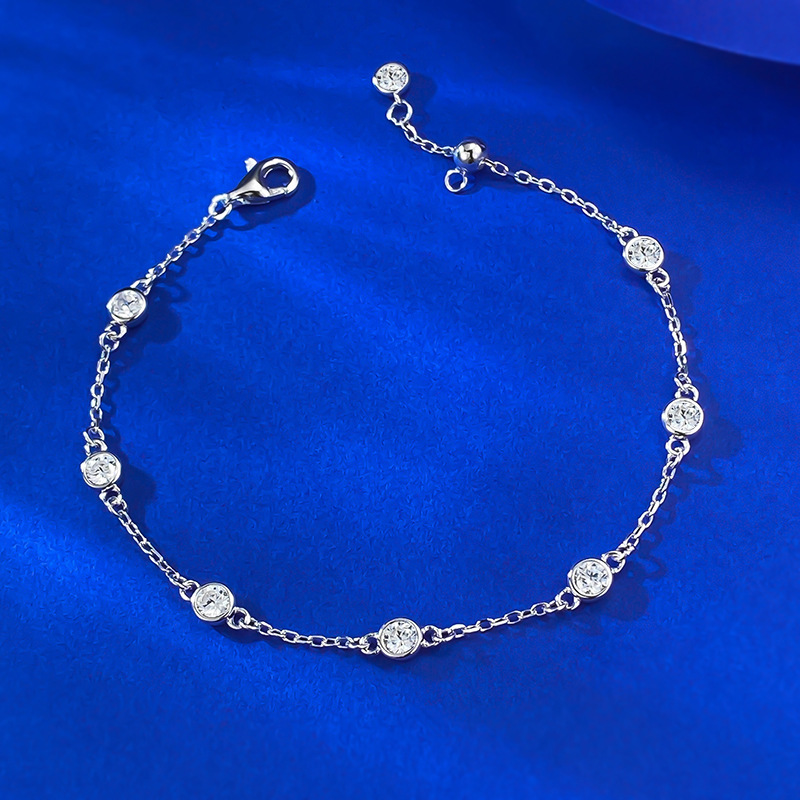
Diamond Tennis Bracelet Clasp: Box vs Hidden Styles
A Diamond Tennis Bracelet clasp affects more than how the bracelet closes. It changes how secure the piece feels, how easy it is to wear, and how polished it looks on the wrist.
For a bracelet that may carry several stones and a meaningful budget, the closure is part of the buy, not a tiny detail. Why own a beautiful bracelet if you do not trust the clasp?
Most shoppers narrow the field to two styles: the box clasp with a safety latch and the hidden clasp with extra security. Both can work, but they fit different habits.
If you're comparing bracelets in our jewelry collection, start with the clasp before you get lost in stone count or metal color. A strong diamond choice helps, and our lab-grown diamonds give you another clean place to compare quality.
Diamond Tennis Bracelet Clasp: What Matters Most
The first question is simple: will you trust it? A good Diamond Tennis Bracelet clasp should close with a firm snap, sit close to the wrist, and stay easy to inspect.
Security, comfort, and appearance are the three things that matter most. If one of them is weak, the bracelet feels unfinished.
GIA and IGI grade the diamonds, not the clasp. That means you should judge the stones and the hardware separately.
A safety latch adds a second barrier, so the bracelet has two points of protection instead of one. That small detail matters more on a piece you plan to wear often.
Beyond the lock itself, the overall bracelet construction affects how well the clasp performs. A delicate clasp on a very heavy bracelet will wear faster than one that is properly matched to the piece's weight and flexibility. When you shop, ask how the clasp is attached, whether the end links are reinforced, and whether the bracelet has enough movement to sit flat without twisting the closure out of alignment. These details are not glamorous, but they are exactly what make a tennis bracelet pleasant to live with.
Diamond quality still matters even when the clasp is the focus
Do not let the hardware conversation distract you from the diamonds. For a Diamond Tennis Bracelet, the stones should look well matched in size, color, and brightness across the full line. In most bracelets, buyers look for a minimum of near-colorless grades such as G-H or better, especially in white gold and platinum where subtle body color is easier to notice. Clarity can often be slightly more forgiving in small melee stones, but visible black spots or heavily included stones are a poor value at any size.
In addition, make sure the bracelet has a believable carat total weight for the price. A 2.00 ct. tennis bracelet will look very different from a 5.00 ct. piece, and the clasp should feel scaled to the overall heft. If the price seems unusually low, check whether the stones are lower color, smaller than expected, or set in a lightweight construction that may not wear well over time.
Box Clasp with Safety Latch
A box clasp uses a tongue-and-box mechanism. The tongue slides in, then locks, and the safety latch helps keep it shut if the main lock loosens.
This is the style most buyers picture when they think of a traditional Diamond Tennis Bracelet clasp. It feels sturdy in the hand and familiar on the wrist.
Shoppers who wear tennis bracelets three or four days a week usually like this style best. They can fasten it without fuss and check it quickly before heading out.
It is also easier for a jeweler to inspect or repair. If the tongue wears down, service is usually straightforward.
The tradeoff is visibility. You will see the hardware more than you would with a hidden closure, and that may matter if you want a dressier line.
Another advantage is predictability. A box clasp has a straightforward mechanical structure, so when you ask for a quality check, a jeweler can usually see wear points quickly. The tongue should slide in cleanly, the latch should click without forcing, and the safety catch should close with enough tension that it does not flutter open on its own. When those three things are working together, the clasp tends to age better than more decorative systems.
What to look for in a good box clasp
Not every box clasp is built equally. Look for crisp alignment between the tongue and box, a latch that moves without grinding, and a safety arm that sits flush rather than sticking up awkwardly. The clasp should also feel balanced against the bracelet. If it seems bulky compared with the rest of the design, it may be a lower-grade component or one that has been oversized to compensate for weak construction elsewhere.
If possible, inspect the underside of the clasp with a loupe or ask the seller for a macro photo. You want clean finishing, no visible gaps, and no deformation where the parts meet. On a new bracelet, the closure should not look scratched, bent, or polished thin from the start.
Hidden Clasp with Extra Security
A hidden clasp is built to blend into the bracelet, so your eye stays on the diamonds. On the wrist, the closure can look nearly invisible.
That gives the bracelet a more formal feel. It suits gift pieces, evening wear, and buyers who care a lot about the line of stones.
A hidden Diamond Tennis Bracelet clasp can be a lovely choice, but it can also be trickier to locate and fasten. If you wear the bracelet often, that extra step can get old.
Maintenance can take more care as well, especially if the mechanism sits inside a more complex setting. For occasional wear, that tradeoff is easy to accept.
The best hidden clasp is the one that still opens, closes, and inspects cleanly. Beauty only matters if the hardware supports the bracelet long term.
Because hidden closures depend on tighter engineering, they are more sensitive to wear, dirt, and rough handling. A small buildup of lotion, soap residue, or daily grime can make the clasp less smooth over time. If you choose this style, plan on periodic cleaning and a yearly check by a jeweler, especially if the bracelet is worn often or has a substantial total carat weight.
When hidden hardware makes sense
Hidden hardware is often best when the bracelet is intended as a statement piece. If the line of diamonds is the main attraction and the closure should disappear into the design, this style does that well. It can also be appealing for very narrow bracelets where a visible box clasp would interrupt the continuous look.
That said, hidden systems should still have a backup safeguard. Ask whether the clasp has a secondary latch or internal locking feature, and confirm how it releases. A closure that looks beautiful but feels confusing during fastening is not a luxury feature; it is an irritation.
Diamond Tennis Bracelet Clasp Comparison
The difference is practical, not abstract. A box clasp is easier to trust and service. A hidden clasp is better if you want the closure to disappear.
| Factor | Box Clasp with Safety Latch | Hidden Clasp with Extra Security |
|---|---|---|
| Security | Very strong, especially with a secondary latch | Strong, but depends more on exact engineering and upkeep |
| Ease of use | Straightforward and familiar | More discreet, but sometimes less intuitive |
| Visual appeal | Clean and classic | Nearly invisible and more refined |
| Durability | Easy to inspect and service | Can be excellent, but more complex to maintain |
| Comfort | Usually comfortable and low-profile | Can feel very sleek on dress pieces |
| Best for | Daily wear, travel, practical buyers | Formal wear, gifting, design-focused shoppers |
Price can shift too. More complex closures usually cost more to make and can take more time to repair.
That does not always change retail pricing, but it can change long-term ownership cost. A simple clasp often makes service easier later.
In the real market, the clasp rarely determines most of the retail price, but it can affect whether a bracelet feels underbuilt or well finished. On a modest bracelet in the $1,500 to $3,500 range, the closure should still be solid, but you may see simpler engineering. On mid-range pieces around $3,500 to $8,000, you should expect better finishing and a more secure lock. For higher-value bracelets above that range, especially those with larger total carat weights, a strong clasp and clean metalwork become essential rather than optional.
Diamond Specs That Pair Well with Each Clasp Style
Because the clasp works with the rest of the bracelet, diamond specifications should match the way you plan to wear it. For a daily bracelet with a box clasp, buyers often favor stones that offer good brightness without requiring top-tier color and clarity across every tiny diamond. For a more formal hidden-clasp bracelet, many shoppers prefer a tighter visual match in the diamonds so the bracelet reads as one continuous band.
If you're comparing lab-grown options, ask for the stone specs in writing. A good tennis bracelet listing should state total carat weight, individual stone size or average stone size, color grade, clarity grade, and metal type. If the piece uses round brilliant diamonds, look for consistent faceting and even spacing. If the stones vary too much in size, the bracelet can lose symmetry and the clasp may appear less integrated.
For natural diamonds, third-party grading reports are especially valuable for center stones and larger accent stones, though melee stones in tennis bracelets are often sold with parcel-level quality descriptions instead of separate certificates for each small stone. In that case, the seller's transparency matters. You want to know whether the bracelet is made with natural diamond melee, lab-grown melee, or a mix, and whether the quality has been checked stone by stone.
How to Choose the Right Diamond Tennis Bracelet Clasp
The right Diamond Tennis Bracelet clasp depends on how often you'll wear the bracelet, how much it weighs, and how much time you want to spend fastening it.
For daily wear
Choose security first. A box clasp with a safety latch is usually the most practical diamond Tennis Bracelet Clasp for regular use.
It is easier to inspect, easier to fasten, and better suited to repeated wear. A two-step closure gives you more peace of mind on busy days.
If you wear watches or stack the bracelet with other bangles, a box clasp is often easier to manage because the closure can be located and checked quickly. Daily wear also means more contact with clothing, desks, bags, and skincare products, so a closure you can visually confirm matters.
For special events
A hidden clasp can be the better visual choice. If the bracelet is for formal outfits or a gift presentation, the cleaner line can make the piece feel more elevated.
The best diamond tennis bracelet clasp for events still needs to open and close without a fight. A pretty closure that frustrates you is not a win.
If you want the bracelet to photograph beautifully or sit beneath a dress cuff without drawing attention, hidden hardware can be worth the added complexity. Just be realistic about how often you will actually use it outside of those occasions.
For travel and gifting
Pick the clasp that gives you the most confidence. Security matters more than subtlety when a bracelet is packed, unpacked, and worn in changing settings.
For gifts, think about the recipient's habits. If they wear bracelets often, a box clasp usually feels safer. If they care most about presentation, hidden hardware may feel more special.
Travel also raises a few practical concerns. A bracelet should come with a secure pouch or case, and the clasp should be easy to verify before and after wearing. If you're buying for a trip, avoid designs that are difficult to operate in low light or with one hand. That is when simple, reliable closures outperform fancy ones.
Metal and weight matter
Metal choice matters too. 14k gold is 58.3% pure gold, 18k is 75%, and platinum jewelry is often 95% platinum. Those numbers matter because the clasp and setting have to match the metal's wear profile.
Heavier bracelets place more stress on the closure. The more substantial the piece, the more valuable a strong diamond tennis bracelet clasp becomes.
A bracelet that weighs more needs hardware that feels proportionally secure. That is true whether you choose yellow gold, white gold, or platinum.
White gold is a common choice for diamond tennis bracelets because it gives the stones a bright, unified look, but it may need rhodium plating over time to keep the color crisp. Yellow gold is warmer and often pairs well with vintage-inspired settings or warmer skin tones. Platinum is the most durable premium option for many buyers because it resists metal loss better than white gold, though it can develop a soft patina that some people like and others prefer to polish away.
Quick checklist before you buy
- Does the clasp close with a firm, clean feel?
- Is there a secondary safety feature?
- Can you operate it without struggling?
- Does the hardware match the bracelet's weight?
- Can a jeweler service it easily if needed?
Also check whether the listing gives the bracelet length and a clear size guide. Tennis bracelets are usually sold in standard lengths like 6.5 inches or 7 inches, but the right fit depends on wrist shape and how much drape you want. A bracelet that is too loose can twist and put extra strain on the clasp, while one that is too tight may sit awkwardly and make fastening more difficult.
Sizing, Fit, and Bracelet Length
Fit affects clasp performance more than many shoppers realize. If a tennis bracelet is too tight, the closure may be under constant tension. If it is too loose, the clasp can roll underneath the wrist and get bumped or caught. The best fit usually allows a little movement without sliding over the hand.
As a general guide, many buyers choose a bracelet length that is about half an inch larger than their exact wrist measurement for a close fit, or about three-quarters of an inch larger for a slightly looser feel. Those are not fixed rules, but they are a useful starting point. If you like a snug fit, ask whether the bracelet can be adjusted by a jeweler. If you like movement, make sure the clasp still closes comfortably without requiring strain.
Linking sizing to clasp style is smart. Hidden clasps can be harder to fasten on a bracelet that barely fits, while box clasps are usually more forgiving. For a substantial bracelet, a well-sized band is part of safety, not just comfort.
Setting Style and Security Tradeoffs
The setting style around the diamonds also changes how secure the bracelet feels. Prong settings often show more metal around each stone and can create a classic, airy look. Bead or shared-prong settings may maximize sparkle by reducing visible metal, but they can require careful craftsmanship so the stones stay aligned and the edges do not snag.
For a tennis bracelet, the setting and clasp should work together. If the bracelet is made with a delicate shared-prong structure, the clasp should not feel like the only robust part of the design. If the bracelet has heavier bezels or more substantial links, the clasp should visually and structurally match that weight.
Ask whether the bracelet has full or partial security around the setting points, and inspect whether the underside is polished smooth. A bracelet with sharp edges or uneven metal can wear on clothing and make the clasp feel less refined. Good finishing is one of the clearest signs that the piece was made to last.
Price Ranges and What You Should Expect
Diamond Tennis Bracelet Prices vary widely based on total carat weight, diamond quality, metal, and clasp engineering. As a rough buying guide, a smaller lab-grown diamond tennis bracelet may start around $1,200 to $2,500, depending on metal and stone size. Mid-range pieces often land between $2,500 and $7,500. Larger or higher-end bracelets can move well beyond $10,000, especially if they use natural diamonds, platinum, or substantial carat weight.
If a price looks unusually low, check the clasp first. Some lower-cost bracelets save money on the closure, the metal thickness, or the finish on the underside. That does not always mean the bracelet is bad value, but it does mean you should inspect the whole build instead of focusing only on the sparkle. A slightly higher price can be worth it if the clasp feels sturdier and the bracelet has better long-term wear potential.
For shoppers comparing natural versus lab-grown diamonds, the clasp choice can stay the same, but the budget landscape changes. Lab-grown stones can allow you to buy a larger look for the same price point, which means the clasp and setting need to handle the added scale. Natural diamond bracelets may cost more for the same visible size, so buyers sometimes end up prioritizing craftsmanship and security even more because the total investment is higher.
Common Mistakes Buyers Make
One of the biggest mistakes is treating the clasp like an afterthought. Many buyers spend most of their time comparing carat weight and color, then discover that the closure is awkward, bulky, or hard to trust.
Another mistake is ignoring the bracelet's weight. A lightweight clasp on a heavy bracelet can wear out too soon. The hardware should be proportionate to the size of the piece, not just the style.
Buyers also sometimes overlook the cost of future maintenance. White gold may need replating. Hidden clasps may need more careful cleaning. Box clasps may need tightening or spring adjustments. None of that should scare you away, but it is useful to know Before You Buy.
Finally, people sometimes choose the prettiest option without testing the actual feel. A closure should be easy to understand, easy to fasten, and secure enough to wear with confidence. If a clasp needs a second guess, keep looking.
Care, Cleaning, and Storage
Bracelet care starts with keeping the clasp clean. Soap, lotion, hairspray, sunscreen, and body oils can all collect around the closure and make it feel less crisp over time. A soft brush, mild soap, and lukewarm water are usually enough for routine cleaning, followed by a lint-free cloth to dry the piece thoroughly.
Avoid ultrasonic cleaners if the bracelet has any loose stones, delicate settings, or a hidden clasp you have not inspected recently. If you are not sure, ask a jeweler before using one. Also store the bracelet flat in a separate pouch or lined compartment so the clasp does not rub against other jewelry. Tangling a tennis bracelet with chains is a common way to bend hardware or scratch polished surfaces.
If you wear the bracelet often, schedule a professional inspection about once a year. A jeweler can test the clasp tension, check for worn prongs, and confirm that the safety latch still works. That small service can extend the life of the bracelet and help you avoid a costly repair later.
Shipping, Returns, and Insurance
For an item this valuable, the buying policy matters almost as much as the bracelet itself. Look for insured shipping, signature confirmation, and discreet packaging. A good seller should tell you whether the bracelet ships in a presentation box or a protective travel case and how long the delivery window is before you place the order.
Returns are just as important. Because bracelet fit and clasp feel can be personal, a return window gives you a safer chance to confirm that the piece works on your wrist. Make sure you know whether returns require original packaging, whether restocking fees apply, and whether custom or resized pieces are final sale. If the seller offers resizing, ask whether that changes the warranty on the clasp.
Insurance is worth considering for any meaningful diamond purchase. If the bracelet is lost or damaged, having a recent appraisal and proper coverage can make a real difference. For higher-value bracelets, ask the seller whether an appraisal is included or available separately.
Our Recommendation
For most buyers, the box clasp with a safety latch is the better all-aRound Diamond Tennis Bracelet clasp. It balances security, comfort, and serviceability.
That balance matters because most shoppers want a bracelet they can wear with confidence, not a delicate piece they need to baby.
If you want a more discreet closure and the bracelet is for special occasions, a hidden option can be the better fit. Still, the broadest group of buyers will be happier with the classic box design.
If you want help comparing options, browse our jewelry collection or contact our jewelry team. We can help you match the clasp to the bracelet's weight, metal, and wear style.
FAQ
Which diamond tennis bracelet clasp is safest for daily wear?
A box clasp with a safety latch is usually the safest choice for daily wear. It gives you a primary lock and a backup catch, which helps reduce the chance of accidental opening. If you wear your bracelet often, that extra layer is hard to beat.
Is a hidden clasp worth it on a diamond tennis bracelet?
It can be, if you want the closure to fade into the design. A hidden clasp gives the bracelet a cleaner look and works well for dressier pieces. If you plan to wear the bracelet many times a week, make sure the mechanism still feels easy to use.
Can a jeweler replace a loose tennis bracelet clasp?
Yes, a qualified jeweler can often Repair or Replace a loose clasp. The right fix depends on the bracelet's metal, weight, and construction. A jeweler can tell you whether a new diamond tennis bracelet clasp will keep the bracelet balanced and secure.
What clasp should I choose for a lab-grown diamond tennis bracelet?
For most lab-Grown Diamond Bracelets, a box clasp is the safest default. It is easy to inspect, easy to service, and well suited to regular wear. If the bracelet is mainly for special occasions, a hidden clasp can be a nice upgrade in look.
How do I know if my tennis bracelet clasp needs repair?
If the clasp feels loose, opens too easily, or does not line up cleanly, it should be checked. You should also look for worn metal, a weak latch, or a safety catch that does not stay closed. A quick inspection by a jeweler can prevent bigger problems later.
Should I ask for certification on a tennis bracelet?
Yes, especially if the bracelet includes larger stones or a higher total carat weight. For natural diamonds, GIA reports are widely trusted, and IGI reports are common for lab-grown diamonds. Even when individual melee stones are not separately certified, the seller should still provide clear documentation about diamond type, total carat weight, and metal content. Certification will not tell you whether a clasp feels good, but it helps confirm that you are paying for the quality you think you are getting.
Ready to Find Your Perfect Diamond?
Explore our collection of certified lab-grown diamonds
Shop Diamonds