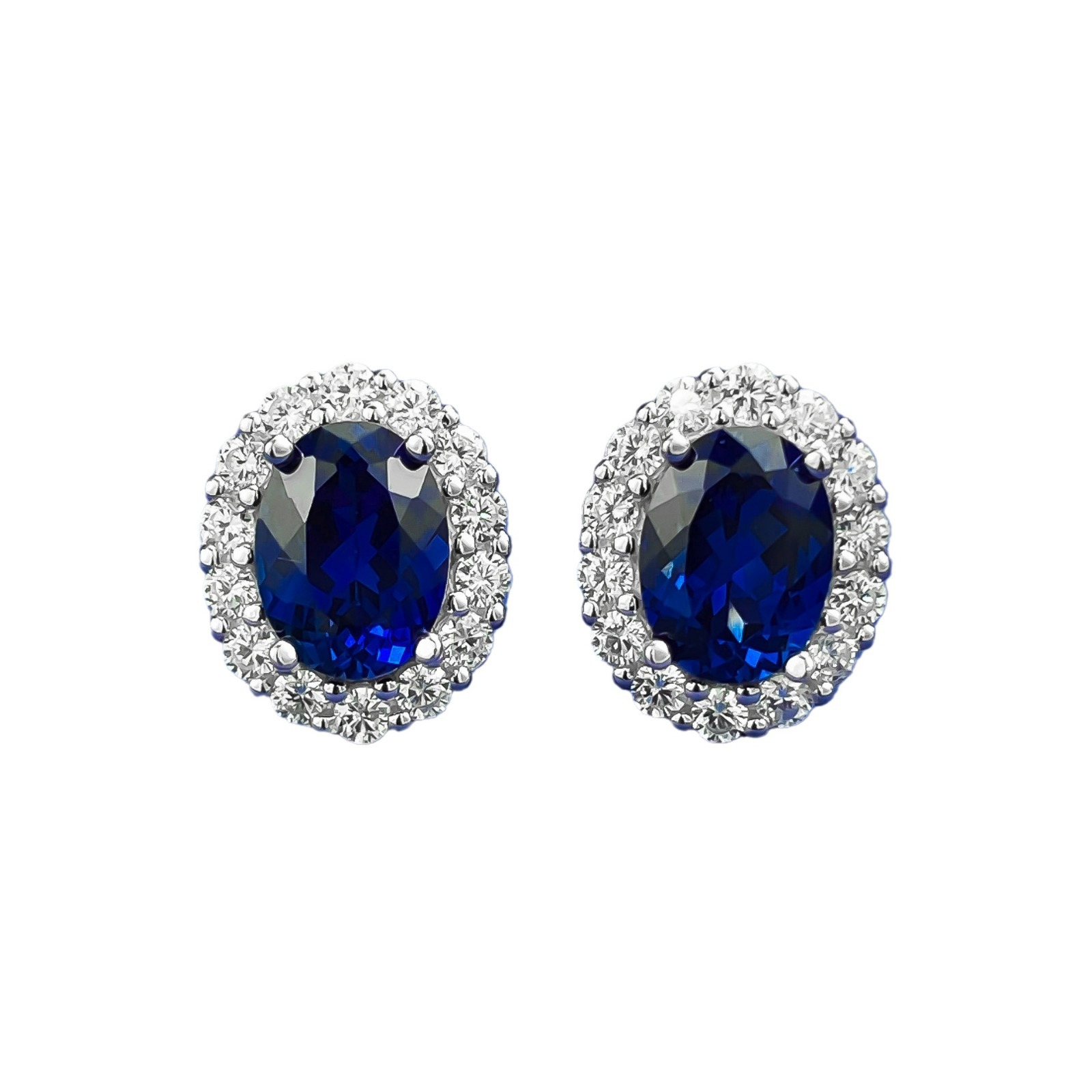
Diamond Stud Earrings Carat Cost: Size and Value Guide
Diamond Stud Earrings carat cost is often the first number shoppers want to understand. Carat weight changes the look on the ear, the price, and the kind of gift or everyday piece you are buying.
Most lab-grown diamond studs range from a few hundred dollars for petite pairs to several thousand dollars for larger statement sizes. The final price depends on total carat weight, cut, color, clarity, metal, setting style, backing type, and grading.
At StoneBridge Jewelry, we focus on premium lab-grown diamond studs because they offer real diamond brilliance with better size flexibility for many budgets. Customers often compare two things first: how large the studs will look and whether the price matches the quality shown on the product page.
What Diamond Stud Earrings Carat Cost Really Means
Diamond Stud Earrings carat cost is usually based on total carat weight, often shown as ctw or TCW. That means the listed weight is for both earrings together, not one diamond alone.
For example, a 1.00 ctw pair usually has two diamonds around 0.50 carat each. A 2.00 ctw pair usually has two diamonds around 1.00 carat each. This detail matters because two 1.00 carat diamonds cost much more than two 0.50 carat diamonds of similar quality.
Price does not rise in a straight line as carat weight increases. Larger individual diamonds are harder to source and match. A jeweler also needs to pair stones that look balanced in diameter, color, clarity, and sparkle.
Lab-grown diamonds can make higher carat weights more attainable. They are real diamonds with the same carbon crystal structure as mined diamonds. The difference is origin: lab-grown diamonds are created in controlled conditions, while mined diamonds form underground.
Diamond Stud Earrings Carat Cost by Size
Diamond Stud Earrings carat cost changes by market, inventory, grading, and metal choice. Shoppers still need real numbers before they can compare. The ranges below are general retail benchmarks for lab-grown diamond stud earrings in common gold settings.
| Total Carat Weight | Approx. Size Per Ear | Typical Lab-Grown Price Range | Good Fit For |
|---|---|---|---|
| 0.25 ctw | 0.125 ct each | $200-$450 | Second piercings, subtle sparkle |
| 0.50 ctw | 0.25 ct each | $350-$750 | First diamond studs, daily wear |
| 0.75 ctw | 0.375 ct each | $500-$1,000 | Workwear, simple luxury |
| 1.00 ctw | 0.50 ct each | $700-$1,500 | Popular gifts, classic studs |
| 1.50 ctw | 0.75 ct each | $1,100-$2,400 | Milestone gifts, more presence |
| 2.00 ctw | 1.00 ct each | $1,600-$3,500 | Luxury everyday wear |
| 3.00 ctw | 1.50 ct each | $2,800-$6,500+ | Statement sparkle |
| 4.00 ctw+ | 2.00 ct each or larger | Varies widely | High-impact fine jewelry |
These numbers are a starting point, not a guarantee. Exact StoneBridge Jewelry pricing may vary by diamond grade, metal, setting, availability, and promotions.
A lower price does not always mean better value. A 1.00 ctw pair with strong cut quality and secure screw backs may be a smarter buy than a cheaper pair with unclear grades.
Petite Studs: 0.25 ctw to 0.75 ctw
Smaller diamond studs are easy to wear and easy to gift. They sit neatly on the ear and work well for professional settings, second piercings, and simple everyday outfits.
Diamond Stud Earrings carat cost in this range is often friendly for first-time fine jewelry buyers. Cut still matters. A bright 0.50 ctw pair can look cleaner and more polished than a duller pair with slightly more weight.
These sizes also pair well with huggie earrings or small hoops. If you are building an ear stack, petite studs add sparkle without crowding the ear.
Classic Studs: 1.00 ctw to 1.50 ctw
A 1.00 ctw pair is one of the most requested diamond stud sizes. It usually gives you two 0.50 carat diamonds, which feels noticeable without being too dressy.
Diamond Stud Earrings carat cost in the 1.00 ctw to 1.50 ctw range can vary a lot. Better cut grades, tighter matching, and upgraded backs can raise the price. For many buyers, this is the sweet spot between sparkle and daily comfort.
This range is a strong choice for birthdays, anniversaries, graduations, bridal gifts, and personal milestones. It is also practical enough for regular wear.
Statement Studs: 2.00 ctw and Larger
At 2.00 ctw and above, diamond studs start to feel bold. Each earring has more visual weight, and the diamonds become a main feature rather than a quiet accent.
Diamond Stud Earrings carat cost rises faster here because each single diamond is larger. Matching also becomes more demanding. The stones should look close in size, color, brightness, and shape.
For larger pairs, the setting matters as much as the stones. Secure prongs, strong baskets, and reliable backs help protect the earrings and make them more comfortable.
What Affects Diamond Stud Earrings Carat Cost?
Carat weight drives much of the price, but it is not the whole story. Two pairs with the same total carat weight can have very different prices if the cut, color, clarity, metal, and documentation differ.
The Gemological Institute of America, known as GIA, uses the 4Cs: cut, color, clarity, and carat weight. These standards help buyers compare diamonds in a more consistent way. IGI also grades many lab-grown diamonds and provides reports that list origin and quality details.
Total Carat Weight vs. Each Diamond's Weight
Always check whether the listing shows total carat weight or individual stone weight. Most diamond stud earrings are sold by total carat weight for the pair.
Here are common examples:
- 0.50 ctw usually means two diamonds around 0.25 carat each.
- 1.00 ctw usually means two diamonds around 0.50 carat each.
- 2.00 ctw usually means two diamonds around 1.00 carat each.
- 3.00 ctw usually means two diamonds around 1.50 carats each.
This is one of the easiest places to make a costly mistake. If a listing says "1 carat diamond earrings," confirm whether that means 1.00 ctw for the pair or 1.00 carat per ear.
Cut Quality and Sparkle
Cut has a major effect on how bright the earrings look. A well-cut diamond reflects light better, so it can appear livelier than a larger diamond with weak proportions.
Many shoppers focus so much on carat weight that they miss cut quality. Diamond stud earrings carat cost makes more sense when you compare sparkle, not just size.
If your budget is fixed, choose a stronger cut before chasing a small bump in carat weight. You will usually enjoy the earrings more.
For round diamond studs, excellent or ideal cut grades are worth prioritizing when available. Look for diamonds that face up round, have even light return, and do not show a dark center. For fancy shapes such as princess, cushion, oval, or emerald cut studs, cut grades may be reported differently, so review the measurements, symmetry, polish, and actual photos or video when possible.
Color and Clarity Choices
Diamond studs sit on the ears, so people usually see them from a normal social distance. That gives buyers some flexibility with color and clarity.
Near-colorless grades such as G, H, and I can look beautiful in earrings, especially with a bright cut. Eye-clean clarity is often enough because tiny inclusions are hard to see once the studs are worn.
Smart grading choices can help control diamond stud earrings carat cost. Instead of paying for the highest color or clarity grade, you can choose diamonds that look clean and bright in real life.
For many lab-grown diamond stud buyers, a practical target is G-H color with VS2-SI1 clarity for strong value, or F-G color with VS clarity for a slightly more premium pair. If the earrings are set in yellow or rose gold, a near-colorless grade can still look crisp because the warm metal softens small color differences. In white gold or platinum, some shoppers prefer G color or better for a cooler white look.
Diamond Certification and Matching
Certification helps verify that the diamonds are what the seller says they are. For larger or higher-value studs, ask whether the diamonds come with grading reports from a recognized laboratory such as IGI or GIA. A report may list lab-grown origin, carat weight, color, clarity, measurements, polish, symmetry, fluorescence, and sometimes a laser inscription number.
Matched pairs are especially important for earrings. The two diamonds do not need to be mathematically identical, but they should look like a pair on the ear. Compare diameter first, because face-up size is what people notice. Then check color, clarity, cut quality, and shape outline. A well-matched 1.50 ctw pair can look more refined than a larger pair where one diamond appears visibly warmer, smaller, or less lively than the other.
Metal, Setting, and Backs
Metal choice affects price and wear. 14K gold is popular because it offers good strength and value. 18K gold has more pure gold and usually costs more. Platinum is dense, naturally white, and often higher in price.
Setting style changes both look and function:
- Prong settings show more diamond surface and let in more light.
- Basket settings add structure and support.
- Martini settings sit close to the ear.
- Bezel settings wrap the diamond in metal for a sleek, secure look.
Backs matter too. Push backs are simple and common. Screw backs add security for higher-value pairs. Locking backs can be a smart upgrade if you will wear the studs often.
Consider ear comfort when choosing posts and backs. Very small push backs can feel light, but they are easier to misplace. Screw backs feel more secure, though some wearers find them slower to put on. Locking backs often provide a good balance for daily wear because they are secure without requiring the twisting motion of screw backs.
Lab-Grown vs. Mined Diamond Studs
Lab-grown and mined diamond studs can look the same to the eye when the 4Cs are comparable. GIA states that laboratory-grown diamonds have essentially the same chemical, optical, and physical properties as natural diamonds, though their origin is different.
The price difference can be meaningful. Lab-grown diamonds often cost less than mined diamonds of similar size and grade. That can help you choose a larger pair, a better cut, or a higher metal quality without stretching the budget as far.
Diamond stud earrings carat cost is one reason many StoneBridge Jewelry customers choose lab-grown studs. They want real diamond sparkle, clear specifications, and more visible size for the money.
| Feature | Lab-Grown Diamond Studs | Mined Diamond Studs |
|---|---|---|
| Diamond type | Real diamond | Real diamond |
| Composition | Carbon crystal structure | Carbon crystal structure |
| Appearance | Same brilliance when well cut | Same brilliance when well cut |
| Grading | Often graded by IGI, GIA, or similar labs | Often graded by GIA, IGI, or similar labs |
| Typical price | Often lower for comparable specs | Often higher for comparable specs |
| Common appeal | Size, value, modern sourcing | Tradition, natural origin, rarity story |
Some buyers still prefer mined diamonds for tradition or heirloom meaning. That is a personal choice. For shoppers focused on visual impact and budget control, lab-grown diamond studs are hard to ignore.
You can compare loose diamond options in our lab-grown diamond collection before choosing your finished earrings.
How Big Will Diamond Studs Look on the Ear?
Carat weight tells you weight, not face-up size. Millimeter measurements help you picture the earrings better.
As a general reference, a round 0.50 carat diamond often measures about 5.0 to 5.2 mm. A round 1.00 carat diamond often measures about 6.4 to 6.5 mm. Cut proportions can shift those measurements slightly.
Start with how the earrings will be worn. Daily studs should feel comfortable, secure, and balanced with your personal style.
For small ears or second piercings, 0.25 ctw to 0.75 ctw may be ideal. For a classic main piercing, 1.00 ctw to 1.50 ctw works for many buyers. For a bold look, 2.00 ctw and larger brings more presence.
Approximate Round Diamond Stud Diameter
Use millimeter size as a visual guide when comparing pairs. The table below shows approximate round diamond diameters for each individual earring, not the total pair.
| Approx. Carat Per Ear | Approx. Diameter | Typical Look |
|---|---|---|
| 0.25 ct | 4.0 mm | Small, neat, and easy for daily wear |
| 0.50 ct | 5.0-5.2 mm | Classic sparkle without a heavy feel |
| 0.75 ct | 5.8-6.0 mm | Noticeable but still versatile |
| 1.00 ct | 6.4-6.5 mm | Polished, luxurious, and visible |
| 1.50 ct | 7.3-7.5 mm | Statement size with strong presence |
| 2.00 ct | 8.0-8.2 mm | Bold and high-impact |
Ear lobe size changes the final effect. A 1.00 ctw pair can look substantial on a petite lobe and more understated on a larger lobe. If you are buying a gift and are unsure, 1.00 ctw is a dependable classic, while 1.50 ctw adds a more generous milestone feel.
How to Get the Best Value for Your Budget
A good value pair is not always the cheapest pair. It is the pair that gives you the best mix of beauty, comfort, documentation, and long-term wear.
Use this Checklist Before Buying:
- Confirm total carat weight for the pair.
- Check the approximate carat weight of each earring.
- Review cut, color, and clarity grades.
- Confirm lab-grown or mined origin.
- Look for grading reports on higher-value pairs.
- Compare 14K gold, 18K gold, and platinum.
- Review setting type and backing type.
- Check the return policy and service support.
Diamond stud earrings carat cost becomes easier to judge when every detail is clear. If a product page hides the basics, keep looking.
Customers often ask whether they should buy a larger carat weight or a better grade. In most cases, we suggest prioritizing cut, matching, and comfortable settings first. Size matters, but sparkle and wearability matter every time you put them on.
If your budget is under $750, focus on petite lab-grown studs with clear specs and bright cut quality. In the $1,000 to $2,500 range, compare 1.00 ctw to 1.50 ctw pairs and decide whether you prefer a higher color grade or a larger look. Above $3,000, pay close attention to certification, matching, post strength, and backing security because the earrings are more valuable and usually worn for many years.
For other fine jewelry styles, you can browse the StoneBridge Jewelry collection and compare studs with hoops, huggies, drop earrings, and dangle earrings.
Shipping, Returns, and Insurance Details to Check
Before buying diamond studs online, review the practical details as carefully as the diamond grades. Fine jewelry should ship securely, preferably with tracking and a signature requirement. For higher-value pairs, insured shipping is important because it protects the package while it is in transit.
Check whether the earrings are ready to ship or made to order. Ready-to-ship studs may arrive faster, while custom-selected pairs can take longer because the diamonds must be matched and set. If you are buying for an anniversary, proposal celebration, graduation, or holiday, build in extra time for production, shipping, and any possible exchange.
A clear return policy matters. Confirm the return window, whether earrings must be unworn, whether custom pieces are eligible, and whether original grading reports, packaging, and tags must be included. After purchase, keep the receipt and diamond documents in a safe place. For larger pairs, consider adding the earrings to a jewelry insurance policy or a scheduled personal property rider.
Red Flags When Comparing Prices
Some listings make diamond studs sound better than they are. Read carefully Before You Buy.
Watch for these warning signs:
- The listing does not say whether the weight is total ctw or per earring.
- Cut, color, or clarity grades are missing.
- Lab-grown or mined origin is not disclosed.
- Higher-value pairs have no grading report or clear specs.
- Metal is described vaguely, such as "gold tone" instead of 14K or 18K gold.
- Backing type is not listed.
- Product photos are blurry or inconsistent.
- Return policy details are hard to find.
Very low prices can reflect weak cut quality, mismatched diamonds, thin settings, or unclear grading. A trusted jeweler should make diamond stud earrings carat cost easy to compare, not confusing.
If you want help comparing sizes or settings, contact our jewelry experts. A short conversation can save you from buying the wrong pair.
Common Buying Mistakes to Avoid
One common mistake is choosing the biggest listed carat weight without checking millimeter size. A poorly cut diamond can carry weight in the depth, which means it may cost more without looking much larger from the front. Another mistake is buying a very high clarity grade for earrings when an eye-clean grade would look the same once worn.
Do not overlook the setting. Thin posts, lightweight baskets, and loose backs can turn an attractive price into a frustrating purchase. Also avoid assuming every pair is certified just because the diamonds are described with grades. Ask what documentation is included and whether the report applies to both stones or only to a representative diamond.
Caring for Diamond Stud Earrings
Diamonds attract oil from skin, lotion, makeup, and hair products. Regular cleaning keeps them bright.
Use a simple routine:
- Mix warm water with a small amount of mild soap.
- Soak the earrings for a few minutes.
- Brush gently with a soft toothbrush.
- Rinse carefully.
- Dry with a lint-free cloth.
Check prongs, bezels, and backs while you clean. If a prong looks raised or a back feels loose, stop wearing the earrings until a jeweler inspects them.
Store studs separately so they do not scratch other jewelry. This is especially helpful if you keep them near chains, gemstone pieces, hoops, or dangle earrings.
Remove diamond studs before swimming, sleeping, heavy exercise, or applying hair products. Chlorine can affect some metals over time, and bedding or towels can catch on prongs. For earrings worn several times a week, schedule a professional inspection about once or twice a year so a jeweler can check the posts, backs, prongs, and overall setting security.
Diamond Stud Earrings Carat Cost: Quick Buying Tips
Diamond stud earrings carat cost should match the way you will wear the earrings. For daily wear, 0.50 ctw to 1.50 ctw is a practical range for many shoppers. For milestone gifts, 1.00 ctw to 2.00 ctw feels more memorable.
If you want the most visible size for your budget, compare lab-grown diamond studs first. If tradition matters more, mined diamonds may be worth the added cost to you.
Choose clear specs, strong cut quality, secure settings, and a retailer that answers questions directly. StoneBridge Jewelry makes it easier to compare lab-grown diamond studs by size, quality, and style, so you can choose a pair with confidence.
Ready to Find Your Perfect Diamond?
Explore our collection of certified lab-grown diamonds
Shop Diamonds