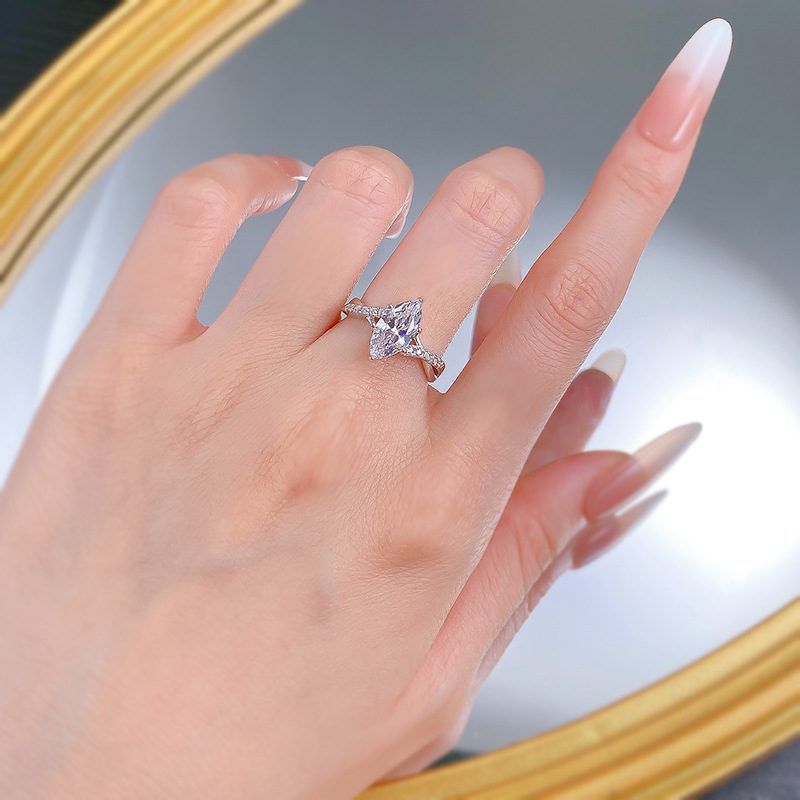
Carat Size Chart for Solitaire Rings: Compare Diamond Sizes and Find Your Best Look
A Carat Size Chart for Solitaire rings helps you compare more than a number on a lab report. It shows how diamond weight turns into visible size, millimeter spread, finger coverage, and the overall look of a classic solitaire. That matters because a 0.75 carat round diamond can look closer to 1 carat than many buyers expect. A poorly cut 1 carat can also face up smaller than it should.
So, what should you actually compare? Not just carat weight. You want cut, millimeter size, and how the ring wears on the hand.
For most shoppers, the goal isn’t to buy the biggest stone possible. It’s to find the size that looks balanced, fits the budget, and holds up in daily wear. A good carat size chart for solitaire shopping makes those tradeoffs much easier to see.
What a Carat Size Chart for Solitaire Rings Really Compares
A useful carat size chart for solitaire rings compares four things at once:
- Carat weight: the diamond’s actual weight
- Millimeter size: the visible width across the top
- Visual presence: how large the diamond looks once it’s on your finger
- Budget value: the price range buyers usually see at each size
Carat is a weight measure, not a size measure. One carat equals 200 milligrams, but no one wears a scale on their hand. They see the stone face-up. That’s why a carat size chart for solitaire diamonds is most useful when it includes millimeter size, not just weight.
For round brilliant diamonds, still the most common choice for solitaire engagement rings, buyers often compare these sizes:
- 0.50 ct for a clean, everyday look
- 0.75 ct for strong value and balanced presence
- 1.00 ct as the classic benchmark
- 1.50 ct for a more noticeable luxury look
- 2.00 ct and above for bold finger coverage
Price usually rises faster than visible size. That’s one reason shoppers check a carat size chart for solitaire rings before they buy. The jump from 0.75 ct to 1.00 ct is easy to see, but the price jump can feel much bigger. The same pattern often shows up between 1.00 ct and 1.50 ct, especially with natural diamonds.
GIA education also notes that cut quality affects brilliance, fire, and sparkle. In plain terms, two diamonds with the same carat weight can look very different. One may spread wider and shine brighter. The other may hide weight in the depth and look smaller.
How to Read a Solitaire Diamond Size Chart
A solitaire diamond size chart works best when you start with shape, then move to measurements. For round diamonds, the top view is usually shown as diameter in millimeters. A well-cut round 1.00 carat diamond often measures around 6.4 to 6.5 mm. A 0.75 carat round diamond often lands near 5.7 to 5.9 mm.
That sounds like a small change. On the finger, it’s enough to notice.
A carat size chart for solitaire rings should also include spread. That means how wide the diamond looks from above compared with its weight. A deep-cut diamond hides more of its weight below the top view, so it can look smaller. A shallow stone can face up larger, but if it’s too shallow, light return can drop.
Here are the main numbers to check:
- Carat weight: total diamond weight
- Diameter in mm: visible width across the top
- Depth percentage: how much weight sits below the face-up view
- Table percentage: a proportion that affects brightness and patterning
- Cut grade: often the biggest beauty factor for round brilliants
According to GIA, cut quality strongly affects brilliance, fire, and scintillation. That’s why a bright, well-proportioned diamond usually looks larger and better than a heavier stone with weak proportions. If you’re using a carat size chart for solitaire buying, cut should stay at the top of your list.
Standard Round Solitaire Size Benchmarks by Carat Weight
These are common round diamond benchmarks used in a carat size chart for solitaire shopping. They’re approximate face-up measurements, not fixed promises.
- 0.25 ct: about 4.0 mm
- 0.33 ct: about 4.4 mm
- 0.50 ct: about 5.1 mm
- 0.70 ct: about 5.7 mm
- 0.75 ct: about 5.8 mm
- 0.90 ct: about 6.2 mm
- 1.00 ct: about 6.4 to 6.5 mm
- 1.25 ct: about 6.9 to 7.0 mm
- 1.50 ct: about 7.3 to 7.4 mm
- 2.00 ct: about 8.1 mm
- 2.50 ct: about 8.7 mm
- 3.00 ct: about 9.2 to 9.3 mm
Those numbers shift a little from diamond to diamond. So a carat size chart for solitaire rings should be treated as a comparison tool, not a guarantee.
Why Two Solitaire Diamonds of the Same Carat Can Look Different
Two 1 carat solitaire diamonds can look surprisingly different. Why? Because carat only tells part of the story.
A few things change the look fast:
- Ideal cut vs. deep cut: an ideal cut often looks brighter and can spread better; a deep cut may look smaller from above
- Shallow cut vs. balanced cut: a shallow stone may look wider, but too little depth can hurt light return
- Prong style: slim claws show more of the diamond, while bulky prongs hide more of the edges
- Band width: a narrow band can make the center stone look larger; a wide band can make it feel smaller
- Finger size: smaller fingers usually give a diamond more visual coverage than larger fingers
That’s why jewelers don’t rely on weight alone. A carat size chart for solitaire rings works best alongside a certificate and real setting proportions.
Classic Solitaire Sizes Under 1 Carat
Solitaire diamonds under 1 carat stay popular because they offer the clean look of a classic ring without the steepest pricing jumps. For many buyers, this range gives the best mix of elegance, wearability, and value.
The most common sizes are 0.50 ct, 0.70 ct, 0.75 ct, and 0.90 ct. Each one plays a different role on a carat size chart for solitaire rings.
0.50 ct works well for buyers who want a refined, understated look. It still reads clearly as a center diamond, but it stays practical for daily wear.
0.70 ct to 0.75 ct often hits the sweet spot. It looks substantial in a solitaire, especially on slim bands and smaller ring sizes, but it avoids some of the premium tied to the 1 carat mark. Many shoppers are surprised by how much presence a 0.75 ct can deliver.
0.90 ct is another smart comparison point. It gets close to the face-up look of a 1.00 ct diamond, especially with strong cut quality, while sometimes staying below a major price jump. That matters in natural diamonds, where pricing often climbs around full-carat marks.
Typical strengths of sub-1-carat solitaire diamonds include:
- lower entry price
- timeless scale that doesn’t overpower the hand
- comfort for everyday wear
- more room in the budget for better color or clarity
- flexibility to choose a premium setting or certified stone
There are tradeoffs, too. Smaller stones offer less finger coverage and less distance impact than a 1.50 ct or 2.00 ct diamond. If you want a stronger statement, a carat size chart for solitaire rings usually points you toward 1 carat and up.
Pricing still depends on cut, color, clarity, certification, and origin. Even so, sub-1-carat diamonds often deliver strong value. Lab-grown diamonds can stretch that value even further, but natural diamonds in the 0.70 to 0.90 range still make a lot of sense for classic buyers.
We’ve found that many shoppers who start out chasing 1 carat end up loving 0.75 ct once they see it on the hand. It often looks fuller than expected.
Best Features of Sub-1-Carat Solitaire Diamonds
Sub-1-carat solitaire diamonds suit minimalist style, daily wear, and budget-aware shopping. They pair well with slim cathedral settings, classic four-prong mountings, and low-profile solitaire designs.
Their biggest strength is simple: cut quality goes a long way. A well-cut 0.75 ct round can look brighter and more eye-catching than a larger stone with weaker proportions. That’s why many pros say to pick cut before chasing a bigger number on a carat size chart for solitaire rings.
These sizes often look especially balanced on:
- finger sizes in the petite-to-average range
- bands around 1.8 mm to 2.2 mm wide
- buyers who want an elegant daily ring instead of a bold statement piece
Pros and Cons of Choosing a Solitaire Under 1 Carat
Pros
- Lower total spend
- Easier future upgrade path
- Clean, classic proportions
- More room for color, clarity, or a better setting
- Often stronger value than milestone weights
Cons
- Smaller face-up spread
- Less impact from a distance
- May feel modest for milestone gifting
- Can disappoint buyers expecting strong finger coverage
Solitaire Sizes 1 Carat and Above
Once a buyer reaches 1 carat, the conversation changes. A 1.00 ct solitaire is the classic benchmark, and every step above it adds more presence, more coverage, and more luxury appeal.
On a carat size chart for solitaire rings, the most compared sizes in this range are 1.00 ct, 1.25 ct, 1.50 ct, and 2.00 ct. These aren’t just heavier stones. They’re different shopping choices.
1.00 ct remains the standard comparison point for many engagement ring shoppers. With a typical diameter around 6.4 to 6.5 mm, it offers a balanced look that feels substantial without being hard to wear every day.
1.25 ct brings a visible jump in spread, often reaching around 6.9 to 7.0 mm. That increase may sound small, but the wider face-up look can make the ring feel noticeably richer.
1.50 ct is where many solitaires start reading as a statement. The stone is easier to spot across the room, shows stronger finger coverage, and needs thoughtful setting design to stay balanced and secure.
2.00 ct and above moves into high-impact territory. These sizes can look beautiful in a solitaire, but they also demand better cut precision, stronger mounting design, and a bigger budget.
Cost is the main hurdle. Natural diamond prices often rise sharply at milestone weights, especially for well-cut stones with attractive color and clarity. That’s where lab-grown diamonds matter. If you want a larger look, lab-grown options can make 1.50 ct or 2.00 ct much more reachable while keeping the same face-up dimensions and diamond structure.
If you’re comparing size first, browse our diamond selection to review certificate details and carat options before you decide.
Still, bigger isn’t always better. A weak 1.50 ct can lose to a bright, ideal-cut 1.00 ct. A wide band or bulky setting head can also make a large diamond feel less refined. A carat size chart for solitaire buying is a starting point, not the final answer.
Best Features of 1-Carat-Plus Solitaire Diamonds
The appeal of 1-carat-plus solitaire diamonds is easy to see. They deliver visible size, classic engagement symbolism, and a more elevated look in simple settings.
These sizes suit buyers who want:
- the traditional 1 carat benchmark
- stronger center-stone visibility
- more finger coverage on medium or larger hands
- a statement look without side stones
Lab-grown diamonds can be a smart fit here. A buyer who wants a 1.50 ct solitaire for visual impact may find that lab-grown makes the size more realistic. If you want to compare full ring styles, you can explore our engagement rings or try our ring builder to test proportions.
For daily wear, larger stones benefit from secure prongs, balanced head design, and a sensible height. Size matters, but stability matters just as much.
Pros and Cons of Choosing a Solitaire 1 Carat or Larger
Pros
- Stronger size presence
- Better visibility from a distance
- Higher luxury appeal for gifts and engagements
- More finger coverage in a solitaire setting
- Bigger statement without side stones
Cons
- Higher cost, especially for natural diamonds
- Inclusions can be easier to notice if quality is uneven
- Setting design matters more for security and comfort
- Larger stones can feel top-heavy in cheaper mountings
Side-by-Side Carat Size Chart for Solitaire Rings
A side-by-side carat size chart for solitaire rings makes the differences easier to compare. The chart below focuses on round brilliant diamonds in classic solitaire settings. Sizes are approximate because cut proportions can shift the exact diameter.
| Carat Weight | Approx. Round Size (mm) | Perceived Size on Finger | Budget/Value Notes | Pros | Cons | Recommended Shopper |
|---|---|---|---|---|---|---|
| 0.50 ct | 5.1 mm | Delicate, refined, visible but modest | Entry luxury; often efficient value | Affordable, practical, timeless | Limited finger coverage | Minimalist buyer, daily wear focus |
| 0.75 ct | 5.8 mm | Balanced and classic; often larger-looking than expected | Strong value-to-size ratio | Good spread for the cost, versatile | Less impact than 1 ct+ | Budget-conscious shopper wanting classic style |
| 1.00 ct | 6.4-6.5 mm | Traditional benchmark with substantial presence | Premium milestone pricing | Classic engagement size, balanced look | Price jump at full-carat mark | Buyer wanting the iconic solitaire size |
| 1.25 ct | 6.9-7.0 mm | Broader face-up look | Better visual jump than many expect | More coverage, elevated look | Higher spend | Shopper wanting more than classic without going oversized |
| 1.50 ct | 7.3-7.4 mm | Statement-oriented but still wearable | Strong luxury tier; lab-grown can improve value | High impact, elegant in plain settings | Cut and setting matter more | Statement seeker, anniversary or premium engagement buyer |
| 2.00 ct | 8.1 mm | Bold, high-visibility finger coverage | Major price increase in natural diamonds | Dramatic presence, luxury appeal | Cost, security, proportion concerns | Buyer prioritizing maximum solitaire impact |
A carat size chart for solitaire shopping becomes much more useful when you compare these rows against your own goals. If budget leads, 0.75 ct and 0.90 ct often stand out. If prestige and presence matter most, 1.25 ct and 1.50 ct get the nod. If you want the classic middle ground, 1.00 ct still earns its place.
What to Include in a Good Comparison Table
The best carat size chart for solitaire buying should include:
- carat weight
- approximate millimeter size
- face-up look on the finger
- price or value notes
- main pros
- main drawbacks
- ideal buyer type
Every chart needs one clear reminder: cut quality and proportions can change the final look. A well-cut diamond nearly always wins the real-world comparison.
Which Solitaire Carat Size Fits Your Budget and Style?
The best solitaire size depends on the buyer, not just the chart. A carat size chart for solitaire rings can show the benchmarks, but your lifestyle, hand size, budget, and setting choices decide what feels right once you wear it.
Here’s a simple match guide:
- Budget-first shopper: focus on 0.70 ct to 0.90 ct
- Classic engagement buyer: compare 0.90 ct to 1.00 ct
- Statement-seeker: start at 1.50 ct and above
- Petite hand: 0.50 ct to 0.90 ct often looks larger in proportion
- Bigger finger coverage goal: 1.25 ct and above usually creates stronger spread
Lifestyle matters, too. Someone who works with their hands may prefer a lower-profile 0.75 ct or 1.00 ct solitaire instead of a taller 2.00 ct setting. A buyer who loves a sleek, minimal ring may want to invest in cut and color instead of raw weight. Someone shopping for an anniversary may care more about visual impact.
Industry experts usually suggest comparing rings on an actual finger, not just in a display tray. That’s smart advice. The same 1 carat diamond can look different on a size 4 finger and a size 8 finger. Band width matters, too. Narrow bands make the center stone stand out. Wider bands create a more grounded look.
If fit is part of your decision, learn about ring sizing before you judge a diamond from photos alone. And if you want help balancing carat, cut, and setting, contact our jewelry experts.
Best Solitaire Size by Budget, Finger Size, and Style Goal
These recommendations usually hold up well:
Best value range: 0.70 ct to 0.90 ct
Great for buyers who want visible size without chasing expensive milestone pricing.Best classic benchmark: 1.00 ct
Ideal for shoppers who want the familiar solitaire standard and balanced presence.Best high-impact range: 1.50 ct and up
Best for statement-focused buyers, especially if lab-grown value is part of the plan.Best visual trick for size
Choose a narrower band and prioritize excellent cut before paying more for a higher round-number carat weight.
A carat size chart for solitaire rings works best when you use it as a proportion guide, not a race toward the largest number.
Expert Recommendation: Best Value Picks on a Carat Size Chart for Solitaire
After comparing spread, wearability, price logic, and buyer expectations, the strongest value zone on a carat size chart for solitaire buying is usually 0.75 ct to 1.00 ct.
Here’s why that range stands out:
- it delivers the classic solitaire look most buyers want
- it gives meaningful face-up size without the steepest cost tiers
- it stays practical for everyday wear
- it leaves room to focus on cut quality, which often matters more than a small jump in weight
For natural diamonds, 0.75 ct to 0.90 ct often wins on value because it avoids some of the premium tied to full-carat milestones while still looking substantial. If you want the symbolic pull of 1 carat, a well-cut 1.00 ct remains a strong all-around choice.
For statement shoppers, the best move may be different. If you want a bigger look without the natural-diamond price spike, 1.25 ct to 1.50 ct lab-grown options often make the most sense. They keep the clean solitaire style while giving noticeably more spread.
That lines up with real shopping results. We’ve found that a bright, well-proportioned 0.90 ct can outperform a sleepy 1.00 ct every day. So if you remember one rule, make it this: put cut first, then compare carat weight by millimeter size.
A carat size chart for solitaire rings helps you buy with your eyes open. Not just for size, but for proportion, budget, and long-term satisfaction.
Shop Solitaire Rings by Carat Size
Ready to turn a carat size chart for solitaire research into a real ring comparison? Start by narrowing your look and budget, then compare product pages with visible millimeter measurements, grading details, and setting style.
A smart shopping path looks like this:
- Compare a classic sub-1-carat look by browsing 0.75 ct solitaire options
- Review 1.00 ct solitaire rings if you want the traditional benchmark
- Consider 1.50 ct lab-grown solitaire rings for stronger finger coverage and value
- Explore custom solitaire settings if you want to adjust band width, prong style, or profile height
To begin, browse our jewelry collection, explore our engagement rings, or try our ring builder to compare solitaire proportions directly. If you want more buying help, you can also read more on our blog or view our FAQ.
The right carat size chart for solitaire buying doesn’t just tell you what’s bigger. It helps you choose the diamond that looks best on your hand, fits your budget, and feels right every time you wear it.
FAQ
What does a carat size chart for solitaire rings actually show?
A useful chart compares more than weight alone. It pairs carat with approximate millimeter diameter, face-up spread, and how the stone usually looks in a solitaire setting. The better versions also include value context, because price doesn’t rise in a straight line with visible size. That makes the chart more useful when you’re comparing real ring options.
How big does a 1 carat solitaire diamond look on the finger?
A well-cut round 1 carat solitaire usually measures about 6.4 to 6.5 mm across. On petite fingers, that can look very noticeable, while on larger fingers it may read as balanced and classic. The setting changes the look, too. A thinner band usually makes the center diamond stand out more.
Is a 0.75 carat solitaire noticeably smaller than a 1 carat solitaire?
Yes, but many buyers expect a bigger gap than they actually see. A round 0.75 carat is usually around 5.8 mm, compared with about 6.4 to 6.5 mm for a round 1 carat. In a simple solitaire with a narrow band, a well-cut 0.75 ct can still look strong and elegant. It often delivers very good value for the size.
Why do two solitaire diamonds with the same carat weight look different?
Carat measures weight, not face-up width, so two stones with the same weight can spread differently. Cut quality, total depth, table percentage, and overall proportions all affect how large the diamond looks from above. A deep-cut stone may look smaller than a well-cut diamond of the same carat. Finger size and band width also change the final look.
What is the best solitaire carat size for value?
For many buyers, the best value sits between 0.75 and 1.00 carat. That range usually gives a classic solitaire look, good everyday wear, and strong visual presence without the steepest price jump. If you want more size for the money, lab-grown diamonds at 1.25 carats and above can also be appealing. The smartest move is to choose cut first, then compare carat by millimeter size.
Ready to Find Your Perfect Diamond?
Explore our collection of certified lab-grown diamonds
Shop Diamonds