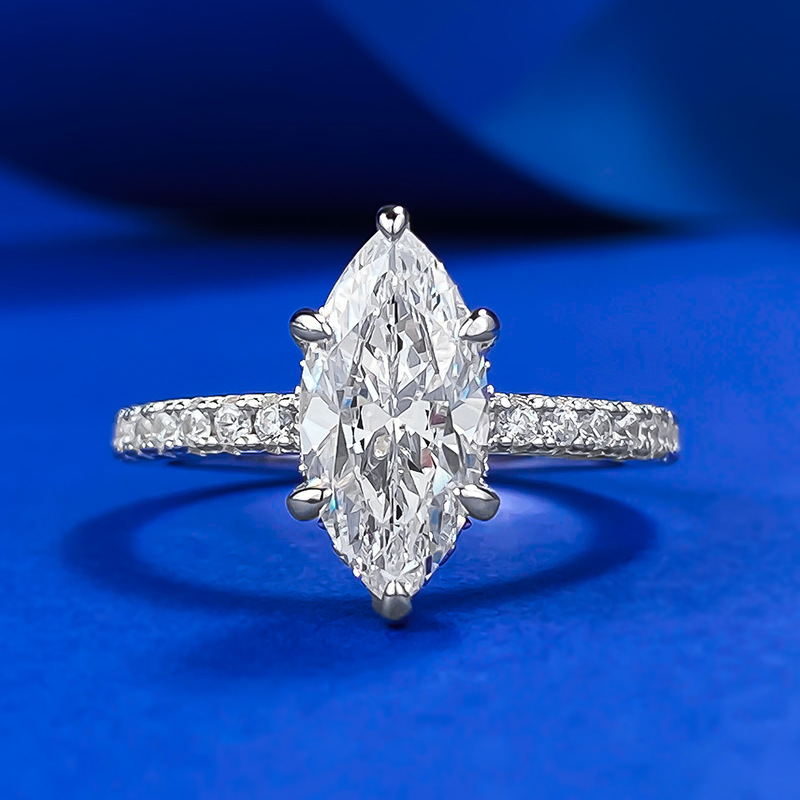
Bezel Setting for Pear Diamond Rings: Secure Style That Still Sparkles
A pear diamond has a look people remember. One end is rounded and soft. The other comes to a sharp, elegant point. That point gives the shape its drama, but it also needs smart protection.
A Bezel Setting for Pear diamond jewelry uses a thin rim of metal to hold the stone around its edge. On a pear shape, that rim can protect the pointed tip, reduce snagging, and create a clean outline. It works well for engagement rings, pendants, earrings, and everyday fine jewelry.
Is a bezel too modern for a pear diamond? Not at all. The right design can feel sleek, vintage, romantic, or bold. The key is choosing a bezel that fits the stone, protects the tip, and still lets the diamond look bright.
What Is a Bezel Setting for Pear Diamond Jewelry?
A bezel setting is a metal frame that wraps around the girdle of a diamond. The girdle is the thin outer edge between the top and bottom of the stone. Instead of using separate prongs, the jeweler shapes metal over the edge to keep the diamond secure.
A bezel setting for pear diamond rings must follow a more complex outline than a round diamond. It has to move smoothly around the rounded end, shoulders, sides, and pointed tip. If the frame looks uneven, the whole ring can feel off.
A full bezel surrounds the entire diamond. A partial bezel protects selected areas and leaves other sections open. Some rings use a hybrid design, with bezel sections and prongs working together.
Our customers often choose a bezel setting for pear diamond engagement rings because it feels comfortable during daily wear. There are fewer raised parts to catch on sweaters, gloves, hair, or bags. For someone who uses their hands all day, that small detail can make a big difference.
Why Pear Diamonds Need Extra Tip Protection
Pear diamonds belong to the fancy shape family. Unlike round brilliants, they have a pointed end. That tip is beautiful, but it can chip if it takes a hard hit at the wrong angle.
Diamond ranks 10 on the Mohs hardness scale, so it resists scratching better than any other natural gemstone. Still, hardness does not mean a diamond cannot chip. GIA diamond education notes that shape, girdle thickness, and setting design all affect durability.
A bezel setting for pear diamond rings makes practical sense because the metal edge can shield the narrow tip and support more of the diamond perimeter. A V-prong can also protect the point, but a bezel offers broader coverage.
For rings, protection matters more than it does for many pendants or earrings. Hands bump desks, car doors, gym equipment, shopping carts, and countertops. A ring setting has to handle real life, not just look good in a photo.
Pear Diamond Anatomy to Check
Before choosing a bezel setting for pear diamond jewelry, look closely at the stone itself. A pear diamond has five main areas:
- Rounded end: the wider base of the stone.
- Shoulders: the curved areas below the rounded end.
- Wings: the tapered sides leading toward the point.
- Pointed tip: the narrow end that needs the most care.
- Girdle: the outer edge gripped by the setting.
A bezel highlights the outline, so symmetry matters. If one shoulder sits higher than the other, the metal frame may make it easier to see. A slightly unique outline can still be lovely, but the shape should look balanced to your eye.
Full Bezel, Partial Bezel, or Hybrid Design?
A full bezel setting for pear diamond rings gives the most complete edge protection. The metal follows the whole diamond, including the point. It creates a smooth, low-snag surface that many people love for daily wear.
A partial bezel looks lighter. It may cover the tip and rounded end while leaving the sides open. This design can show more of the diamond profile and give the ring a more airy feel.
A hybrid design blends bezel sections with prongs, side stones, or an open gallery. These rings can be beautiful, but you should ask exactly how the tip is protected. If the point is exposed, the design should include a V-prong, cap, or another secure detail.
| Bezel Style | Best For | Protection Level | Look |
|---|---|---|---|
| Full bezel | Daily rings and active wearers | Highest | Smooth, sleek, defined |
| Partial bezel | Lighter modern designs | Medium to high | Open, airy, sculptural |
| Hybrid bezel | Custom styles with mixed details | Varies | Balanced and distinctive |
Metal thickness also matters. A very thin bezel can look refined, but it must still hold the stone safely. A thick bezel offers a stronger visual frame, though it may overpower a small pear diamond.
How a Bezel Setting Affects Sparkle
Many shoppers worry that a bezel setting for pear diamond rings will make the stone look dull. That concern is fair, but sparkle depends on more than exposed sides. Cut quality, symmetry, polish, proportions, and cleanliness all affect how bright a diamond looks.
Most light enters and returns through the top facets of the diamond. A bezel covers part of the girdle, but it does not cover the crown. A well-cut pear diamond can still look lively in a bezel.
GIA grades round diamonds for cut, but fancy shapes such as pears are judged through measurements, polish, symmetry, and visual performance rather than one simple cut grade. IGI reports for lab-grown diamonds also list polish and symmetry. Use those reports as a starting point, then review videos and magnified images.
The bow-tie effect also deserves attention. Pear diamonds often show a darker bow-tie shape across the center. A mild bow-tie is normal. A heavy, dark bow-tie can pull attention away from the diamond, and a bezel will not fix weak light performance.
What Diamond Specs Work Best in a Bezel?
For a bezel setting for pear diamond jewelry, some stone details become more important because the setting frames the outline so clearly. A medium to slightly thick girdle is usually safer than an extremely thin one. Very thin girdles can be more vulnerable at the point, while very thick girdles may reduce face-up size for the carat weight.
Many buyers also look for a depth that supports good spread. For a pear diamond, dimensions matter as much as carat weight. A stone that is too deep can face up smaller, while a shallow stone may look wide but can lose brilliance if the cut is off. Ask for the exact measurements and compare them with the certificate, not just the carat weight.
For clarity, eye-clean stones often make the most sense in bezels, since the metal edge already creates a strong frame. VS2 and SI1 can offer excellent value if the inclusions are not visible without magnification. For color, G to H is a popular sweet spot in white metal. In yellow or rose gold, many shoppers are comfortable going slightly lower in color if the diamond still looks bright to the eye.
If you want a larger-looking center stone without moving into a much higher price bracket, a pear with strong spread and a well-executed bezel can be a smart combination. The metal outline often makes the shape read clearly even when the carat weight is modest.
Cleaning Keeps the Sparkle Alive
A bezel setting for pear diamond jewelry can collect lotion, soap, and dust along the rim. That buildup blocks light and makes the ring look tired. Regular cleaning helps the diamond stay bright.
At home, use warm water, mild dish soap, and a soft brush. Soak the ring for 10 to 20 minutes, brush gently around the bezel edge, rinse well, and dry it with a lint-free cloth. Skip toothpaste, bleach, chlorine, and rough brushes.
Does a Bezel Make a Pear Diamond Look Bigger?
A bezel can change how large a pear diamond appears. The metal creates a clear outline, so the shape reads strongly from across the room. In yellow or rose gold, that border stands out even more.
A bezel setting for pear diamond rings can add a small amount of face-up presence. It will not turn a 1.00 carat stone into a 2.00 carat stone, but it can make the outline feel more finished. For some shoppers, that framed look is part of the appeal.
Measurements tell you more than carat weight alone. A 1.00 carat pear diamond may measure around 8.5 x 5.5 mm, depending on depth and proportions. A 2.00 carat pear may measure near 11 x 7 mm, but every stone varies.
Length-to-width ratio also changes the look. A ratio around 1.45 feels fuller. Ratios near 1.55 to 1.65 often look classic. Ratios around 1.75 or higher create a longer, more dramatic pear.
If you are comparing stones in person or online, ask for face-up photos next to a ruler or finger model. Two diamonds with the same carat weight can look very different once set. A bezel can slightly reduce the visible spread at the edge, so it helps to choose a pear that already has the proportions you like.
Choosing Metal for a Bezel-Set Pear Diamond
Metal color changes the whole mood of a bezel setting for pear diamond designs. The same stone can look crisp in platinum, warm in yellow gold, or soft in rose gold.
Yellow gold gives strong contrast. It frames the pear shape clearly and can flatter near-colorless diamonds in the G to J range. If you like a visible outline, yellow gold is a strong choice.
White gold and platinum create a cleaner, icier look. Platinum is dense and naturally white. White gold is usually rhodium plated, so it may need fresh plating over time.
Rose gold adds warmth and romance. It works well with vintage-inspired bezels, curved bands, and softer silhouettes. It also makes the pear outline easy to see without feeling too bold.
If you are comparing stones and metals, browse our lab-grown diamonds and review real measurements before choosing a setting. You can also explore finished engagement rings to see how different metals change the look.
Metal Tradeoffs to Consider
Platinum is a strong choice if you want a setting that feels substantial and low-maintenance in color. It tends to develop a patina over time, which some people like and others prefer to polish away. White gold can be a more affordable alternative, but rhodium replating may be needed every few years depending on wear.
Yellow gold is often easier to maintain visually because it does not require plating. It can also soften the look of a bright white diamond and help the ring feel less stark. For a minimalist bezel setting for pear diamond rings, 14K gold is popular because it balances durability and price. 18K gold has a richer color and a slightly softer feel, which some buyers prefer for a fine-jewelry finish.
If the wearer has very active hands or works with tools, platinum or 14K gold may be the more practical option. For a fashion-forward ring worn less aggressively, 18K gold can deliver a richer visual tone.
Fit, Height, and Ring Orientation
A bezel setting for pear diamond rings can face several directions. Point-up means the tip points toward the fingernail. Point-down means the tip points toward the wrist. East-west places the pear across the finger for a more modern look.
Point-up is classic and lengthens the finger. Point-down feels soft and romantic. East-west is more unexpected and often works well with lower profiles.
Ring height affects comfort. A low bezel sits close to the finger and is less likely to bump into things. A higher setting may show more of the diamond from the side, but it can catch more often.
Band width matters too. Many fine engagement rings fall around 1.8 to 2.2 mm wide. Larger pears, especially stones near 2.00 carats and above, may feel more balanced on a slightly sturdier band.
Want to test different proportions? Try our ring builder or browse fine jewelry designs for ideas before you commit.
How Much Does a Bezel-Set Pear Diamond Ring Cost?
Pricing depends on the diamond, the metal, and whether the ring is ready-made or custom. A simple bezel setting for pear diamond jewelry in 14K gold may start around $700 to $1,500 for the setting alone, depending on the maker and any accent details. Platinum, heavier metal, hand-finished edges, and custom CAD work can push the setting price higher, often into the $1,200 to $3,000 range or more.
The center stone is the biggest variable. A natural pear diamond with a strong lab report, good color, and eye-clean clarity can cost several thousand dollars even at modest carat weights. Lab-grown diamonds usually offer a larger look for the budget, which is why many shoppers compare both options before deciding.
If you are buying a finished ring, ask whether the price includes the diamond certificate, final polishing, resizing, insurance shipping, and warranty service. Those details can change the real value of the purchase. A lower upfront price is not always the better deal if the setting is thin, the diamond is poorly proportioned, or shipping and returns are restrictive.
Buying Checklist for a Bezel Setting for Pear Diamond Ring
A beautiful bezel starts with the right diamond and the right craftsmanship. One cannot fully save the other. A lively pear diamond still needs a secure setting, and a perfect bezel cannot make a poorly cut stone sparkle.
Start with a lab report. GIA and IGI reports can confirm carat weight, color, clarity, measurements, polish, symmetry, and lab-grown origin. The report gives facts, while photos and videos show personality.
For color, many shoppers choose D to H for a bright white look. In yellow or rose gold, I or J color diamonds can still look beautiful if the cut is strong. For clarity, VS1 to SI1 may offer good value when the diamond is eye-clean.
Before buying a bezel setting for pear diamond jewelry, check these details:
- Tip protection: the point should be covered, capped, or securely supported.
- Bezel edge: the metal should look smooth and even.
- Alignment: the pear should sit straight unless the design is intentionally angled.
- Symmetry: the frame should follow both shoulders evenly.
- Height: the side profile should match your lifestyle.
- Finish: polishing should be clean, with no rough seams.
Ask for side-view images, a CAD rendering, or a short video before approval. With custom work, those extra checks help prevent surprises.
Questions to Ask Before You Buy
Before checking out, ask whether the ring can be resized after purchase. Bezel rings can be resized, but the process is more limited than with some prong settings because the frame sits close to the stone. Ask the jeweler how many sizes the ring can safely move and whether a future resize may affect the bezel seam.
It is also worth asking if the stone is removable for future service. A well-made bezel should hold the diamond securely, but repairs, polishing, or restoration may be easier if the jeweler has clear documentation of how the setting was built.
If you are shopping online, confirm whether the final ring will match the approved CAD or mockup. Small changes in bezel thickness, stone orientation, or band width can affect the final look. Good jewelers will explain what is fixed and what may vary slightly during hand finishing.
Shipping, Returns, and Resizing
Fine jewelry should ship securely and arrive fully insured. Look for tracked delivery, adult signature requirements, and tamper-resistant packaging. If a seller offers free shipping, ask whether that includes full insurance or only standard carrier coverage.
Return windows commonly range from 10 to 30 days for stock pieces. Custom-made bezel setting for pear diamond rings may be final sale or may have a shorter approval window. Read the policy before ordering, especially if the ring is made to your exact size or engraved.
Resizing can be more complicated with a bezel than with an open prong setting. A small size change is usually possible, but large changes may require rebuilding part of the shank or resetting the stone. If the ring is a surprise proposal piece, it is smart to confirm the wearer's size as accurately as possible before ordering.
If you are between sizes, many jewelers recommend choosing the slightly larger size for a wider band, then adjusting later if needed. Finger size can also change with temperature and time of day, so a proper measurement matters more than guessing from another ring.
Common Mistakes to Avoid
The first mistake is choosing a bezel that is too bulky. Pear diamonds look best when the setting respects the taper and curve. Too much metal can make the stone look heavy.
The second mistake is assuming every bezel protects the tip. Some partial bezels leave the point exposed. If that happens, ask how the design reduces chip risk.
The third mistake is shopping by carat weight only. Carat measures weight, not spread. A 1.50 carat pear can look slim and long, while another 1.50 carat pear can look wider and shorter.
The fourth mistake is ignoring maintenance. A bezel setting for pear diamond rings is low-snag, not no-care. Dirt still collects around the rim, and metal can wear over time.
The fifth mistake is skipping professional inspections. For a ring worn every day, plan on one or two jeweler checks per year. The jeweler can confirm that the bezel edge stays tight and the stone has not shifted.
Another common error is not checking whether the bezel hides too much of the diamond. A stone that is already small or deep can appear even more compact if the metal wall is very tall. If you want maximum visual size, ask for a low-profile bezel with minimal metal overlap while still keeping the edge secure.
Care Tips for Long-Term Wear
Take off your ring before heavy lifting, gardening, swimming, or using harsh cleaning products. A bezel gives strong edge coverage, but fine jewelry still deserves care.
Store the ring away from other jewelry. Diamonds can scratch metal and other gemstones. A soft pouch, lined box, or separate compartment works well.
Avoid ultrasonic cleaning unless your jeweler says it is safe for your exact ring. This is especially true if the design includes accent stones, engraving, or delicate details.
A well-made bezel setting for pear diamond jewelry can serve you for years. Keep it clean, check it often, and treat it like a piece you plan to wear for a long time.
Is a Bezel Setting Right for Your Pear Diamond?
A bezel setting for pear diamond rings is a smart choice if you want security, comfort, and a defined outline. It protects the pointed tip better than many open settings and gives the ring a smooth feel.
Choose a full bezel if protection is your top priority. Choose a partial or hybrid bezel if you want a lighter look, but make sure the tip still has coverage. Match the metal, height, and band width to the wearer’s routine.
The best result comes from balance. The diamond should have pleasing symmetry and strong light performance. The setting should fit the exact stone, not force the stone into a generic frame.
If you want help comparing pear diamonds or planning a custom bezel, StoneBridge Jewelry can guide you through proportions, metal choice, setting height, and long-term care.
Ready to Find Your Perfect Diamond?
Explore our collection of certified lab-grown diamonds
Shop Diamonds