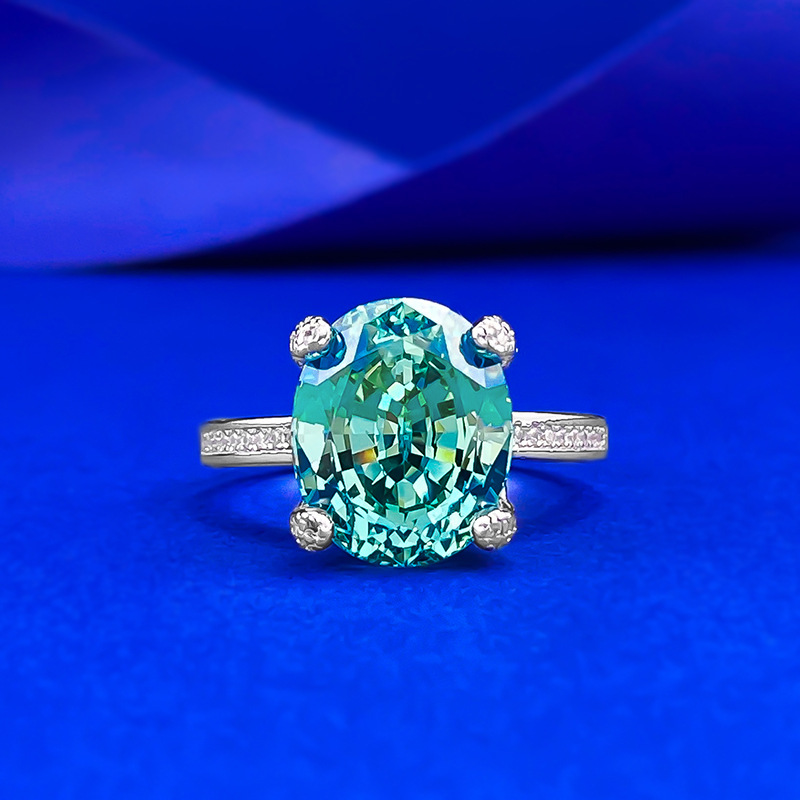
Best Ring Setting for Pear: The Styles That Protect and Flatter Most
Finding the best ring setting for pear takes a little more care than picking a setting for a round diamond. A pear has one soft end and one pointed tip, and that tip needs real protection. The setting also changes how large the diamond looks, how much it sparkles, and how comfortable it feels day to day.
Most shoppers compare the same core styles: solitaire, cathedral solitaire, halo, hidden halo, bezel, three-stone, and pavé-accented designs. Each one solves a different problem. Some protect the point better. Some add more brilliance. Others keep the center stone clean and classic.
So which option deserves the top spot? For many buyers, the answer is a solitaire with a V-prong. Still, that isn't the right fit for everyone.
What Makes the Best Ring Setting for Pear Diamonds?
The best ring setting for pear has to do two things well. It should protect the pointed end, and it should make the teardrop outline look balanced on the hand. If either part falls short, the ring can feel off.
GIA notes that pointed fancy shapes need extra care because exposed tips can be more vulnerable to damage. That's why jewelers often recommend a V-prong for pear-shaped diamonds. It covers the tip more securely than a standard prong while still leaving most of the stone visible.
Shoppers usually compare settings across six practical points:
- Tip protection – Does the design shield the point?
- Shape balance – Does the pear look even and flattering?
- Sparkle – Does the setting add brilliance or contrast?
- Comfort – Will it wear well every day?
- Band fit – Will it sit nicely with a wedding band?
- Budget – How much does the setting add to the total cost?
That last point matters more than many people expect. A halo or three-stone ring can raise the final price through extra diamonds, labor, and metal weight. A plain solitaire often keeps more of the budget focused on the center stone.
How to Judge the Best Ring Setting for Pear Before You Buy
A pretty photo doesn't tell the whole story. The best ring setting for pear should match the stone, your hand, and how you'll wear the ring.
Structural details that matter
Pear-shaped diamonds have a few quirks that affect setting choice:
- The tip is the weak point. A direct hit can chip it if the setting leaves it exposed.
- Ratio changes the look. Many pears fall between about 1.45 and 1.75 length-to-width, though preference varies.
- Symmetry shows easily. On a minimal setting, uneven shoulders or a crooked tip stand out fast.
- Orientation affects style. Most people wear the point toward the fingertip, but some prefer the reverse.
A good V-prong should cover the tip without hiding too much of the face-up shape. That balance is small, but it matters.
Personal factors that change the answer
No single design works for every buyer. Your ideal setting depends on daily wear, taste, and budget.
Think about these factors first:
- Lifestyle: Active hands often do better with bezel or lower-set styles.
- Finger coverage: Halo and three-stone rings usually look larger on the hand.
- Maintenance tolerance: Pavé and halo rings need more cleaning and periodic checks.
- Wedding band plans: Some baskets and cathedral shoulders may need a contoured band.
- Stone size: A well-cut 1.20 ct pear can face up larger than a deep 1.30 ct stone.
If you're starting with the diamond, browse our lab-grown diamonds first so you can compare shape, spread, and ratio before choosing the setting.
Solitaire and Cathedral Solitaire: The Best Ring Setting for Pear for Most Buyers
If you want a clean look, this category usually comes out ahead. A solitaire gives the center stone full attention. That's a big reason many jewelers and buyers see it as the best ring setting for pear.
A classic pear solitaire uses prongs around the body of the stone and a V-prong at the tip. That setup keeps the diamond open to light, easy to clean, and visually crisp. It also tends to cost less than halo or three-stone styles.
Why shoppers keep coming back to solitaire:
- It shows off the pear outline clearly
- It feels timeless rather than trend-driven
- It works well in 14K gold, 18K gold, or platinum
- It keeps maintenance fairly simple
- It lets you spend more on the center diamond
A cathedral solitaire lifts the shoulders of the band toward the center setting. From the side, it looks more architectural. It can also add support to the head, though build quality still matters more than the style name.
There are trade-offs. A plain solitaire won't add much extra finger coverage. If the center stone is under 1.00 ct, some people want more visual impact than a simple prong setting gives.
When a solitaire makes the most sense
A solitaire often feels like the best ring setting for pear if you love classic design and want the diamond to lead. Our customers often choose this style when the center pear has strong spread and good symmetry, since those qualities are easier to appreciate without a frame around them.
It also works well if you want flexibility later. You can pair it with a plain wedding band, a diamond band, or a contoured ring depending on the basket shape. Want to compare profiles? Browse our engagement ring collection to see plain solitaires and cathedral styles side by side.
Halo and Hidden Halo: Best Ring Setting for Pear if Sparkle Comes First
Some buyers want more than a clean outline. They want brightness, presence, and a larger look on the finger. That's where halo enters the conversation.
A halo surrounds the center diamond with small accent stones. On a pear, that frame can make the shape look fuller and more defined. It often gives the biggest face-up effect of any setting style, especially for center stones in the 0.70 ct to 1.20 ct range.
A classic halo changes the top view the most. A hidden halo places the accent diamonds beneath the center stone, where they catch light from the side without outlining the pear from above. If you want more sparkle without a full border, hidden halo is the quieter choice.
Why halo appeals to so many shoppers:
- It adds strong visual size
- It increases top-view sparkle
- It improves finger coverage
- It can sharpen the pear outline
- It creates a dressier overall look
Halo isn't maintenance-free. Small stones collect residue faster, and they need occasional checks. The setting must also protect the point properly. A halo looks protective, but the V-prong still does the real structural work at the tip.
IGI and GIA reports can help you decide where to place your budget. In many cases, the price jump from a 0.90 ct pear to a 1.20 ct pear is larger than buyers expect. A halo around the smaller stone may create similar hand presence for less money than moving up in carat weight.
When halo is the better fit
If sparkle is your top priority, halo may be the best ring setting for pear for you. It suits buyers who want a richer look and don't mind a little extra upkeep.
It's also a strong choice if your center stone is modest in size and you want more presence. Why pay for a much larger diamond if the setting can do some of that visual work for you?
Other Strong Options: Bezel, Three-Stone, and Pavé Styles
Solitaire and halo get most of the attention, but they aren't the only good answers. For some buyers, the best ring setting for pear sits in one of these categories.
Bezel settings
A bezel wraps metal around the edge of the diamond. For pear shapes, that can offer excellent protection at the point and around the sides. It also lowers snag risk, which makes it popular for active lifestyles.
Pros of a pear bezel:
- Excellent durability
- Strong tip protection
- Smooth, easy-wearing profile
- Modern appearance
Possible drawbacks:
- More metal around the stone
- Less airy than prongs
- Slightly softer outline in some designs
If security ranks first, bezel may be the best ring setting for pear diamonds.
Three-stone settings
A three-stone ring places side stones next to the pear center. Those accents may be rounds, baguettes, trapezoids, or half-moons. The result often feels dressy, tailored, and expensive-looking.
Reasons buyers love it:
- Adds finger coverage without a full halo
- Creates a balanced, custom feel
- Can complement the center pear's proportions
- Offers a high-end look
Trade-offs include higher cost and more design variables. Wedding band fit can also take more planning.
Pavé-accented bands
Pavé styles line the band with small diamonds. They don't surround the center stone, but they do add more life across the ring. For many buyers, this is the sweet spot between plain solitaire and full halo.
Why pavé works well:
- Adds sparkle without framing the pear
- Keeps the center shape easy to see
- Feels more detailed than a plain band
The downside is maintenance. Tiny accent stones need occasional inspection, and very thin pavé bands can wear differently over time depending on construction.
If you want to test different combinations, use our ring builder to compare center stones with solitaire, pavé, halo, and three-stone settings.
Pear Ring Setting Comparison: Protection, Sparkle, Comfort, and Cost
The best ring setting for pear depends on what you care about most. One style wins on security. Another wins on size effect. Another gives the best value.
Here is a practical side-by-side breakdown:
| Setting Style | Tip Protection | Sparkle | Maintenance | Comfort | Style Longevity | Wedding Band Fit | Total Cost |
|---|---|---|---|---|---|---|---|
| Solitaire | High with V-prong | Medium | Low | High | Excellent | Excellent | $$ |
| Cathedral Solitaire | High with V-prong | Medium | Low | Medium to High | Excellent | Good to Very Good | $$ |
| Halo | High with V-prong | Very High | High | Medium | Very Good | Good | $$$ |
| Hidden Halo | High with V-prong | High | Medium to High | Medium to High | Very Good | Good | $$$ |
| Bezel | Very High | Medium | Low | Very High | Very Good | Good | $$ to $$$ |
| Three-Stone | High with V-prong | High | Medium | Medium | Very Good | Fair to Good | $$$ |
| Pavé-Accented Solitaire | High with V-prong | High | Medium | High | Very Good | Very Good | $$ to $$$ |
Best by shopping priority
- Best overall: Solitaire with a protective V-prong
- Best for sparkle: Halo
- Best for active wear: Bezel
- Best for a luxe look: Three-stone
- Best middle ground: Hidden halo or pavé solitaire
How budget changes the decision
If you want the strongest value, solitaire usually wins. More of the total budget goes toward cut quality, spread, and certification instead of accent stones. That can matter a lot if you're comparing color grades like G-H versus D-F or clarity grades like VS2 versus SI1.
If you have more room to spend, halo and three-stone styles may deliver more visible impact than a modest bump in carat weight. In real shopping terms, a 1.00 ct pear with a halo can look larger on the hand than a 1.20 ct solitaire, depending on measurements.
Which Pear Setting Fits Your Style, Lifestyle, and Budget?
Once you narrow the goal, the best ring setting for pear gets easier to spot.
The classic minimalist
Choose a plain solitaire or cathedral solitaire. This buyer wants a ring that still looks right 20 years from now. Clean lines matter more than extra detail.
The sparkle-first shopper
Choose a halo or hidden halo. This style suits someone who wants more brightness, a larger look, and stronger finger coverage.
The active wearer
Choose a bezel or low-set solitaire. Lower profiles snag less, and bezel settings offer some of the best protection for pointed shapes.
The value-focused buyer
Choose a solitaire or pavé solitaire. A simple setting leaves more room in the budget for the center diamond. A pavé band adds shimmer without the full cost of a halo.
The statement lover
Choose a halo or three-stone design. Both styles create more presence and a more formal look.
The lab-grown buyer
Choose the style you actually love, then use the savings strategically. Lab-grown pears often make halo, platinum, or three-stone designs easier to afford. You can start with our diamond selection and build from there.
If hand coverage is a major concern, check your finger size before finalizing anything. A pear that looks large on a size 4.5 finger may look more delicate on a size 8.
Our Take on the Best Ring Setting for Pear
After looking at protection, style, upkeep, and cost, our top pick for the best ring setting for pear is a solitaire or cathedral solitaire with a V-prong.
Why this choice works for so many people:
- It protects the most vulnerable part of the stone
- It keeps the pear outline clear
- It ages well stylistically
- It usually offers strong long-term value
- It pairs easily with many wedding bands
For shoppers who want the diamond itself to shine, this setting gets the balance right. It protects what needs protection and doesn't crowd the shape.
The runner-up is halo. If you want extra brilliance, more finger coverage, and a larger visual footprint, halo may be your personal winner instead.
If you'd like help comparing real designs, explore our engagement rings, build your own with the ring builder, or browse fine jewelry styles for more inspiration.
Frequently Asked Questions About Pear Ring Settings
What is the best ring setting for a pear-shaped diamond?
For most buyers, the safest all-around choice is a solitaire or cathedral solitaire with a V-prong. That setup protects the pointed tip while keeping the pear shape open and easy to see. It also gives you more flexibility with wedding bands and future styling. If you care more about added sparkle than simplicity, a halo may be the better fit.
Is a halo or solitaire better for a pear engagement ring?
A halo is usually better if you want a bigger look, more brilliance, and stronger finger coverage. A solitaire is better if you want a classic design that is easier to clean and maintain. Both can work beautifully with a pear center stone, but they serve different priorities. Think about whether you want the setting to add drama or stay in the background.
Do pear-shaped diamonds need a V-prong setting?
In most cases, yes, a V-prong is strongly recommended for pear-shaped diamonds. The pointed tip is the part most likely to chip if the ring takes a hit. A standard prong doesn't cover that area as well. Before You Buy, ask to see how the V-prong sits over the tip so you know it protects the stone without hiding too much of it.
Are bezel settings good for pear-shaped rings?
Yes, bezel settings are a very smart option for pear-shaped rings, especially for active wearers. They protect the outline well, reduce snagging, and often feel more secure in daily use. The trade-off is visual: some people prefer the lighter look of prongs. If durability matters most, bezel deserves serious consideration.
Which pear ring setting makes the diamond look bigger?
Halo settings usually make a pear diamond look the largest from the top view because they expand the outline with accent stones. Hidden halos add sparkle from the side, though they don't change the face-up size as much. A slim-band solitaire can also help a pear look larger by contrast, especially if the diamond has a long shape and strong spread. Compare actual millimeter measurements, not just carat weight, before deciding.
Ready to Find Your Perfect Diamond?
Explore our collection of certified lab-grown diamonds
Shop Diamonds