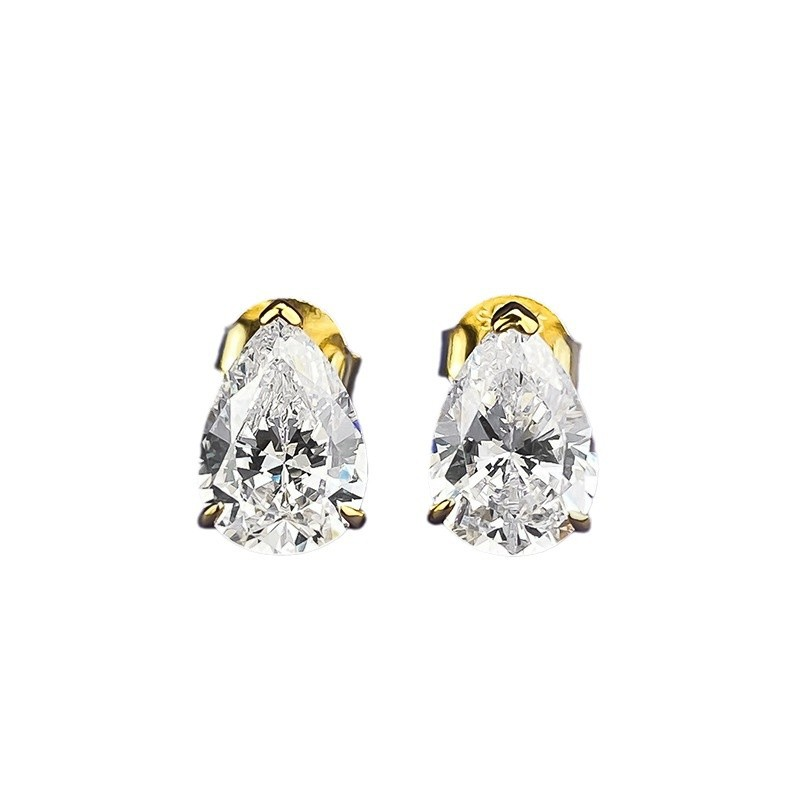
Best Cut Grade for Lab Grown Diamonds: Excellent vs Ideal vs Very Good
Choosing the best cut grade for Lab Grown Diamonds is mostly about what you can see, not what the report sounds like. A strong cut gives you brighter light return, sharper sparkle, and a cleaner look in the ring. The best cut grade for lab grown should match your budget, your setting, and how close people will view the stone.
A lot of shoppers start by chasing carat weight. We've found that many buyers change course once they see how much a well-cut stone outshines a larger one. Why pay for extra size if the diamond looks sleepy? The best cut grade for Lab Grown Diamonds protects the value you're already spending on color, clarity, and setting.
GIA treats cut as the quality factor that most affects a diamond's beauty because it controls light return. IGI is also common in the lab grown market, and both labs can help you compare stones. Still, the report is only part of the picture. Photos, videos, and measurements tell you whether the best cut grade for lab grown is actually doing its job.
Best Cut Grade for Lab Grown Diamonds: What Cut Changes
Cut is not the same thing as shape. Shape is round, oval, cushion, emerald, pear, or marquise. Cut is the precision of the angles, symmetry, and polish that decide how light moves through the stone.
A round brilliant usually has 57 or 58 facets. That faceting pattern is built for brightness and sparkle. When the angles are off, the diamond can leak light or look flat even if the grade on paper seems fine. That is why the best cut grade for Lab Grown Diamonds can matter more than many buyers expect.
Here are the four things cut changes most:
- Brilliance: how much white light the diamond returns
- Fire: colored flashes in strong light
- Scintillation: the pattern of sparkle as the stone moves
- Face-up presence: how large and lively the stone looks from above
Cut also affects value. Lab Grown Diamonds often sell for 60% to 80% less than comparable mined stones, so a weak cut can waste part of that savings. A well-cut diamond uses the budget better. In other words, the best cut grade for lab grown is the one that gives you the clearest visual payoff for the money.
For lab grown buyers, this matters even more because the category gives you room to be selective. If the budget allows a larger carat weight, resist the instinct to let cut slide. A diamond with a lower cut grade can face up larger and still look less impressive than a smaller, stronger stone. That tradeoff is easy to miss when you are shopping online, where the marketing headline often highlights size before performance.
Excellent Cut: The Safest Default
For most buyers, Excellent is the best cut grade for Lab Grown Diamonds. It gives you the least risk and the most consistent sparkle. In a round brilliant, Excellent usually delivers the strongest mix of brightness, contrast, and edge-to-edge life.
That consistency matters in daily wear. Office light, daylight, and warm indoor lighting all reveal different parts of the stone. An Excellent cut is more likely to stay lively in all three. If the diamond will sit in a solitaire or a low-drape setting, the cut grade becomes even more visible.
We've found that shoppers often notice the difference between a good Excellent stone and a weaker one only after side-by-side viewing. Once they do, they usually prefer the better performer. That's one reason the best cut grade for Lab Grown Diamonds is often the simplest answer for engagement rings.
If you want to compare how an Excellent stone looks in a finished design, browse our engagement rings or test settings in our ring builder.
When Excellent is worth the premium
Choose Excellent when the diamond is the center of attention. That includes engagement rings, anniversary gifts, and pieces you'll see every day. If you care most about sparkle and want fewer surprises, Excellent is the cleanest pick.
It can also help when the stone is larger. A 1.50 carat diamond shows more surface area than a 1.00 carat stone, so light performance is easier to judge. In those sizes, cut quality has more room to show off. The best cut grade for Lab Grown Diamonds usually becomes more important as carat weight goes up.
Excellent is also the best choice if you are comparing stones remotely and cannot inspect them in person. A lab report can tell you the grade, but it cannot tell you whether the diamond has a dead center, a dark bow-tie, or uneven contrast. Excellent reduces that uncertainty, especially when the retailer provides only one still image and a short video.
Ideal and Very Good: When They Still Make Sense
Ideal and Very Good can both be smart buys, but they need closer review. A lower label does not automatically mean a dull stone. Some Ideal and Very Good diamonds look nearly identical to an Excellent cut once they are set.
That is where the images matter. Look at the video, the face-up photo, and the measurements together. If the table, crown, pavilion, symmetry, and polish all line up well, you may find a strong value. For some shoppers, that makes Ideal or Very Good the best cut grade for lab grown because it leaves room for a bigger stone or a stronger setting.
The tradeoff is simple. The range of quality is wider. One Very Good diamond may look crisp and bright, while another may show less fire or a softer edge pattern. So the label alone is not enough.
Ideal is often the most appealing label when you are shopping IGI-certified Lab Grown Diamonds, because it can signal an attractive balance between performance and price. Very Good can also be worth considering in round brilliants if the stone has healthy proportions, no obvious extinction, and an image set that looks lively from edge to edge. The key is that you are buying the actual diamond, not the category name.
GIA vs IGI on lab grown reports
GIA usually uses Excellent, Very Good, Good, Fair, and Poor for round brilliant cut grading. IGI often uses Ideal and Excellent on lab grown reports, depending on the document and shape. That means the same word does not always mean the same thing across labs.
Read the lab name first, then read the actual specs. A stone graded Ideal by one system may not line up exactly with an Ideal label from another. If you're shopping online, the photo set often tells you more than the headline grade. That is the practical way to judge the best cut grade for Lab Grown Diamonds when reports vary.
For a deeper look at diamond options, you can also shop our lab grown diamonds or compare styles in our jewelry collection.
How to Compare Stones Before You Buy
A good purchase decision looks at three things together: the report, the proportions, and the image. Skip one of those, and you take on more risk. Keep all three in view, and the best cut grade for lab grown becomes much easier to spot.
Start with the report. Check the cut grade, polish, symmetry, table percentage, and depth percentage. Then compare the photos or videos for even light return and lively contrast. Finally, ask whether the diamond still looks good in the setting you plan to use.
Use this quick checklist:
- Round brilliants: look for balanced table and depth numbers
- Fancy shapes: focus on face-up sparkle and bow-tie presence
- Larger stones: inspect the image more carefully, because flaws show sooner
- Lower grades: compare side by side with an Excellent stone if possible
A practical example helps. A 1.50 carat Excellent cut can easily outperform a 1.80 carat Very Good stone if the larger diamond leaks light. On the other hand, a Very Good stone with tight proportions and strong video may be the better deal if it saves enough money to upgrade the setting. The best cut grade for Lab Grown Diamonds is the one that looks best on the hand, not just on paper.
For round brilliants, many buyers also pay attention to the ratio between table and depth. There is no single magic number, but extreme measurements are worth questioning. A very large table can reduce fire, while excessive depth can make the stone face up smaller than expected. If you are evaluating an oval, pear, or marquise, the cut grade on the report is less predictive than the visual pattern in the video, especially around the center where a bow-tie can appear.
Specs Worth Checking
If you want the best cut grade for lab grown without overpaying, look beyond the headline grade and read the whole report.
For round diamonds, these are the most useful details:
- Table percentage: often strongest when it sits in a balanced range rather than at an extreme
- Depth percentage: helps you avoid stones that hide weight in the pavilion
- Symmetry and polish: both should be Excellent or Very Good on a serious candidate
- Culet: ideally none or very small in modern round brilliants
- Fluorescence: usually not a deal breaker, but worth checking if the stone is borderline in other areas
For fancy shapes, proportions matter, but they are less formulaic. Ovals, cushions, emerald cuts, and pears can all look beautiful with different measurements. In those shapes, the best cut grade for Lab Grown Diamonds is often the one that gives you the most attractive face-up pattern, not the most rigid numeric profile. A strong video is usually more useful than a perfect-looking spreadsheet.
Clarity and color also interact with cut. An excellent cut can mask minor inclusions better than a weak cut because the sparkle distracts the eye. That said, do not use cut to justify a clarity grade that is too low for your setting or your viewing distance. In a solitaire engagement ring, a VS1 or VS2 is often a practical sweet spot; some buyers are comfortable going to SI1 only when the inclusion plot and images are clean and the stone is eye-clean at normal distance.
Metal, Setting, and Size Tradeoffs
The best cut grade for Lab Grown Diamonds depends on the setting as much as the diamond itself. A highly reflective halo can make a slightly lower cut grade easier to live with, while a minimalist solitaire shows every weakness in the stone.
Metal choice changes the look and the maintenance. Platinum is durable and holds prongs well, which is useful for daily wear and for larger stones that need secure support. 14k gold is a practical balance of durability and price, and it usually keeps the total ring cost lower. 18k gold has a richer color but is a bit softer, so it can show wear sooner if you are hard on your hands.
Setting style matters too:
- Solitaire: exposes the diamond fully and rewards the best cut grade for lab grown
- Halo: can make the center stone look larger and add extra brightness
- Three-stone: adds visual spread, but side stones should match the center's tone and style
- Bezel: offers protection and a modern look, but can slightly reduce edge sparkle
- Low-profile setting: practical for daily wear, but the head design must still allow light to enter
If you are maximizing size on a budget, a very slightly smaller Excellent cut may look better than a larger Very Good. If you want a ring that feels substantial from a distance, a halo or hidden halo can help create more presence without compromising the center stone. If your hands are active or you wear the ring constantly, a lower setting with strong prongs may be more important than chasing the highest grade available.
Ring size also affects the visual outcome. On smaller ring sizes, a diamond can appear slightly larger because the band occupies less of the hand. On larger ring sizes, the same carat weight may look more delicate, which puts even more pressure on cut quality to deliver sparkle. That is another reason the best cut grade for Lab Grown Diamonds should be judged in context, not in isolation.
Price, Certification, and Shopping Rules
Price is where many shoppers make avoidable mistakes. Lab Grown Diamonds can be very good value, but the savings do not help if you overpay for a stone with mediocre performance. The best cut grade for lab grown should fit the rest of the purchase, including the setting, center stone size, and service policy.
As a rough guide, well-cut lab grown round diamonds often command a premium over weaker cuts of the same size and color. That premium is usually justified when the stone is the main visual focus. A 1.00 carat to 1.50 carat Excellent cut stone can sit in a very different price band from a lower-graded diamond with similar carat weight, and the gap often becomes more noticeable in larger sizes.
Certification matters too. A reputable lab report from GIA or IGI should show the stone's measurements, growth method, shape, cut grade, polish, symmetry, fluorescence, and clarity plot. If a seller does not provide the report number or cannot let you verify it, move on. The best cut grade for Lab Grown Diamonds is only useful if the document is legitimate and the stone matches it.
Before You Buy, confirm these practical policies:
- Shipping: insured delivery with signature required
- Returns: a realistic return window, not a one-day formality
- Resizing: whether the brand offers it and what it costs
- Warranty or maintenance: prong inspection, cleaning, or rhodium plating if relevant
- Trade-in or upgrade options: useful if you expect to move up in size later
Buyers often forget to budget for the ring itself. A diamond and setting combination can change the total price quickly depending on metal choice, accent stones, and labor. If you want the best cut grade for Lab Grown Diamonds and a substantial setting, decide your full budget first, then divide it between center stone and mounting. That keeps you from making a compromise in the wrong place.
One other detail: ask whether the retailer provides high-resolution images from multiple angles, not just a stock rendering. A true stone video is more valuable than a marketing badge. If the seller offers both images and a gemologist review, that is even better, especially for fancy shapes or larger carat sizes.
How to Handle Sizing, Care, and Long-Term Wear
Lab grown diamonds themselves are as hard as mined diamonds, but the ring's durability still depends on the setting. The best cut grade for lab grown diamonds will not help if the prongs loosen or the ring gets knocked out of alignment.
Have the ring sized before wear if possible. A ring that spins will keep the center stone from facing up correctly, and that can make even an Excellent diamond look less lively. If you are between sizes, ask about quarter-size adjustments or a temporary fit solution. Wide bands often fit tighter than narrow ones, so the band width should be part of the sizing conversation.
For care, simple habits go a long way:
- Remove the ring for heavy lifting, gym work, and cleaning with harsh chemicals
- Rinse it occasionally in warm water with mild soap and a soft brush
- Store it separately so the diamond does not scratch softer jewelry
- Check the prongs and center stone regularly, especially after impact
- Have the ring professionally inspected if it is worn every day
If you choose platinum, expect a slightly different look over time. It develops a patina rather than losing metal color in the same way white gold can. White gold may need periodic rhodium plating to keep its bright finish. Yellow gold and rose gold do not require that same maintenance, but they may show scratches more visibly depending on the alloy and finish. These details do not change the best cut grade for lab grown, but they do affect how the finished ring wears over years of use.
Common Mistakes to Avoid
Most bad diamond purchases come from the same few mistakes. The first is assuming that a higher carat weight automatically means a better ring. It does not. A weakly cut stone can look sleepy no matter how large it is.
The second mistake is trusting the grade without checking the video. Even within Excellent, there are noticeable differences. In Ideal and Very Good, those differences can be larger. The best cut grade for lab grown diamonds is never just the label on the report.
Other mistakes to avoid:
- Choosing a stone with a strong report but no visual media
- Ignoring the setting, even though it changes how the diamond reads on the hand
- Buying a ring without understanding the return window or resize policy
- Overlooking metal choice and daily wear durability
- Picking clarity or color too low for the style of ring
One especially common error is buying the lowest-priced stone and assuming the savings are real. Sometimes the cheaper stone has a less attractive cut, a less favorable shape ratio, or a weaker return policy. In those cases, the upfront discount can disappear quickly. If you are comparing two diamonds closely, the better cut is often the better long-term buy, even if it costs a little more today.
Expert Recommendation
For most shoppers, Excellent is still the best cut grade for lab grown diamonds. It gives the strongest balance of sparkle, consistency, and low risk. That makes it the easiest recommendation for an engagement ring or any center stone you want to love for years.
Very Good and Ideal still have a place. They can be smart picks when the report is clean, the images look sharp, and the savings are enough to matter. In our experience, customers often choose a slightly lower grade only when the stone still looks lively in real light. That is a reasonable trade, as long as you review the evidence.
If you want help comparing options, start with engagement rings, then move to the ring builder to see how cut, setting, and size work together. You can also browse lab grown diamonds if you're still choosing the center stone.
Frequently Asked Questions
What is the best cut grade for lab grown diamonds for an engagement ring?
The best cut grade for lab grown diamonds for an engagement ring is usually Excellent. It gives you the strongest mix of sparkle, brightness, and consistency in daily wear. If the ring will be seen up close, that extra reliability is worth a lot. A well-cut stone also makes the rest of the ring look better.
Is an Excellent cut lab grown diamond worth paying more for?
Usually, yes. The premium often buys better light return and less risk of a flat-looking stone. If the diamond is the focal point of the piece, the better cut can be easier to see than a small jump in carat size. That's why many buyers treat the best cut grade for lab grown as money well spent.
Can a Very Good cut lab grown diamond still look beautiful?
Yes, it can. A strong Very Good stone may look close to an Excellent cut if the proportions and images are clean. The key is to check the actual diamond, not just the label. If the price savings are real, Very Good can be a solid value choice.
How do I know if a lab grown diamond has a strong cut?
Check the lab report, then look at the video and photos. You want even brightness, sharp contrast, and no obvious dull zones. GIA and IGI reports are useful, but they don't replace visual review. If you're unsure, compare the stone against an Excellent cut reference.
What size lab grown diamond is best if I want the cut to stand out?
At 1.00 carat and above, cut differences become easier to see, especially in round brilliants. If your budget allows, a well-cut 1.00 to 1.50 carat stone often gives a strong balance of presence and performance. Above that, cut quality matters even more because any light leakage becomes more noticeable. If you want maximum sparkle at a modest budget, prioritize cut before increasing size.
What should I ask a retailer before placing an order?
Ask for the report number, a real video of the exact stone, the return window, whether resizing is included, and whether shipping is insured and signature required. If the stone will be set before delivery, ask if you can approve the center stone first. These are practical safeguards that protect your purchase if the diamond does not look as expected in person.
If you're deciding between options, the simplest rule still holds: choose the best cut grade for lab grown that looks brightest in the actual stone, then confirm it fits your budget, setting, and return policy. That is the most reliable way to get a diamond that looks good now and holds up over time.
Ready to Find Your Perfect Diamond?
Explore our collection of certified lab-grown diamonds
Shop Diamonds